
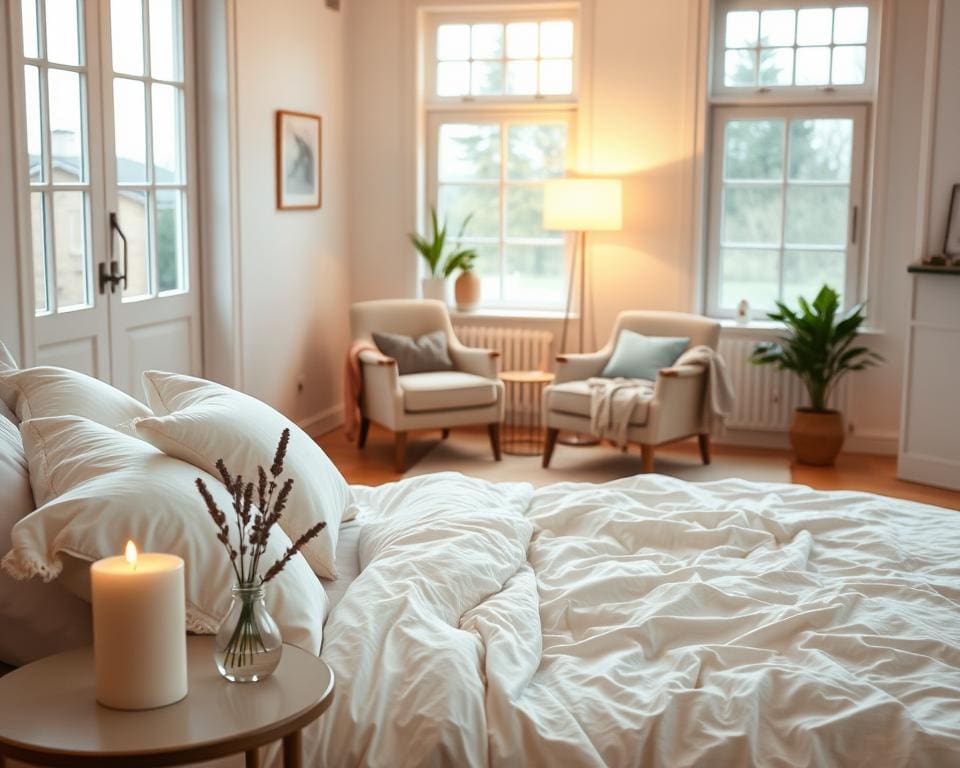
What makes a bedroom more relaxing is the mix of simple design choices and small routines that cue the body to rest. A sleep-friendly bedroom starts with calming color, a supportive bed, soft lighting, controlled sound, and comforting textiles. This article offers relaxing bedroom ideas and bedroom relaxation tips that fit renters and homeowners across the United States.
Research from the National Sleep Foundation and the American Academy of Sleep Medicine links environment to sleep latency, sleep duration, and sleep efficiency. Clearer air, lower light levels at night, and reduced noise all help people fall asleep faster and wake less often. Those gains matter for mood, memory, and daytime focus.
Later sections expand on five core elements: calming color palettes and their psychological effects, bed and mattress choices, layered lighting and sound control, textiles and scent, and design plus routines. Each area provides practical, scalable steps—from one-hour fixes to full serene bedroom design projects—to improve rest.
Readers can expect measurable benefits: less time to fall asleep, fewer nighttime awakenings, calmer bedtime routines, and better morning mood. The tips balance style and science so you can adopt bedroom relaxation tips on any budget and create a personal sanctuary that supports restorative sleep.
What makes a bedroom more relaxing?
A calm bedroom starts with small, intentional choices that ease the mind and body. Thoughtful color, a supportive bed, soft lighting, and smart storage work together to create rest. Use these practical steps to shape a space that invites sleep and quiet.
Calming color palettes and their psychological effects
Color affects mood in measurable ways. Cool, muted tones like soft blues, sage green, warm neutrals, and lavender tend to lower heart rate and foster calm. Avoid high-saturation reds and bright oranges near the bed to reduce stimulation.
For a balanced scheme, choose one dominant wall color and two to three complementary accents. Test paint samples in both natural and artificial light. Matte finishes cut glare and make a room feel more restful. Consider Benjamin Moore shades such as Calm or Revere Pewter and Sherwin-Williams picks like Sea Salt or Mindful Gray as starting points.
Choosing the right bed and mattress for comfort
Pick a mattress type that matches your sleep needs. Memory foam offers pressure relief and motion isolation. Innerspring gives bounce and airflow. Hybrids blend support and contour. Latex stays responsive and cool.
Match firmness to sleep position and body weight. Side sleepers often prefer soft to medium. Back sleepers do well with medium-firm. Stomach sleepers usually need firmer support. Look at brands such as Saatva, Tempur-Pedic, Purple, and Casper when researching the best mattress for sleep.
Size and foundation matter. Make sure the bed fits the room—queen is common for couples. An adjustable base can help with acid reflux and circulation. Rotate or follow manufacturer care, use a supportive frame, and plan to replace a mattress every seven to ten years when sagging or pain appears.
Soft lighting strategies to promote relaxation
Light influences hormones that control sleep. Reduce blue-rich, high-intensity light in the hour before bed. Choose warmer color temperatures between 2700K and 3000K and lower lux levels for evening calm.
Layer lighting with ambient, task, and accent sources. Use bedside lamps, wall sconces, and low-level floor lights to avoid harsh overhead glare. Install dimmers and pick warm LED bulbs. Philips Hue and LIFX offer smart bulbs that let you shift color temperature and set schedules for relaxing lighting for bedroom routines.
Decluttering and layout to reduce stress
Clutter raises cortisol and fills mental space. A tidy room feels safe and peaceful. Start by clearing surfaces and removing work items like laptops and bills. Create a drop zone for everyday clothes and use under-bed boxes for off-season storage.
- Adopt minimalist storage solutions from IKEA, The Container Store, or West Elm.
- Keep clear pathways to support movement and calm.
- Position the bed so it faces the door when possible, without being directly in line, to enhance a sense of security.
Maintain balance and symmetry to improve visual rest. These steps in decluttering bedroom and arranging a bedroom layout for relaxation help the space signal one clear message: rest is welcome here.
Creating a sleep-friendly atmosphere with lighting and sound
Gentle light and calming sound shape how quickly we relax. Thoughtful choices help cue your body to unwind and stay asleep. Use natural light by day and plan soft evening scenes so your bedroom becomes a true refuge.
Layered lighting gives a room depth and purpose. In a layered lighting bedroom, ambient light provides even illumination, task lights serve reading and dressing needs, and accent fixtures highlight artwork or cozy corners. Choose recessed dimmable cans for overall glow, adjustable bedside swing-arm lamps for reading, and LED strips or picture lights for subtle accents.
Rely on warm, low-glare sources instead of a single bright overhead lamp. Place task lights near a chair or bedside to avoid lighting the whole room. Use accent lighting sparingly to draw the eye and add warmth without breaking calm.
Layered lighting: ambient, task, and accent
Ambient lighting sets the base mood. Task lighting supports activities like reading. Accent lighting creates visual interest and depth. Arrange fixtures so each layer can be controlled independently. That way you can move from bright mornings to mellow evenings with ease.
Choosing bulbs, dimmers, and smart lighting for bedtime routines
Pick warm-color LEDs in the 2700K–3000K range and look for high CRI for true color. Warm-dim bulbs that shift to amber as they lower output feel more natural at night. Install dimmer switches compatible with LED loads or use plug-in dimmer lamps where rewiring is not an option.
Smart bulbs for sleep let you program gradual dimming that mimics sunset. Brands like Philips Hue, Lutron Caseta, and Ecobee offer reliable scenes and voice control. Set schedules to reduce blue light exposure before bed and save energy with efficient LEDs.
For layout and daylight ideas, a practical guide can help you plan windows, mirrors, and treatments for optimal natural light during the day: how to invite sunlight into your.
Using soundscapes, white noise, and silence to improve sleep quality
Low, steady sound can mask sudden noises that trigger micro-awakenings. Sleep soundscapes and steady tones stabilize the auditory environment. Consider white noise machines or apps that offer pink and brown noise as alternatives to abrupt sounds.
White noise machines such as Marpac/Dohm have long been trusted to produce consistent masking. Streaming services and apps like Calm and Headspace provide layered nature soundscapes for a softer approach. Keep volume under 50 dB and use timers if you prefer the sound to fade after you fall asleep.
Silence matters for deep rest. Improve quiet with heavy curtains, rugs, door sweeps, and double-glazed windows. These measures reduce urban noise so your sleep soundscapes work without interruption.
- Set lighting and sound routines that repeat nightly for reliable sleep cues.
- Combine smart bulbs for sleep with dimmers to automate wind-down phases.
- Place white noise machines at a half-room distance to avoid masking bedside conversation.
Textiles, scent, and tactile elements that enhance calm
Soft textiles and gentle scent cues turn a bedroom into a restorative retreat. Choosing the best bedding materials and pairing them with thoughtful layers, scent, and soft surfaces helps the room feel calmer and more inviting.
Bedding materials: natural fibers vs. synthetics
Natural fiber sheets like Egyptian cotton, Pima, linen, Tencel (Lyocell), bamboo viscose, and wool offer breathability and moisture control that many sleepers need. Percale finishes feel crisp, while sateen gives a silkier touch. Synthetics such as microfiber and polyester blends can be budget friendly and durable, but they may trap heat for some people.
Look for OEKO-TEX and GOTS certifications when you shop. Brands such as Brooklinen, Parachute, Boll & Branch, and Saatva offer lines that highlight care, longevity, and responsible sourcing.
Pillows and layers: balancing support and coziness
Choose pillow types for sleep based on your usual position: down or down-alternative for a soft cradle, memory foam for contouring support, latex for resilience, and adjustable shredded fill for custom loft. Match firmness and loft to neck support needs.
Layer a supportive primary pillow with a softer secondary pillow for lounging. Add a duvet with a washable cover and a lightweight throw to adjust warmth through the night. Replace pillows every one to three years and wash covers regularly to maintain freshness.
Using aromatherapy and scent cues to signal wind-down time
Aromatherapy for sleep can help create a nightly ritual. Research points to lavender and chamomile as scents that promote relaxation when used sparingly. Try a diffuser, pillow mist, or linen spray for subtle scent cues.
Use safe delivery methods such as electric diffusers or soy wax melts placed away from fabrics and avoid open flames near bedding. Brands like Vitruvi, doTERRA, and Young Living carry popular blends; test for sensitivities and consult a clinician if you have allergies.
Area rugs, curtains, and soft surfaces to improve acoustics and warmth
Area rugs and heavy curtains absorb sound and add insulation against cold windows, creating a cocooning effect. Low-pile rugs are easier to clean, while high-pile options feel plush underfoot.
Place a rug under the bed to anchor the space and cushion footsteps. Add textured throws or an upholstered headboard to boost tactile comfort. Retailers from West Elm to Target Threshold, Rugs USA, and Wayfair offer options across budgets.
Cozy textiles and decor tips can inspire small changes that yield big comfort gains. Keep layers simple, choose natural fiber sheets where possible, and let scent and soft surfaces guide your nightly routine.
Design, organization, and routines that support restful sleep
Simple design choices create calm. Use a limited palette and cohesive textures to reduce visual noise, and make the bed the clear focal point. Leave negative space around the bed and avoid turning the room into an office; keeping work out of the bedroom preserves the mental cue that this is a place for rest. These sleep hygiene bedroom design principles help the mind relax the moment you enter.
Small organization habits pay big dividends. Adopt daily bedroom organization tips like making the bed each morning and a nightly tidy ritual to clear surfaces and put away clothes. Combine open shelving for curated items with concealed storage and labeled bins for seasonal gear. Follow a seasonal maintenance schedule—rotate the mattress, launder bedding, vacuum, and wash curtains—to keep the room feeling fresh and supportive of sleep.
Establish consistent bedroom routines for sleep and a 30–60 minute wind-down each night. Dimming lights, light reading, gentle stretches, and turning off screens at least 60 minutes before bed form reliable bedtime routine ideas. Set tech boundaries: use Do Not Disturb, blue‑light filters, or remove phones from the room, and rely on a dedicated alarm clock or wearable instead.
Round out the plan with practical steps and a timeline. Start with high-impact, low-cost changes—declutter, add blackout curtains, swap bulbs, and buy a supportive pillow—then phase in larger investments like a new mattress or soundproofing. Week 1: declutter and set routines. Week 2: update lighting and bedding. Month 1: evaluate mattress and fine‑tune storage. If sleep problems persist, consult local sleep specialists or a certified sleep coach and use consumer reviews and return policies when buying big items.