
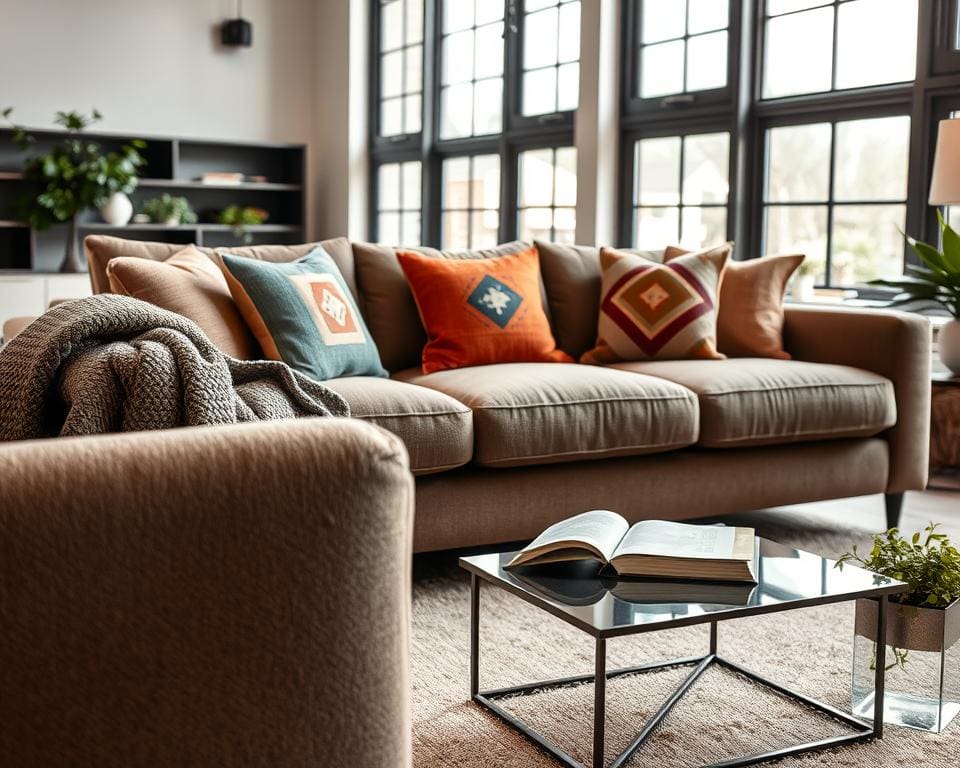
A sofa anchors a living room. In American homes — from open-plan lofts in New York to family rooms in suburban Dallas — the right piece needs to look good and stand up to daily life. This sofa design guide will help you see how aesthetic choices and sensible construction come together.
Style matters because a sofa sets tone and mood. Practicality matters because families, pets, and sunlight test every seam. A stylish practical sofa balances clean lines, fabric choice, and frame strength so it can host movie nights, homework sessions, and weekend guests without showing wear.
Later sections will unpack functional sofa features like removable cushions, modular layouts, and built-in storage. You’ll also get guidance on materials, scale, color, and care so you can choose from the best sofas for everyday living with confidence and ease.
What makes a sofa both stylish and practical?
Finding the sweet spot between beauty and everyday use begins with clear priorities. Think about how you will live on the piece: entertaining, lounging, or formal seating. That choice guides which details matter most when you seek to balance form and function sofa design.
Balancing form and function
A successful sofa pairs clean lines with supportive ergonomics. Deep seats and the right cushion firmness let you relax without losing a tailored silhouette. Slim arms look contemporary, but check cushion depth and back support before committing.
Mid-century designs often mix classic proportions with modern touches. Slipcovered English roll-arm sofas show how traditional looks can be practical when covers are removable. Test by sitting and reclining to confirm sofa usability for your routine.
Materials that deliver appearance and durability
Choose durable sofa materials that match lifestyle needs. Performance fabrics like Sunbrella and Crypton resist stains and keep color, while high-quality polyester blends stand up to heavy use. Linen threads a refined look, best when blended for strength.
Leather options range from top-grain that develops character to protected finishes that clean easily for homes with kids or pets. Frames built from kiln-dried hardwood and reliable spring systems extend life. Look for cushions with HR foam or pocketed coils to reduce sagging.
For details on maintenance and fabric testing, consider trusted resources such as care and selection guides that explain abrasion ratings and finish choices.
Design features that enhance usability
Functional design furniture often includes modular or sectional options for flexible layouts. Reconfigurable pieces adapt as needs change and make open-plan living simpler to manage.
Practical sofa design features include removable covers, hidden storage, and sleeper mechanisms that add value in small homes. Adjustable headrests, USB charging ports, and raised legs improve comfort and cleaning access.
Consider warranty and serviceability when you buy. A solid warranty on frame and suspension plus available replacement cushions extend the sofa’s life and protect your investment in sofa usability.
Choosing the right style and scale for your space
Picking the right sofa is about more than looks. Start with the room’s design language and the role you want the sofa to play. That will help you choose sofa style that feels intentional and suited to daily life.
Matching sofa style to room design
Identify whether your room leans contemporary, mid-century, modern farmhouse, or traditional. A tufted Chesterfield reinforces a classic study, while a low-profile track-arm piece suits a minimalist living room. Brands like West Elm, Crate & Barrel, and Joybird show how silhouette and upholstery signal different design voices.
Think about layering. Coordinate sofa lines with coffee tables, media consoles, and accent chairs for a cohesive rhythm. Matching leg finishes and hardware ties pieces together without feeling forced.
Decide if the sofa should be a focal point or a neutral anchor. A bold hue or pattern makes a statement. A neutral base gives you flexibility with rugs, curtains, and art.
Scale, proportion, and traffic flow
Measure the room, doorways, and elevators before you buy. That avoids delivery headaches and fit problems. Keep standard clearances in mind: about 18 inches from sofa front to coffee table and 30–36 inches for main traffic lanes.
Match sofa scale and proportion to the space. Large sectionals work in open-plan living rooms. For apartments, sofas around 72–82 inches sit well without overwhelming the room. Seat depth and arm height should reflect how you use the sofa.
Use leg height and arm bulk to control visual weight. Exposed legs create lightness. Skirted or low-to-floor sofas read heavier and more formal. Modular sectionals define zones in large rooms. Standalone sofas and chairs create intimate groupings in multifunctional areas.
Color, pattern, and texture choices
Start with color strategies. Neutrals like beige, gray, and navy offer longevity and flexibility. Test swatches in your room at different times of day to judge warmth and undertone.
Use pattern and texture for balance. Small patterns can read as texture from across the room and hide minor wear. Bold prints become focal points and should be scaled to the room. Combine pattern and texture for depth: pair a leather sofa with knit throws or choose boucle upholstery with crisp linen pillows.
Consider performance and light exposure. Velvet feels luxurious but shows wear differently than woven linen or performance chenille. For sunny rooms, pick colorfast fabrics and UV-resistant finishes, and rotate cushions to even out fading.
Practical considerations for everyday living
Everyday comfort starts with simple routines. Follow a sofa maintenance guide: vacuum crevices weekly, fluff and rotate cushions monthly, and heed manufacturer cleaning codes (W, S, WS, X). For spills, blot immediately and use mild detergent on water-safe fabrics after testing on a hidden area. Leather needs a damp wipe and periodic conditioner to stay supple.
Plan deeper care to keep a sofa looking fresh. Schedule professional upholstery cleaning once a year for heavy-use sofas or every two years for lighter use. This sofa cleaning and care restores appearance and removes allergens. Choose sofas with removable covers or accessible cushions to make deep cleaning easier and extend the lifespan of your investment.
Select fabrics and features that suit family life. Look for Crypton, performance microfiber, or treated leathers when seeking the best sofas for families; these resist stains and odors. Darker neutrals and textured weaves hide pet hair and small marks. Protective measures—washable throws, slipcovers, felt pads on legs, and pet beds—help preserve upholstery and floors.
Balance budget and longevity when buying durable sofas for everyday use. Higher-end builds with kiln-dried hardwood frames and eight-way hand-tied suspension last longest, while mid-range options with sinuous springs and high-density foam offer good value. Verify safety treatments, measure doorways, test comfort, and confirm warranties and delivery. With small preventive steps and smart choices, practical sofa tips turn a stylish piece into a family-ready centerpiece for years.