Industrial automation has revolutionised the landscape of manufacturing processes, unlocking remarkable levels of efficiency and productivity. By integrating sophisticated technologies, businesses can replace traditional human intervention with automated systems that enhance production capabilities and improve product quality. The automation effectiveness becomes evident as it streamlines operations, reduces costs, and minimises errors, granting companies a competitive edge in a rapidly evolving marketplace. This discussion lays the groundwork for exploring these transformative benefits in practical scenarios.
The Rise of Industrial Automation
The evolution of industrial automation reflects a remarkable journey through history, culminating in the advanced systems we utilise today. The story begins with the mechanisation that emerged during the Industrial Revolution, which laid the groundwork for a complete transformation within the manufacturing landscape. This period showcased a marked shift in how industries operated, leading to the gradual rise of automated solutions. Understanding the history of industrial automation allows us to appreciate the milestones that have shaped contemporary practices.
Historical Context of Automation in Industry
The origins of automation can be traced back to simple machinery designed to ease manual labour. As time progressed, innovations such as steam power and electrical systems catalysed significant changes. These developments introduced greater efficiency and productivity, paving the way for modern automation technologies. The manufacturing evolution has been characterised by a continuous quest for improved methods, ultimately leading to sophisticated robotics and smart systems that define today’s industrial environment.
Key Drivers Behind Industrial Automation Adoption
A variety of factors have motivated industries to embrace automation, making it essential to examine the automation adoption drivers. Key elements include:
- Efficiency: The relentless pursuit of optimising operations remains a powerful motivator.
- Consistency: The demand for uniform quality in production has led to the integration of automated systems.
- Technological advancement: Breakthroughs in AI, IoT, and other technologies have facilitated innovative automation solutions.
- Market competitiveness: Industries face pressure to adopt automation to meet the ever-evolving demands of consumers.
Each of these factors plays a crucial role in driving the evolution of industrial automation, underscoring its importance in the modern economy.
Enhanced Efficiency and Productivity
Industrial automation plays a pivotal role in streamlining operations, driving operational efficiency across various sectors. By integrating automated processes, organisations can significantly optimise their workflows, leading to remarkable productivity enhancement. With the application of advanced technologies, companies have reported efficiency increases of up to 30% in their production lines.
Streamlining Operations Through Automation
The implementation of automated solutions facilitates a reduction in manual input, transforming the way businesses operate. As tasks become streamlined, employees can focus on more strategic activities, unleashing potential for innovation and growth. Key benefits include:
- Enhanced speed and accuracy in task execution.
- Improved resource allocation and management.
- A more agile response to market demands.
Reducing Downtime with Automated Solutions
One significant advantage of embracing automation is the substantial downtime reduction. Automated systems are designed to predict maintenance needs, which allows for timely interventions. This proactive approach ensures continuous operational flow, avoiding costly halts in production. By minimising interruptions, companies can maintain their output and uphold the quality of their products.
Cost Reduction and Financial Benefits
The financial aspects of adopting industrial automation represent a transformative opportunity for businesses. Through streamlined operations, organisations witness remarkable cost savings, which significantly contribute to their bottom line. The financial advantages of automation extend beyond mere labour reductions, encompassing waste minimisation and enhanced productivity.
Long-term Savings from Automated Processes
Investing in automated systems results in substantial long-term savings. Companies that embrace automation typically benefit from reduced operational costs. Factors such as decreased labour expenses and improved efficiency create a strong foundation for financial growth. By automating processes, firms can allocate resources more effectively, leading to a more robust financial structure.
ROI Metrics for Industrial Automation Investment
Conducting a thorough ROI assessment is essential for understanding the value of automated systems investment. Key metrics such as payback period and productivity increases offer insights into how quickly companies can recover their investments. A comprehensive analysis reveals just how automation enhances profitability over time, underscoring the compelling financial advantages of automation.
Improved Quality and Consistency
In today’s competitive marketplace, the significance of product quality and consistency in manufacturing cannot be overstated. Automation plays a vital role in achieving exceptional outcomes by minimising human error, leading to more reliable production lines and enhanced customer satisfaction.
Minimising Human Error in Production
Human error can introduce variability that affects the overall quality of products. With automated systems in place, there is a remarkable reduction in such errors. These systems are programmed to follow precise protocols, ensuring that each step of the production process is executed flawlessly. For example, renowned firms in the automotive sector have harnessed automation to achieve nearly flawless assembly lines, drastically decreasing defects. The end result is superior product quality that meets consumers’ high expectations.
Standardisation of Products Through Automation
Automation fosters standardisation, which is essential for maintaining uniformity in product quality. By adhering to consistent procedures, manufacturers can ensure that every item produced meets the same criteria. This standardisation yields significant benefits, not only in terms of regulatory compliance but also in enhancing brand reputation. Companies that commit to consistent manufacturing through automation often find that they can scale their operations without sacrificing quality.
Flexibility and Scalability in Operations
The evolution of automation technologies has revolutionised the way industries operate. Companies now benefit from operational flexibility, allowing them to tailor automated systems to meet specific, ever-changing demands. This adaptability is crucial in a fast-paced market where responsiveness can make all the difference.
Adapting Automated Systems to Changing Needs
As market dynamics shift, the need for organisations to pivot quickly becomes imperative. Automated systems equipped with adaptive capabilities can be reconfigured for different tasks without extensive downtime. This type of operational flexibility helps businesses remain competitive and responsive to client needs, ultimately enhancing overall efficiency.
Scalable Solutions for Growing Industries
Industry growth often demands that companies expand their operations. Scalable automation solutions provide a perfect answer to this challenge. By implementing modular systems, firms can seamlessly increase capacity and adapt processes to align with heightened demand. These scalable solutions empower organisations to not only thrive during peak times but also to navigate transitions smoothly, safeguarding their competitive edge.
Data-Driven Decision Making
The emergence of data-driven strategies has revolutionised the landscape of industrial automation. Companies harness the power of data analytics in manufacturing to refine and enhance operational efficiency. This significant shift allows organisations to leverage valuable insights obtained through big data utilisation, driving performance and innovation.
Leveraging Big Data in Industrial Automation
Through the adoption of big data analytics, organisations can optimise their production lines, foresee possible equipment failures, and enhance their supply chain management. This proactive approach is critical in fostering a culture of informed decision-making. Organisations that invest in data analytics can identify trends and anomalies, which leads to a more agile response to market demands.
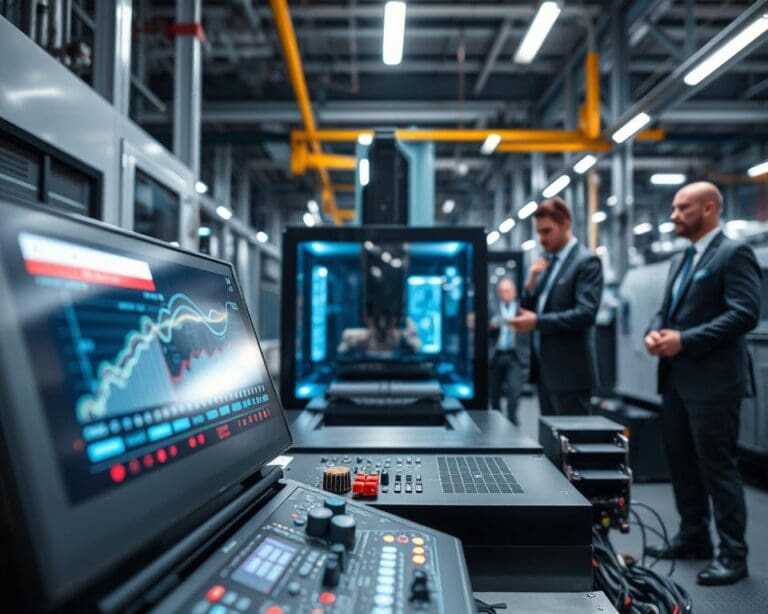
Real-time Monitoring and Analytics Benefits
Real-time monitoring plays a crucial role in the success of data-driven decision-making. By integrating advanced monitoring tools, businesses can make immediate adjustments to operations based on current data. The benefits of real-time access to information include:
- Enhanced ability to react quickly to issues or changes in production
- Reduced downtime through timely interventions
- Increased overall productivity and resource optimisation
As organisations embrace this technology, they cultivate an environment focused on continuous improvement and operational excellence.
Workforce Transformation and Skills Development
The workforce impact of automation is reshaping industries and redefining job roles. As machines increasingly handle repetitive tasks, the nature of human employment is shifting. This transformation encourages organisations to re-evaluate their workforce structure, moving towards positions that require critical thinking, creativity, and supervision. New opportunities in fields such as robotics and programming are emerging, alongside roles in system maintenance and oversight.
Shifting Roles in an Automated Workplace
Within this evolving environment, different job roles transformation is evident. Traditional positions are transitioning into more specialised functions that leverage technology. Employees find themselves taking on analytical tasks, interpreting data produced by automated systems, and ensuring smooth integration between human effort and machine efficiency. This development not only enhances productivity but also creates dynamic, challenging work environments that attract a new generation of talent.
Training and Upskilling for Future Jobs
To respond to the workforce impact of automation, companies must prioritise skills development through comprehensive training in automation. Employees require access to ongoing education, enabling them to adapt and thrive in this fast-paced landscape. Initiatives might include workshops, online courses, and hands-on training sessions tailored to equip workers with relevant skills. Investing in such training represents a commitment to the workforce, preparing employees for the challenges and opportunities that automation brings.
What makes industrial automation so effective?
The effectiveness of industrial automation lies in its multifaceted benefits that encompass enhanced efficiency, significant cost savings, and improved quality control. As we have explored, the automation benefits manifest not only through increased productivity but also through a reduction in operational downtime. Manufacturers harness these advantages to streamline processes, ensuring a smoother operation with minimal human error, which invariably contributes to higher standards in product quality.
Summarising the automation impact reveals a transformative shift in the workforce dynamics as well. With the advent of advanced technologies, roles within manufacturing are evolving, prompting a need for reskilling and upskilling. This workforce transformation is crucial for adapting to a landscape where human capabilities are augmented by intelligent systems, allowing for innovation that aligns technological progress with the essential human touch in the future of manufacturing.
Looking ahead, the potential of industrial automation in the UK is immense. Companies that embrace this shift are poised to drive further innovation and productivity. By effectively integrating automated solutions, they will not only optimise their operations but also adapt to the changing demands of the market. It is this synergy between technology and human skills that will define the future and solidify industrial automation as a cornerstone of success in the manufacturing sector.