
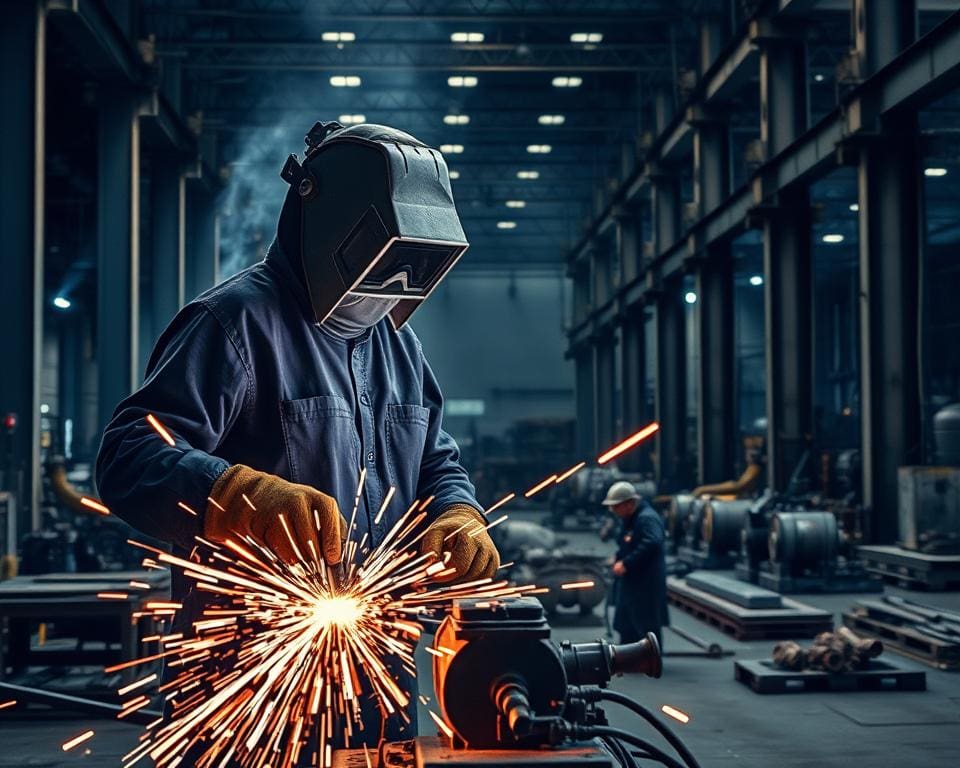
Welding is a cornerstone of modern industry, underpinning essential operations in construction, manufacturing, and maintenance. The welding importance cannot be overstated, as it ensures the integrity and durability of critical infrastructure. With various welding applications ranging from building bridges to fabricating machinery, the demand for skilled welders continues to rise. Mastering critical welding skills not only opens up abundant career opportunities but also fosters innovation, enabling the industry to evolve and adapt to new challenges in the United Kingdom.
The Importance of Welding in Modern Industry
Welding stands as a cornerstone of modern industry, crucial for a myriad of applications across various sectors. Not only does it provide strength and durability to structures, but it also enables the creation of innovative designs and functionalities that were once unimaginable. Understanding industrial welding meaning helps to highlight the significance of this skill in today’s world.
Overview of Welding Applications
The versatility of welding applications is evident in industries such as construction, automotive, aerospace, and shipbuilding. Each field benefits uniquely from welding technology:
- Construction: Welding forms robust frameworks for buildings and bridges, ensuring their longevity and safety.
- Automotive: This sector relies on welding to create strong and lightweight frames, enhancing vehicle performance.
- Aerospace: Welding is essential for intricate components that must withstand extreme conditions during flight.
- Shipbuilding: The maritime industry uses welding for durable hulls and components, vital for the safety and efficiency of vessels.
Historical Significance of Welding
Tracing the roots of welding reveals its profound historical significance. The evolution of welding methods has directly influenced global manufacturing processes. Notably, during World War II, advanced welding techniques were crucial for the rapid production of military vehicles and equipment. This period marked a turning point in historical welding, showcasing how innovation can arise from necessity and propel industries forward.
What makes welding a critical industrial skill?
Welding stands as a cornerstone in various sectors, offering numerous benefits to those who master this craft. Understanding the advantages of welding expertise reveals the high demand for skilled individuals in this field. Welding expertise not only leads to enhanced job prospects but also promotes career development opportunities, particularly vital in our ever-evolving industrial landscape.
Key Benefits of Welding Expertise
Attaining welding expertise can lead to an array of compelling outcomes. Notable welding benefits include:
- High Demand: Industries require qualified welders, resulting in a consistent need for skilled professionals.
- Lucrative Earnings: Welders often receive competitive salaries, making the profession financially rewarding.
- Career Progression: With experience and additional certifications, welders can advance to supervisory roles or specialisations.
Welding’s Role in Various Industries
The industrial applications of welding span a variety of fields, underscoring its necessity across sectors. In construction, welding contributes to the integrity of structural supports. The automotive industry relies on welding for the assembly of vehicles, ensuring safety and performance. Furthermore, manufacturing sectors utilise welding for product assembly, reaffirming its importance in creating durable goods. By maintaining safety standards and quality control, welding plays a crucial role in contributing towards sustainable industrial practices.
Welding Techniques and Their Functions
Welding techniques play a pivotal role in industrial applications, each possessing unique characteristics that influence their suitability for various projects. Understanding these methods can empower individuals to choose the right approach for their specific needs. Three prominent welding techniques are MIG welding, TIG welding, and stick welding, each delivering distinct advantages and limitations.
MIG, TIG, and Stick Welding: An Overview
MIG welding, or Metal Inert Gas welding, stands out for its speed and ease of use. It employs a continuously fed filler wire to create a weld and is particularly effective for thin materials. Its versatile applications make it a favourite among automotive and fabrication industries.
TIG welding, or Tungsten Inert Gas welding, is renowned for its precision. This method utilises a non-consumable tungsten electrode and offers greater control over the weld pool. TIG welding is ideal for stainless steel and aluminium projects, making it indispensable in aerospace and artistic metalwork.
Stick welding, the most traditional method, employs a consumable electrode coated in flux. While it may be less user-friendly than MIG and TIG welding, its robustness makes it suitable for outdoor and harsh environment applications. Stick welding finds frequent use in construction and repair works.
Choosing the right welding technique hinges on project requirements, including material type, thickness, and environmental conditions. Each method contributes significantly to the manufacturing landscape, empowering professionals with the tools necessary for effective and reliable work.
The Economic Impact of Welding Skills
The welding economy plays a pivotal role within the UK’s industrial landscape. The contributions made by skilled welders go beyond simply joining materials; they underpin the very foundations of various sectors, from construction to manufacturing. The welding industry injects billions into the UK economy, facilitating innovation and creating robust job opportunities.
Welding’s Contribution to the UK Economy
Welding serves as a linchpin for many industries in the UK. It supports vital infrastructure projects and innovative developments. The financial significance is immense; the welding sector adds considerable value to the economy, driving growth and competitiveness. Skilled welders are essential for maintaining the quality and safety of products, which boosts consumer trust and business reputation.
Job Opportunities and Career Growth in Welding
Employment in welding is on the rise, reflecting the growing demand for skilled professionals. As industries evolve, so do the roles available within the UK welding job market. Numerous career paths exist, from fabricators to inspectors and engineers, offering prospects for professional advancement. Upskilling and continuous education are vital in seizing these opportunities, ensuring welders remain at the forefront of technological advancements.
Safety Standards and Best Practices in Welding
The essence of welding safety cannot be overstated. Adhering to rigorous welding safety standards is paramount for industry professionals. A comprehensive understanding of safety equipment and proper training can significantly mitigate potential hazards that welders face daily.
Essential Safety Equipment for Welders
Proper safety equipment serves as the first line of defence for welders against workplace dangers. Essential items include:
- Protective helmets: shield the head and face from harmful sparks and intense light.
- Welding gloves: provide hand protection against heat and electrical shock.
- Protective clothing: made from flame-resistant materials, safeguards the body from burns.
- Respiratory protection: safeguards against inhaling harmful fumes and particulates.
Training and Certification Requirements
Completing thorough welder training is essential for ensuring safety and competency in welding tasks. Certification in welding confirms that individuals meet industry standards and possess the necessary skills. Regular training updates help welders stay informed about evolving safety practices and regulations, facilitating a culture of safety awareness.
The Future of Welding Technology
The landscape of welding is evolving rapidly, with innovations leading the charge towards a new era. The future of welding hinges on continuous improvements in equipment and methodologies, ensuring that the industry remains efficient, safe, and productive. With welding technology advancements occurring at an unprecedented pace, the integration of modern tools will set the standard for years to come.
Advancements in Welding Equipment
State-of-the-art welding equipment is crucial in shaping the future of welding. From advanced welding power sources to improved electrode technology, these innovations enhance performance and cater to specific applications. Key advancements include:
- Smart welding machines equipped with artificial intelligence for real-time monitoring and adjustments.
- Lightweight, portable welding equipment that increases accessibility.
- Advanced materials that improve weld quality and reduce defects.
These developments position professionals to produce superior results while reducing time and labour costs, thereby transforming traditional practices into more streamlined processes.
Automation and Robotics in Welding
The rise of automation in welding is reshaping the industry, driving efficiency and precision. Integrating robotics into welding processes not only enhances productivity but also reduces human error. As automation in welding continues to advance, several exciting trends emerge:
- Collaborative robots (cobots) that work alongside human welders, enhancing safety.
- Fully automated welding systems capable of performing complex tasks with minimal oversight.
- Increased accessibility to automation for smaller companies, enabling more players to leverage cutting-edge technology.
These innovations signal a promising direction for the welding sector, presenting new opportunities and challenges for the workforce. Embracing these changes will ensure that professionals remain competitive and equipped with the skills needed to thrive in this dynamic environment.
Environmental Considerations in Welding
The welding industry plays a significant role in modern manufacturing and construction. With increasing awareness of environmental issues, a shift towards eco-friendly practices has emerged. This movement aims to minimise the welding environmental impact while enhancing sustainability in welding. Embracing these practices not only benefits the planet but also improves the industry’s public image and fosters a culture of responsibility among welders.
Eco-Friendly Practices in Welding
There is a growing emphasis on eco-friendly welding methods. Techniques such as using low-emission welding equipment and adopting alternative materials can substantially reduce emissions and waste. Key practices include:
- Utilising energy-efficient welding machines to lower power consumption.
- Implementing proper ventilation systems to reduce harmful fumes in the workplace.
- Recycling metal waste generated during the welding process.
- Investing in training programmes focused on sustainable welding techniques.
The Impact of Welding on Sustainability
Welding contributes significantly to sustainability efforts within various industries. By prioritising environmentally friendly methods, organisations can ensure their operations align with governmental regulations. Furthermore, the incorporation of sustainable practices not only supports the environment but also enhances the overall quality of products manufactured. The ongoing transition towards sustainability in welding reflects a broader commitment to creating a greener future through innovation and responsible practices.
Welding Education and Training Programs
Welding education is a crucial stepping stone for those aspiring to build a successful career in this dynamic field. Various welding training programmes are available across the United Kingdom, offered through technical colleges, accredited institutions, and vocational training schemes. These programmes are designed to provide learners with both the theoretical groundwork and practical skills necessary to excel in diverse welding environments.
Engaging in vocational training in welding not only enhances students’ knowledge of different techniques and safety practices but also immerses them in hands-on experiences that closely mirror real-world applications. Apprenticeships and workshop sessions ensure that individuals are well prepared to meet the demands of the industry and contribute effectively to their future employers.
Presently, welding education and training programmes are evolving to incorporate the latest technological advancements, creating a workforce adept at handling modern challenges. By investing in quality training, prospective welders equip themselves with the tools to thrive in an ever-changing industrial landscape, ultimately making a significant impact on the future of welding.