
This article maps industrial sensor careers and shows readers which roles work with sensors in real workplace settings. We define industrial sensors as devices that detect physical, chemical or environmental parameters—temperature, pressure, flow, vibration, proximity, humidity, gas concentration, strain and light—and convert those inputs into electrical or digital signals for monitoring, control and analytics.
Employment contexts include manufacturing plants, oil and gas sites, water and power utilities, automotive and aerospace factories, food and beverage lines, pharmaceutical facilities, construction projects, building services and smart infrastructure across the United Kingdom. These settings frame the jobs with hardware installation and the wider careers in industrial instrumentation we explore.
The piece adopts a product-review style applied to roles and tools. Each role is assessed like a product: core responsibilities, skills required, typical outcomes and career trajectory. That approach helps compare roles with sensors and highlights sensor technician jobs UK and related positions.
The structure ahead covers an overview of careers engaging sensors; hardware installation roles such as field service engineers and instrumentation technicians; design and development positions; operations and maintenance staff; data and software collaborators; installation and commissioning specialists; and pathways for progression, skills and certifications.
Primary focus question: What careers involve hardware installation? Meta title and meta description will target that query. The target audience is UK-based jobseekers, apprentices, technicians, engineers and career advisers seeking clear, practical guidance on roles with sensors and opportunities in industrial sensor careers.
Overview of careers that engage with industrial sensors
Industrial sensors sit at the heart of modern industry, creating new roles and reshaping existing careers. The importance of industrial sensors appears in routine tasks and strategic projects. Teams from shop-floor technicians to systems architects now depend on reliable sensing to meet production, safety and compliance goals.
Why industrial sensors matter in modern industry
Sensors supply real-time visibility into machines and processes. That visibility enables automation, predictive maintenance and quality assurance while supporting safety systems. A vibration sensor that flags a failing bearing or a pressure sensor that prevents a leak can save time and cut costs.
Sensors also connect equipment to PLCs, SCADA and cloud platforms. This link underpins Industry 4.0 and creates demand for roles that bridge operational technology and IT. As systems adopt edge computing and wireless protocols, job descriptions now ask for data literacy alongside hands-on skills.
Key industries that require sensor expertise in the United Kingdom
Manufacturing, automotive and aerospace companies rely on precision sensing for tight tolerances and traceability. Energy and utilities use environmental and condition-monitoring sensors across wind, gas and water networks. Oil and gas demand explosion-proof instrumentation and strict compliance with safety codes.
Pharmaceutical and food and beverage sectors expect hygienic sensors and validation expertise to satisfy MHRA and food safety rules. Construction and buildings use sensors for HVAC and building management systems. Transport and logistics apply telematics and infrastructure sensing for smarter movement of goods.
How sensor technologies are shaping job roles and product offerings
The rise of IoT, MEMS and miniaturised sensors alters product design and service models. Manufacturers such as Siemens, Honeywell and Bosch push pre-configured sensor modules and cloud analytics that simplify deployment. That shift creates hybrid roles: technicians who analyse data and engineers who understand cybersecurity for connected devices.
Sensor workforce demand grows where plug-and-play calibration and integrated ecosystems reduce time-to-operate. This trend expands industrial automation jobs while creating opportunities in product development, commissioning and technical support. Career paths now reward a mix of field experience and digital skills.
What careers involve hardware installation?
Hands-on roles that install industrial sensors blend practical skill with technical knowledge. These careers involve hardware installation, on-site problem solving and close teamwork with engineers and clients. Practical experience with wiring, signal types and commissioning is central to success in this area.
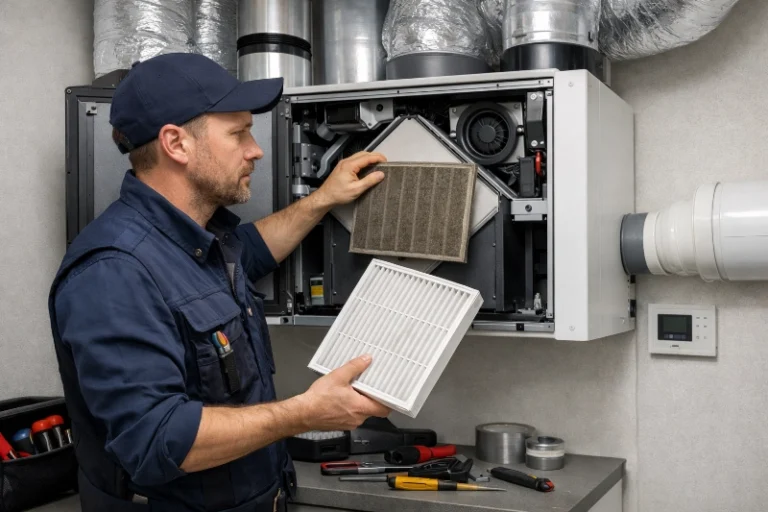
Field service engineers work at customer sites to fit, configure and maintain sensor systems. A field service engineer UK will carry out diagnostics, firmware updates and repairs, and provide clear documentation for handover. This role demands mechanical aptitude, electrical wiring skills, fault-finding ability and strong customer communication. Employers include OEMs, systems integrators and dedicated service providers.
Instrumentation technicians focus on precise calibration and signal verification. Instrumentation technician jobs involve loop checks, use of calibrators and HART communicators, and the creation of calibration certificates. Work is often in process plants and utilities, where adherence to quality and regulatory standards matters.
Electrical and controls engineers design the control logic that uses sensor inputs. Controls engineer roles require electrical design, PLC programming with platforms such as Siemens or Allen-Bradley, and knowledge of industrial networks like Modbus or EtherNet/IP. These engineers produce wiring diagrams and specification sheets, then collaborate with installation teams to ensure system integrity.
Installation apprenticeships and entry pathways give a clear route into site-based careers. Installation apprenticeships UK include Level 2–4 electrical or instrumentation programmes and NVQs that combine on-the-job training with classroom study. Further study options include HNC/HND, BTEC and City & Guilds courses, while professional routes through IET, IMechE or IChemE support long-term progression.
- Typical on-site skills: mechanical installation, cable termination, signal testing.
- Common safety qualifications: ATEX awareness, confined-space entry, MEWP training.
- Career progression: from apprenticeships to technician and engineer ranks, then chartered status with employer support.
Design and development roles working with sensor hardware
Design and development teams turn sensor ideas into products that work reliably in the field. They balance performance, cost and manufacturability while meeting regulatory demands. Practical skills and tight collaboration with suppliers and data teams make the difference between a prototype and a product ready for market.
Hardware design engineers: selecting sensors for product requirements
Hardware design engineers lead sensor selection engineering by assessing accuracy, range and temperature drift. They design analogue front-ends with signal conditioning, filtering and amplification to preserve sensor integrity. PCB layout, EMC/EMI mitigation and enclosure choices determine long-term reliability under IP-rated conditions.
Skills include analogue electronics, PCB tools such as Altium or KiCad, supplier negotiation and BOM cost control. For medical or hazardous applications they prioritise certified components and accessible calibration points for manufacture and service.
Embedded systems engineers: integrating sensors into electronics and firmware
Embedded systems engineers focus on embedded systems sensor integration through firmware that acquires and conditions data. They implement sampling strategies, manage low-power modes for battery devices and write drivers for MEMS sensors and ADCs. Communication stacks like BLE or MQTT link devices to cloud platforms for analytics.
Proficiency in C/C++, RTOS experience and sensor fusion for IMUs are central. Debugging tools such as oscilloscopes, logic analysers and JTAG are used daily. Close coordination with cloud and data teams ensures sampling rates and formats meet downstream needs.
Prototype and test engineers: validating sensor performance for market readiness
Prototype test engineer sensors roles create test rigs and run environmental, vibration and lifecycle trials to confirm accuracy and repeatability. They produce test reports, analyse data statistically and drive corrective actions when components drift or fail. Compliance testing for CE marking and EMC forms part of release gates.
Routine use of environmental chambers, vibration tables and calibration standards underpins confidence in product claims. Evaluations often compare modules from Bosch Sensortec, STMicroelectronics MEMS and Honeywell pressure sensors to recommend fit-for-purpose parts.
- Cross-discipline collaboration: Hardware, firmware and test teams share specifications and prototypes early to reduce rework.
- Design for manufacture: Early supplier engagement and accessible calibration points cut time to market.
- Quality focus: Robust validation by prototype test engineer sensors prevents costly field failures.
Operations and maintenance roles interacting with sensors
Operations and maintenance teams form the backbone of sensor-driven plants. They turn raw measurements into safe, reliable output and keep equipment running at peak performance.
Maintenance technicians work at the coalface of condition monitoring. Daily rounds start with scanning alarms and trend charts from vibration, temperature and current sensors. They use CMMS software, portable vibration analysers and thermal cameras to diagnose faults, replace parts and support oil analysis programmes. As teams adopt predictive maintenance UK methods, maintenance technicians sensors move from reactive fixes to planned interventions that cut MTTR and prolong asset life.
Operations managers must read dashboards and SCADA outputs, then translate those insights into action. An operations manager sensor data view will show throughput, energy use and quality signals. That information guides schedule changes, process tweaks and cross-team priorities. Clear KPIs and good change management help turn sensor readings into measurable performance gains.
Reliability engineers design monitoring strategies and set meaningful thresholds to avoid nuisance alerts. A reliability engineer sensor systems focus includes sensor placement, Weibull and root-cause analysis, and spares planning informed by trend data. Thoughtful models reduce unplanned outages and support long-term reliability-centred maintenance.
Training and tools shape these roles. Field teams need AR-assisted instructions for complex repairs and analysts require skills in IoT analytics to fully exploit sensor networks. Organisations that invest in people and platforms see steady gains in uptime and cost control. Read about how the industry is evolving at future industrial maintenance.
Data and software roles that collaborate with sensor hardware
Turning raw sensor signals into clear, actionable insight depends on tight collaboration between hardware and software teams. This work demands attention to timing, fidelity and security so that every reading can inform operations, maintenance and business decisions.
Data engineers design pipelines that capture high-frequency feeds and make them reliable for analysis. They select tools such as Kafka, AWS Kinesis or Azure IoT Hub for buffering, choose time-series stores like InfluxDB or TimescaleDB, and apply device authentication with X.509 certificates to secure transport. Practical choices about edge compute and sampling intervals reduce latency and cost while keeping data trustworthy for users downstream.
Data scientists and analysts turn organised streams into business value. They build models to spot anomalies, forecast failures and optimise processes using Python, pandas, scikit-learn and TensorFlow. Feature engineering for sensor fusion and time-series forecasting creates predictive maintenance systems and quality-inspection automation that save time and money.
IoT platform engineers bridge devices and cloud, managing device lifecycle, OTA updates and dashboard integrations. Familiarity with AWS IoT, Azure IoT Central, Google Cloud and Grafana helps deliver interoperable solutions. Knowledge of OPC UA ensures industrial systems speak the same language when scaling across vendors and sites.
- Ensure metadata and sampling intervals are set during commissioning to support analytics.
- Use secure provisioning and encrypted channels so sensor networks remain resilient.
- Adopt edge preprocessing where bandwidth or latency make cloud-first designs impractical.
In practice, a data engineers sensors specialist works with installers to confirm data fidelity. A data scientist sensor analytics professional crafts models that reflect real-world noise and drift. An IoT platform engineer UK focuses on regulatory compliance and cloud integration specific to British operators.
These roles form a continuous loop: hardware teams calibrate and stream, software teams ingest and model, stakeholders act on insights. That loop is where measurable gains in safety, uptime and efficiency appear.
Installation and commissioning specialists in sensor projects
Installation and commissioning teams turn design into working reality on site. Their work makes sure sensor systems meet technical specs, regulatory rules and client expectations before handover.
Commissioning engineers lead testing and validation. They run FAT and SAT procedures, perform loop checks and functional tests, and confirm calibration and accuracy. Their dossiers contain commissioning reports, as-built drawings, punch lists and formal acceptance sign-offs. In projects across the UK, a commissioning engineer sensors will keep traceable calibration records and check conformity with BS EN, ISO and ATEX as needed.
Site integrators manage the practicalities when equipment comes from multiple vendors. A site integrator multi-vendor plans cabling, mounting, power and network provisioning, then resolves interoperability issues between sensors, PLCs and software stacks. Key skills include sequencing to reduce downtime, vendor liaison and systems-level troubleshooting. Real examples include linking third-party vibration sensors to an owner’s PLC or unifying environmental sensors into a central BMS.
Health and safety officers make installations safe and compliant. They assess hazards, enforce safe systems of work and confirm staff hold statutory training such as working at height, confined space entry and COSHH where chemicals are present. Their risk mitigation covers safe isolation for electrical work, lifting plans for heavy instrumentation and ensuring correct PPE and emergency procedures. Attention to health and safety sensor installation protects people and assets while meeting HSE and British Standards guidance.
- Deliverables: commissioning reports, traceable calibration logs, acceptance sign-offs.
- Core checks: FAT/SAT, loop and functional tests, interoperability validation.
- Safety steps: isolation procedures, lifting plans, statutory training verification.
Career progression, skills and certifications for sensor-related roles
Starting points in sensor careers often include installation apprenticeships and junior technician posts. With hands-on experience and training sensor installers programmes, people move to senior technician, commissioning engineer or field service lead roles. From there, career progression sensors can lead to controls engineer, reliability manager or engineering manager positions that oversee teams and complex systems.
Core technical skills for sensor careers cover electrical wiring and schematics, signal conditioning, calibration techniques, and PLC/DCS basics. Industrial communications, basic networking and cyber-secure device provisioning are also essential. Data literacy — sampling intervals, timestamps and data quality — helps technicians collaborate with analysts and supports product development and operations teams.
Soft skills are equally important: clear communication, customer service, problem-solving, and concise technical reporting speed up delivery and improve handovers. Combining these with targeted certifications instrumentation UK, such as City & Guilds, NVQs, HNC/HND or degrees in electronic, electrical or mechatronic engineering, strengthens credibility and employability.
Vendor and technology certifications from Siemens, Rockwell Automation, Schneider Electric, Honeywell and Emerson complement safety courses like ATEX awareness, IECEx, IOSH and NEBOSH. Emerging badges in cloud platforms (AWS IoT, Azure IoT) and networking (Cisco, CompTIA) bridge hardware and analytics. For steady progression, mix formal study with on-the-job experience, seek cross-disciplinary roles and engage with IET, IChemE or IMechE for CPD and routes to chartered status.