
Across the United Kingdom, engineers and policymakers are asking a pressing question: what technologies are shaping the future of engineering? The pace of change feels urgent. Net zero commitments, supply‑chain volatility and a tight labour market mean the nation must adopt future of engineering technologies faster than before.
This article frames that challenge for an audience of UK engineers, industry leaders and civil servants. It explains how government priorities such as the net zero target, the Levelling Up agenda and funding from UK Research and Innovation and the Industrial Strategy Challenge Fund are steering investment into engineering innovation UK. That support is catalysing emerging engineering tech from clean energy to advanced manufacturing.
We will examine five core domains in depth: artificial intelligence and data analytics; digital twins and simulation; advanced manufacturing and robotics including additive manufacturing and cobots; Internet of Things and big‑data infrastructures; and clean energy plus materials innovation. Each section builds on the last, moving from an overview to focused case studies and practical guidance.
Readers can expect insight into the opportunities and risks of adoption, clear examples of UK and international deployments, and guidance on the skills and policy choices needed to capitalise on these advances. By the end, the goal is to make the future of engineering technologies tangible and actionable for teams across industry and government.
What technologies are shaping the future of engineering?
The pace of change in engineering feels relentless. New tools turn long projects into agile cycles, cut waste and raise quality. These shifts reflect broader transformative engineering trends that link digital systems with physical craft.
Overview of transformative trends
Automation of repetitive tasks frees engineers to solve harder problems. Machine learning and cloud platforms speed design iteration. Edge computing and sensor miniaturisation bring decision-making closer to the asset.
Digital twins and rapid simulation create a tight feedback loop between virtual testing and physical trials. That loop shortens development times and lowers costs while making sustainability an explicit design constraint.
Why these technologies matter for UK engineering
UK engineering priorities now centre on net zero, competitiveness and skills renewal. Technologies that cut emissions and boost productivity align with the nation’s climate and industrial goals.
Manufacturing digitalisation and smarter supply chains open new export markets for advanced components and software. Firms must weigh data governance, safety standards and interoperability as they scale these tools.
Key sectors most affected: construction, manufacturing, energy and transport
Construction technology like BIM, modular build and robotic systems reduces timelines and material waste. That brings faster delivery for housing and infrastructure projects across the UK.
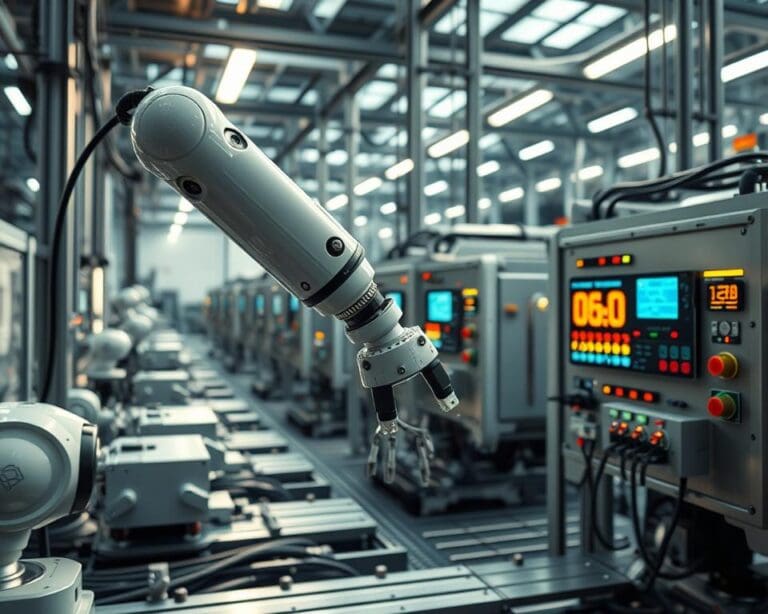
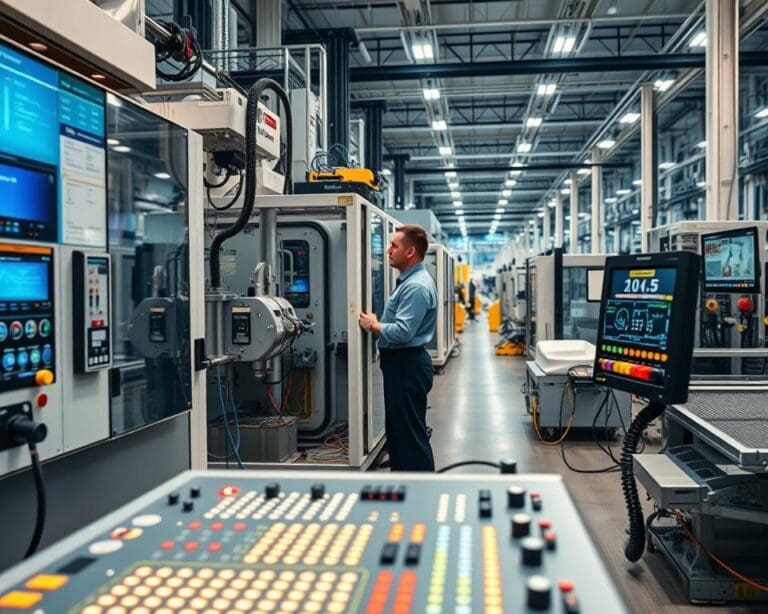
Manufacturing digitalisation transforms factories into flexible, data-rich environments. Cobots, additive manufacturing and predictive maintenance increase yield and enable bespoke production at scale.
Energy systems benefit from distributed renewables, battery storage and smart grids paired with predictive asset management. These advances support decarbonisation while improving resilience.
Transport innovation spans electrification, connected infrastructure and autonomous trials on motorways. UK battery research hubs and vehicle trials are practical steps toward lower emissions and greater capacity.
Artificial intelligence and data-driven engineering: automation and insight
AI in engineering is reshaping how projects are conceived, tested and maintained across the UK. Short development cycles, lower risk and clearer performance forecasts come from combining sensor feeds, simulation models and domain expertise. The following subsections outline practical uses that are already delivering value on sites and in factories.
Machine learning for design optimisation and predictive maintenance
Supervised learning and optimisation algorithms let engineers explore vast parameter spaces quickly. Aerospace teams at Rolls‑Royce, automotive suppliers and civil engineering firms use these methods to produce lighter, stronger and more efficient components.
Predictive maintenance UK programmes train anomaly detection models on sensor histories to forecast failures. The result: less unplanned downtime for turbines, rail assets and manufacturing equipment, lower maintenance spend and longer asset life.
Common tools include TensorFlow, PyTorch and specialised platforms from Siemens and Dassault Systèmes. Skilled engineers are needed to label data correctly and interpret model outputs for safe, certifiable designs.
Digital twins and simulation for faster, safer projects
Digital twins create live virtual replicas of assets so teams can test scenarios before making changes on site. Real‑time synchronisation with sensors means simulations mirror actual behaviour.
Examples in the UK include urban infrastructure modelling for the Thames Tideway Tunnel and offshore wind operators using digital twins to monitor blades and substructures. Balfour Beatty and Skanska have piloted workflows that speed commissioning and cut site rework.
Benefits are clearer sequencing for safer construction, fewer surprises at handover and improved collaboration through shared visualisation among stakeholders.
Big data, IoT and real-time decision-making
IoT engineering depends on a layered stack: sensors, edge devices, connectivity such as 5G or LoRaWAN, then cloud ingestion and analytics pipelines. This flow delivers near real‑time insight for operations and control rooms.
Scalability and interoperability challenge many teams. Solutions include time‑series databases like InfluxDB, stream processing with Kafka and cloud platforms from AWS, Microsoft Azure or Google Cloud. Standards such as OPC UA help systems talk to one another securely.
Cybersecurity and data governance remain critical. Organisations must build data‑centric teams, invest in quality labelling and align KPIs to measure value from analytics. These steps turn raw signals into timely, actionable decisions.
Advanced manufacturing and robotics enhancing efficiency and precision
The factory floor is changing fast. Lightweight, sensor‑rich collaborative robots enable safer co‑working with staff on assembly, material handling, inspection and testing. Vendors such as Universal Robots, ABB and FANUC supply cobots that UK integrators fit into electronics and automotive sub‑assembly lines to boost flexibility.
Cobot cells cut set‑up times and cycle durations. This often leads to steadier quality and lower long‑term labour costs when planning and integration are done well. Return on investment follows from improved throughput and fewer defects, not from replacing human skills outright.
Additive manufacturing brings design freedom that was once impossible. Rapid prototyping, part consolidation and tailored medical implants or aerospace brackets become routine with 3D printing. British innovators such as Renishaw and the AMRC drive material advances in metal powder bed fusion and continuous fibre composites.
Hybrid manufacturing mixes additive layers with precision subtractive finishing. That approach delivers bespoke production at scale while reducing material waste and lead times. Engineers value the blend of customisation and repeatable accuracy.
Ethical and social questions shape how automation spreads. Robotics ethics must address safety, liability and fair access to benefits. Clear standards and open dialogue keep communities engaged and protect workers in shared spaces.
Workforce transformation rests on targeted training. Practical routes include apprenticeships, sandwich placements with universities and micro‑credentials for software, data and robot operation skills. Employers who invest in reskilling engineers build resilience and preserve institutional knowledge.
Policy can accelerate responsible adoption. Incentives for SMEs, stronger STEM outreach and frameworks for labour transition help maintain social licence and morale while scaling advanced manufacturing UK across regions.
Clean energy, materials innovation and sustainable engineering
UK engineering is shifting rapidly as clean energy technologies move from pilot projects to mainstream infrastructure. Engineers now design grid‑scale battery storage, smart grid control systems and power electronics to smooth variable generation from offshore wind and solar. The Contracts for Difference scheme and North Sea wind expansion, alongside hydrogen neighbourhood trials for heat decarbonisation, are changing project briefs and whole‑life planning.
Materials innovation UK is reducing embodied carbon through low‑carbon cement alternatives, recycled composites and bio‑based polymers. Research hubs and industrial players are developing next‑generation alloys, graphene applications and lightweight composites that cut energy use in transport and construction. Designing for disassembly and digital material passports supports a circular economy and makes recycling‑friendly manufacturing a practical aim.
Sustainable engineering is now a core constraint, not an add‑on. Whole‑life carbon assessment, ISO environmental standards and mandatory reporting force design choices that reflect long‑term impacts. Tools such as life‑cycle assessment software, embodied carbon calculators and Net Zero Carbon frameworks help engineers quantify trade‑offs and meet regulatory expectations.
For UK organisations the path is clear: invest in low‑carbon R&D, back cross‑sector pilots for hydrogen and CCUS, and embed sustainability competencies in professional development. By combining green engineering practices with materials innovation UK and a focus on the circular economy, firms can scale clean energy technologies and deliver resilient, low‑carbon infrastructure.