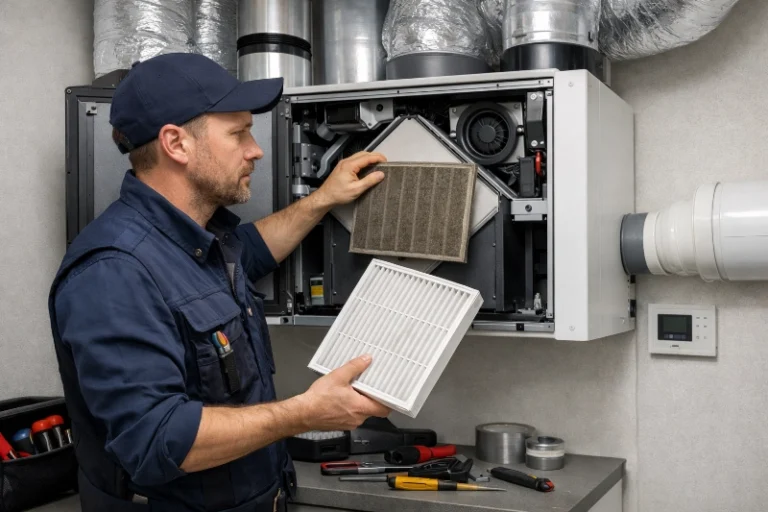

Predictive maintenance uses data from sensors and operational systems, analysed by algorithms and human expertise, to forecast equipment faults and schedule interventions before breakdowns occur. In practice this means combining condition monitoring tools with predictive maintenance software and asset performance management platforms to keep plants, depots and networks running smoothly.
This short guide reads like a product‑review for engineers and decision makers across UK industry. It surveys data acquisition hardware such as vibration and temperature sensors and IIoT gateways, examines analytics and machine learning toolkits, and reviews condition monitoring suites and CMMS integrations. The piece also covers deployment, security and the careers that drive system optimisation.
The tone is inspirational and practical. It is written for UK engineers, maintenance managers, asset owners and professionals considering a move into reliability engineering, IIoT or data science. Readers will find evidence from vendor whitepapers by SKF, Honeywell and Siemens, market insight from McKinsey, Deloitte and Omdia, and guidance from UK bodies including the Energy Networks Association and the Department for Business and Trade.
Adopting predictive analytics UK tools helps manufacturing, energy, water, rail and facilities management meet efficiency, safety and Net Zero targets. The following sections will show how to choose the right predictive maintenance tools and software, and how condition monitoring tools and asset performance management practices deliver measurable returns.
Overview of predictive maintenance tools and their benefits
Predictive maintenance blends condition monitoring, historical failure records and analytics to forecast faults and plan work around predicted remaining useful life. This predictive maintenance definition sets it apart from reactive repairs and routine, time‑based servicing. The focus is on acting before failure, which matters most for safety‑critical assets such as rail signalling and power transformers.
Defining predictive maintenance and why it matters
At its core, the approach uses sensors and data to monitor bearings, temperature and vibration in real time. Analytics translate those signals into actionable alerts that let teams schedule interventions when they will have least impact.
Standards such as ISO 13373 for vibration and ISO 55000 for asset management underpin best practice. Those standards guide operators in regulated sectors where unscheduled failure carries public‑safety and compliance risks.
Key advantages for UK industries and sustainable operations
Adopting predictive strategies boosts UK industrial efficiency by improving asset availability and productivity. Case studies from firms like Siemens and GE report reductions in unexpected downtime by up to 30–50%, which directly improves throughput on factory floors and in utilities.
There are clear financial returns from fewer emergency repairs, smarter spare‑parts stocking and longer asset life. Those savings support corporate targets and investor expectations for performance.
Sustainability and maintenance intersect when fewer premature replacements and optimised run schedules lower material use and transport emissions. Wind farms, water treatment works and manufacturing sites in the UK are using predictive programmes to help meet Net Zero goals.
How tools reduce downtime, cost and environmental impact
Sensors and IIoT capture early signs of wear so teams can prioritise work. Platforms connect to CMMS and ERP systems so work orders, parts provisioning and shutdowns are planned, not frantic.
Predictive maintenance brings inventory benefits by shifting to condition‑based spares management and reducing waste from unnecessary part changes. Consultancies such as Deloitte and PwC show how operational ROI often includes environmental gains.
For readers seeking practical guidance, a useful overview explains how IoT, AI and analytics come together in modern maintenance tools and workflows. That material helps teams design programmes that deliver the measurable benefits of predictive maintenance while supporting sustainability and maintenance objectives across the UK.
Data acquisition hardware: sensors and IoT devices
Choosing the right hardware shapes any successful predictive maintenance programme. Sensors and edge platforms collect the signals that feed analytics, so careful selection of vibration sensors, temperature sensors and acoustic condition monitoring tools sets the foundation for reliable alerts and accurate trend analysis.
Vibration sensors such as piezoelectric accelerometers and MEMS accelerometers are the go‑to for rotating machinery. They capture bearing, shaft and gearbox signatures across typical industrial frequency bands from a few hertz up to several kilohertz. Velocity sensors suit lower frequency shaft motion while high‑frequency accelerometers reveal early bearing defects.
Temperature sensors include thermocouples, RTDs and infrared pyrometers. RTDs and thermocouples give precise contact readings for bearings or windings. Infrared sensors provide safe, non‑contact measurements on moving parts or high‑voltage equipment. Choose based on response time, accuracy and mounting constraints.
Acoustic condition monitoring and ultrasound detectors excel at early detection of leaks, electrical discharge and incipient faults. Airborne microphones catch gas or steam leaks across a space. Structure‑borne pickups mounted on housings reveal internal fault signatures. Consider environmental protection, IP ratings and ATEX/IECEx certification for hazardous areas.
Product examples from SKF, Brüel & Kjær, Fluke and Rockwell Automation illustrate different trade‑offs in sensitivity, ruggedness and approval standards. Data sheets and technical notes remain the best reference when matching sensors to an asset and environment.
IIoT gateways and industrial edge devices aggregate sensor streams at source. They perform initial preprocessing such as filtering, windowing and FFT, then forward compact features or flagged events to central systems. Local analytics cut latency for critical alarms and reduce bandwidth by avoiding raw waveform transmission.
Rugged platforms from Siemens SIMATIC, Advantech, HPE Edgeline and edge frameworks like AWS IoT Greengrass support on‑site compute and secure transfer. Edge compute also helps keep sensitive data local while integrating with cloud backends for longer‑term analytics.
UK IoT connectivity spans wired and wireless choices. Industrial Ethernet variants such as Profinet, EtherNet/IP and Modbus TCP stay central on factory floors for deterministic communication with PLCs and SCADA. LoRaWAN offers low‑power wide‑area reach for distributed assets across utilities and waterworks, with growing coverage in the UK.
Cellular options, including 4G and 5G, suit remote or mobile assets like wind farms and rail. Private 5G deployments deliver campus‑grade bandwidth and low latency where spectrum and infrastructure permit. MQTT and OPC UA serve as common telemetry and interoperability protocols across these networks.
Match sensors and gateways to the asset criticality, site conditions and available UK IoT connectivity. That alignment yields cleaner data, faster detection and more confident maintenance decisions.
Analytics platforms and machine learning toolkits
Choosing the right analytics stack shapes how teams detect wear, predict failures and schedule repairs. Predictive analytics platforms range from light on‑premises installations to fully managed cloud services. Firms in the UK often adopt hybrid patterns that keep critical data local while leveraging cloud scale for model training.
On‑premises vs cloud decisions call for careful trade‑offs. On‑premises setups grant tight control over sensitive data, deliver deterministic processing and help meet strict data residency or regulatory demands for critical infrastructure. They demand greater capital expenditure and add maintenance tasks that can slow roll‑out.
Cloud options supply elastic compute for training large models and offer managed services from AWS, Microsoft Azure and Google Cloud that speed integration. They simplify deployment across multiple sites but raise questions about latency, ongoing costs and data governance. Many organisations opt for edge pre‑processing with cloud model orchestration to balance both worlds.
Hybrid patterns rely on platforms such as Azure IoT Edge, AWS IoT and Siemens MindSphere to run models at the edge while using centralised cloud tooling for retraining. This approach keeps inference close to equipment and lets teams scale learning across fleets.
Popular ML frameworks guide model choice. Time‑series forecasting, supervised classification for fault detection and unsupervised anomaly detection are common tasks. Deep learning often tackles waveform analysis where convolutional neural networks or LSTM/RNNs shine.
TensorFlow and PyTorch remain favoured for deep learning work, especially for spectrogram and sequence models. scikit‑learn stays practical for classical methods such as random forests and gradient boosting plus feature engineering. Specialist libraries like tsfresh for feature extraction, Prophet for forecasting and SciPy or librosa for signal processing speed development.
For teams focused on equipment health, TensorFlow predictive maintenance examples show how CNNs and LSTMs extract patterns from vibration and acoustic streams. Those examples help bridge research prototypes to production systems.
Automated machine learning shortens the path from data to model. AutoML for maintenance accelerates feature selection, hyperparameter tuning and model selection so engineers can deliver proofs of concept quickly. Commercial tools such as Google Cloud AutoML, H2O Driverless AI and DataRobot sit alongside open‑source projects like auto‑sklearn and TPOT.
Organisations should treat AutoML as a productivity boost rather than a replacement for domain expertise. Sensor feature engineering, accurate labelling of failure modes and guarding against data leakage still require human oversight.
- Use edge filtering to reduce cloud egress costs and protect privacy.
- Start models on scikit‑learn for speed, then scale to TensorFlow or PyTorch for deep learning needs.
- Apply AutoML for rapid prototyping while keeping experts involved for final validation.
Condition monitoring software and specialised applications
Choosing the right tools can turn raw sensor streams into actionable maintenance plans. Condition monitoring software sits at the heart of a predictive strategy, linking real‑time analytics with day‑to‑day maintenance tasks. This section outlines commercial CMMS options, specialist suites and the features that matter for UK operations.
Commercial CMMS and dedicated condition monitoring suites
Computerised Maintenance Management Systems handle work orders, scheduling, inventory and maintenance history. Market leaders such as IBM Maximo, SAP EAM, UpKeep and Fiix serve large sites and SME fleets with proven workflows. Dedicated suites from SKF, Emerson Reliability Solutions, GE Digital and Siemens target waveform visualisation, spectral analysis and real‑time anomaly scoring.
Vendors offer turnkey SaaS packages or modular enterprise suites. The ecosystem choice affects hardware support, professional services and long‑term upgrade paths. Analyst comparisons and vendor pages help buyers weigh total cost, ease of deployment and vendor support networks.
Features to look for: anomaly detection, trend analysis and alerting
Essential features include configurable alert thresholds, trend visualisation and spectral views for vibration and acoustic data. Modern anomaly detection software blends statistical checks with machine learning to catch subtle faults early.
Advanced capabilities add remaining useful life estimates, root‑cause suggestions and custom dashboards. Mobile apps for technicians and clear escalation workflows improve usability and reduce mean time to repair.
Integration with ERP and maintenance workflows
Seamless ERP integration maintenance closes the loop from detection to repair. When an analytics platform flags a fault, automated work‑order creation in CMMS and parts reservation in an ERP avoid delays. APIs, middleware such as MuleSoft or Dell Boomi, and standards like OPC UA or RESTful interfaces make this possible.
Successful projects focus on data mapping, master‑data management and synchronised asset models or digital twins. Case studies show improved uptime when condition monitoring feeds directly into planning and procurement systems.
- Assess vendor roadmaps and support for UK compliance.
- Prioritise solutions with strong mobile and offline technician tools.
- Choose platforms that simplify ERP integration maintenance and automate routine tasks.
For buyers, a balanced CMMS review UK should compare functionality, user experience and integration readiness. That approach uncovers solutions that scale with asset complexity and foster predictive practices across operations.
What careers focus on system optimization?
Predictive maintenance relies on teams that blend engineering know‑how with data science. Careers in system optimisation span hands‑on roles on the plant floor to analytical posts that convert sensor data into clear actions.
Reliability engineers lead efforts to reduce failures and extend asset life. A reliability engineer UK will run failure mode analysis, set measurement plans and work with operations and safety teams to deliver maintainable solutions.
Maintenance data scientists shape models from time‑series signals, build features from vibration and temperature traces, and produce remaining useful life estimates. A maintenance data scientist UK links domain expertise with machine learning to create actionable alerts.
New roles appear as systems become connected. IIoT engineer jobs focus on device integration, secure gateways and edge compute. Machine learning engineers deploy models in production and maintain inference pipelines.
An asset performance manager translates analytics into investment priorities and maintenance strategy. The asset performance manager balances technical outputs with business KPIs to set enterprise asset plans.
- Typical employers include manufacturers such as Rolls‑Royce and BAE Systems, utilities like National Grid, and transport firms such as Network Rail.
- Consultancies and systems integrators offer combined mechanical, electrical and data capabilities that support cross‑disciplinary teams.
Skills in demand include signal processing, Python, SQL, cloud platforms and familiarity with SCADA and PLC systems. Professional credentials increase credibility; Chartered Engineer status, IMechE courses and IRSE certificates are valued for specialist tracks.
Training routes vary. University MSc programmes, industry bootcamps and vendor certifications from AWS, Microsoft Azure and Siemens are common ways to gain practical skills. HR professionals with CIPD expertise help organisations manage reskilling and workforce transition.
For candidates, a mix of practical maintenance experience and data fluency opens pathways across roles. Those pursuing careers in system optimisation should seek hands‑on projects, sector‑relevant certifications and a record of delivering measurable asset improvements.
Deployment, security and scalability considerations
Start deploying predictive maintenance with a phased approach: pilot on a high-value asset or production cell, validate data quality and model performance, then scale horizontally across similar equipment and vertically into enterprise systems. Using digital twins and standardised asset models from industrial digitalisation frameworks, such as those promoted by Siemens and ABB, improves repeatability and cuts integration time for subsequent rollouts.
Design an edge-to-cloud architecture that keeps inference close to assets for low-latency needs while centralising model training and fleet analytics in the cloud for scalable predictive maintenance. This hybrid pattern supports elastic compute for peak workloads and ensures consistent model updates across sites, enabling measurable gains in availability and lower total cost of ownership.
Security and data governance must be baked into every stage. Apply device identity, secure boot, and encrypted telemetry (TLS or MQTT over TLS), alongside network segmentation and regular patching. Adopt defence-in-depth with device hardening, VPNs or private APNs for cellular links, and SIEM integration for central monitoring in line with IIoT security UK guidance from the National Cyber Security Centre.
Establish clear data governance: define ownership, retention and anonymisation rules to meet UK GDPR and sector resilience requirements. Manage supplier risk via contractual controls for cloud vendors and integrators. Track lifecycle costs—sensor calibration, edge hardware refreshes, licensing and training—and measure KPIs such as reduction in unplanned downtime, MTTR and maintenance cost per asset. Create a centre of excellence to capture lessons, manage models and maintain a roadmap for continuous, scalable predictive maintenance.