Structural repairs are the first line of defence in preserving a building’s life and value. Asking why are structural repairs essential for long-term building stability? reminds owners that repair work is not a one-off cost but an investment in safety, durability and future asset value.
Core functions of structural repairs in maintaining stability
The primary objectives of structural repairs are clear. They restore load paths, prevent progressive collapse and arrest material degradation such as timber rot, steel corrosion and concrete spalling. Repairing foundations and load-bearing elements ensures the structure performs as originally designed.
Neglect brings measurable risks. Accelerated deterioration raises remedial costs, limits insurance options and creates legal and safety hazards for occupants. Industry guidance warns that unaddressed foundation failure or compromised load-bearing walls can lead to partial or total collapse.
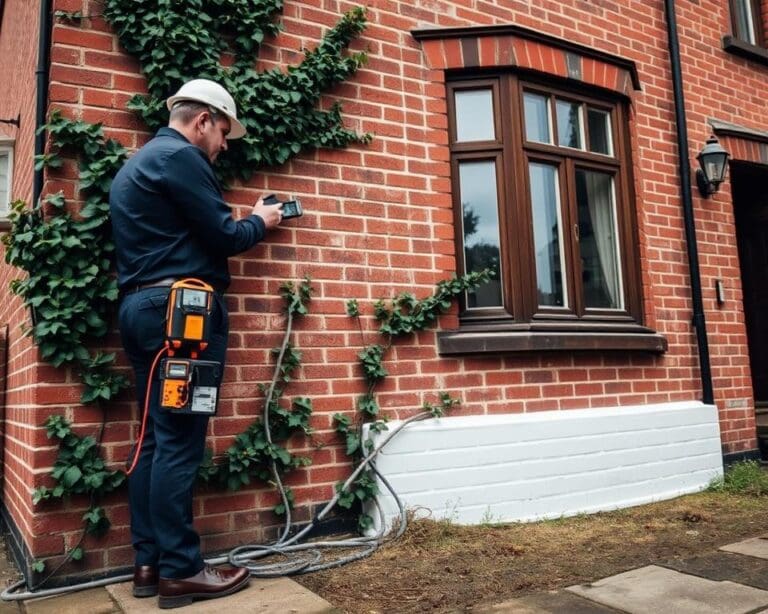
Early detection keeps costs down. Routine inspections, professional structural surveys and monitoring techniques—crack monitoring and level surveys—allow timely, cost-effective interventions that reduce disruption and long-term expenditure.
Regional factors in the United Kingdom make these points urgent. Persistent damp, freeze–thaw cycles and coastal exposure increase corrosion and decay. Kent and East Sussex feature many period properties where local conditions shape repair priorities and methods.
For owners seeking expertise, structural works expertise on fortifyconstruction.co.uk illustrates the value of experienced contractors. Fortify Construction provides regional knowledge and practical structural repairs and stability solutions tailored to Kent and East Sussex, offering confidence when projects are complex.
Think of structural works as proactive stewardship. Timely repairs protect family safety, preserve heritage fabric in historic properties and secure long-term building integrity and protection while safeguarding return on investment.
Structural repairs are essential for long-term building stability
Understanding why structural repairs matter helps owners make timely, cost-effective choices. Good interventions restore load-bearing capacity in foundations, beams, columns and walls. That reassurance keeps homes safe and usable while protecting investment.
Protecting long-term building integrity and protection
Targeted repairs re-establish the intended structural system. Underpinning, beam replacement and timber repair return designed load paths. Material-matching mortars and cathodic protection for steel reinforcements avoid new incompatibilities.
Common mechanisms of decay include moisture ingress, salt crystallisation, alkali–silica reaction, timber rot and metal corrosion. Addressing the root cause stops spread and preserves the whole fabric of the building.
Preventing progressive deterioration and escalating costs
Small defects can grow into major failures. A minor crack that lets water reach reinforcement can end in section loss and spalling. Early fixes such as crack stitching, resin injection or localised underpinning cost far less than emergency stabilisation or full replacement.
- Schedule inspections to spot rising risks.
- Use staged interventions to spread cost over time.
- Adopt lifecycle planning to reduce chance of sudden collapse.
Maintaining safety standards and structural work compliance and safety standards
Repair work must meet UK Building Regulations and relevant British Standards, with structural calculations from a chartered structural engineer. Contractors have duties under CDM to provide safe systems and competent teams.
Certificates, drawings and clear scopes of work protect homeowners and help with insurance claims. Accredited tradespeople and adequate insurance make projects safer and simpler to approve at resale.
How timely interventions preserve property value and usability
Keeping a building structurally sound maintains market value and avoids enforcement notices. Clear structural reports and remedial records boost buyer confidence and speed transactions.
Residents benefit from uninterrupted use, fewer issues with damp and reduced thermal bridging. Prompt action with suitable structural repairs and stability solutions prevents disruptive emergency works and protects the memories held within a property.
Common structural issues and practical stability solutions
Buildings in the UK face a range of structural problems that affect homes and commercial properties. A swift visual inspection, a full structural survey, level monitoring and, where needed, intrusive investigation with material testing will reveal the root causes. Matching diagnosis to remedial work keeps buildings safe and useable.
Foundation problems often start with settlement, differential movement, subsidence from tree roots in clay soils, heave or poor original construction. Homeowners should watch for stair-step cracks, doors and windows that stick, sloping floors or lateral movement. Specialists offer foundation stabilisation services such as traditional mass concrete underpinning, pit-and-beam methods, mini-piling for deep support, jet grouting and resin injection to fill voids. Drainage work and tree root management address moisture-related movement.
Load-bearing wall repairs respond to failures caused by added loads, removal of supports, masonry decay or foundation movement. Simple stitch repairs can stabilise cracks. Partial rebuilding or reprofiling of brickwork restores form. New lintels or creation of alternative load paths with concealed steelwork redistribute forces. Lime-based mortars suit older fabric. Engineering designs and temporary propping are essential to maintain safety during works.
Steel beam installation becomes the right choice when larger openings are required, failed timber joists need replacing or loads must be redistributed in conversions. Common options include universal beams (UB), rolled steel sections and composite steel–concrete arrangements. Micro-piles paired with steel beams offer deep support. Specifiers must consider fire protection with intumescent paint or encasement, corrosion protection and correct bearing details at beam ends.
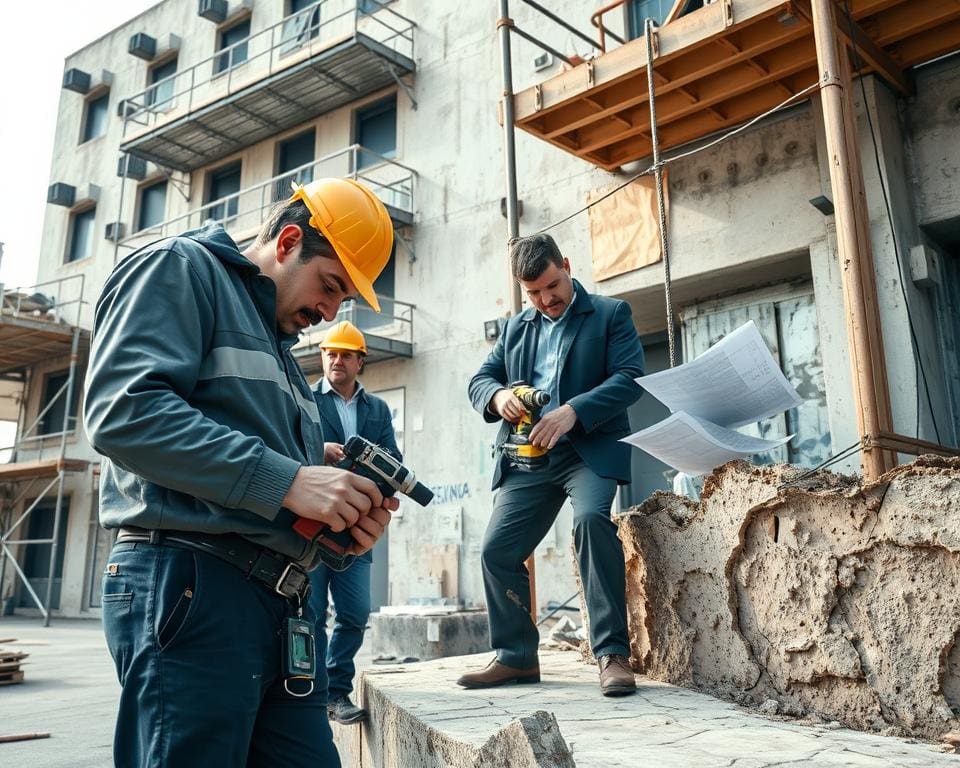
Concrete repair services tackle spalling, cracking and reinforcement corrosion. Symptoms include surface delamination, exposed corroded rebar and hairline or structural cracks from carbonation. Repairs involve removing delaminated concrete, treating reinforcement by passivation or cathodic protection, and applying repair mortars or polymer-modified concretes. Resin injection repairs cracks and protective coatings limit further ingress. Testing such as covermeter surveys, half-cell potential checks and petrographic analysis guides the approach.
Structural strengthening and underpinning solutions must be tailored for heritage and modern buildings. For historic properties, minimally invasive techniques, lime-compatible materials and reversible interventions help protect significance. Conservation officers should be consulted when required. Modern buildings may benefit from carbon fibre reinforcement polymers, steel plate bonding, pile-and-beam underpinning or ground improvement methods. Chartered structural engineers balance preservation, performance and cost while specifying appropriate works.
- Diagnostic methods: visual surveys, level monitoring, intrusive investigation, material testing.
- Remedial options: underpinning, mini-piling, resin injection, concealed steelwork, repair mortars.
- Key aims: restore load paths, prevent further damage and deliver long-term structural repairs and stability solutions.
Choosing expert structural repairs and compliance-focused partners
Selecting the right contractor begins with credentials. Look for Constructionline, CHAS or relevant ISO accreditation and membership of professional bodies such as the Institution of Structural Engineers or the Royal Institution of Chartered Surveyors. Check that firms carry public liability and professional indemnity insurance and can demonstrate local experience delivering expert structural solutions in Kent and East Sussex.
Vet contractors with practical checks: request case studies and references for similar work in your area, and ask to see structural calculations and drawings prepared or verified by chartered structural engineers. Insist on transparent written quotes, phased work programmes, clear warranties and formal aftercare arrangements to avoid surprises during delivery of structural works for residential properties.
Compliance and safety cannot be optional. Confirm understanding of Building Regulations, CDM duties and demand method statements, risk assessments and a register of materials to meet British Standards. These steps ensure structural work compliance and safety standards are embedded into every stage from temporary works to permanent repairs.
Fortify Construction offers a useful example of a compliance-focused partner, providing structural repairs with Fortify Construction and regional expertise visible via structural works expertise on fortifyconstruction.co.uk. Working with a specialist yields an integrated service from survey and design through to steel, concrete-repair mortars and underpinning systems, with conservation-sensitive approaches where required.
Commission a professional structural survey at the first sign of movement and keep clear records of inspections and remedial work. Choosing the right partner preserves safety, usability and the emotional value of your home, securing buildings for generations with trusted, expert structural solutions in Kent and East Sussex.