The walk-in shower has moved from niche choice to mainstream in the UK. You will see frameless glass panels, low-threshold trays and fully tiled wet-room solutions in new builds and refurbishments alike. This rise reflects modern bathroom trends and a clear interest in practical, stylish solutions.
Retailers such as Victoria Plum, B&Q and Wickes report higher enquiries and sales for accessible showers. Homeowners renovating en suites, or planning to future-proof properties for ageing in place, are often choosing walk-in shower designs. The shift towards minimalism and spa-style bathrooms also feeds the walk-in shower popularity.
This article helps you weigh the walk-in shower benefits for your home. Later sections examine contemporary design, how these showers enhance perceived space, cleaning and maintenance, accessibility, water efficiency, and cost and resale considerations so you can make an informed choice.
Why homeowners choose a walk-in shower for modern bathrooms
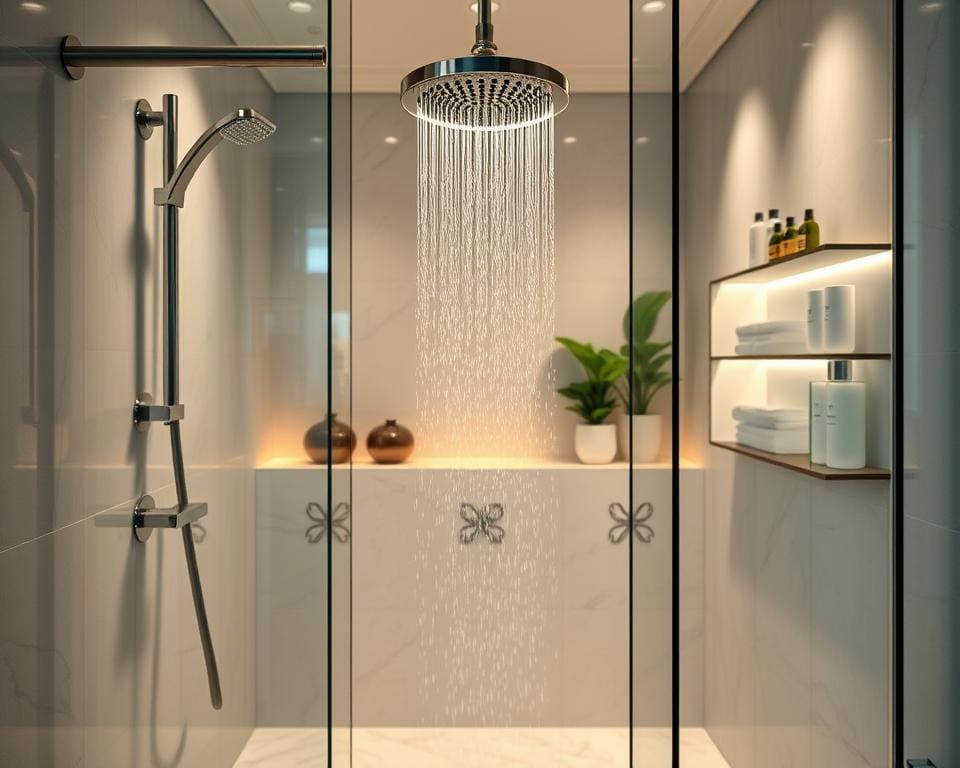
Walk-in shower design has become a go-to choice when you plan a modern bathroom design. Clean lines and open sightlines cut visual clutter. You get a spa-like look that suits contemporary brassware finishes and freestanding baths.
Contemporary design and visual appeal
Minimalist schemes favour simplicity. Frameless shower glass, especially toughened panels from makers such as Pilkington or Saint-Gobain, keeps the view uninterrupted. Pairing a ceiling-mounted or rainfall shower from Grohe or Hansgrohe lifts the sense of luxury without crowding the room.
How walk-in showers improve perceived space in small bathrooms
Transparent panels and level-access trays let light flow, so a compact bathroom feels bigger. Positioning the shower at the far end of a narrow room opens up circulation. Choose lighter wall tiles and large-format porcelain slabs from Porcelanosa or Johnson Tiles to enlarge the feel.
Glass panels, tiling and versatile styling options
Material choices range from natural stone-effect ceramics to wet-room large-format tiles. Waterproof plasterboard systems such as Wedi or Knauf provide a secure backing for tiling. You can vary glass panel heights and finishes—clear, tinted or etched—to balance privacy and style.
- Use a single glass panel rather than a full enclosure for more openness.
- Consider integrated niches and linear drains from ACO or Wickes to keep lines clean.
- Mix mosaic accents with large tiles for focal walls without overwhelming the scheme.
These small bathroom solutions focus on light, reflection and uninterrupted planes. Thoughtful bathroom tiling ideas and the right frameless shower glass help you craft a contemporary space that feels larger and more refined.
Practical advantages of a walk-in shower
An accessible shower brings clear practical benefits for everyday life. You gain safer access, easier cleaning and the chance to cut water use without losing comfort. Below are the main advantages to consider when planning your bathroom adaption or upgrade.
Accessibility and ease of use for all ages
A low-threshold shower removes the need to step over a bath rim, reducing trip risk for older people and for children. Level-access designs suit wheelchair users and those with limited mobility, which is why lifetime home adaptations and grant-funded renovations often favour them.
Practical features that improve safety include slip-resistant floor finishes certified to BS EN 14231 or R11+ ratings, built-in seats or fold-down benches and grab rails positioned to British Standard recommendations. Thermostatic mixer valves from trusted manufacturers such as Mira or Aqualisa cut the risk of scalding and keep temperature steady while you shower.
Cleaning and maintenance benefits compared with traditional baths
Walk-in layouts reduce hard-to-reach corners where grime and mould gather around baths and curtains. Frameless glass panels with easy-clean or anti-limescale coatings from brands like KÖNIG Glass and Glassfit limit water spots and speed up upkeep.
Linear drains sit flush with the floor and are easier to clear than centre wastes. Large-format tiles cut grout lines, which lowers maintenance time and the chance of dirt build-up. For routine care, use a squeegee after use, keep grout and silicone seals well maintained and choose a low-alkaline cleaner recommended by your tile manufacturer.
Water efficiency and eco-friendly fittings
Modern fittings often use less water than a typical UK bath, which can hold 80–100 litres. A five-minute shower with water-saving showerheads uses about 30–40 litres, with savings rising if you fit flow regulators or aerating heads.
Thermostatic mixers reduce wasted warm-up time. Digital controls and eco modes on contemporary eco shower systems from manufacturers such as Grohe and Hansgrohe add precise flow control and lower consumption. Less water use means lower energy demand to heat water, which trims bills and cuts household carbon emissions.
Cost, installation and resale value considerations for walk-in shower
When planning a walk-in shower you should first set realistic budgets. A basic installation with a low-threshold tray and single glass panel can start from about £800–£1,500 for materials and straightforward fitting. Mid-range options with tiled wet-room floors, linear drains and better fittings typically fall between £2,000–£6,000. High-end bespoke wet-room conversions with underfloor heating, frameless glass and premium fittings can exceed £8,000–£12,000. Remember that existing plumbing, structural work and waterproofing needs will push the walk-in shower cost higher, so factor site-specific risks into your plan.
Installation practicalities influence both price and duration. Expect a survey and design stage of one to two days, preparation and waterproofing taking one to three days, tiling and drainage works two to five days, and glazing plus final plumbing one to two days. Use competent installers registered with recognised schemes such as TrustMark or members of the Bathroom Manufacturers Association, and ensure compliance with Building Regulations for drainage and waterproofing. These shower installation considerations reduce the chance of costly rework and speed up delivery.
A well-executed walk-in shower can boost buyer interest and your bathroom renovation ROI by adding contemporary, low-maintenance and accessible appeal. However, poor waterproofing, inadequate drainage gradients or inconsistent tiling can damage the shower resale value and lead to expensive repairs. Invest in proven membrane systems such as Wedi or Schluter-KERDI, use accredited installers and keep warranties and receipts to present to prospective buyers. For broader budgeting context and contingency guidance on full renovations, see this budgeting resource before you finalise costs.