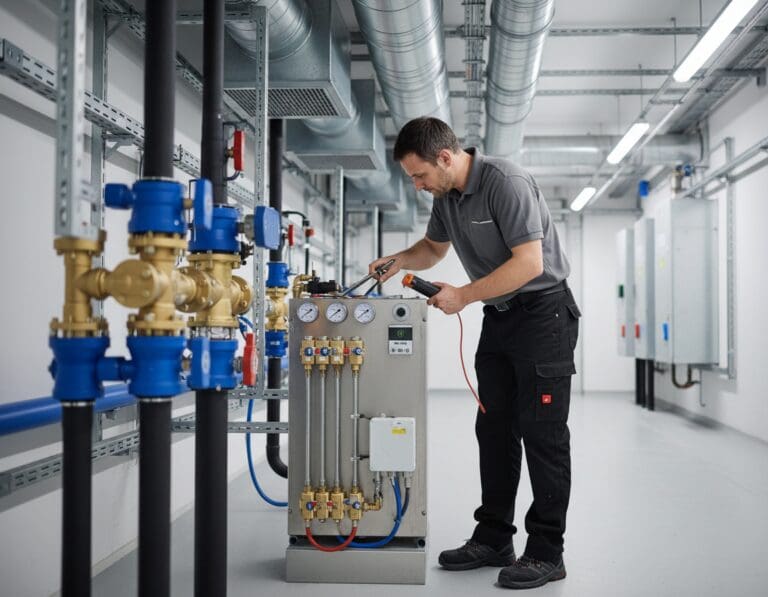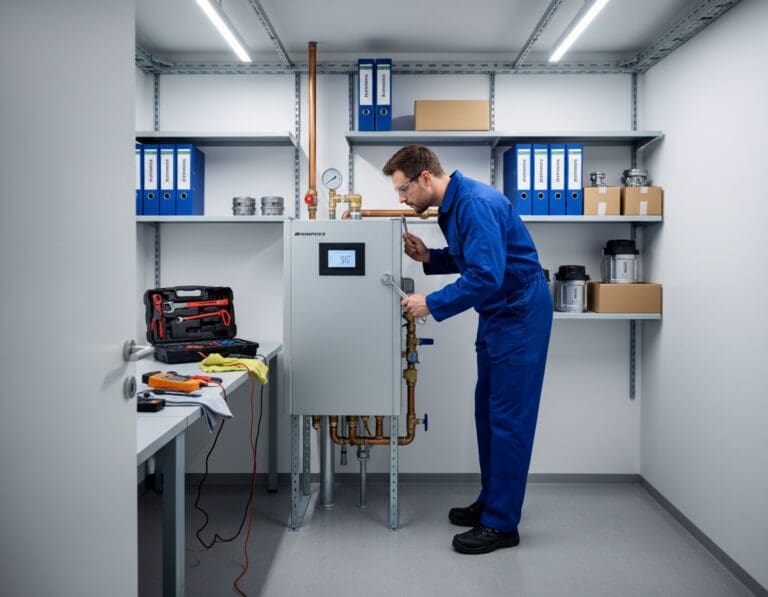
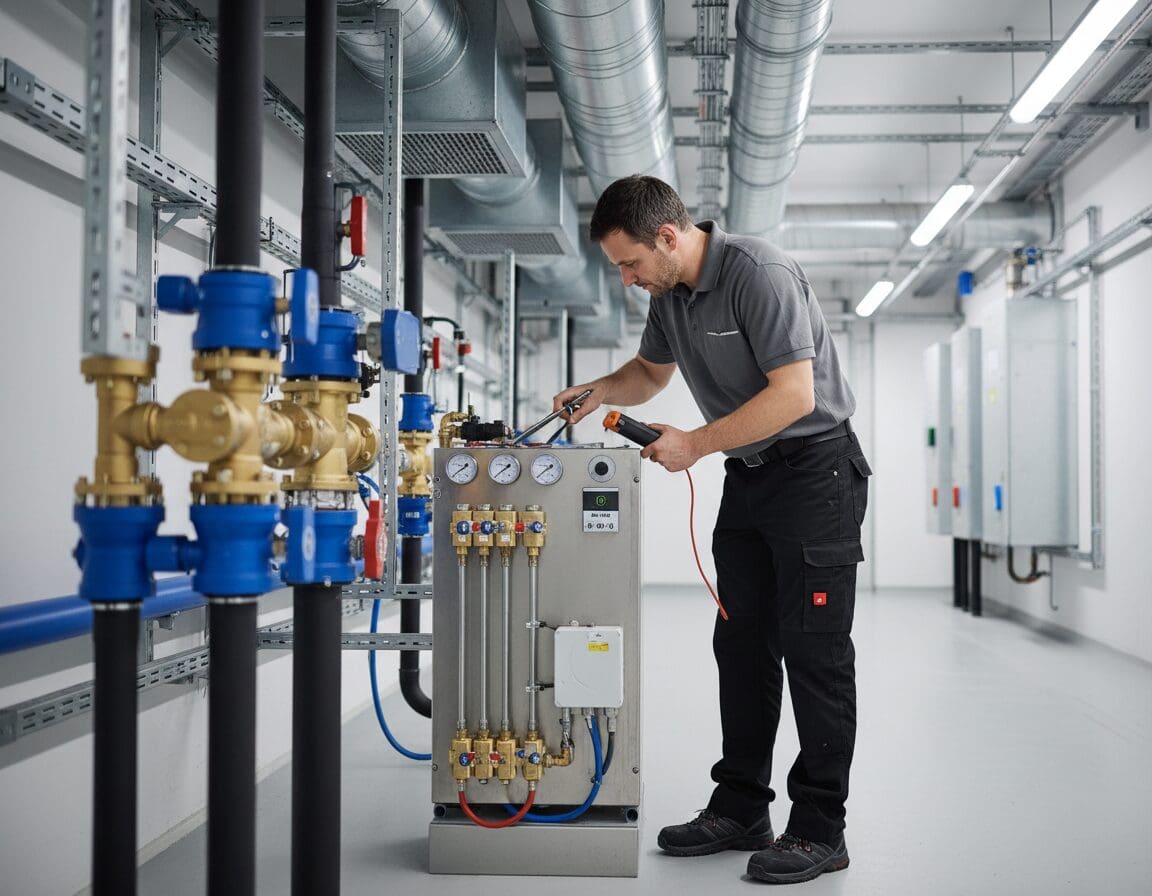
A Heat Interface Unit (HIU) transfers energy from a communal primary network into each flat’s heating and domestic hot water (DHW) using heat exchangers, valves and control electronics. Danfoss HIUs are widely specified across the United Kingdom for communal and multi‑occupancy schemes because they pack compact engineering and smart control into a single unit.
Regular Danfoss HIU service and maintenance keeps heat transfer working as designed. Expert servicing preserves responsiveness, stabilises DHW temperatures and protects occupant comfort. It also supports HIU performance optimisation and efficiency so buildings use less energy while residents enjoy steady heat delivery.
When HIUs are neglected, common faults emerge: fouled heat exchangers, valve sticking or leakage, degraded control calibration, sensor drift and scale build‑up. These issues reduce heat output, cause temperature fluctuation and can lead to costly downtime or premature component failure. Timely Danfoss HIU repairs and fault diagnosis minimise such risks and help avoid emergency interventions.
Measured outcomes matter: poor maintenance raises resident bills, increases complaints and reduces system efficiency. Following manufacturer‑recommended servicing and keeping traceable maintenance records protects warranties and helps building managers meet UK compliance obligations. Professional Danfoss HIU engineers deliver diagnostics and repairs that preserve manufacturer settings and ensure safety.
Viewed as an investment, routine Danfoss HIU service strengthens sustainability, improves resident wellbeing and controls long‑term costs. Consistent maintenance and targeted HIU performance optimisation and efficiency create reliable heating systems that serve buildings and people better.
Danfoss HIU service: what it covers and why it matters
Keeping Danfoss HIUs working well protects comfort, controls costs and preserves system life. A clear service routine makes it easier to spot issues early, maintain hot water hygiene and support accurate metering for landlords and building managers. Skilled Danfoss HIU service and maintenance keeps systems efficient and residents satisfied.
Overview of components and operation
Danfoss HIUs use plate or coil heat exchangers to deliver space heating and domestic hot water while isolating the primary network fluid. Primary and secondary circulation pumps move heat around the system. Modulating valves, thermostatic or electronic controls and actuators adjust flow and temperature to meet setpoints.
Meters and metering housings record usage. Safety and non‑return valves protect the installation. Sensors for temperature and pressure feed control electronics and built‑in diagnostics found on many Danfoss units. These compact, modular designs and factory‑set parameters help service engineers diagnose faults quickly.
Routine service tasks: inspection, cleaning and adjustments
Routine work begins with a visual inspection for leaks, corrosion and secure mounting. Technicians verify pipework integrity and test pump operation and differential pressures. Filters are cleaned or replaced to avoid flow restrictions.
Accessible heat exchangers are cleaned or descaled where necessary. Sensors and thermostats are calibrated. Modulating and motorised valves are exercised to prevent seizure and lubricated if required. Control parameters are checked and reset to manufacturer settings when needed.
For fault finding, engineers use pressure and temperature diagnostics to expose heat exchanger fouling, flow restrictions, air locks or valve malfunction. Portable test equipment validates sensor accuracy and control response. Careful recording of works supports traceability for future Danfoss HIU repairs and fault diagnosis.
Safe working practices are essential. Primary circuits are isolated before intervention. Gas and electrical safety rules are observed where relevant. Water hygiene matters for DHW: legionella risk mitigation is part of proper servicing.
Typical service intervals and regulatory considerations in the UK
As a rule, annual servicing suits most communal HIUs. High‑usage or older installations may need checks every six months. Initial commissioning and post‑repair reviews help confirm correct operation and control tuning.
UK Building Regulations and the Water Supply (Water Fittings) Regulations set duties for plumbing and hygiene. Landlords and building owners must provide safe hot water and keep systems maintained. Authorised servicing preserves manufacturer warranty and supports metering accuracy for billing.
Regular Danfoss HIU component inspection and cleaning and planned Danfoss HIU service and maintenance reduce the chance of breakdowns. They also aid in resolving common Danfoss HIU problems and solutions before they escalate into costly Danfoss HIU repairs and fault diagnosis.
HIU servicing for heating and hot water systems
Regular attention to heat interface units keeps communal heating reliable and predictable. Clean, correctly sized and well‑commissioned heat exchangers deliver the designed thermal capacity. That means radiators reach set temperatures and showers provide stable domestic hot water.
Neglect leads to lost performance. Partial blockage or scaling cuts the effective exchanger area, which lowers flow rates and lengthens heat‑up times. Thermostatic control can start to hunt and some dwellings receive less heat than others.
Impact of regular servicing on heat delivery and water temperature stability
Planned inspections restore flow and tighten temperature tolerances. Technicians measure pre‑ and post‑service readings to show quicker DHW recovery and steadier room temperatures. Small changes in flow or set points produce clear, measurable improvements for residents.
Routine flushing, descaling and recalibration reduce thermostatic swings. That improves occupant comfort and cuts the number of call‑outs from flat owners.
How servicing reduces energy consumption and lowers resident bills
An inefficient HIU forces the primary network to run hotter or for longer to meet demand. Fouled exchangers and leaking valves raise communal energy use and increase costs on resident bills.
Targeted works such as corrected pump speeds, replacement of leaking valves and recalibrated thermostatic settings cut waste. Restored hydraulic balance reduces pump run times and lowers primary return temperatures. These changes deliver savings while improving network resilience.
Servicing practices for communal and apartment block installations
Good servicing combines technical skill with careful logistics. Planned access arrangements, coordination with building managers and resident notices minimise disruption. Technicians keep accurate service logs for each HIU and record readings before and after work.
- Staggered visits and mobile flushing units speed bulk servicing for many apartments.
- Communal plant room checks identify issues that affect multiple HIUs.
- Prioritisation can use performance telemetry when available to target weakest units first.
Clear fault reports guide decisions on remedial or upgrade works. When teams follow HIU maintenance for communal heating systems, they reduce repeat faults and improve resident satisfaction while addressing common Danfoss HIU problems and solutions as they arise.
Adopting these practices supports improving HIU efficiency and system performance across a building, turning reactive repairs into planned asset care.
Improving HIU efficiency and system performance
Small adjustments deliver large gains when managing heat interface units in residential blocks. Focused intervention on controls, hydraulics and components lifts comfort, cuts waste and prolongs equipment life. Below are practical steps to drive HIU performance optimisation and efficiency across a building.
Performance optimisation techniques
Begin with hydraulic balancing to ensure fair flow distribution to radiators and apartments. Set differential pressure controls and use variable speed pumps to avoid overpumping and to keep flows steady under changing loads.
Control tuning and commissioning secure stable modulation. Set correct setpoints, refine weather compensation curves where available and update firmware or settings on Danfoss controllers. Verify algorithms run without hunting and deliver steady room temperatures.
Commissioning best practice starts with baseline readings: flow, temperature and pressure. Make incremental adjustments, measure outcomes and complete post‑commission checks to confirm energy and comfort targets are met.
HIU component inspection and cleaning
Regular Danfoss HIU component inspection and cleaning prevents performance loss and protects metering accuracy. Use a checklist for visual corrosion, leak detection, gasket and seal condition, valve stroke checks, sensor accuracy tests and filter or strainer cleaning.
Heat exchanger cleaning should match the level of fouling. Apply mechanical cleaning where access allows. Use chemical descaling with approved inhibitors to remove limescale while protecting materials. Ensure chemicals are neutralised and disposed of in line with UK regulations.
Preventive maintenance reduces emergency callouts, extends component life and lowers the risk of contamination moving into secondary systems. Timely attention often avoids costly downtime and maintains accurate billing.
When to consider replacement
Consider HIU heat exchanger and valve replacement if corrosion or pitting is irreparable, leaks persist after repair or heat transfer remains poor after cleaning. Repeated valve failures, actuator motor faults or obsolete parts that fail diagnostics also justify replacement.
Factor lifecycle costs when choosing repair versus replace. Restored efficiency yields energy savings that can offset replacement costs and reduces disruption for residents. Work with certified Danfoss engineers to ensure parts meet original specifications and preserve control compatibility.
Fault diagnosis and next steps
Use systematic Danfoss HIU repairs and fault diagnosis when symptoms persist. Log baseline data, apply measured fixes and re‑verify performance. This approach turns reactive work into planned improvements and supports long‑term efficiency gains.
Professional Danfoss HIU engineers in London
Selecting accredited, experienced engineers makes a tangible difference for communal plantrooms and apartment blocks. Professional Danfoss HIU engineers in London bring local knowledge of building stock, communal heating schemes and regulatory obligations, and they understand how those factors affect service plans and compliance. Look for teams with manufacturer training, public liability insurance and clear written reports to ensure work is traceable and auditable.
Typical offerings in the capital cover planned preventative maintenance contracts, emergency callouts, commissioning and metering verification. Skilled crews provide Danfoss HIU repairs and fault diagnosis alongside chemical cleaning, heat exchanger replacement and control upgrades. Specialist providers also deliver bespoke reports for building managers, giving clarity on asset condition and lifecycle planning for HIU maintenance for communal heating systems.
R&B London HIU Engineers is an example of a specialist team that focuses on targeted Danfoss HIU service by R&B London HIU Engineers, combining diagnostics, repairs and long‑term maintenance contracts tailored to apartment blocks. When assessing contractors, prioritise factory accreditation, parts warranties, transparent pricing and compliance with UK water and safety regulations to reduce risk and protect residents.
Proactive, professional Danfoss HIU engineers in London preserve resident comfort, cut operational costs and support sustainability goals. Building owners and managers should secure regular, expert servicing to protect investment, maintain stable heat and hot water delivery and safeguard wellbeing across communal schemes.