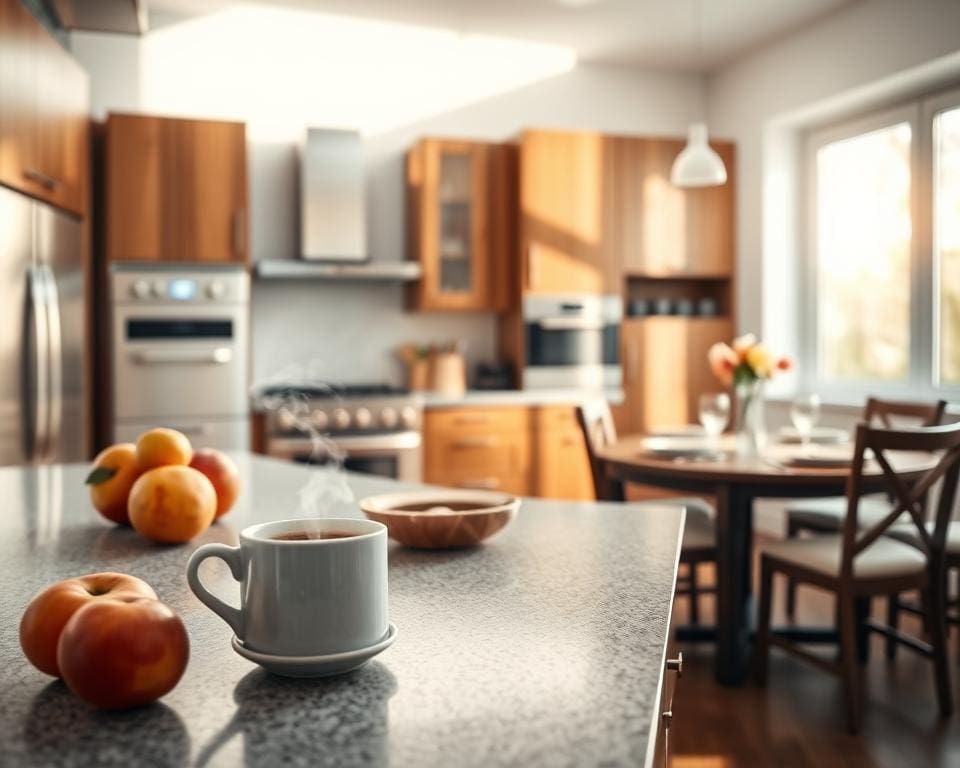
Kitchens have transformed. Once a purely utilitarian space, the modern kitchen now blends cooking, socialising, remote working and entertaining. This shift explains why is kitchen design central to modern homes and why homeowners place growing value on the importance of kitchen design.
Across the United Kingdom, open-plan living has raised the kitchen’s profile. Coverage in The Guardian, The Telegraph and Dezeen highlights how kitchen-led layouts shape daily routines and family interaction. These commentaries help explain why the kitchen as the heart of the home is more than a phrase — it is a social and spatial reality.
Demographic changes and busier lives have intensified demand for adaptable kitchens. Reports from the HomeOwners Alliance and Houzz UK show renovation priorities often put the kitchen top of the list. Post-pandemic habits, smaller household sizes and increased home entertaining all add weight to the case for modern kitchen trends UK that deliver practical returns.
Design answers both emotional and practical needs. Good layout and considered finishes create comfort and belonging while improving workflow and household management. The kitchen design benefits extend from everyday ease to memorable shared experiences.
This article will explore those facets in order: the kitchen’s social role, practical functionality, aesthetic choices and their impact on property value, and finally sustainability and future trends. Each section will unpack how design choices shape life at home and why they matter to British households now.
Why is kitchen design central to modern homes?
Contemporary kitchens have shifted from back-room utility to the heart of daily life. A social kitchen becomes a place where families gather for meals, homework and conversation. Lifestyle writers and sociologists note how ritual and routine build connection around food and shared time.
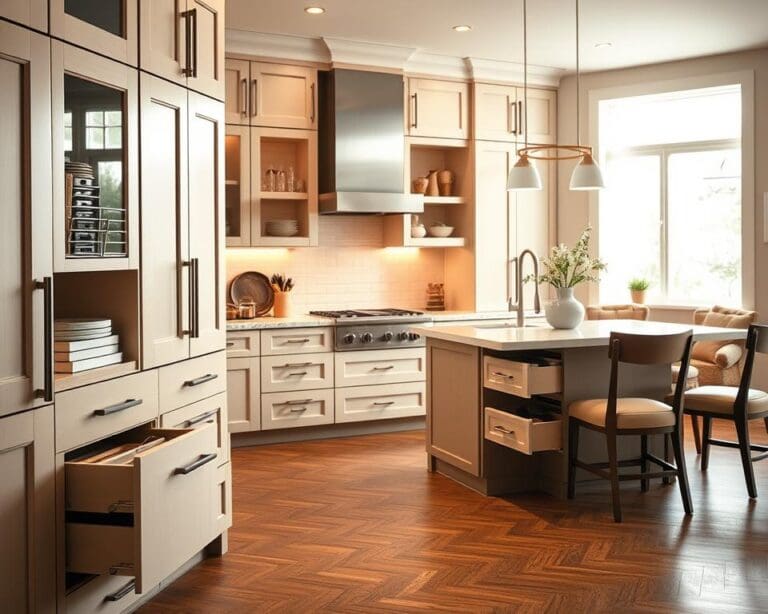
Design choices support sociability. Islands with seating, breakfast bars and integrated dining zones encourage lingering. Multi-height surfaces suit children and adults, making a family hub kitchen design feel welcoming and practical. UK firms such as Tom Howley, Porter & Stone and brands like Howdens and Magnet increasingly plan layouts with sociability at the core.
Social heart of the home
A social kitchen works for everyday life. It gives space for a quick breakfast, a child’s homework session and evening chats. Built-in benches, banquette seating and easy-clean worktops help sustain that use while keeping the room tidy and durable.
Open-plan layouts and family interaction
Open-plan living is common in many UK homes. Removing walls between kitchen, dining and living areas increases visibility and light. This layout helps parents supervise children while cooking and supports multiple activities at once, such as working and relaxing.
Practical layout choices make a difference. Use zoning with furniture or flooring to define areas. Add targeted lighting and acoustic treatments to manage sound. Good circulation avoids bottlenecks and keeps the kitchen social space flowing.
Entertainment and hospitality roles
Many homeowners now treat the kitchen as the primary place to host. A kitchen for entertaining will include features like induction hobs that allow the host to face guests, integrated coffee machines and wine fridges. These elements create a smooth service flow.
Design for hosting focuses on prep areas, warming drawers and hidden storage so the room remains tidy during gatherings. Hospitality-minded designers and chefs favour durable, hygienic surfaces such as Silestone and quartz. The result is a kitchen for entertaining that balances style with functionality.
Practical functionality and everyday living
Good kitchen design merges beauty with purpose so daily tasks feel effortless. Small choices in layout, storage and appliance selection shape how a household moves, cooks and socialises. Practicality is the backbone of any lasting scheme.
Ergonomics and workflow: work triangle and beyond
The classic work triangle — cooktop, sink and fridge — remains a useful starting point for efficient kitchens. It helps minimise unnecessary steps and keeps core tasks close at hand. Modern homes often expand on this with separate work zones for baking, prep and cleaning.
Large or multigenerational families benefit from task-specific islands and parallel workstations. These layouts reduce queuing at peak times and let several people work together comfortably.
Follow ergonomic best practice by setting counters around the standard 900mm height, then adjust for the main user’s stature. Keep clearances for appliance doors and circulation; aim for minimum aisle widths that allow a dishwasher or oven door to open without blocking traffic. Place task lighting to avoid shadows on worktops.
Design guidance from professional bodies such as the Chartered Institute of Building and RIBA offers practical layout standards and accessibility advice. Their recommendations help balance usability with safety and long-term comfort.
Storage solutions that simplify daily routines
Well planned storage reduces clutter and saves time. Deep drawers for pots and pans make heavy items easier to reach than high cupboards. Pull-out pantry units and carousel corner fittings convert awkward spaces into accessible stores.
Bespoke ideas suit UK homes where space can be tight. Slimline pantry units fit narrow gaps, under-stair storage links kitchens to hallways, and utility or boot-room adjacency keeps dirty shoes and coats out of the main space.
- Integrated organisers for cutlery and utensils keep frequently used items ready.
- Built-in recycling and composting systems support tidy, sustainable habits.
- Soft-close mechanisms and internal lighting improve daily convenience.
Brands such as Blum, Häfele and Howdens UK supply reliable fittings and modular inserts that lift functionality. These systems make the most of every cupboard and drawer, turning storage into a selling point as well as a convenience.
Appliance integration and smart kitchen technology
Integrated appliances create a clean, cohesive look while saving space. Built-in dishwashers, fridge/freezers and ovens align with cabinetry for a seamless aesthetic. Where extraction is needed, built-in hoods or downdraft systems keep sight lines uncluttered.
Smart kitchen technology UK options bring genuine convenience. Wi‑Fi ovens, smart fridges with inventory features and app control for heating streamline routines. Voice-activated lighting and taps free hands during busy tasks.
Consider major brands such as Bosch, Siemens, NEFF and Samsung when fitting smart kit. These manufacturers offer models that combine reliability with modern features.
Balance convenience with resilience. A strong home network, regular firmware updates and clear service plans reduce security and maintenance risk. Keep some timeless mechanical solutions alongside smart features so repairs remain straightforward and the kitchen endures.
Design, aesthetics and property value
Good design shapes how a kitchen feels and how a buyer sees its worth. Thoughtful choices in kitchen materials and kitchen finishes set the tone for the whole home. The right match of colour and light can make a small space feel welcoming or a large room feel intimate.
Material choices and finishes that define style
Popular British options include matt and lacquered cabinetry, natural timber, engineered quartz and granite worktops, stainless steel splashbacks and durable ceramic or porcelain tiles. Brands such as Caesarstone, Silestone and Villeroy & Boch provide reliable quality for many projects. British timber specialists offer warm, tactile surfaces when you want a lived-in look.
Quartz gives stain resistance and low maintenance, while timber brings warmth but needs sealing and care. Stainless steel offers a professional aesthetic, though it shows fingerprints more readily. Choosing soft-close hinges and solid drawer boxes upgrades perceived quality without a full bespoke price tag.
Colour schemes and lighting to create atmosphere
Current kitchen colour schemes in the UK favour muted naturals like sage and warm greys, with deep tones such as navy and forest green for feature areas. Two-tone schemes are back in style to add depth and character.
Lighting ties the scheme together. Layered solutions combine task lights, ambient pendants and accent LEDs to highlight cabinetry and architectural features. Under-cabinet LED strips work for prep zones. Choose warm 2700–3000K for a cosy feel and cooler temperatures for task areas. Energy-efficient LED options cut running costs and give consistent colour rendering.
Pair materials and colours to match lifestyle needs: calming neutrals suit family homes, stronger contrasts suit urban flats. Aim for cohesion so finishes feel intentional rather than accidental.
Impact on resale value and buyer appeal
Kitchens remain among the highest-return renovation areas in the UK housing market. Data from Rightmove, Zoopla and Houzz UK shows modern, well-specified kitchens attract more viewings and faster sales. Neutral, durable choices appeal to the widest audience while bespoke, high-end finishes attract premium buyers in affluent neighbourhoods.
To balance personal taste with broad market appeal, prioritise durable worktops, reliable appliances and timeless cabinetry lines. These investments strengthen kitchen resale value UK and give buyers confidence in the property’s long-term quality.
Sustainability, well-being and future trends
Sustainable kitchen design UK now centres on choices that cut waste and last longer. Opt for FSC-certified timber, recycled-content worktops and low-VOC paints to protect indoor air. Recycled composite worktops and upcycled cabinetry are emerging as practical, stylish options that extend a kitchen’s lifecycle while reducing embodied carbon.
Look for recognised standards such as FSC certification and BREEAM guidance for refurbishments, and follow Energy Saving Trust advice on appliance ratings. Low-energy kitchens rely on induction hobs, efficient dishwashers and smart boiler controls, alongside low-flow taps, to cut bills and consumption without compromising performance.
Wellbeing in kitchen design is about light, air and material honesty. Maximise natural daylight, introduce biophilic touches like houseplants and use non-toxic finishes to improve indoor air quality. Thoughtful ergonomics and organised storage reduce physical strain and mental clutter, reflecting research that links calm domestic spaces with better mental health.
Future kitchen trends point to smarter, more modular homes. Expect greater use of interoperable appliances, compact systems for urban flats and circular-economy practices from UK furniture and kitchen brands that favour repairable fittings and recyclable materials. AI-assisted cooking, better sensors for food freshness and antimicrobial materials are likely to shape the next decade.
For practical planning, choose durable, eco-friendly kitchen materials, prioritise efficient layouts and lighting, and invest in energy-efficient appliances. Embrace modular elements that adapt as needs change to create a kitchen that balances style, function and sustainability for the long term.