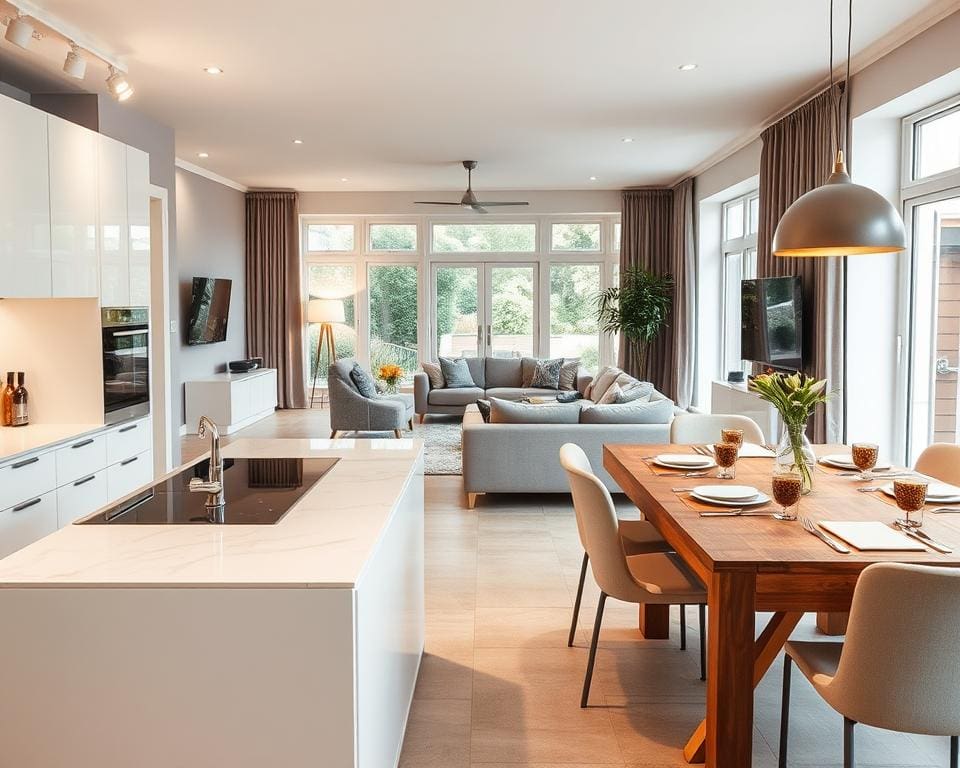
Open-plan living combines two or more traditional rooms — usually the kitchen, dining and living areas — into one continuous space. This layout feels modern and practical, and it explains why many homeowners and designers keep asking, Why is open-plan living still so popular?
Across the UK, open-plan living UK appears in new-build developments and in renovated Victorian and Georgian terraces. City flats and suburban houses alike favour the layout. Young families value sociable cooking and easier supervision, while downsizers prize bright, low-maintenance rooms. That cross-generational appeal drives open plan house popularity in diverse markets.
Industry data supports the claim. Reports from UK property consultancies and housing market commentators show steady buyer preference for flowing spaces. Guidance from the Royal Institute of British Architects and features in magazines such as Grand Designs and Homes & Gardens also highlight the benefits of open-plan homes, urging flexible, light-filled designs.
This article will explore the historical and cultural rise of open-plan living, practical design solutions for acoustic and privacy challenges, and what the future may hold for UK homeowners. Along the way we will examine the tangible benefits of open-plan homes — more natural light, the sense of spaciousness, adaptable use of square footage, stronger social connection and often improved resale appeal.
Why is open-plan living still so popular?
The appeal of open-plan layouts rests on history, practicality and feeling. A short look back and a clear view of modern life explain why many UK homes favour a connected ground floor that supports homeworking, family time and socialising.
Historical rise and cultural shifts
The history of open-plan runs from late Georgian compartmentalised rooms through Victorian formality to 20th-century modernism. Architects such as Le Corbusier and schools like the Bauhaus championed open, flexible interiors. Post-war housing shortages and changing household sizes further nudged layouts away from rigid compartmentation.
Mid-century social change reshaped how families used space. Casual dining and less formal entertaining made an open layout practical. Contemporary media helped normalise the look. Magazines such as Ideal Home and TV shows like Grand Designs showcased renovated open plans, making sociable home design aspirational for many buyers.
Benefits for contemporary living
Practical gains are obvious in dense UK towns and cities. Open plans improve daylight, create clear sightlines and help small square footage feel larger. Removing internal partitions often costs less than building extensions and can add market appeal.
Economic and environmental benefits matter too. An open-plan layout can raise perceived value when selling in competitive markets. It also supports zonal heating, efficient lighting strategies and simpler insulation improvements, which cuts energy use and bills.
- Better use of space for home offices and play areas
- Increased resale desirability across many regions
- Potential for lower renovation costs than adding rooms
Emotional and lifestyle appeal
Sociable home design centres on connection. Open spaces let hosts cook while engaging guests and allow parents to watch children across the room. This makes daily life less fragmented and more inclusive.
Psychological effects are important. Perceived spaciousness and natural light lift mood and reduce feelings of isolation, a benefit for families and older occupants. The layout supports blended routines where work, leisure and family life overlap.
All three threads—history of open-plan evolution, cultural shifts and open-plan acceptance, plus the benefits of open-plan living—help explain the continuing popularity of an open-plan lifestyle UK homeowners choose when they want flexible, sociable and efficient homes.
Design considerations and practical solutions for open-plan homes
Open-plan living can feel generous and bright when it is carefully planned. Thoughtful choices in layout, sound control, climate and finishes make these spaces both beautiful and practical. Below are clear strategies to help you adapt an open-plan home to everyday life.
Zoning and flow without walls
Define areas with furniture rather than full-height walls. A sofa, a rug or an island unit creates a visual break between living, dining and kitchen zones. Use shelving or partial-height partitions to form cosy corners while keeping sightlines open.
Plan circulation so movement feels natural. Keep clear paths from the entrance through to the kitchen and garden doors. Allow minimum clearances around tables and walkways for safety and comfort.
Choose multifunctional pieces like extendable tables and fold-down desks. Built-in cupboards and bespoke joinery help hide clutter and keep the open-plan layout calm and organised.
Acoustic and privacy challenges
Open spaces can amplify sounds and reduce privacy. Soft furnishings such as curtains, upholstered chairs and rugs absorb noise and reduce echo. These elements are an easy way to improve comfort.
Consider acoustic solutions open-plan options like decorative panels, hanging baffles or bookcases that act as sound buffers. Sliding doors or internal glazed screens can offer visual connection while limiting noise transfer.
Reserve quieter zones for work or sleep. If space allows, add a small booth or enclosed room for calls and focused tasks to keep daily life running smoothly.
Heating, ventilation and natural light
Large volumes can be tricky to heat evenly. Underfloor heating gives steady warmth across open areas. Use zonal thermostats and smart heating controls to avoid overheating parts of the home.
Fit correctly sized radiators and ensure good insulation and draught-proofing. For moisture and cooking odours, install mechanical ventilation with heat recovery or efficient extractor fans.
Maximise natural light through larger glazed areas, rooflights and open sightlines. Lighter wall and floor finishes reflect daylight. Where neighbours are close, use frosted glass or blinds for privacy without losing brightness.
Style and material choices for cohesion
Unify the space with a consistent design language. Harmonised colour palettes and complementary materials make the whole area read as one. Use engineered oak or high-quality laminate for continuous flooring.
Select durable surfaces for busy zones: quartz or composite worktops in the kitchen, washable paints for family areas. Add feature lighting, statement furniture and plants to introduce texture and warmth.
Choose sustainable options such as responsibly sourced timber, low-VOC paints and energy-efficient appliances. These choices support long-term value and appeal to many UK homeowners.
Future of open-plan living and alternatives for UK homeowners
The future of open-plan living will be shaped by a clear demand for flexibility after the pandemic. Increased homeworking means households need adaptable floorplans that switch from social hubs to private workspaces. Many homeowners want bright, sociable spaces but also value quiet retreats, so the trend is towards hybrid layouts that balance openness with pockets of privacy.
Smart home technology will play a central role in that shift. Integrated lighting and heating controls, zonal thermostats and acoustic masking systems let families control comfort room by room. Unified audio-visual systems and app-driven scene setting make open areas feel bespoke, supporting flexible home design UK initiatives that aim to deliver both sociability and personalised comfort.
Alternatives to open-plan now include semi-open layouts with sliding or pocket doors, glazed internal walls and modular room-in-room units such as pod offices. These solutions create segmented living spaces without heavy structural work and suit terraces and flats where neighbours’ proximity makes privacy a priority. Retaining the ability to add or remove partitions keeps properties adaptable for future buyers.
Practicalities remain vital. Local planning constraints and listed building rules can limit radical changes, and removing load-bearing walls requires structural input and party wall agreements. For resale, consider your local market: families often favour open-plan, while professionals and older buyers may prefer defined rooms. The most resilient approach is to design flexible options that future-proof a home and appeal to a broad slice of the UK market.