
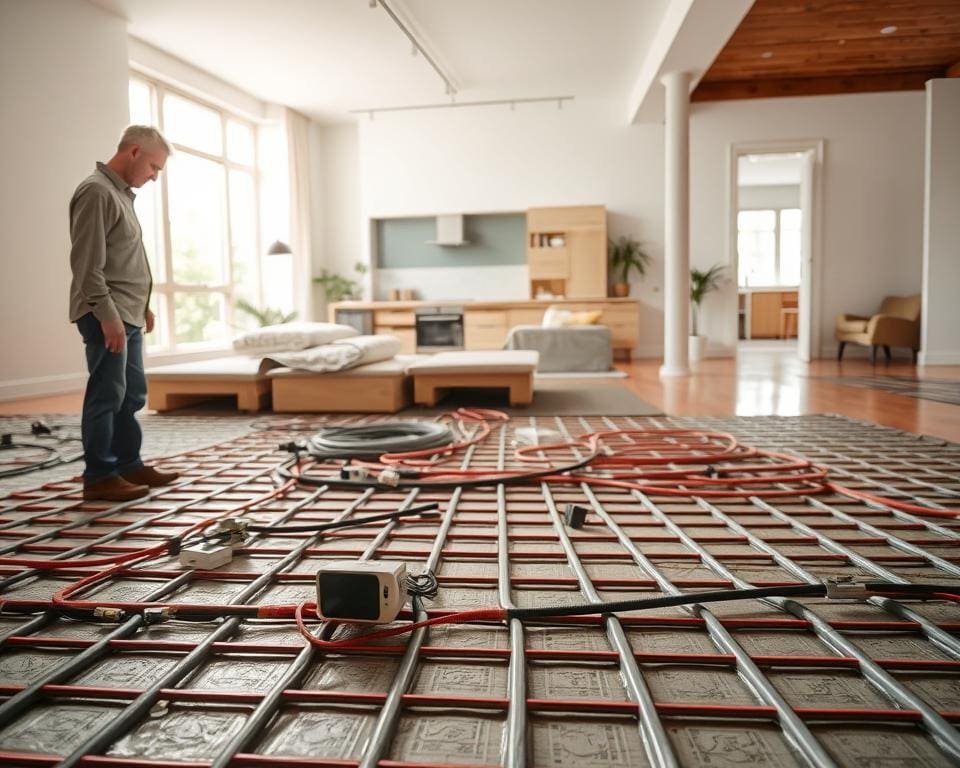
Radiant floor heating delivers steady, even warmth that reduces cold spots and raises comfort in homes across the United States. When exploring underfloor heating considerations, homeowners gain not only cozy floors but potential underfloor heating benefits USA such as higher resale appeal and improved living comfort.
Before installing underfloor heating, clarify your project goals: a full-house system, a bathroom or kitchen retrofit, or new construction. Scope drives the choice between hydronic vs electric underfloor heating, impacts cost, and determines installation complexity.
Key decision factors include floor construction and suitability, room-by-room heat needs, insulation levels, and compatibility with finishes. Proper planning for layout and controls ensures the radiant floor heating system performs efficiently and meets comfort expectations.
Get a professional assessment early. Licensed HVAC contractors and specialist installers—brands like Uponor, Warmboard, Schluter, and Devi—can run load calculations and site surveys to confirm feasibility and advise on system type.
Also check local building codes and permitting requirements. State and municipal rules can affect allowed systems, electrical loads, and insulation standards, so contact your local building department before committing.
Finally, weigh energy and environmental impacts: hydronic systems paired with high-efficiency boilers or heat pumps often cut fuel use, while electric systems offer simpler installation and control but may cost more to run depending on electricity rates and grid carbon intensity. Upfront costs and timelines vary, but long-term comfort and operating savings determine the true return on investment.
What should you consider when installing underfloor heating?
Choosing underfloor heating calls for a clear look at structure, system type, layout and finishes. A few smart checks early on save money and boost comfort. The guidance below helps you compare options and plan each room with confidence.
Assessing floor construction and suitability
Start by identifying the structural type: concrete slab, suspended timber or screed over subfloor. Concrete slabs suit embedded electric mats or hydronic pipes best. Suspended timber often needs low-profile electric systems or purpose-made panels to avoid raising floor heights.
Check floor build-up and clearances. Renovations may limit your choices if ceiling heights or door swings are tight. Brands like Warmup and Uponor offer slim systems for tight retrofits.
Inspect the subfloor condition for levelness and moisture. Use vapor barriers or mitigation systems when installing over ground-contact slabs or basements. For multi-story projects, confirm added screed weight won’t overload structures; consult a structural engineer when unsure.
Comparing electric and water-based systems
Decide between electric vs hydronic radiant floors by weighing upfront cost, running cost and installation impact. Electric systems are simpler to fit and suit small rooms or retrofits. Hydronic systems scale better for whole-house use and pair well with high-efficiency boilers or heat pumps.
Think about control and energy sources. Electric systems respond quickly, making them good for bathrooms. Hydronic systems keep steady warmth and often cut long-term energy bills when combined with modern boilers or geothermal heat pumps.
Room-by-room heat requirements and layout planning
Carry out a room heat load calculation for each space before finalizing the design. Small rooms need less output than open-plan areas. Factor in window size, insulation levels and room use.
Plan pipe or mat layout to avoid furniture and fixed cabinets that block heat. Place thermostats in representative locations for accurate control. Map zones so you can heat living areas and bedrooms separately.
Insulation needs and impact on energy efficiency
Install insulation for radiant heating under the system to direct heat upward and cut energy waste. Good insulation reduces warm-up time and lowers operating costs.
Choose rigid boards or reflective layers based on subfloor type and the chosen system. For hydronic systems on suspended floors, consider insulated panels with channels for pipes to reduce floor buildup.
Compatibility with floor coverings and finishes
Match underfloor heating floor coverings to the system and the room. Tile and stone offer excellent thermal transfer and work well with both electric and hydronic systems. Engineered wood and some laminates can be suitable if manufacturers approve their use with radiant heat.
Check maximum surface temperatures for sensitive materials and adhesives. Follow flooring maker guidelines to keep warranties valid and to avoid warping or adhesive failure.
Installation process, costs, and timeline for underfloor heating
Planning an underfloor heating project begins with clear goals and a realistic budget. Early decisions shape underfloor heating cost and the long-term underfloor heating ROI. A professional site survey and heat-loss calculation set the design, zoning, and control strategy for each room.
Typical steps in the installation process
Start with a detailed site survey and heat-loss assessment to size the system. Prepare the subfloor by cleaning, levelling, and addressing moisture. Install insulation and vapour barriers where required.
Next, lay the heating elements. Electric systems use mats or loose wire. Hydronic systems use PEX pipe fixed into grooved panels or embedded in screed. Pressure-test hydronic circuits and run electrical continuity tests for electric systems.
Allow screed or floor topping to cure before fitting finishes. Commission the system, connect hydronic loops to boilers or heat pumps, and program thermostats. Proper commissioning maximizes performance and helps justify the expected underfloor heating ROI.
Upfront costs, long-term operating expenses, and ROI
Upfront costs vary with system type, home size, and whether floors need major renovation. Estimate materials, labour, and any extra work such as insulation or new subflooring. Factor in the pricing for controls and manifolds for hydronic setups.
Long-term operating expenses depend on system efficiency and the chosen heat source. Pairing underfloor heating with a heat pump often reduces running costs and improves energy efficiency. Track lifecycle costs to evaluate underfloor heating ROI against conventional radiators.
Expected disruption and timelines for different systems
Electric systems tend to have a shorter radiant floor installation timeline and cause less disruption. They are often suitable for small rooms or retrofits. Wet hydronic systems need more on-site work and a longer cure period for screed.
Typical radiant floor installation timeline ranges from a single day for simple electric installs to several weeks for hydronic systems when you include screed curing and final commissioning. Plan for lead times on bespoke components and schedule work around inspections.
Permits, building codes, and working with professionals
Check local underfloor heating permits and building code requirements before work begins. Major changes, penetrations to floors, or systems tied to boilers and heat pumps may need building control sign-off. Consult resources such as the Planning Portal guidance and your local authority to confirm rules.
Hire accredited trades for the best outcome. When hiring underfloor heating installer, look for professionals registered with trade bodies, Gas Safe for boilers, and certified electricians for electrical connections. Clear contracts, insurance, and documented commissioning reports protect your investment and support claims about underfloor heating cost and compliance.
Performance, controls, and maintenance to maximize comfort and value
Underfloor heating performance is measurable: electric systems commonly deliver 80–120 W/m² for supplemental warmth, while hydronic systems range from 60–140 W/m² depending on design. Electric setups heat faster—often within 20–60 minutes—while hydronic systems take longer because of higher thermal mass. Good insulation and correct floor construction reduce heat loss and improve responsiveness, which is essential for maximizing UFH efficiency and steady-state comfort.
Modern radiant floor controls bring comfort and savings when paired with quality smart thermostats for UFH like Nest, Ecobee, or Honeywell Home. Zoning with programmable schedules cuts runtime and matches heating to occupancy. Hydronic systems benefit from manifold balancing, actuators, and weather-compensating controls to reduce cycling and maintain even temperatures across rooms.
Routine underfloor heating maintenance keeps systems reliable. For hydronic systems, annual boiler or heat pump service, filter changes, pressure checks, and leak inspections matter. Electric systems need periodic visual checks of connections and thermostat calibration. Keep manifolds accessible, register warranties, and retain installation documentation to support longevity and resale value.
Common underfloor heating troubleshooting topics include cold spots (often spacing, insulation, or trapped air in circuits), slow response (excess thermal mass or poor insulation), uneven heating (balancing valves or mat overlap), and noises from screed expansion or pumps. Plan upgrades—switching to a heat pump, adding solar PV for electric systems, or installing modular manifolds—to extend life and improve performance while enhancing appeal to U.S. buyers who value documented energy-efficient features.