Living in a studio flat or a one-bedroom in London, Manchester or Edinburgh brings character — and storage challenges. Good small apartment organisation makes daily life easier, reduces stress and helps you maximise small space without costly renovations.
This introduction explains why organising a small flat matters for both renters and owners across the United Kingdom. You’ll see practical, budget-friendly apartment storage ideas you can use straight away and longer-term choices worth investing in.
The scenarios are familiar: overflowing wardrobes, limited kitchen surface, tiny bathrooms and awkward nooks in converted Victorian terraces. The advice here respects landlord permissions, listed-building rules and typical British hallways and windows.
The article draws on real-world sources such as IKEA space solutions, Homebase and B&Q guidance, and established design principles. You’ll learn how to declutter, choose furniture that maximises usable space, exploit vertical storage and create daily systems that keep your flat tidy.
Read on to find clear, actionable tiny home organisation steps that improve cleaning, boost rental or resale appeal and help you enjoy every square metre of your home.
Small apartment organisation: smart space-saving strategies
Living in a compact flat asks you to be deliberate about every item and every inch. Start with clear, practical steps that reduce clutter and unlock usable space. Use methods that fit busy lives and rental rules so changes feel manageable.
Decluttering and editing your possessions
Work room by room and sort items into four boxes: keep, donate, recycle, bin. Apply a 12-month rule for seasonal items; if you have not used something in a year, consider letting it go. This method limits decision fatigue and speeds the edit process.
Use Donation centres such as British Heart Foundation stores, Freecycle or Freegle for items in good condition. For bulky goods, contact your local council for kerbside bulky collection or use Big Yellow Self Storage for short-term off-site storage when needed.
Digitise paperwork and photos to cut down on filing. Measure cupboards and drawers before you buy organisers. Purge duplicate kitchen gadgets and replace several single-use tools with one versatile item.
Furniture that maximises usable space
Choose multifunctional furniture to reduce the number of pieces you need. Think sofa beds, ottomans with hidden storage and extendable dining tables that adapt to guests. Retailers like IKEA, Habitat and Loaf offer compact furniture designed for small flats.
Consider fitted solutions where it makes sense. Sharps Bedrooms and local carpenters can create built-in wardrobes or alcove shelving that use awkward gaps. Custom joinery often saves space over time by matching scale and shape precisely.
Pick low-profile sofas and armless chairs to maintain sightlines. Use lightweight materials and removable slipcovers so items suit rental constraints and are easy to move. Modular pieces let you reconfigure a room as needs change.
Vertical storage and shelving solutions
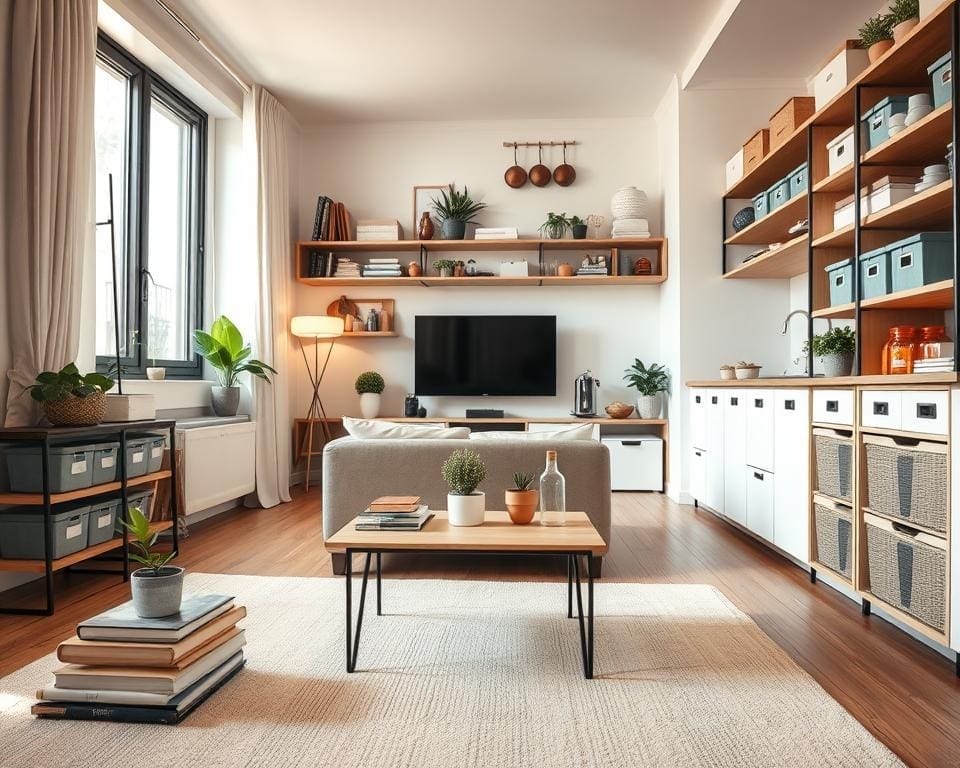
Free up floor area by fitting vertical shelving and wall-mounted rails. Install floating shelves, picture rails or pegboards where possible. Always fix heavy units to studs or use suitable wall plugs for plaster and masonry typical in UK flats.
Tall, narrow units like bookcases and tallboy chests add cubic storage without crowding the room. Anchor these items to walls for safety. For renters, choose freestanding over-door organisers and tension poles to avoid drilling holes.
In kitchens and bathrooms, use magnetic strips, rail hooks and tiered corner shelving to keep surfaces clear. Under-bed storage boxes and slim drawers hide seasonal items and make efficient use of otherwise wasted space.
Design and layout tips to make a small apartment feel larger
To make apartment feel bigger, treat the flat as one flowing stage rather than a set of closed rooms. Keep sightlines open and choose pieces with low visual weight. Light, neutral paint and the same floor across rooms create continuity and a calmer backdrop for your furniture choices.
Open-plan thinking and visual tricks
Adopt an open-plan small space mindset by removing bulky partitions and favouring transparent or slim-framed furniture such as glass tables and open-legged sofas. This keeps your eye moving across the room and helps you spot empty corners you can use.
Use mirrors to multiply daylight and reflect key focal points. A mirrored splashback in the kitchen or a large mirror opposite a window doubles the perceived depth. Choose matte finishes on walls to reduce glare while keeping ceilings a shade lighter than walls to add perceived height.
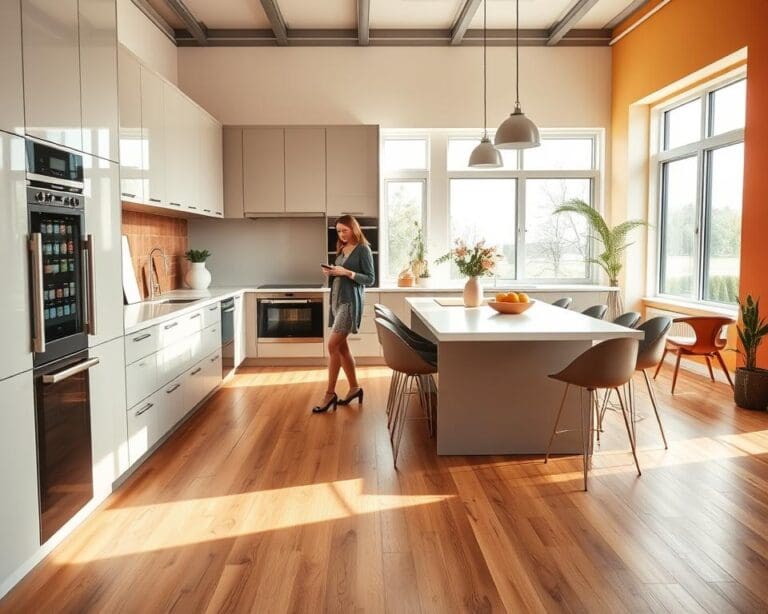
Keep flooring continuous where possible. Engineered oak or long vinyl planks draw the eye along the length of the flat and reduce visual breaks, one of the simplest small flat layout ideas that works every time.
Zoning without walls
Create distinct areas with furniture rather than erecting walls. A rug, the back of a sofa or an open bookshelf can mark a living area without blocking light. Open shelving serves as storage and a semi-transparent divider so you can define zones without shrinking them.
Consider folding screens or a curtain track for flexible partitions that suit renters. A wall-mounted drop-leaf table or a tall cafe-style table can act as a workspace and dining surface, smart small flat layout ideas for people who need a work-from-home zone.
Use wardrobes or clothing rails to separate a sleeping nook in a studio. Choose mirrored doors where you can; they add storage and work as a visual space trick to extend the room.
Lighting and window treatment choices
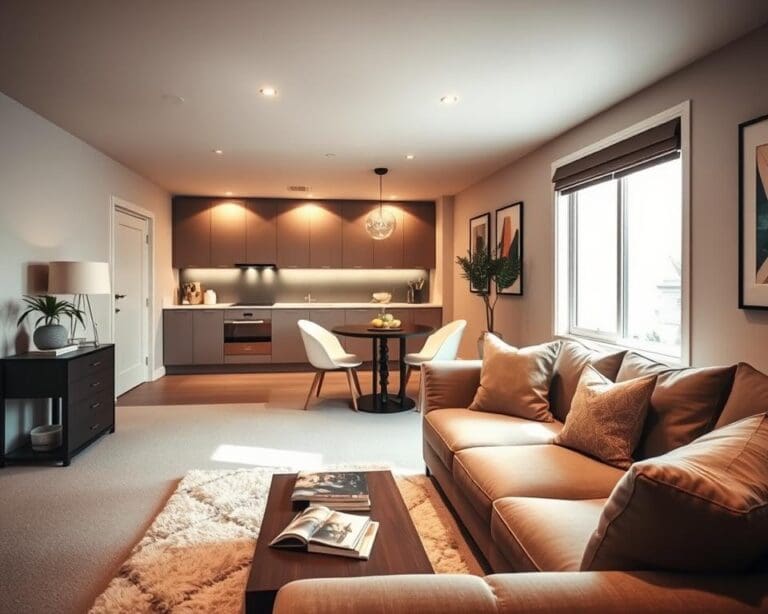
Layer your lighting to add depth. Combine ambient ceiling or recessed lights with task lamps under kitchen units and at desks. Accent strips or picture lights provide focal points and prevent a flat, cramped feel. Good small flat lighting makes rooms feel more spacious and inviting.
Let daylight lead. Choose sheer curtains or slim roller and Roman blinds to maximise natural light while keeping privacy. For ground-floor flats, pair frosted film on lower panes with curtains above to keep the view and the light. Fit slim curtain tracks or recessed rails to avoid bulky fittings that interrupt the flow.
Install warm LED downlights with dimmers so you can change the mood and perceived scale of a room. Thoughtful lighting choices are among the most effective visual space tricks you can use in a compact home.
Practical organisation systems for daily living
You can stop clutter before it starts by building small-apartment routines that fit your day. Try a 10-minute tidy every evening and set a weekly slot for laundry and ironing. Place habit triggers where they matter: a laundry basket by the bedroom or bathroom, a shoe tray and key hooks by the door, and a coat hook near the entrance to make daily organisation systems effortless.
In the kitchen, organise by frequency of use to save time and counterspace. Keep everyday crockery and utensils within easy reach and store occasional items higher up or in labelled boxes. Use clear, labelled Kilner jars or OXO Good Grips containers for dry goods and vertical organisers for lids and baking trays. Slimline dishwashers, combination microwave-ovens and wall-mounted rails free up work surfaces and support effective kitchen organisation.
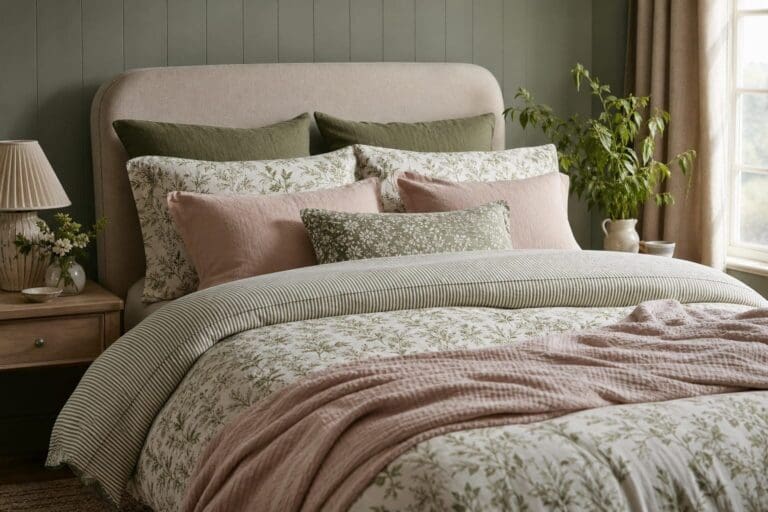
Wardrobe systems should reduce decision fatigue and make clothes care simpler. Rotate seasonal items into vacuum bags or under-bed boxes when space is tight. Adopt a capsule wardrobe of versatile pieces in neutral colours and fit modular organisers from IKEA or John Lewis to increase hanging and folded storage. These choices make dressing easier and keep your wardrobe streamlined.
Create an entryway station and living-room systems that prevent clutter from spreading. A small console with key hooks, a shoe tray and a post shelf acts as a command centre. In the living room, use baskets, trays and tables with drawers to corral remotes and small items. Pair paper handling with digital scanning apps like Adobe Scan and use online billing to cut paper. Every three months, review what you own, purge unused items and, if needed, consult fitted storage specialists such as Sharps Bedrooms or use Big Yellow Self Storage for overflow.