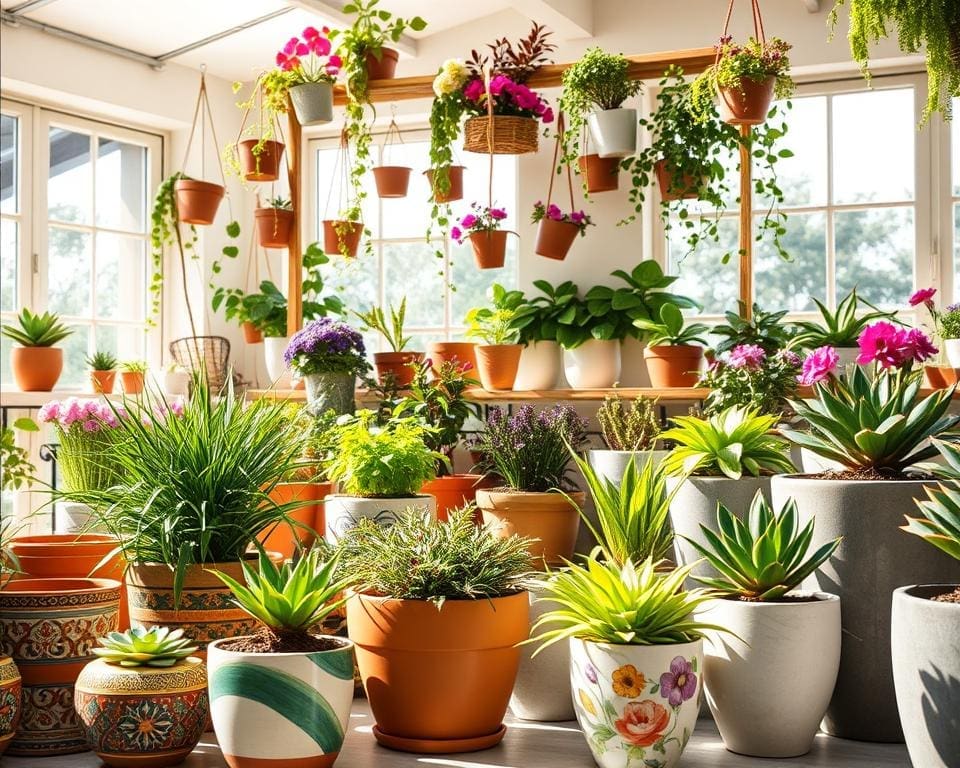
When you buy plant pots, you are choosing more than a container. The right pot affects drainage, root health, insulation and how easy it is to move plants around your home or garden.
Think about where the pots will live — a sunny conservatory, a windswept balcony or a shaded living room all have different needs. Your choice of material, size and drainage will change depending on whether you want plant pots for every space and style or specific types of plant pots for indoor and outdoor use.
Size and shape influence root development: deep, stable pots suit trees and large plants, while seedlings need shallow trays or small pots with good drainage. Materials matter too. Terracotta breathes and suits Mediterranean species, whereas resin is light and often frost-resistant — useful if you need to move pots in winter.
Practical details make life easier. Check for drainage holes or plan to add saucers or risers to protect surfaces. Consider self-watering systems if you have a busy schedule. Also weigh environmental and transport factors: recycled plastic pots reduce waste, while heavy stone or concrete-effect planters increase shipping emissions and may need help to move.
For UK conditions, frost resistance is important for outdoor pots. Move sensitive plants indoors or add insulation during hard freezes. Match style to setting: terracotta for rustic borders, concrete-effect planters for modern patios and decorative indoor pots for hallways and living rooms.
Finally, buy from reliable suppliers. Idealist Planters offers premium outdoor garden planters, tall planters and large plant pots that balance form and function. Use this simple checklist when shopping: assess plant needs, measure space, pick material and style, check drainage and frost resistance, consider weight and mobility, and choose a trusted retailer.
Choosing the right plant pots: size, shape and drainage
Picking the right pot can change how well your plants grow. Start by measuring the space you have and imagining the plant at full size. Think about stability for taller specimens, and visibility for smaller houseplants. This helps you find the right size and shape for plant pots that suit the plant and the spot.
How to pick the correct size for seedlings, houseplants and large plants
For seedlings, choose cells or small pots of around 5–10 cm to avoid waterlogging and to encourage neat root systems. Seed trays and shallow root trainers work well for herbs and cuttings. When you buy plant pots, it is important to match the pot size closely to the plant’s current growth stage, rather than choosing something too large too quickly, as this helps prevent overwatering and supports healthy root development.
When you move on to houseplants, pick a pot only one size up from the current root ball. A 2–5 cm increase in diameter at each repotting step helps prevent excess moisture being held in the compost.
For trees and large plants, select deep, wide pots that give substantial soil volume. Patio trees and topiary need depth and weight for stability. Consider plant pots for trees and large plants made from heavier materials or add ballast for upright support.
Matching pot shape to root systems and plant growth habit
Tap-rooted shrubs and small trees suit tall, deep planters that allow the main root to descend. Many herbs and bedding plants prefer wide, shallow pots, troughs or window boxes to spread their fibrous roots.
Columnar plants and palms look balanced in tall planters, while trailing species do best in hanging baskets or elevated pots on legs. Remember some plants tolerate or prefer root constraint, such as container citrus or bonsai.
Drainage options: saucers, holes and self-watering systems
Most plants need drainage holes to avoid root rot. Check holes are large enough and consider a mesh disc to stop compost washing out. Indoors, use saucers to catch runoff and risers to avoid cold, damp surfaces.
Self-watering systems use reservoirs or wicking to provide steady moisture. These are useful for busy households and for tropical species. Double-potting with a plastic liner lets you use decorative pots while controlling moisture. Choose indoor plant pots with modern design that include practical drainage solutions.
When to repot and recognising root-bound plants
Look for roots at drainage holes, water running straight through, slow growth or yellowing leaves. If soil dries out very quickly that can be a sign of a tight rootball. Most houseplants benefit from repotting in spring when growth resumes.
When repotting, gently tease roots and prune circling roots if needed. Use a pot slightly larger and refresh compost with a well-draining, peat-free mix that includes grit or perlite. For very large specimens consult garden centres for specialist advice and consider sturdy, breathable options that suit plant pots for every space and style.
Materials and styles for plant pots and planters
Choosing the right pot means balancing look and function. Below you will find clear, practical notes on common choices so you can match materials to plants, site and style.
Clay, terracotta and ceramic
Clay terracotta ceramic pots are porous and let excess moisture evaporate. That breathability suits succulents and Mediterranean plants that need drier roots between waterings.
Unglazed terracotta is traditional and fairly heavy, which gives stability for tall or top-heavy specimens. Take care in very wet freeze–thaw conditions, as unsealed terracotta can crack. Glazed ceramics hold moisture longer and show decorative finishes that work well indoors or in sheltered outdoor spots.
Plastic and resin pots
Plastic and resin pots are lightweight and come in many colours and modern shapes. You can move them easily and use them for balconies or conservatories where weight matters.
Plastic is non-porous so soil dries more slowly, which suits moisture-loving plants. Look for UV-stabilised and frost-resistant grades. Many manufacturers now offer recycled plastic options; check product specifications for claims and warranties.
Metal, fibreglass and concrete effect planters
Metal planters such as galvanised steel or aluminium give a contemporary edge. Steel needs protection against rust, while aluminium will not rust and stays light to lift.
Fibreglass combines low weight with premium finishes and often copies the look of stone. That makes it useful for very large pots where true concrete would be impractical. Concrete effect planters deliver a modern aesthetic without the full weight and cracking risk of real concrete.
Bear in mind metal can overheat in full sun. Fibreglass and concrete-effect materials give steadier root temperatures but still benefit from winter shelter on exposed sites.
Decorative pots, trough garden planters and window boxes
Decorative pots range from ornate ceramic urns to pared-back contemporary designs. Choose sizes that suit plant scale and use liners for indoor use to protect floors.
Trough garden planters are ideal for borders, herbs and mass planting. Ensure good drainage and consider how heavy a stone or concrete trough will be before siting it in the garden.
Window boxes and planters on legs enhance curb appeal for townhouses and flats. Pick rot-resistant materials such as treated hardwood, plastic composites or galvanised metal. Secure fixings and reliable drainage will protect facades and prevent water damage.
When you shop, check frost resistance, UV stability and warranty. Brands such as Idealist Planters offer premium fibreglass and concrete effect planters that suit modern patios and indoor spaces. Match the style to your property: period homes favour terracotta and classic ceramics, contemporary properties suit concrete-effect or metal planters. Use colour and texture to create focal points and practical solutions for your planting scheme.
Practical considerations for indoor and outdoor use
When choosing types of plant pots for indoor and outdoor use, think first about the surface and light in your space. Use saucers, trays or plant stands to protect floors and furniture from water and staining. For dim rooms, select lighter‑coloured pots that reflect light; for high‑humidity species, non‑porous containers cut evaporation and help maintain stable moisture.
Mobility matters. Lightweight options such as plastic or fibreglass make it easier to move plants for cleaning or seasonal repositioning, and plant caddies with wheels suit large plant pots on patios or in conservatories. Indoor plant pots with modern design can act as focal points, but always pair decorative shells with functional liners or drainage to prevent root rot and mess.
Outdoor use brings different demands. Buy frost‑resistant pots for year‑round planting in the UK or plan to shelter vulnerable containers in winter. Fibreglass, resin and treated metal often perform well, while heavy materials give better stability against wind. For balconies, check building rules about water runoff and weight, and place saucers or raised feet to avoid damage beneath pots.
If you plan to grow plant pots for trees and large plants, choose planters built for root volume and weight and consider root barriers or professional advice for very large specimens. Ensure outdoor garden planters and large plant pots have good drainage and sit on gravel or raised supports to prevent waterlogging.
When you buy plant pots from Idealist Planters, you can compare premium planters on idealistplanters.co.uk and check warranties for frost resistance and UV stability before you commit. This helps you choose planters that match both your plants and your space, without compromising on quality or durability.
Where to buy plant pots that combine style and durability
When you decide to buy plant pots, it helps to choose a specialist that balances design, quality and practical use. Idealist Planters focuses on premium materials such as fibreglass and concrete-effect finishes that suit both indoor and outdoor spaces. Their range includes tall planters, troughs and large containers designed for stability, weather resistance and modern styling. By choosing a reliable supplier, you ensure your planters not only look good, but also support healthy plant growth over time.