
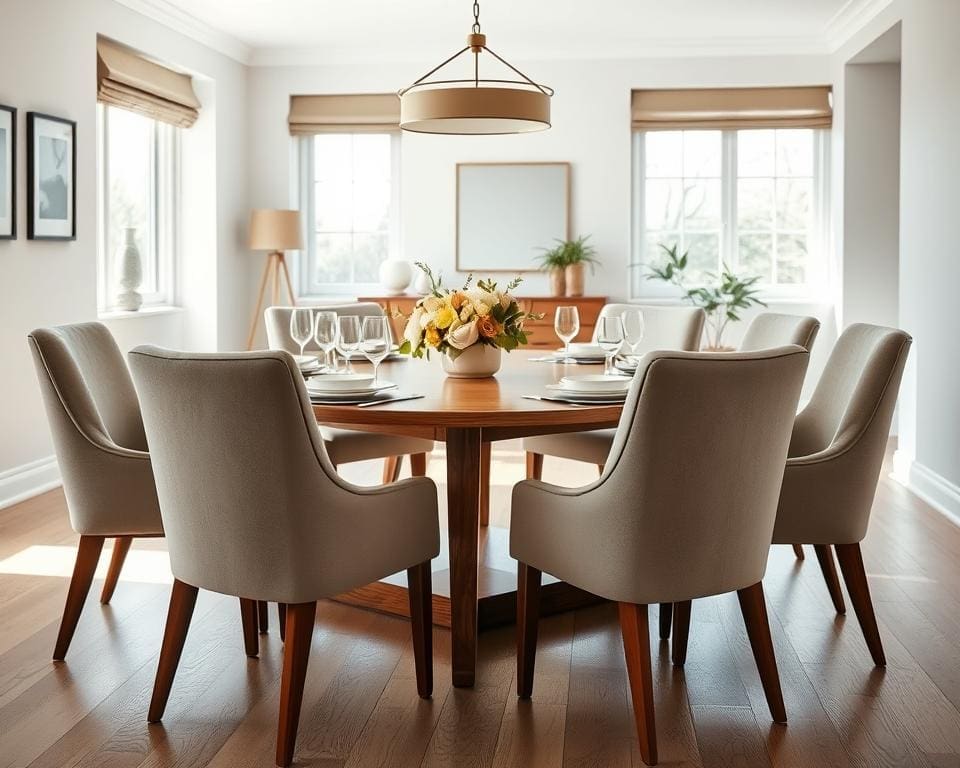
Choosing the right dining chairs and table shapes the way your room feels and functions. The best dining chairs and table combination gives you comfort, correct proportions and a look that lasts. Get this right and your dining room furniture will serve everyday meals, weekend guests and occasional dinner parties without fuss.
This short dining set guide explains why scale, style and material all matter. You will learn to measure your space, match chair height to table depth, and balance modern or traditional looks. The guide also covers durability, upholstery care and the trade-offs between extendable and fixed tables.
Whether you live in a compact Victorian terrace, a modern open‑plan kitchen‑diner or a small flat, the same basics apply. If you are a homeowner, renter or interior enthusiast in the United Kingdom, you will recognise choices from John Lewis & Partners, Habitat, DFS, Heal’s and IKEA UK when you try pieces in store.
The article is organised into five clear sections so you can jump to what matters most: layout and measurements; matching chairs and table scale; style and function; materials and maintenance; and practical buying and styling tips. Use this as a practical starting point to find the dining table and chair match that fits your space and life.
Understanding your dining room layout and dimensions
Before you buy furniture, take a moment to measure your space and note features that affect layout. Measure room length and width, mark alcoves, bay windows, radiators and door swings. Record ceiling height because it changes the visual scale of a room and helps you decide on pendant lights and storage.
Use a tape measure to get accurate dining space dimensions. Allow at least 76–92 cm (30–36 inches) of table depth per person where possible. For comfortable seating and movement, leave 90–110 cm (36–43 inches) between the table edge and a wall. These rules help you calculate the maximum table length that will fit without crowding.
Measure any existing table and chairs before you redecorate. Note table height (standard 72–76 cm), chair seat height (around 45–50 cm) and seat width. These figures confirm fit and help you estimate chair clearance when paired with your chosen table.
In the UK, many homes have narrow Victorian dining rooms or open-plan living where flow matters. Measure door swings and the distance to a kitchen island. These details alter usable floor area and affect how you plan traffic routes and furniture placement.
Measuring your space correctly
- Measure length, width and any recesses that reduce usable area.
- Note ceiling height and fixed features such as radiators and windows.
- Calculate table depth per person and the gap you need between table and wall.
Allowing for circulation and chair movement
Plan circulation space dining room around seated chairs. A minimum of 90 cm behind chairs gives comfortable movement. In tighter rooms, allow 60–70 cm as the least acceptable clearance. Leave 30–40 cm between chairs when guests are seated to provide elbow room.
Account for extendable tables by planning for leaves when they are open. If you host dinner parties often, add the extra depth and circulation space to your measurements. For small footprints, consider benches that tuck under the table, stackable or folding chairs, and sliding chairs on rug-friendly surfaces.
Rug sizing matters. Extend the rug at least 60 cm beyond the table edge so chairs remain on the rug when pulled out. This one change improves comfort and keeps your floor covering in proportion.
Choosing table shape to suit room proportions
Use a table shape guide when matching furniture to a room. Rectangular tables suit long, narrow rooms. Round or oval tables work well in square or compact spaces and encourage conversation. Square tables fit symmetrical rooms where every side is balanced.
Think about visual impact. Round tables soften angular rooms. Glass tops make small rooms feel airier. Pedestal bases free up legroom compared with four-leg tables, which can crowd knees in tighter arrangements.
Match guest capacity to shape and size. A 120–140 cm round table seats four comfortably. Rectangular tables of 180 cm usually seat six, while 220 cm can seat eight. For frequent entertaining in British homes, extendable rectangular tables remain a practical choice. For everyday family meals, durable rectangular or oval options perform well.
Dining chairs table: matching scale, style and functionality
Getting the balance right between seating and the table makes your dining room feel easy to use and pleasing to the eye. Think about how chair and table scale affect comfort, movement and the room’s overall look before you buy.
Finding the right scale between chairs and table
Measure table height and chair seat height carefully. A standard dining table is 72–76 cm high. Aim for a seat height of 43–48 cm so you have about 25–30 cm of knee clearance. If chairs have arms, check that arm height fits beneath the table apron or underside.
Allow roughly 60 cm per person as a minimum seat width. If you prefer more elbow room, plan for about 75 cm per seat. For benches, allow more flexible spacing but keep comfort in mind. Visual scale matters: heavy, bulky chairs suit a chunky table, while slender metal or mid-century styles pair well with lighter tops.
Coordinating styles: modern, traditional and eclectic mixes
For a neat dining set style match, stick to one dominant language. Modern dining chairs often show clean lines, slim legs and neutral upholstery. Pair them with glass tops, sleek rectangular tables or Scandinavian oak to keep the look coherent.
A traditional dining table tends to be solid, with carved details and warm stains. Match it with upholstered high backs or classic wooden chairs to respect the scale and proportion of the room.
If you prefer an eclectic approach, mix one statement head-of-table armchair with simpler side chairs. Repeat a material or colour at least twice and keep scale consistent to avoid a cluttered feel. UK trends show painted farmhouse tables in country cottages, mid-century revival in urban flats, and industrial metal accents in city apartments.
Considerations for extendable and fixed tables
Extendable tables give you flexibility for guests and save space when closed. Consider extendable dining table tips: check the mechanism, test stability with leaves inserted, and pick a reputable maker. Some mechanisms add weight or need occasional maintenance.
Fixed tables are often stronger and simpler in appearance. Choose a fixed table if your seating needs rarely change. Think about how chairs interact with extension: armless chairs or benches make it easier to squeeze in extra guests when you open the table.
Plan storage for leaves and spare seats. Options range from under-seat storage benches to compact folding chairs you can store in a loft or garage. Retailers such as John Lewis & Partners, DFS, Argos and Habitat supply a variety of practical solutions across the UK.
Materials, comfort and durability for everyday use
Choose dining table materials that match how you live. Your decision affects look, upkeep and lifespan. Think about traffic, children and pets when you compare options.
Pros and cons of wood, metal, glass and laminate
Solid wood such as oak, beech or walnut gives a warm, long-lasting surface that can be sanded and refinished. It resists everyday knocks but can scratch, stain and react to humidity if not sealed. Wood pieces are heavier to move, yet their repairability often makes them a sensible buy.
Metal frames offer slim profiles and rugged support for a contemporary look. They need little maintenance and suit industrial or modern interiors. Metal can feel cold to the touch, may scuff floors without pads and should be powder-coated to avoid rust.
Glass tops lighten a room visually and show off bases. Tempered glass wipes clean easily and is ideal for compact spaces. Expect fingerprints and a risk of chips from heavy knocks, so plan placement and family use carefully when weighing a wood vs glass table.
Laminate and veneer give budget flexibility and broad colour choice. High-pressure laminates (HPL) deliver strong scratch resistance. These finishes are low maintenance but cannot be refinished like solid wood and may delaminate at edges over time.
Hybrid tops such as engineered wood or HPL offer a balance between appearance and durability. Check manufacturer specifications and warranty details to confirm suitability for domestic use.
Upholstery choices and maintenance tips
Pick upholstery with everyday use in mind. Natural fibres like cotton or linen feel breathable and comfortable but stain more easily. Synthetics such as polyester and acrylic can be treated for stain resistance and are easier to clean.
Leather and faux leather are durable and simple to wipe down. Genuine leather develops a patina and benefits from regular conditioning. PU leather is budget-friendly and low-maintenance, though it may show wear sooner than full-grain leather.
Seat comfort depends on cushion fill and support. High-density foam holds shape and offers support for long meals. Feather or down blends feel luxurious yet need regular plumping. Check seat depth and back shape to match how you sit.
Follow chair upholstery tips like immediate blotting of spills, routine vacuuming and using fabric protectors approved for the material. For delicate fabrics use professional cleaning. For leather, rely on manufacturer-approved cleaners and conditioners. Consider performance fabrics such as Crypton or Sunbrella alternatives for a pet- and child-friendly finish.
Choosing finishes that resist wear and suit cleaning routines
Select finishes that fit your cleaning habits. Oiled and hard-wax wood finishes allow spot renewal and are forgiving in family settings. Lacquered tops are tough but show scratches more readily. For high-use tables an oiled or hard-wax finish often balances repairability with resistance.
Edge detail matters. Rounded edges reduce bumps and bruises in homes with children. Recessed or chamfered aprons help chairs tuck in neatly without catching arms.
Adopt simple cleaning routines: daily wipe with a microfibre cloth and mild detergent, avoid abrasive cleaners on sealed wood or painted surfaces, and use coasters and placemats to prevent heat and liquid damage. Fit felt pads, rubber glides or castor cups under legs to protect wooden floors and carpets, and check pads regularly to replace worn ones.
Practical tips for buying and styling your dining set
When buying dining set pieces, test them where you can. Sit in chairs for at least ten minutes to check comfort, open extendable tables to assess mechanisms, and feel the weight and stability. Confirm measurements for delivery through doors, stairwells and lifts so the table and chairs actually fit your home.
Set a clear budget but consider investing in the table and two end chairs that will see the most wear. You can add cheaper side chairs for occasional use. Check retailer return policies, assembly requirements and warranties; many UK retailers such as John Lewis & Partners, IKEA UK and Heal’s offer one to five year guarantees on mechanisms and finishes—register your purchase and keep receipts.
Seek sustainable and repairable options: look for FSC‑certified timber, local British manufacturing and suppliers who provide spare parts or repair services. For second‑hand finds, explore Facebook Marketplace and Gumtree, or work with local upholsterers and joiners to restore or bespoke pieces. This approach stretches your budget and supports longevity.
For style dining room cohesion, pick a dominant material or colour and repeat it in smaller details such as frames or a sideboard. Use a unifying element—colour palette, leg profile or material—to mix and match chair styles safely. Follow simple dining table styling tips: long runners suit rectangular tables, low centrepieces keep conversation flowing on round tables, and dimmable pendant lighting hung 60–75 cm above the surface sets the right ambience.
Think practical storage and multifunction: a sideboard, console or storage bench keeps clutter out of sight, while extendable tables serve everyday meals and larger gatherings. For seasonal refreshes, update seat pads or slipcovers, or repaint bases and legs for a new look without replacing everything. If you need guidance on where to buy dining chairs table UK, consider a mix of national retailers and skilled local makers to balance price, quality and custom sizing.
Before you buy, tick off a final checklist: accurate measurements, circulation clearance, chair comfort, finish durability, delivery access and warranty. These simple checks will help you choose a set that fits your space, your life and your sense of style.