Choosing living room furniture sofa coffee table combinations can feel daunting, but it becomes simple when you focus on a few key points. You want a sofa and coffee table pairing that reflects your taste, fits the room and stands up to daily life in a UK home.
Start by thinking about living room design: are you drawn to contemporary lines from Made.com, classic comfort from John Lewis & Partners, or statement pieces available at Barker and Stonehouse? Consider scale and proportion first so your sofa doesn’t overwhelm a terraced house sitting room or look lost in a compact flat.
Material and maintenance are vital for busy households. Choose upholstery suited to pets and children and look into cleaning and delivery services offered by DFS or SofaSofa when you buy. Set a realistic budget and expect a balance of longevity and style so your investment lasts.
Throughout this guide you’ll find practical living room furniture ideas and UK living room furniture tips to help you measure, select fabrics and finish a cohesive look with accessories. By the end you should be ready to pick a sofa and coffee table pairing that combines comfort, form and function.
Identify your living room style and practical needs
Start by clarifying what you want from the room. A quick moodboard of images from Pinterest, Instagram and retailer lookbooks helps. Use that to weigh style preferences against daily routines and the realities of your living room layout.
Understand popular living room styles
For a modern living room, favour clean lines, neutral palettes and functional pieces. Consider modular sofas from Made.com and minimalist metal-and-glass coffee tables to keep the look uncluttered.
Scandi style leans on pale woods, cosy textiles and simple silhouettes. HAY and Muuto offer great examples; add a low-profile sofa in linen and a pale-wood coffee table for warmth.
Traditional interiors call for classic shapes, rolled arms and rich fabrics such as velvet or leather. Look at Barker and Stonehouse or Loaf for inspiration, then layer patterns and tailor cushions to complete the mood.
Industrial décor suits warehouse flats. Choose steel-framed tables, distressed timber tops and leather sofas with sturdy lines to achieve that rugged feel.
An eclectic living room mixes eras and colours with confidence. Balance bold pieces with neutral anchors and repeat a colour or texture to create cohesion.
Assess your space and lifestyle
Begin measuring living room dimensions, doorways and corridors so any purchases will fit. Mark fixed features such as radiators and windows before you arrange seating.
Think about traffic flow and leave 45–60cm between the sofa and coffee table for comfortable movement. In larger rooms you can float a sofa to form a conversation area.
If you have pets or children, choose furniture for pets and family-friendly sofas in performance fabrics or treated textiles. Rounded coffee-table edges and ottomans reduce injury risk.
Test seat depth, cushion fill and back height at showrooms to match your comfort priorities. Use painter’s tape on the floor to visualise sofa and coffee table footprints.
Set a practical budget and longevity expectations
Follow a simple sofa price guide UK to set realistic expectations. Entry-level sofas start around £300–£700, mid-range sit between £700–£2,000 and premium options exceed £2,000.
Consider coffee table costs too: simple MDF or nesting tables begin at £50–£150 while solid wood or designer pieces may cost £200–£1,000+
Decide where to invest. Prioritise furniture durability and invest in quality sofa if the piece will see heavy daily use. Save on trend-led items like accent tables you can refresh more often.
Review warranties and aftercare: aim for at least a five-year structural guarantee on higher-end sofas and check cleaning options at point of sale to protect your purchase.
living room furniture sofa coffee table: choosing the right sofa
Picking the right sofa starts with the room. Measure doorways, corners and the space where the sofa will sit. Match sofa shape and size to your room so circulation feels natural and the piece looks balanced.
Match sofa shape and size to your room
Two-seaters suit small rooms and hallways while three-seaters are the standard for medium spaces. If your layout needs flexibility, consider modular sofas or a sectional sofa UK for adaptable seating. Sofa beds add function in compact UK flats and guest rooms.
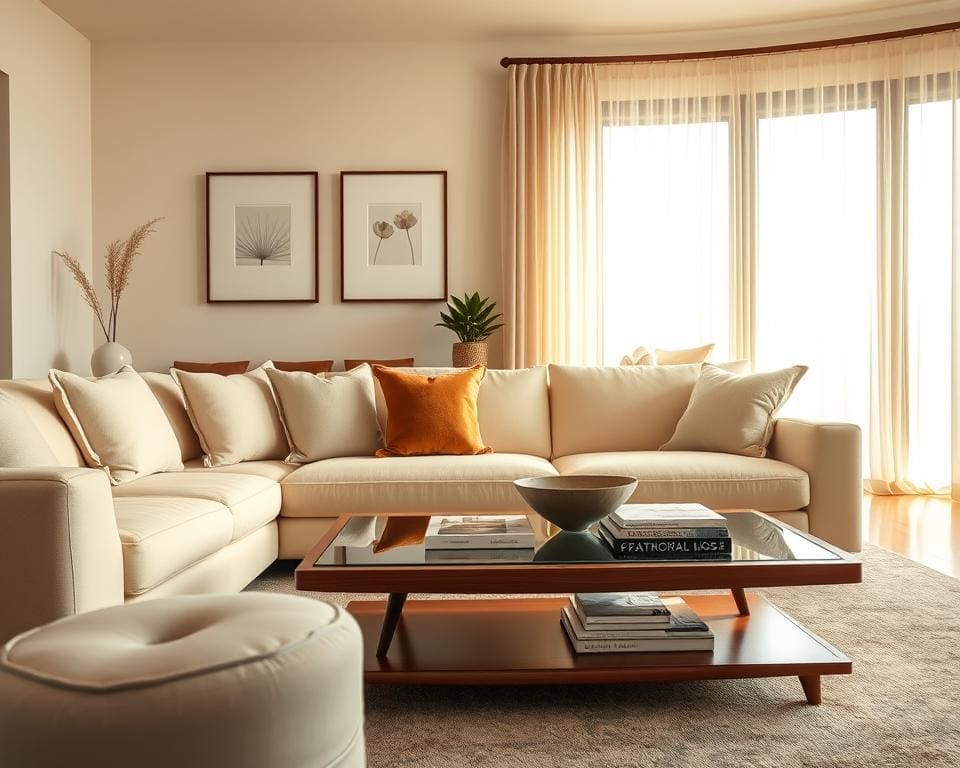
Use a coffee table about two-thirds the length of the sofa as a starting point. Leave 45–60cm between the sofa front and the table and 30–45cm between the table and the TV stand for legroom.
Select materials and upholstery for your lifestyle
Choose sofa fabrics UK that fit daily use. Cotton and linen blends breathe but stain more easily. Velvet looks luxurious while performance fabrics such as Sunbrella and Sophie Conran ranges offer stain resistance and durability for busy households.
Leather sofas UK come in several grades. Aniline leather has a soft feel and will age with character. Semi-aniline gives a protective finish. Faux leather is easier to clean but less breathable. For pet owners, a pet-friendly sofa in darker tones and tighter weaves hides hair and wear better.
Check cushion fills and suspension. High-resilience foam wrapped in fibre gives medium-firm support. Feather-and-down needs regular plumping. Look for sinuous springs or eight-way hand-tied springs in higher-end models.
Choose a sofa colour and texture that fits your aesthetic
Decide between a neutral sofa for long-term flexibility and a statement sofa to create a focal point. Neutrals like greys, beiges and navy pair well with many finishes. Bold hues such as emerald or mustard suit eclectic schemes.
Combine sofa colours with textured upholstery to add depth. Mix cushion patterns in large, mid and small scales. Use throws and rugs in different textiles—wool, leather, linen—to introduce tactile interest.
Always order swatches and view them in your room at different times of day. That step prevents surprises and ensures the chosen tone and texture work with your flooring, walls and lighting.
Choose coffee tables and complementary pieces to complete your look
Start by thinking about shape and scale. Round coffee tables are safer in tight spaces and help circulation, while rectangular tables suit long sofas and give a larger surface area. Square tables pair well with sectional layouts, and nesting tables add flexibility when you need extra surfaces for guests.
Check height and clearance before you buy. Aim for a coffee-table height of 40–50cm so the top sits roughly level with or slightly below the sofa seat. Leave about 45–60cm between the sofa front and the table edge for comfortable legroom and easy movement.
Choose coffee table materials to match both style and use. Glass tops make a room feel lighter but need frequent cleaning. Solid woods such as oak or walnut bring warmth and durability. Metal frames with timber tops add an industrial edge, while mixed-media options like marble and metal feel high-end but can be heavy and require floor protection.
Think about utility and family life. Open-shelf tables and drawers offer storage for books and remotes, and lift-top coffee tables can double as a dining or laptop surface in compact flats. Consider ottomans with tray tops for extra seating and storage, and use side tables or nesting tables to rearrange surfaces as needed.
Protect surfaces and plan for durability. Use coasters and placemats on timber, consider tempered glass for safety, and seal stone tops against spills. For busy households, lacquered wood or powder-coated metal finishes are easier to maintain.
Balance scale and styling for a cohesive look. A common rule is that the coffee table should be about two-thirds the length of your sofa and sit within the rug boundaries. Add a single statement accessory, a tray to corral clutter, and layered lighting to create a focal point. For UK buyers, check delivery dimensions, weight limits for stairs, and consider local craftsmen or reclaimed-wood suppliers for sustainable, unique pieces when looking for the best coffee table UK.