The Importance of Practice Management Software in Modern Clinics
Running a modern clinic involves much more than treating patients. Healthcare professionals also manage bookings, patient records, billing, reminders and daily administration. When these processes rely on separate tools or manual work, mistakes happen faster and valuable time disappears quickly. That is why more clinics invest in practice management software that keeps everything organised in one place.
Today’s patients also expect speed and convenience. They want to book appointments online, receive reminders automatically and communicate with clinics without delays. Clinics that still depend heavily on paperwork or outdated systems often struggle to keep up with these expectations. Modern software helps practices stay efficient while creating a smoother experience for both staff and patients.
Why clinics need smarter digital systems
Administrative work often takes more time than healthcare professionals expect. Reception teams answer calls all day, practitioners update notes manually and staff members constantly switch between systems for scheduling, invoices and patient records. Over time, this slows down the entire clinic.
Practice management software removes much of this pressure by centralising daily operations. Instead of juggling multiple platforms, clinics work from one organised system that handles appointments, intake forms, documentation and communication together. This creates a faster workflow and reduces unnecessary stress for practitioners.
Digital systems also improve accuracy. Missed appointments, double bookings and lost paperwork happen less frequently when processes become automated. Staff spend less time correcting mistakes and more time focusing on patient care. For busy wellness clinics, chiropractors and therapists, this difference becomes noticeable almost immediately.
Online booking improves the patient experience
Patients increasingly prefer online convenience. Many people no longer want to call during office hours just to schedule an appointment. They expect flexible online booking options that work whenever they need them.
Modern scheduling systems allow patients to book appointments 24/7. They can choose available time slots, receive instant confirmations and manage bookings without needing assistance from reception staff. This not only improves convenience for patients but also saves clinics a significant amount of administrative time.
Automated reminders also play an important role. Email and SMS notifications reduce forgotten appointments and help clinics minimise no-shows. A full schedule means fewer gaps during the day and more predictable revenue for the practice.
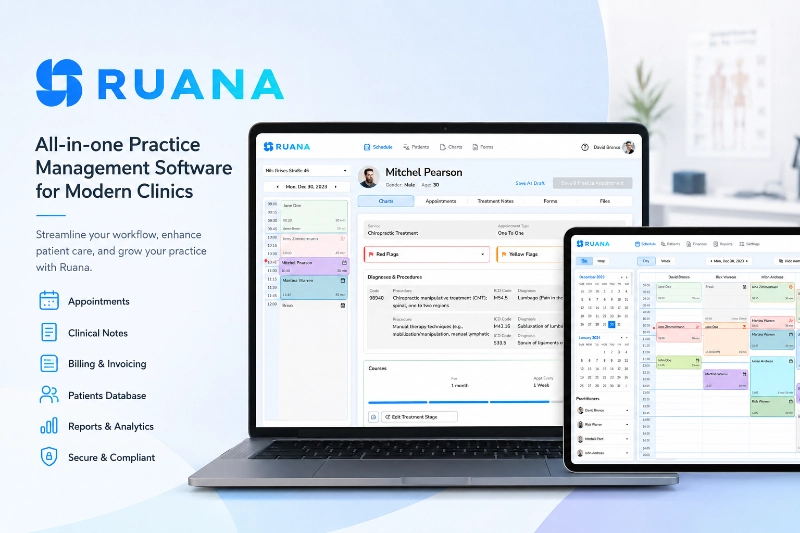
Platforms like Ruana software combine booking tools, reminders and scheduling into one workflow, helping clinics stay organised without relying on multiple disconnected systems. The platform also supports solo practitioners as well as multi-practitioner clinics, making scheduling much easier for growing healthcare businesses.
Key features that make Ruana stand out
Choosing the right practice management platform often depends on ease of use, flexibility and how well the software supports daily clinic operations. Many healthcare professionals struggle with disconnected systems that create extra administration instead of reducing it. Ruana focuses on bringing the most important clinic tools together in one streamlined platform. This helps practitioners stay organised while creating a smoother experience for both staff and patients.
The platform was specifically designed for chiropractors, therapists, wellness professionals and multi-practitioner clinics. Instead of overwhelming users with unnecessary complexity, the software focuses on practical tools that support real clinical workflows. This makes it easier for practices to save time, reduce scheduling issues and improve patient communication.
Key features include:
- 24/7 online appointment booking
- Automated SMS and email reminders
- Digital intake forms and patient questionnaires
- Customisable SOAP notes and charting tools
- Integrated invoicing and billing features
- Multi-practitioner scheduling management
- Revenue tracking and financial insights
- HIPAA-compliant workflows and secure data storage
- Membership and wellness package management
- Cloud-based access without software downloads required
These features allow clinics to manage administration, communication and patient documentation from one central system. As practices continue growing, having everything connected in one platform helps reduce daily friction and improves operational efficiency significantly.
Faster documentation creates more time for care
Documentation remains one of the most time-consuming parts of healthcare administration. Many practitioners spend hours after work updating patient files, writing SOAP notes or processing forms manually. This affects both productivity and work-life balance.
Digital charting tools simplify this process considerably. Practitioners access patient histories instantly, use customised templates and complete notes far more efficiently. Instead of handling endless paperwork, they document treatments directly within the system during or immediately after appointments.
This faster workflow improves the quality of care as well. When healthcare providers quickly access accurate patient information, they make better-informed decisions during consultations. Patients also benefit from shorter waiting times and more focused interactions with practitioners.
Customisable forms and digital intake documents further streamline the process. Patients complete paperwork online before arriving at the clinic, reducing delays at reception and helping appointments start on time.
Better financial management for modern clinics
Managing invoices and payments manually often creates unnecessary complications for clinics. Billing errors, missed payments and disconnected financial systems slow down operations and affect cash flow.
Integrated practice management software simplifies billing by keeping everything connected in one place. Clinics generate invoices quickly, track payments more accurately and manage memberships or wellness packages without extra administrative work. Some systems also support insurance-ready billing codes and superbills, which helps practices handle more advanced financial workflows efficiently.
Analytics and reporting tools provide another major advantage. Clinics gain insights into revenue trends, appointment statistics and practitioner performance. This information helps practice owners identify opportunities for growth and improve operational decisions over time.
As clinics continue to grow, having access to real-time financial and operational data becomes increasingly valuable. Instead of guessing which services perform best, clinics use clear insights to optimise scheduling, staffing and patient retention strategies.
The future of healthcare administration
Healthcare continues moving toward more digital and patient-focused solutions. Clinics that rely heavily on manual administration often struggle to scale efficiently or meet modern patient expectations. Practice management software helps healthcare providers adapt to these changes while creating more sustainable workflows.
The next generation of software will likely include even more automation, smarter analytics and AI-supported workflows that reduce administrative pressure further. However, the goal remains the same: helping practitioners spend less time on paperwork and more time with patients.
For chiropractors, therapists and wellness professionals, efficient systems are no longer optional. They have become essential tools for delivering organised, professional and patient-centred care in a competitive healthcare environment.