
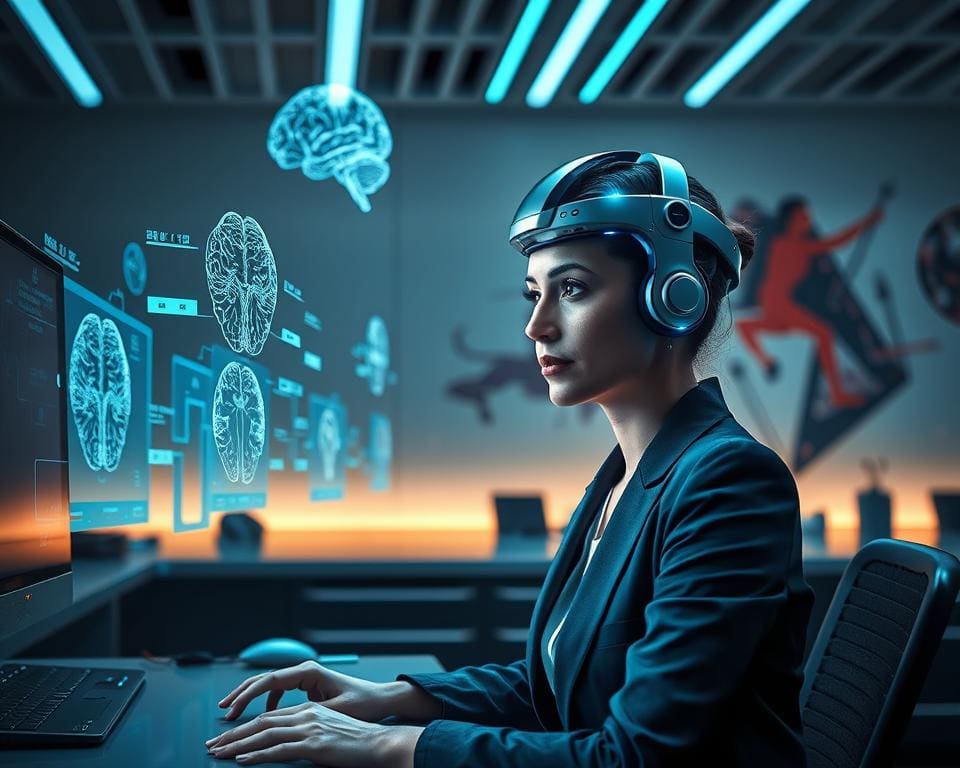
You are entering a field where neural interfaces shift how you interact with machines and with one another. Brain computer interfaces translate patterns of neural activity into commands for external devices or software. They range from invasive intracortical arrays used in clinical trials to non‑invasive EEG headsets and semi‑invasive sensors. This scope matters because each approach carries different risks, costs and promise for health and productivity.
Clinical milestones show the pace of change. Intracortical implants developed by teams at University College London and trials involving companies such as Neuralink and Synchron have restored motor commands in research participants. Non‑invasive systems from firms like g.tec and OpenBCI offer safer, lower‑cost routes to decode intent. Consumer headsets explored by augmented and virtual reality developers are beginning to trial neural input for gaming and accessibility.
The article outlines what you can expect. Section two examines the technology, how systems work and current applications. Section three tackles ethics, privacy and regulation, and section four explores how neural interfaces will alter everyday human‑computer interaction and practical steps you can take.
This matters for the UK. Public funding from UK Research and Innovation supports foundational work in neurotechnology UK, while the NHS is watching assistive and neurorehabilitation uses closely. Policy choices in the UK and EU will shape device approval, data flows and cross‑border research collaboration.
Trends underline urgency: investment in neurotechnology is rising, machine learning for neural decoding is improving rapidly, and AR/VR market growth fuels demand for novel input. You will see references to peer‑reviewed studies, clinical trial registries and government documents as the article progresses to ground claims in reputable sources.
brain computer interfaces: technology, progress and practical applications
You will find below a concise guide to how brain computer interfaces work, what they can do today and which technical hurdles remain. The aim is to give practical insight without technical overload so you can judge current capabilities and near‑term prospects.
How brain computer interfaces work
At the heart of BCI technology lies neural signal acquisition. You can choose between three main approaches: invasive implants, semi‑invasive recordings and non‑invasive sensors. Invasive implants, such as intracortical microelectrode arrays, record high‑resolution activity from cortex but require surgery and carry clinical risk.
Semi‑invasive methods like electrocorticography (ECoG) sit beneath the skull yet above the brain surface. They deliver better fidelity than scalp methods while lowering some surgical burdens. Non‑invasive tools include scalp EEG, functional near‑infrared spectroscopy (fNIRS) and magnetoencephalography (MEG). These are safe and portable but give lower spatial or temporal resolution.
The typical signal chain moves from acquisition to pre‑processing, feature extraction, machine‑learning decoding and command execution. Pre‑processing removes artefacts and filters noise. Feature extraction and BCI signal processing feed classifiers or deep learning models that translate patterns into actions.
Adaptive algorithms and transfer learning reduce calibration time so you can use a device more quickly. Closed‑loop systems provide real‑time feedback. Sensory feedback can be haptic, visual or proprioceptive. Closed‑loop neurostimulation adjusts stimulation based on ongoing signals to restore function or refine control.
Leading academic groups at Imperial College London and University College London have published key studies. Commercial players such as Blackrock Neurotech, Synchron, Neuralink, g.tec, OpenBCI and Meta are pushing both research and product development.
Current and emerging applications
Medical uses form the clearest near‑term impact. Implanted arrays have enabled prosthetic limb control with grasp and reach in clinical trials. Neuroprosthetics for communication have allowed people with locked‑in syndrome to spell words via brain signals.
Neurorehabilitation uses BCI neurofeedback and paired stimulation to promote motor recovery after stroke. Trials report functional gains when therapy pairs intention signals with peripheral or cortical stimulation.
Consumer applications range from EEG headsets for meditation and gaming, such as Muse, to hands‑free control in AR/VR environments. You will see cognitive state detection tools that monitor attention and fatigue to adapt interfaces and productivity apps.
Military and security actors study enhanced soldier systems, remote vehicle control and surveillance. These dual‑use potentials raise governance and ethical questions that need urgent attention.
Peer‑reviewed trials and product studies report varied metrics for accuracy, speed and tolerability. You should expect gradual improvement as BCI signal processing, sensor design and machine learning mature.
Key technical challenges
Signal fidelity and robustness remain major issues. Noise, movement artefacts, electrode drift and physiological variability such as fatigue or mood can degrade performance in real‑world use.
Miniaturisation and power management constrain both chronic implants and consumer wearables. Engineers must balance battery life, heat dissipation and biocompatibility when designing long‑term devices.
Interoperability and standards are lacking. The absence of universal communication protocols and agreed safety standards makes integration across devices and vendors difficult. Cross‑industry standards bodies are needed to harmonise interfaces and testing.
Other persistent challenges include long‑term stability of implants, immune response, regulatory approval pathways and the need for large, reproducible clinical studies that demonstrate efficacy and safety over time.
Ethics, privacy and regulation shaping human interaction with neural tech
You are entering a space where machines read patterns that once belonged only to your mind. This raises urgent questions about BCI ethics, neural privacy and brain data ownership that affect how you will trust, use and control neural devices.
Neural data can reveal thoughts, intentions, moods and medical conditions. That makes storage, transmission and processing uniquely sensitive. You must expect risks from re‑identification, insecure cloud storage and unregulated secondary uses of signals, even when data appear anonymised.
Privacy risks and data governance
Consent for neural devices is more complex than for typical sensors. What you allow today may enable new inferences tomorrow. Dynamic consent models let you update permissions as analysis techniques evolve.
Technical safeguards reduce exposure. Encryption in transit and at rest protects streams and stored files. Edge processing keeps raw neural signals on your device. Differential privacy and federated learning let developers train models while limiting your personal data leaving the device.
Legal frameworks such as the UK Data Protection Act and GDPR offer protections, but grey areas remain around brain datasets. You need clear rules on brain data ownership so healthcare providers, manufacturers and users know rights and limits on monetisation.
Ethical implications for identity and agency
BCIs can amplify intent and assist decision‑making. They may also nudge preferences or automate actions in ways that affect autonomy. You should be able to distinguish between suggestion and control when a device acts on decoded intent.
Long‑term use can change how you see yourself. Studies from neuroscience and human‑computer interaction show adaptation, changes in mental workload and, at times, dependency or frustration when systems underperform.
Access to neural enhancements could widen social divides. If only affluent groups gain reliable devices, workplace pressure to adopt cognitive tools might follow. Equity must shape policy so benefits do not entrench exclusion.
Cognitive liberty and mental privacy deserve recognition as human rights that inform regulation and everyday practice.
Regulatory approaches and policy recommendations
Current UK regulation covers many clinical devices under the UK MDR and aligns with EU MDR for products on the continent. Data protection laws like GDPR and neural data guidance offer a baseline. Non‑medical consumer BCIs sit in a patchwork of safety and consumer rules that leave gaps.
Suggested standards should include rigorous safety testing for invasive and semi‑invasive devices, mandatory post‑market surveillance and transparent algorithmic reporting. You should expect mandatory adverse event reporting and strong cybersecurity requirements.
International coordination is vital. Organisations such as the Council of Europe, OECD and WHO can host shared standards. Neuroethics groups and professional societies offer practical ethics guidance you can trust when shaping rules.
- Fund independent safety research in the UK to test real‑world risks.
- Open public consultations so patient and clinician voices shape policy.
- Update statutes to clarify brain data ownership and commercial use rights.
Practical policy must balance innovation with robust protection. If you expect safe, fair and private neural technology, governance must combine legal clarity, technical safeguards and inclusive ethical oversight.
How brain computer interfaces will redefine everyday human interaction
You will find BCIs reshaping daily life by making control feel natural and light. Designers aim to capture intent signals you already use, add predictive models to reduce effort, and give clear multimodal feedback so perception and action close quickly. Human‑centred methods, iterative testing with diverse users and accessibility audits will guide those interfaces, keeping cognitive load low and familiar.
To reduce mental effort, systems will chunk commands, learn your patterns and augment rather than replace existing tools. That adaptive approach helps you keep hands‑on methods while letting neural channels speed routine tasks. The result is assistive technology that feels like an extension of your will, not a demanding new skill set.
For people with disabilities, brain‑driven spelling systems, wheelchair control and robotic limbs are already improving mobility and communication in clinical trials. Neurorehabilitation tools promote plasticity after stroke and show measurable gains in quality of life. Wider BCI adoption UK would lift independence, workplace inclusion and educational access for those who need it most.
Public acceptance depends on perceived safety, clear benefit and transparent governance. Surveys in the UK and Europe show cautious interest; you will trust devices that are openly tested, independently evaluated and backed by clear redress. Consent‑based sharing of affective neural data and opt‑in models will be vital to prevent misuse while enabling neural communication that can enhance empathy and team collaboration.
BCIs will change how you collaborate and learn. Hands‑free control of shared tools, faster idea exchange and systems that monitor team cognitive states could boost productivity, but they must balance privacy. In education, adaptive tutoring and neurofeedback promise personalised learning while raising ethical questions for children that you should address now.
Three plausible futures emerge: modest augmentation for specific tasks within five years, tighter symbiosis with AI assistants within a decade, and hybrid human‑AI teams for complex work as technical limits fall. Each scenario needs better sensors, robust models and strong societal governance to succeed without harm.
You can prepare by improving digital and neurotechnology literacy, joining public consultations and supporting ethical research at institutions such as UCL and Imperial College London. Clinicians should start training and building consent pathways while organisations create local governance for data. Follow MHRA guidance, peer‑reviewed journals and research centres to stay informed as the future of BCIs unfolds.