Living in a small flat or terraced house makes smart home storage essential. This guide focuses on practical, achievable home storage strategies tailored to UK homes, from studio apartments to Victorian terraces. You will find small home storage ideas that help you maximise space and protect your possessions.
Good storage matters. It boosts daily function, lowers stress and makes rooms feel larger. Measurable gains come from improved cubic volume utilisation and reduced surface clutter. Clear worktops, tidy hallways and organised cupboards make routines quicker and more pleasant.
British housing brings specific challenges. You may have narrow hallways in Victorian terraces, bay-windowed rooms in Edwardian houses, open-plan city flats or minimal built-in storage in many new builds. These constraints shape the best storage solutions for small homes in the UK.
The article covers four practical themes: how to assess and zone your space, built-in and furniture-based storage options, vertical and multipurpose solutions, and simple organising and decluttering habits. You will get both low-cost tweaks and ideas for longer-term investments such as bespoke cabinetry.
Follow the guide and expect clearer surfaces, easier access to everyday items, better use of vertical and hidden space, and routines that prevent clutter returning. Start by auditing your home and make one small change today to begin to maximise space with compact living storage.
Smart home storage strategies to maximise limited space
Begin by taking a calm inventory of your home to understand where space is lost and where potential lives. A quick storage audit helps you map each room, note items by category and frequency of use, and spot clutter hotspots such as entryways, kitchen counters and underbeds. Use a tape measure, notebook or spreadsheet and a camera to record measurements and trouble areas.
Assessing your space and storage needs
Start with simple measurements: usable wall height, cupboard depth, under-bed clearance and depth behind radiators. Measure to the skirting so fitted units sit neatly. Label belongings as daily, weekly, seasonal or archival to decide how close items must be to hand. Store frequently used things at waist-to-eye height for easy access.
Reference trusted retailers for sizing and ideas. IKEA gives modular dimensions you can work with and Howdens offers practical cabinetry options. For spatial context consult guidance from the Royal Institute of British Architects when planning changes.
Creating zones and multifunctional areas
In open-plan homes you can use rugs, lighting and furniture placement to create clear zones for living, working, sleeping and dining without building walls. Zone planning reduces visual clutter and makes it easier to assign storage to each function.
Choose furniture that separates areas while adding storage: bookcases as dividers, consoles behind sofas and storage sofas that conceal office kit. Foldaway desks and mobile trolleys on castors help you switch between tasks and keep compact spaces flexible for multifunctional rooms.
For British homes where working from home is common, ensure home-office equipment can be tucked away after hours. Nesting tables and wall-mounted fold-down tables let a dining area become a workspace in seconds.
Staging and visual tricks to make spaces feel larger
Manage sightlines by keeping horizontal surfaces clear and placing storage so it does not break the room’s visual flow. Concealed storage—fitted cupboards, ottomans with lift-up lids and benches—cuts visual noise while a small amount of curated display prevents a closed-in feel.
Use mirrors to reflect daylight and create depth; position them opposite windows where possible. Keep a light, consistent colour palette to reduce visual clutter. Match storage unit heights to skirting for pleasing proportions and favour recessed lighting or LED strips to draw the eye up.
Practical small changes deliver measurable gains: freeing floor area with vertical shelving, under-bed storage boxes and smart closet systems increases usable square footage, lowers stress from mess and creates flexible zones that suit daily life.
For a focused guide on practical layouts and built-in approaches consult this resource: best storage solutions for small homes. Use these ideas with declutter strategies to maximise limited space and make your home feel open and efficient.
Built-in and furniture-based solutions for compact homes
Smart use of fitted elements and clever furniture makes small spaces work harder. You can combine bespoke pieces with ready-made options to create streamlined storage that suits awkward alcoves, bay windows and narrow hallways.
Bespoke built-in cupboards and shelving
Tailor-made joinery lets you exploit every inch. Bespoke cupboards fill chimney-breast alcoves, use full height to the ceiling and turn under-bay-window benches into useful seats with hidden compartments.
Common opportunities in UK homes include fitted wardrobes in bedrooms and shallow cupboards in slim corridors. If a full bespoke install is beyond budget, consider semi-bespoke systems from John Lewis & Partners, B&Q, Wickes or IKEA’s PAX, or hire a local carpenter for simpler fitted runs.
When buying, measure twice and think about sliding doors for tight passages. Choose adjustable shelving and moisture-resistant finishes for kitchen and utility areas so your built-in storage stays flexible and durable.
Furniture that doubles as storage
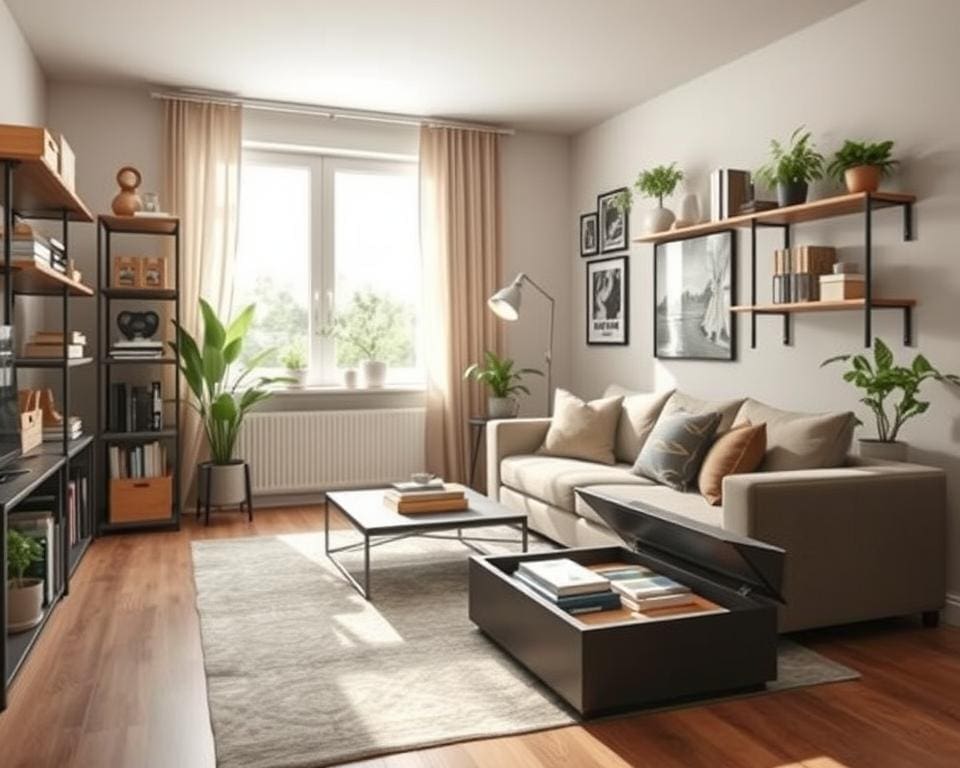
Choose pieces that hide clutter while staying stylish. Ottomans with storage and storage benches are ideal for living rooms and halls. Beds with drawers, coffee tables with lift tops and dining benches with hidden lids add function without bulk.
Look for sturdy construction and soft-close fittings. Neutral finishes help items blend with décor so your storage furniture reads as part of the room, not an afterthought.
Retailers such as Habitat, Made.com and DFS offer multifunctional ranges. Silentnight and Hypnos supply beds with integrated drawers. Check ergonomics: ottoman lids should be comfortable to perch on and drawers must clear skirting boards.
Modular and stackable units for adaptability
Modular shelving systems let you reconfigure as needs change. Options such as IKEA Kallax, String System and modular ranges from Muuto and Habitat can be stacked in narrow halls or combined with drawers and doors.
Use tall slim units in corridor niches and stack crates inside cupboards to gain vertical storage. Mix open and closed modules: display decorative items on shelves and hide paperwork and cables in closed boxes.
Create visual cohesion with matching baskets, boxes and drawer inserts. Choose materials that complement your floors and joinery so modular shelving feels coordinated with the rest of your compact home furniture.
Creative vertical and multipurpose storage ideas
Use vertical thinking to add order without losing floor space. Smart stacking and clever fittings make rooms feel bigger while keeping essentials to hand. The suggestions below focus on practical fixes you can install yourself or discuss with a carpenter or builder for more complex builds.
Utilising walls, doors and ceilings
Fit wall-mounted storage such as floating shelves, pegboards and rail-and-hook systems to free up surfaces. Choose strong fixings to studs or the correct wall plugs for UK masonry and respect weight limits on rails and shelves.
Consider peg systems like Magnetoplan or X-Board style panels for tools, kitchen utensils and craft supplies. Use hanging rails from brands found at Dunelm or Argos to create accessible, tidy displays.
Over-door organisers are ideal for shoes, cleaning supplies and accessories. Pick slim profiles in breathable, washable fabrics for narrow doors and check that flat-front doors meet fire-safety rules and any landlord requirements.
Ceiling-mounted options are useful in flats. Pulley-operated drying racks save outdoor space and loft ladders or safe loft-access boxes extend storage if loft insulation and Building Regulations allow. Consult a structural or loft specialist before adding heavy loft storage.
Small kitchen and bathroom vertical solutions
Kitchen vertical solutions make prep simpler. Fit magnetic knife strips, hanging rail systems for pans and slim spice racks on cupboard doors. Use the shallow gap above the fridge or washing machine for narrow cabinets and vertical plate racks to save drawer space.
In bathrooms, use tension rods for hanging baskets and wall-mounted dispensers for soap and shampoo. Over-cistern shelving and recessed medicine cabinets add storage without reducing floor space. Choose moisture-resistant materials such as PVC-laminate, marine plywood or lacquered MDF to avoid swelling.
For compact organisers, look to Joseph Joseph and other affordable ranges for drawer dividers and pull-out racks. The practical tips at how to optimise storage without clutter can help you decide which fittings suit your space.
Smart use of staircases and high spaces
Under-stair storage can be bespoke drawers, cupboards in risers or pull-out shoe drawers. In many UK period homes, under-stair cupboards become cloakrooms or compact WCs when plumbing and planning allow.
High-level storage works well for seasonal items. Fit high shelving and keep lightweight, labelled boxes for easy access. Use a stable foldable step ladder and add guardrails or doors on very high shelves to reduce fall risk.
Think about integrating storage into the stairs themselves. Designs include open treads with pull-out drawers, bookcases built into the staircase side and small storage pockets in step backs. Work with a qualified carpenter to ensure builds meet safety and building regulations.
Practical organising, maintenance and decluttering tips
Start with clear, simple decision rules to make organising tasks painless. Use the 12‑month rule: if an item has not been used in a year, consider donating or recycling it. Apply the one-in-one-out rule for clothing and accessories so new purchases do not add clutter. Ask the “does it earn its space?” test—if an object has no regular purpose, give it away or recycle it responsibly.
Set a realistic decluttering schedule you can stick to. A daily tidy routine of ten minutes keeps surfaces clear and prevents pile-ups. Add a weekly 30–60 minute zone focus—rotate between kitchen, wardrobe and paperwork. Plan seasonal deep-cleans with daylight-saving changes or wardrobe swaps to review belongings systematically.
Choose labelled storage and transparent bins to speed visual searches and reduce forgotten items. Use drawer inserts from IKEA, Muji or Joseph Joseph for cutlery, toiletries and small electronics. Keep a small toolkit with dividers, a label maker or masking tape and marker, clear plastic boxes and a collapsible laundry basket for donations to streamline storage maintenance.
Involve household members with simple rules and visible systems. Use colour-coded bins or a shared storage list and display a weekly chore chart to keep everyone accountable. Scan important documents to secure cloud services such as Dropbox or Microsoft OneDrive, keep a single in-tray for current bills and set measurable goals—free a shelf each month and track donations to local charities like Oxfam or the British Heart Foundation.