Good home lighting does more than banish shadows. It balances function and atmosphere, changing how you see space, colour and texture. In this guide you will find practical lighting ideas that suit typical UK homes, from compact terraces to open-plan flats.
You will learn planning basics and layered strategies that make room lighting work for living rooms, kitchens, dining areas, bedrooms and bathrooms. The aim is to give clear, energy-smart advice so you can pick fittings that look great and cut costs.
Where safety matters, the guide flags UK requirements. Bathroom fittings must meet the right IP rating and installers must use compatible bulbs and lamp holders such as B22, E27, GU10 and MR16. Major retailers like John Lewis, Habitat, Ikea UK, The Lightbulb Company and Lighting Direct stock suitable LEDs and smart systems for UK wiring.
The article is organised for quick reference: Section 2 covers planning, layers and brightness; Section 3 looks at living-room lighting ideas and focal fittings; Section 4 focuses on kitchen and dining; Section 5 examines bedroom and bathroom solutions. Read on for practical house lighting tips and interior lighting inspiration you can apply room by room.
Home lighting essentials: planning, layers and brightness
Good lighting starts with a simple plan. Look at how you use each room, note natural daylight and list the tasks you do there. That will help you choose the right lighting layers and avoid over- or under-lighting.
Understanding the three layers of lighting
You can think of lighting as three clear layers. Ambient lighting provides general illumination for circulation and comfort. Ceiling-mounted fittings, recessed downlights and large pendants work well for this base layer.
Task lighting targets specific activities. Choose adjustable desk or table lamps, under-cabinet strips in the kitchen and vanity lights for grooming to reduce glare and improve visibility.
Accent lighting adds depth and interest. Use track heads, picture lights, wall-washers or LED strip lights in coves to highlight art, plants or shelving and create contrast.
Combining ambient lighting, task lighting and accent lighting gives flexibility. Fit dimmers to ambient sources, keep task fixtures bright for precision and use accent lighting to draw the eye.
How to calculate the right brightness and colour temperature
Focus on lumens rather than watts. Lumens measure light output, watts measure energy use. To estimate needs, multiply the room area (m²) by the desired lux level to get total lumens required.
- Living rooms: aim for around 100–300 lux for ambient comfort.
- Kitchens and worktops: target 300–750 lux for task areas.
- Bathrooms and grooming: aim for 300–500 lux at mirrors; 500 lux gives detailed clarity.
Use a simple lumens calculation: room area × lux level = total lumens. Divide that figure by the lumen rating of a chosen bulb to find how many fittings you need.
Colour temperature affects mood. Choose warm white (2700–3000K) for cosy living rooms and bedrooms, neutral white (3000–4000K) for kitchens and bathrooms, and cooler whites (4000–5000K) where crisp detail is required. Pick lamps with CRI 80+ for general use, and CRI 90+ where accurate colour matters, such as make-up or art appraisal.
Energy-efficient choices and long-term savings
LEDs are the smart choice for longevity and lower running costs. Modern LEDs last 25,000–50,000 hours and deliver significant LED savings when compared with halogen or incandescent lamps.
Check the driver and thermal design in fittings and favour reputable brands like Tridonic or Osram for longer life. Choose compatible bulb bases for UK fittings, such as B22, E27 and GU10.
Smart controls and dimmable LED drivers cut energy use in real time. Systems from Philips Hue, LIFX or wiring-compatible dimmers can reduce consumption and improve convenience.
Follow guidance from the Energy Saving Trust when planning upgrades and consider phased replacements to spread cost. For extra reading on practical choices and fixture examples visit how to choose the perfect lighting for every, which focuses on practical fittings and energy-efficient lighting UK options.
Living room lighting ideas to create comfort and ambience
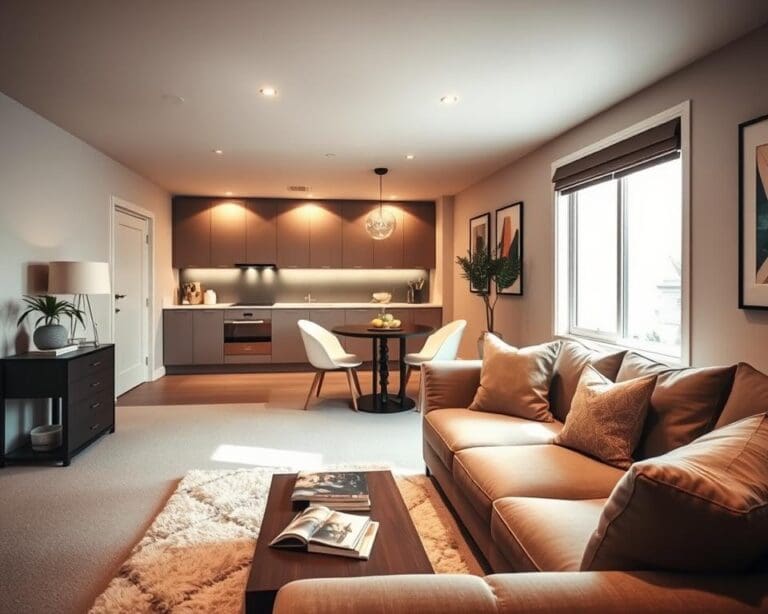
Start by thinking of lighting as layers. A well-planned scheme uses ambient, task and accent light to support different activities in your lounge. This makes living room lighting feel flexible and comfortable for everyone who uses the space.
Combining ambient, task and accent lighting for flexible use
Use a central ceiling fixture or recessed downlights for general illumination. Add adjustable floor lamps and table lamps beside seating to give 150–300 lux for reading and hobby tasks.
Fit directional accent lights to highlight shelving, media units or artwork. Aim fixtures at about 30 degrees to cut glare and protect sightlines to the TV. Wall lights and uplighters help create soft, diffuse layers that reduce screen reflections and lift the room without harsh shadows.
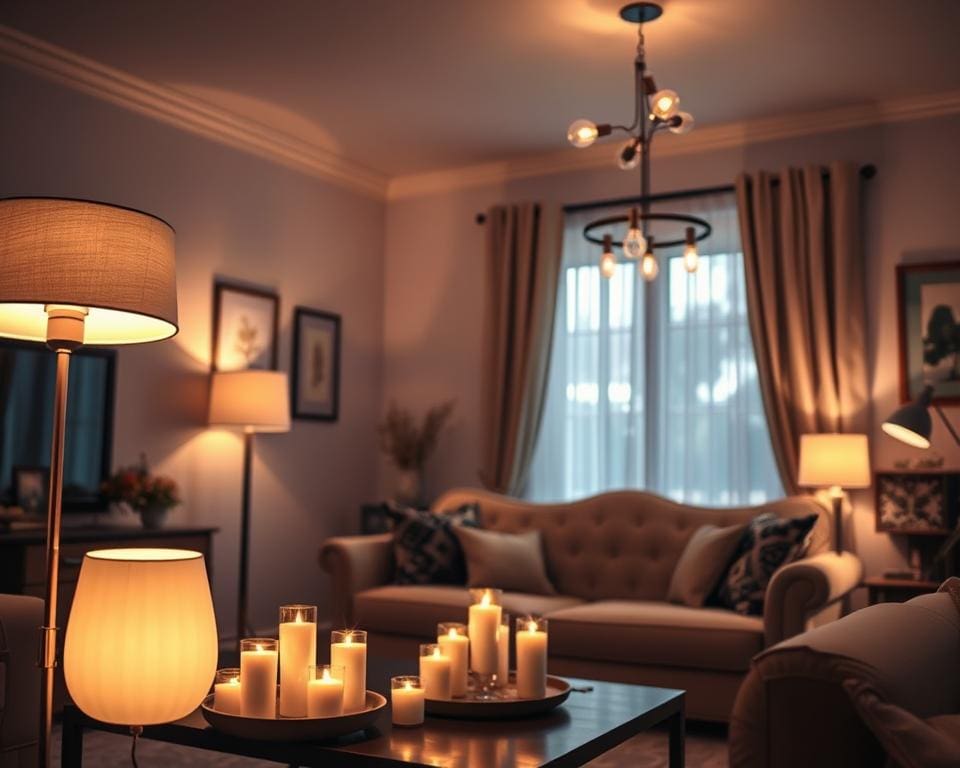
Create scenes for different moments. Choose brighter settings for board games or cleaning. Switch to low, warm light for film nights or relaxed evening chat.
Best pendant and chandelier options for focal points
Select pendant lighting or a chandelier to suit room size and ceiling height. A pendant diameter of roughly one-third the width of your seating area usually looks balanced. Keep a 2.1m clearance in circulation routes when fitting hanging pieces.
Pick styles that match your interior: mid-century modern pendants, industrial metal shades, glass or crystal chandelier styles for period homes, and woven fibre shades for Scandi schemes. For trusted buying choices, consider Habitat, John Lewis & Partners, Oliver Bonas, Tom Dixon or Ikea for budget options. Use a qualified electrician for heavy fittings and ensure ceiling boxes are rated for the weight.
Using dimmers and smart controls to set the mood
Dimmable lighting brings energy savings and longer bulb life while giving you mood control. Match dimmable LEDs with a compatible dimmer module; trailing-edge dimmers often work best with LEDs.
Explore smart lighting lounge systems for convenience. Philips Hue, LIFX and Zigbee or Z‑Wave hubs offer scene presets for reading, entertaining and movie nights. Integration with Amazon Alexa, Google Home or Apple HomeKit lets you control light by voice or schedule. Remember that full functionality may need a bridge or hub and keep network security in mind when adding smart devices.
Kitchen and dining lighting: functional and stylish solutions
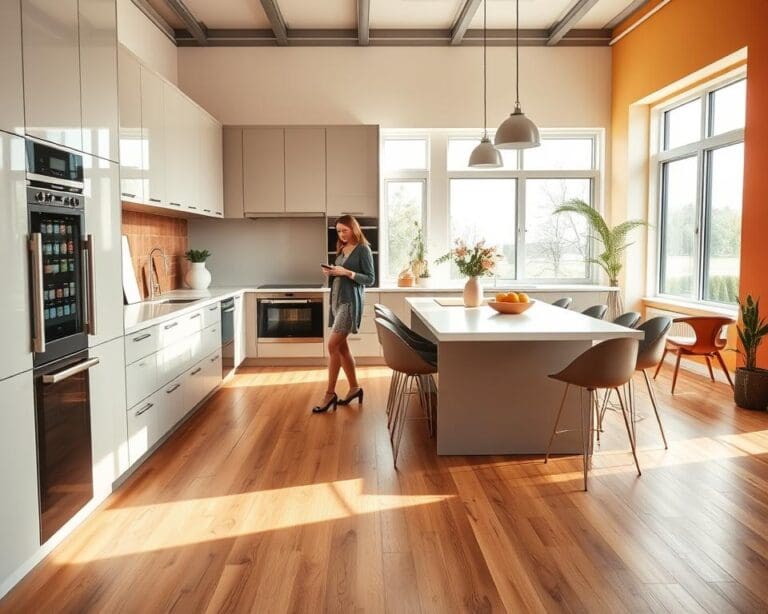
Good kitchen lighting makes cooking safer and more enjoyable. Think of layers that work together: bright task light for food prep, softer ambient light for dining and accent lights to highlight features. Planning around how you use the room will help you choose the best fittings.
Task lighting for worktops and preparation areas
For clear, shadow-free work surfaces aim for 300–500 lux at worktop level. Fit under-cabinet lights using LED strips worktop or puck lights with a CRI of 90+ and a colour temperature between 3000–4000K for true colour rendering. Space recessed downlights about 1.2–1.5m apart in a standard kitchen to avoid dark spots.
Choose IP44 or higher fittings where lights sit near sinks and hobs to meet safety expectations. Anti-glare diffusers keep viewing comfortable and help when you use screens or recipe tablets. Always follow UK electrical regulations for kitchen zones when positioning circuits and switches.
Island and pendant lighting that balances task and style
Island pendant lights can be both practical and decorative. Hang pendants 75–90cm above the island surface so they give focused task light without blocking sightlines. If you use three fixtures, space them evenly to cover the full work area.
Metal shades give directional light for chopping and plating. Glass or fabric shades soften the glow for entertaining. Popular finishes in British kitchens include brushed brass, matt black, smoked glass and natural rattan. Consider linear island lights or modular systems for a consistent wash of illumination.
Layered lighting for dining zones and entertaining
For dining room lighting centre a statement pendant roughly 60–75cm above the table to create an intimate scale. Use warmer tones, around 2700–3000K, to flatter food and skin tones. Combine the pendant with dimmable ambient lights and small accents such as wall lights or picture lights.
Smart controls let you set scenes for casual meals, formal dinners and late-night drinks. Portable accent options like table lamps or battery LED candles offer flexibility when you move guests around. Mixing these elements gives you a dining area that feels welcoming and works for many occasions.
Bedroom and bathroom lighting ideas for relaxation and practicality
For bedroom lighting, aim for warm ambient light at 2700–3000K to support sleep and relaxation. Use layered dimmable lighting so you can brighten the room for dressing and lower levels for winding down. Bedside lamps or adjustable wall lights with directional heads provide focused task light for reading; target about 300 lux at the reading position for comfort without glare.
Think about wardrobe and dressing-area fittings: recessed or strip LEDs inside closets, interior sensor lights and high-CRI lamps help you judge colours accurately. Combine blackout curtains and warm-start smart scenes to reduce blue-rich light in the evening. USB-integrated bedside lamps and motion-sensor night lights add practical convenience for late-night trips.
In the bathroom, prioritise safety and grooming with appropriate mirror lighting. Install two side-mounted fittings or a horizontal light at eye level to cut shadows and aim for roughly 500 lux for grooming tasks. Choose anti-glare, diffused LED fixtures with high CRI so colours appear true when you shave or apply make-up.
Use IP-rated bathroom lights suited to the correct zones: at least IP44 around basins and sinks, and higher ratings for showers. Select recessed downlights with suitable ingress protection and thermal ratings for wet areas. Have electrical work completed by a Part P qualified electrician, and prefer moisture-resistant finishes and LED fittings with accessible drivers for easier maintenance.