Choosing the perfect lighting changes how your home feels, looks and functions. This room lighting guide gives clear, practical advice so you can pick lighting for every room with confidence.
You will learn simple home lighting ideas for living rooms, kitchens, bedrooms and bathrooms. The focus is on combining style with energy-efficient choices such as LEDs and smart controls from Philips Hue and LIFX.
Lighting is both functional and aesthetic. It affects mood, safety and the perceived size of a space. Good choices depend on understanding types of light, colour temperature, brightness and fixture styles.
Later sections show how to layer ambient, task and accent lighting, match fixtures to décor and plan layout and budget. You will also find practical pointers: measure rooms, note daylight, prioritise safety in wet areas and check dimmer and fitting compatibility.
Advice follows guidance from manufacturers such as Philips and Osram and aligns with UK building and electrical safety standards, including BS 7671. Use this guide to create reliable, stylish British home lighting that suits your lifestyle.
Understanding lighting basics and how they affect mood
Good lighting shapes how a room feels and how you use it. You can change a space from functional to inviting by choosing the right mix of fixtures, colour temperature and brightness. Think in layers to control the lighting mood for different activities and times of day.
Types of lighting: ambient, task and accent
Ambient lighting gives overall illumination. Ceiling-mounted fittings, recessed downlights and large pendants provide a base layer that reduces harsh shadows in living areas and bedrooms.
Task lighting concentrates light where you need it. Use under-cabinet strips in kitchens, bedside lamps for reading and vanity lights for grooming to limit glare and improve visibility.
Accent lighting draws the eye to features such as art, plants or shelving. Adjustable spotlights, track heads and LED strips add depth by making focal points brighter than surrounding surfaces.
Layer all three types. Fit dimmers to ambient sources, keep bright task fixtures for practical use and add accent lighting to create contrast and interest.
Colour temperature and the feel of a room
Colour temperature, measured in kelvin, affects atmosphere. Warm light (2,700–3,000K) feels cosy and suits living rooms and bedrooms. Neutral white (3,500–4,000K) works well for kitchens and workspaces.
Cool daylight (4,000–6,500K) is energising and helps with detail work in utility areas. Check the CRI rating too; a CRI of 80+ is fine for most rooms, while CRI 90+ is best where true colour is vital.
Match warmth or coolness to the desired lighting mood. Warmer tones relax and promote socialising. Cooler tones sharpen focus and increase alertness.
Brightness, lumens and how to measure light
Lumens tell you how much visible light a bulb emits. Higher lumens mean brighter light. With LEDs, wattage no longer equals brightness, so follow lumen figures when selecting bulbs.
As a guide, aim for total lumens of 1,500–3,000 in living rooms, 3,000–8,000 in kitchens including task lighting, and 1,000–2,000 for bedrooms. Bathrooms often need 3,000–4,000 lumens when mirror lighting is included.
Lux measures light per square metre. General spaces are typically 100–300 lux, kitchen worktops 300–750 lux and grooming areas 300–500 lux. Use a lux meter or a trusted smartphone app to check levels, or layer fixtures to reach target values.
Observe IP ratings in bathrooms and outdoors. Choose fittings with IP44 or higher near water, and follow UK wiring standards when installing permanent fixtures for safety and compliance.
home lighting ideas to suit different room functions
Good lighting changes how a room feels and works. Use layered lighting to mix ambient, task and accent sources so each space does what you need. The tips below help you pick practical and stylish solutions for every room in a typical UK home.
Living rooms: layered lighting for comfort and entertaining
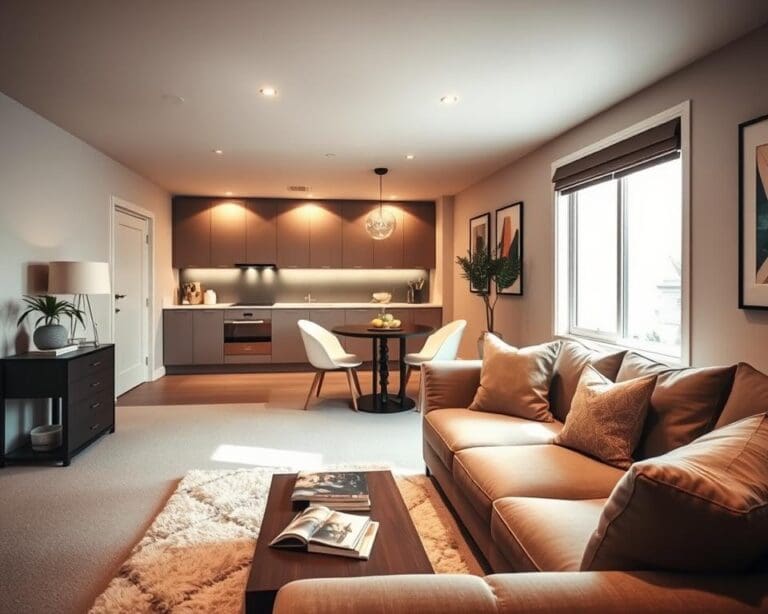
Aim for layered lighting in your living room to balance comfort with entertaining. Start with a central pendant or recessed ambient source rated around 1,500–3,000 total lumens for typical room sizes.
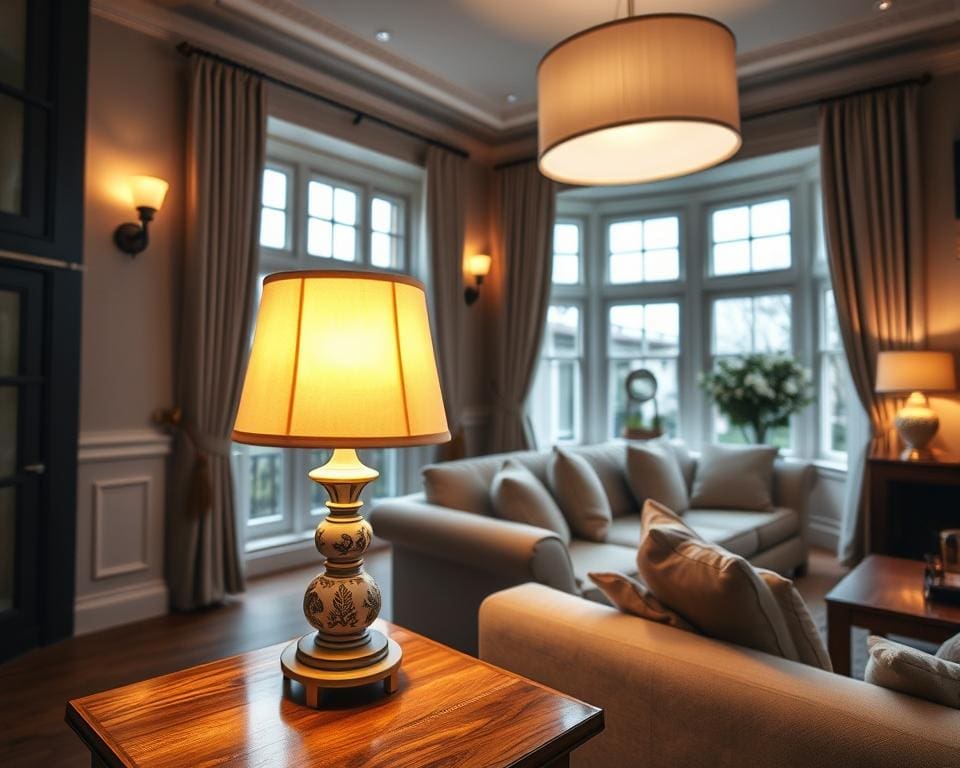
Add task lights such as a reading lamp or a floor lamp beside seating. Use accent lights, like picture lights or shelf LEDs, to highlight artwork and shelving.
Choose warm 2,700–3,000K bulbs to keep the room cosy. Fit dimmer switches or smart bulbs from Philips Hue or IKEA TRÅDFRI to set scenes for TV, guests or reading. Position lights so they do not glare on screens and use uplights to create soft indirect glow.
Kitchens: task-focused lighting for safe, efficient cooking
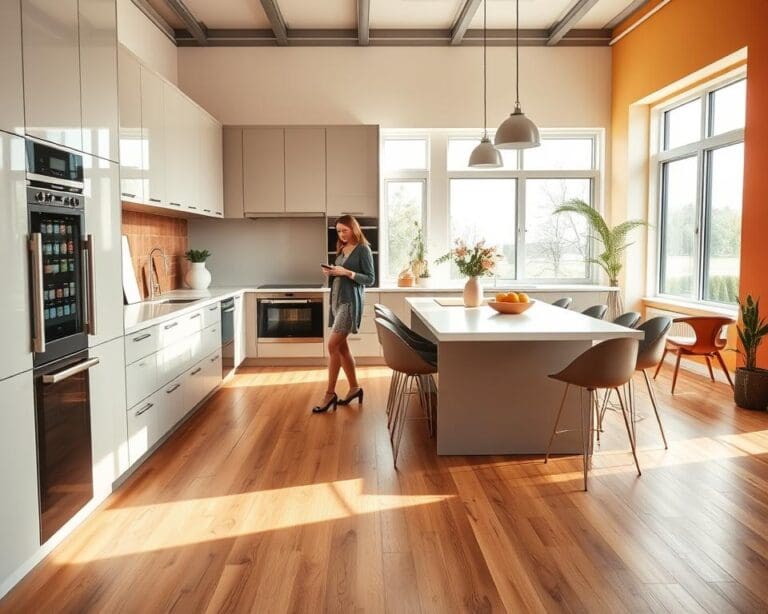
Put task lighting first in kitchens. Under-cabinet LED strips or puck lights give even, shadow-free light on worktops and sinks.
Use bright over-island pendants to achieve 300–750 lux on the workspace. Choose fixtures with high CRI for true food colours when cooking.
Combine task fittings with recessed downlights for uniform ambient light. Pick fittings that tolerate heat and grease, and ensure circuit ratings meet safety standards. Consider motion sensors for utility areas to add convenience.
Bedrooms: soft, warm lighting to promote relaxation
Keep bedroom lighting soft and warm to support winding down. Target lower total lumens, around 1,000–2,000, with 2,700K colour temperature.
Layer with bedside task lamps for reading and wall sconces for gentle ambience. A modest ceiling light can provide general illumination when needed.
Use dimmable bulbs or smart controls to reduce brightness gradually before sleep. Add low-level night lights or LED strips for safe movement without waking fully. Choose fabric shades or brass finishes for a cosy look.
Bathrooms: bright, even lighting for grooming and safety
Bathrooms need bright, even lighting and clear mirror illumination. Fit vertical fixtures or LED mirror lights at eye level to cut shadows for shaving and makeup.
Select cool to neutral temperatures, roughly 3,000–4,000K, with CRI 90+ for accurate colour rendering. Combine mirror lighting with recessed downlights for general coverage.
Check IP ratings for zones near baths and showers and pick fittings suitable for humid conditions. Good ventilation and correct IP44 or higher ratings help keep fixtures safe and long-lasting.
Choosing fixtures, styles and energy-efficient options
Picking the right lighting fixtures affects how your rooms look and feel. Start with a clear sense of your décor, room size and practical needs before you buy. The right choice balances lighting styles, scale and energy use to give you comfort and savings.
Matching fixture style to your décor
Match fixtures to your interior style for a cohesive result. Contemporary rooms suit recessed downlights and slim pendants. Period homes take well to brass, glass or chandelier designs. Loft-style spaces benefit from industrial pendants and exposed bulbs.
Consider scale and proportion. Large rooms can handle bold statement pendants. Low ceilings do better with flush or semi-flush fittings. Choose finishes such as brushed nickel, matte black, antique brass or aged bronze to coordinate with taps and door handles.
Buy from reputable UK retailers like John Lewis, Habitat and B&Q, or look to specialist brands such as Anglepoise and Flos for designer pieces.
LEDs, dimmers and smart lighting controls
LED lighting is the most efficient and long-lived option for most homes. Look at lumen output and colour temperature when comparing products. Check Energy Saving Trust guidance and updated UK labelling for efficiency details.
Dimmable LEDs need compatible dimmers. Always consult manufacturer compatibility lists to avoid flicker or reduced life. Popular smart lighting brands include Philips Hue, IKEA and LIFX if you want easy-start options.
Smart lighting systems let you create scenes, set schedules and automate with motion sensors to cut wasted energy. Choose systems that work with Apple HomeKit, Google Home or Amazon Alexa if you plan voice control. Retrofit smart bulbs avoid rewiring, but smart switches often give fuller functionality.
Bulb shapes, fittings and compatibility tips
Know common UK fittings: E27 and E14 screw bases, GU10 and MR16 spotlights, plus B22 bayonet caps in older homes. Match base type, voltage and physical size when replacing bulbs to prevent fitting issues.
Pay attention to beam angle for downlights and spotlights. Narrow beams (15–25°) are best for accenting. Wider beams (36–120°) suit general illumination. Check lumen output rather than wattage to reach the brightness you want.
Ensure bulb compatibility with enclosed fittings; some LED bulbs are not rated for fully enclosed luminaires. Confirm dimmability and look for clear guidance on bulb compatibility to avoid surprises.
Practical planning: layout, placement and budget considerations
Begin by sketching a simple floor plan and note where natural light falls and where you spend time. Mark seating, worktops and TVs to decide lighting placement and where task lighting is essential. This helps you plan lighting with clear priorities and avoids costly rewiring later.
Use layering: position ambient fixtures centrally or in a subtle grid, add task lamps at reading chairs and kitchen worktops, and use spot or wall lights to highlight art or architectural features. Mind mounting heights—pendants over tables or islands usually sit about 600–900mm above the surface for good sightlines. Avoid bright light behind screens; uplighting or bias lighting reduces glare.
Think switches, wiring and safety early on. Place switches by every room entry and for major zones, and consider two-way switching in halls or large spaces. For new circuits or bathroom fittings, hire a NICEIC-registered or Part P-qualified electrician to comply with UK regulations. Discuss ring-main capacity and circuit separation for kitchens during UK lighting planning.
Set a realistic lighting budget and phase upgrades to spread costs. Prioritise high-impact rooms such as the kitchen and living room, retrofit LED bulbs and smart controls first, then replace fixtures later. Buy energy-efficient LEDs in multipacks from familiar retailers like Screwfix or Wickes, use timers and motion sensors, and obtain written quotes from local electricians to keep your plan on track.