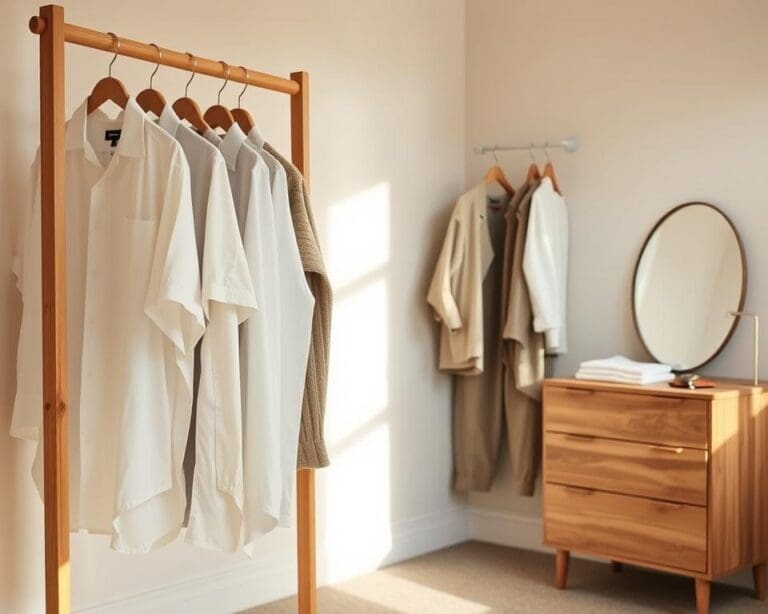
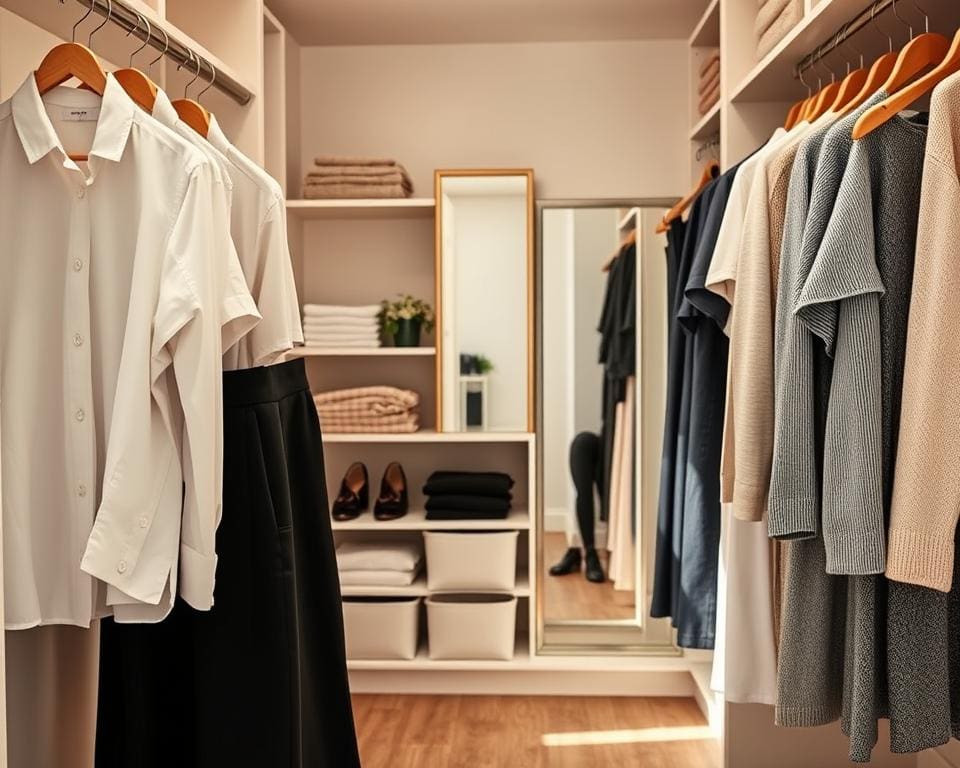
Building a practical wardrobe starts with a clear idea of what counts as wardrobe essentials. These are durable, adaptable garments and accessories that form the backbone of your everyday wardrobe and capsule wardrobe UK. When you focus on closet essentials, you cut decision fatigue and make dressing quicker and more consistent.
Wardrobe essentials save time and support sustainability. Quality pieces last longer, mix-and-match more easily, and reduce the need to buy fast fashion. For UK life, that means choosing items that cope with seasonal shifts and unpredictable weather, while covering casual, smart-casual and workplace dress codes.
In this guide you will find five clear sections. First, core pieces: tops, bottoms and layering items. Next, footwear and accessories that finish outfits. Then seasonal outerwear and weatherproof staples. Finally, care, fit and shopping tips to build and maintain a lasting closet.
When you search or shop, use wardrobe essentials and closet essentials to focus your choices. Think of must-have clothing items that combine versatility and quality, from classic white shirts to tailored trousers and trusted knitwear.
For sourcing examples, consider Marks & Spencer for classic basics and knitwear, John Lewis for workwear and coats, Uniqlo for functional layers like Heattech, COS and & Other Stories for elevated minimal pieces, and Clarks or Dr. Martens for durable footwear suited to UK conditions. These are illustrative options rather than endorsements.
Follow the sections that follow to learn which items to prioritise and practical tips for buying, caring for and combining your must-have clothing items so your everyday wardrobe feels effortless and reliable.
For an expanded checklist and inspiration on building a capsule wardrobe UK, see this guide at what pieces build a perfect capsule.
Wardrobe essentials: core pieces for everyday versatility
You want a closet that works from morning meetings to weekend plans. Focus on core wardrobe pieces in neutral colours, good cuts and quality fabrics so everything mixes and matches with ease.
Timeless tops that anchor your looks
Start with plain white and neutral T‑shirts in cotton or cotton‑modal blends. Choose a weight that suits your season and a crew or V‑neck that flatters your neckline. Aim for a slim fit that is not tight and a length that tucks or half‑tucks well. Consider Uniqlo Supima cotton or Marks & Spencer organic ranges for reliable basics.
Keep a Breton top in navy/white or black/white as a casual‑luxury option. Pick mid‑weight cotton with a boat‑neck or slight stretch for year‑round wear. Look to Saint James or Petit Bateau for heritage styles, or Boden for high‑street alternatives.
Include crisp button‑down shirts in white and light blue. Poplin or broadcloth in classic or tailored fits work for formal and smart‑casual looks. Small alterations to sleeve length or tapering deliver a sharper silhouette. Brands such as Thomas Pink and Charles Tyrwhitt offer dependable shirting.
Must-have bottoms for mix-and-match dressing
Well‑fitting jeans in a dark wash are essential. Opt for a mid or high rise and try straight, slim or relaxed legs to see what flatters you most. Dark indigo reads smarter and pairs easily with a blazer or trainers. Try Levi’s 501 or 511 and consider Nudie Jeans for sustainable options.
Add tailored trousers in neutral tones for smarter days. Select wool‑blend for winter and lighter suiting fabrics for warmer months. Wide‑leg and tapered shapes both work; focus on fit at the waist and hem for a polished finish.
Keep a versatile skirt — a midi A‑line or a pencil — for seamless day‑to‑night transitions. Choose wool‑blend, crepe or heavy cotton so the silhouette holds and pairs well with both trainers and heels.
Layering pieces to adapt to seasons
Light knitwear is vital. Choose a cashmere jumper for luxurious softness or merino for breathability and temperature control. Mid‑weight crews and V‑necks in beige, navy and grey form a neutral base you will reach for again and again. Johnstons of Elgin and Marks & Spencer stock dependable knits.
Add a classic blazer to smarten casual outfits. A single‑breasted, two‑button cut in a soft‑shouldered or lightly structured shape works best. Wool or wool‑blend suits cooler months; linen blends suit warmer days. A blazer lifts jeans, T‑shirts and dresses with minimal effort.
Finish with a casual jacket such as a denim or utility chore jacket for everyday layering. Denim suits spring and summer, while utility jackets add structure through autumn. Use these pieces to vary texture and extend outfit options; for tips on balancing smart and casual footwear with these layers see this guide on styling white trainers how to style white sneakers.
- Build around neutrals, then add one or two accent colours.
- Prioritise fit, then fabric quality.
- Start with fewer pieces that work together for a capsule approach.
Footwear and accessories that complete your outfits
Footwear and accessories turn a look from plain to polished. They give your outfits function and personality while meeting UK needs for comfort and grip. Pick pieces that move smoothly from rainy commutes to weekend walks.
Your shoe collection should cover most occasions without excess. Aim for supportive trainers UK favourites with breathable uppers and cushioned soles. New Balance, Nike and Veja supply styles that work for long days on foot and fit simple wardrobes.
Shoes that cover most occasions
For smart days at the office, choose quality work shoes or loafers in polished leather. Look at sole construction, preferring leather or rubber depending on grip needs. Clarks, Church’s and Loake offer durable options that lift tailored trousers and midi skirts.
Boots must handle wet streets and slick pavements. Opt for ankle-height designs in waterproof or treated leather and rubber soles for traction. Chelsea boots remain a classic choice that pairs well with jeans, dresses and trousers. Dr. Martens, R.M. Williams and Grenson make weather-ready boots with strong heritage.
Accessories to elevate simple looks
A neutral belt anchors an outfit; choose black or brown full-grain leather for longevity. Include a statement belt with textured leather or a bold buckle to define the waist over coats and dresses.
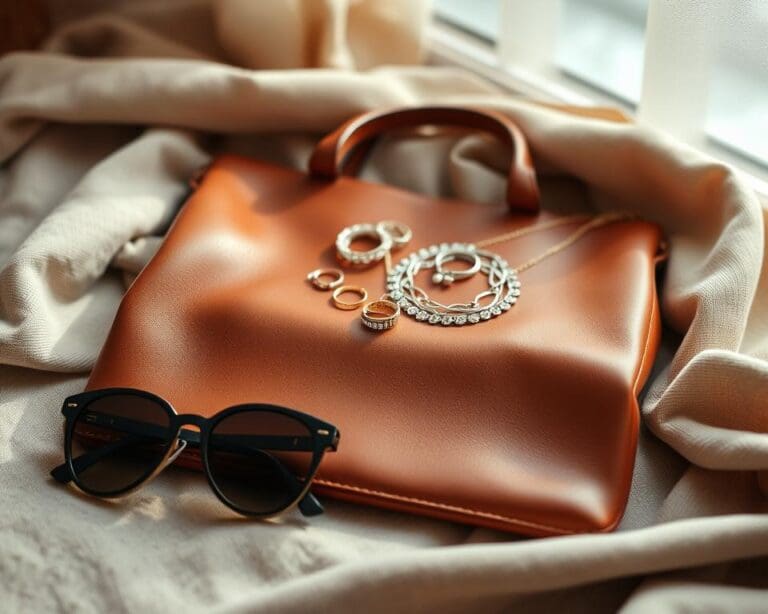
Pick a leather tote or a compact crossbody for daily use. A leather tote holds commuting essentials while a crossbody keeps hands free on busy days. Mulberry and Radley offer reliable leathers and classic shapes that age well.
Finish with scarves, quality sunglasses and minimal jewellery. A scarf adds warmth and texture, sunglasses polish any outfit and thin chains or studs add subtle refinement. Shop John Lewis or Oliver Bonas for accessible accessory options, and consider Oliver Peoples for eyewear.
Practically, invest in at least one pair of comfortable trainers, one pair of smart work shoes and one pair of weather-appropriate boots. Care for leather with regular polishing, resoling when needed and shoe trees to keep shape.
Seasonal outerwear and weatherproof staples
Outerwear does two jobs: it shields you from the elements and completes your look. Choose versatile pieces that work across months in the UK. Focus on quality over quantity so each item earns its place among your outerwear essentials.
Coats that combine function and style
For wet days, a trench coat UK or a waterproof mac is a smart pick. Look for classic trench details such as a storm flap, belt and epaulettes, or the clean lines of a mac. Breathable waterproof fabrics like Gore-Tex or coated cotton keep you dry without feeling clammy. Consider heritage labels such as Burberry for a trench coat UK, Mackintosh for well-made macs, or Rains for pared-back modern options.
An insulated coat is essential when temperatures drop. Choose between down and modern synthetic fills depending on your needs. Longer lengths, a hood and storm cuffs trap warmth and cut wind chill. Brands like Patagonia and The North Face offer technical performance, while Marks & Spencer and John Lewis stock insulated coat options suited to city life.
Practical items for unpredictable UK weather
Spring and autumn call for lighter jackets that layer easily. Bomber styles, quilted jackets and lightweight wool coats all slot under heavier outerwear when needed. Pick a silhouette that fits over sweaters without bulk so you can add thermal layers when the mercury falls.
- Carry a compact umbrella that folds into a bag or pocket. Choose durable frames to resist gusts.
- Waterproof footwear matters as much as coats. Rubber-soled boots and treated leather hold up on soggy streets. Look at Hunter for Wellies and Blundstone for hard-wearing boots.
Base layers make a big difference in comfort. Merino wool or synthetic Heattech-style fabrics trap heat without weight. For active days, favour moisture-wicking, breathable layers to avoid damp skin. Uniqlo Heattech and Smartwool supply reliable thermal layers and breathable options for different conditions.
Caring for weatherproof pieces preserves performance. Reproof waterproof garments when water starts to bead rather than soak in. Have down or insulated coat items cleaned by specialists to maintain loft. Check fit so you can add or remove layers without losing shape. Investing in one durable raincoat and one quality insulated coat will serve you better than several cheaper replacements.
Care, fit and shopping tips to build a lasting closet
Put fit first: a well-fitting garment is the piece you will wear most. Use clothing fit tips such as hemming trousers, shortening sleeves and small waist adjustments to make items feel custom. A blazer with corrected sleeve length and a tailored waist looks sharper, while trousers taken in at the waist stop slipping and wear better.
Choose shapes that suit your body and day-to-day life. If you have a pear or hourglass shape, look for waist-defining cuts; if you are rectangular, add pieces that create curves, like belted coats or structured blazers. Match silhouettes to how you live — commuting, office time or relaxed weekends — so your essentials are genuinely useful.
Select fabrics with the season and maintenance you will commit to. Cotton is easy to wash but creases; wool regulates temperature yet often needs dry-cleaning; synthetics resist creasing but can pill. Read labels and decide whether garment care UK routines fit your schedule before you buy.
Adopt simple garment care routines to extend lifespan. Wash at recommended temperatures, avoid excess washing of denim and knitwear, reshape damp jumpers and dry them flat, and use padded hangers for jackets. Store off-season items in breathable bags and use cedar or lavender to deter moths. For structured tailoring and down coats, book professional cleaning if they are heavily soiled.
Build a base of neutrals, then add seasonal colour or trend pieces. For shopping for essentials, prioritise investment items — a well-cut blazer, a durable coat, quality shoes and tailored trousers — and economise on short-lived trend tees or accessories. High-street stores can supply basics while designer or specialist brands are worth it for pieces you’ll wear for years.
Try capsule wardrobe tips to simplify choices: limit a season to interchangeable items that mix well. A starter capsule might include five tops, three bottoms, two dresses or a skirt and dress, two pairs of shoes, one blazer, one coat and one bag. Keep a shopping list of gaps, photograph outfits to spot holes, and audit your wardrobe to repair or donate items you no longer wear. Small investments in wardrobe care and fit will noticeably increase how long your clothes look and feel good.