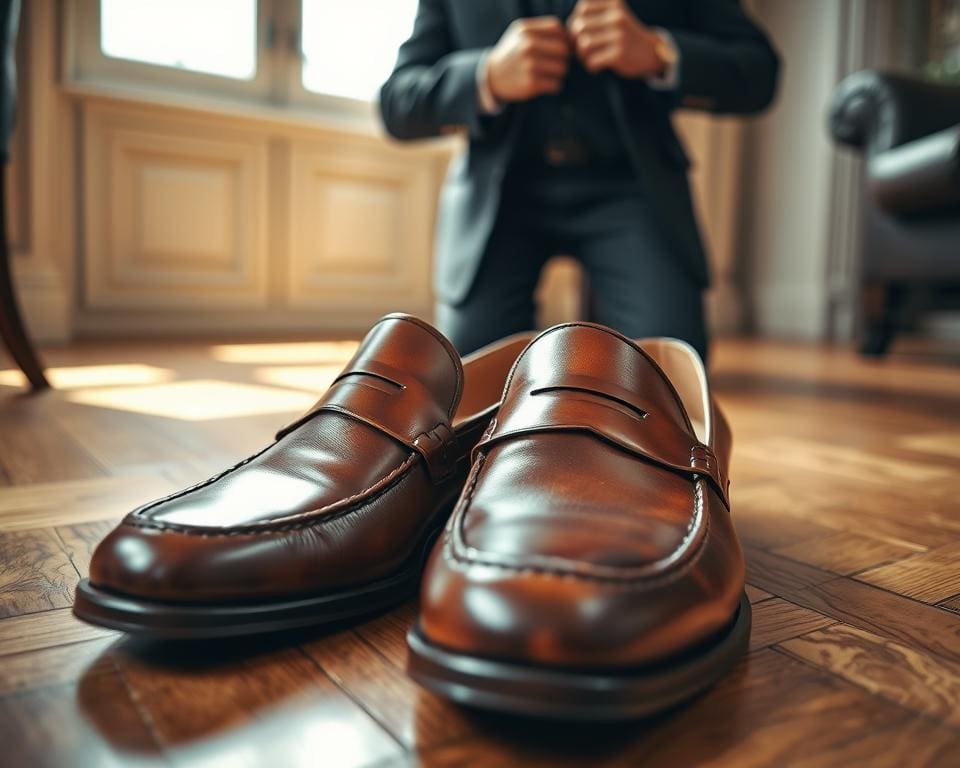
You’ll find leather loafers across high-street windows and luxury shops because they balance looks and function. These timeless loafers sit neatly between formal shoes and casual trainers, making them reliable wardrobe staples for many people in the United Kingdom.
Classic loafers from brands such as Church’s, Loake, Tricker’s and Gucci show how the silhouette works at every price point. That cross-market appeal underlines the loafer benefits UK owners value: a smart yet relaxed appearance, comfortable wear, and styles that span generations.
In this article you will explore why leather loafers remain so popular. You will read about their heritage and how craftsmanship shaped their reputation. You will also learn about style and modern uses, the construction and care that extend their life, and practical tips for buying in the UK.
Later sections will cover versatility across outfits, design variations and finishes, why proper construction matters, and simple maintenance such as resoling and polishing. Understanding these points will help you choose a pair that lasts and keeps your smart casual shoes rotation looking sharp.
Heritage and history of smart footwear
You will find that the loafer’s story links places and practices across continents. Its appeal rests on simple lines and practical comfort. That clarity made it easy to adapt into smart footwear for town and country.
Origins of the loafer silhouette
The origins of loafers trace back to Scandinavian slip-ons and Native American moccasins. Early Aurland shoes from Norway set a local template in the early 20th century. Those pieces shared a slip-on moccasin influence and a low vamp, which are key to the modern shape.
American makers refined the look. G.H. Bass popularised the penny loafer in the 1930s, a milestone in penny loafer origins. That design married the moccasin influence with a neat apron and saddle, giving you the silhouette you recognise today.
How craftsmanship shaped reputation
Craftsmanship moved loafers from casual slip-ons to respected smart footwear. Techniques such as Goodyear welting, Blake stitch and hand-lasting raised durability and finish. Those methods form the backbone of heritage shoemaking and underpin long-lived shoes.
English makers like Church’s and Loake reinforced that standing. Their factory skills focus on lasting, solework and hand-finishing. You see their influence in shoes that tolerate wear yet retain a polished look.
Loafers in British sartorial tradition
In the UK, loafers became woven into menswear and womenswear choices. You will spot them on university campuses, in country houses and in city offices. They moved from Ivy League and Eton circles into the wider smart casual lexicon.
Their simplicity suits British tailoring and country-wear alike. Clean lines and understated profiles mean loafers complement tweed, flannel suits and chinos. That adaptability helped secure their place in British footwear heritage.
Leather loafers: style, versatility and modern appeal
Leather loafers remain a wardrobe pillar for many in the UK. You will find them at the office, on the weekend and on holiday. This section outlines practical pairings, the main loafer styles and how colour, finish and season affect your choices.
Versatility across outfits and occasions
You can wear versatile leather loafers with a tailored suit for a smart-casual office day. Pair a penny loafer with navy or grey tailoring to keep a professional edge while softening formal lines.
For relaxed workdays or evenings, combine loafers with chinos or wool trousers. Swap to jeans on weekends for an easy, put-together look. Choose linen trousers and bare ankles for holiday afternoons to keep the outfit light and breathable.
Sock choice alters the tone. Visible socks add personality, no-show socks keep the look neat, and bare ankles bring a summer-casual feel. Driving loafers are great for short journeys and laid-back outfits, thanks to their flexible soles.
Design variations that endure
The main loafer types offer distinct looks. A penny loafer features a saddle strap and suits both office and smart leisurewear. A tassel loafer has decorative tassels and works well with blazers and tweed.
Belgian loafers are slim and refined for formal-casual mixes. Driving moccasins focus on comfort and grip for the wheel. Horsebit loafers, inspired by Gucci, provide a luxury statement piece that lifts simpler outfits.
These loafer styles are easy to match across wardrobes. Penny loafers and tassel loafers are staples for British work and weekend life. Driving loafers serve casual, mobile needs without sacrificing style.
Colour, finish and seasonal considerations
Colour and finish change how you wear loafers. Black and dark brown leathers suit formal office settings. Burgundy and tan add warmth and pair well with country tweeds and corduroy.
Suede brings a softer, casual look but needs careful care in wet British weather. For autumn and winter choose darker, more robust leathers and consider commando soles or rubber studs for extra grip.
In spring and summer favour lighter leathers and slimmer leather or driving soles for breathability and elegance. Rubber-soled variants help on wet commutes and keep your shoes resilient on rainy days.
Comfort, construction and longevity
Choose loafers that feel right on the first try. Fit begins with the last shape and continues through inner components such as cushioned insoles, stitched counters and breathable calf leather linings. These elements determine whether you end the day pain-free or nursing blisters.
Materials and inner construction
Uppers made from full-grain or top-grain leather give you the best blend of durability and aesthetic. Full-grain develops a rich patina with time. Top-grain offers a more uniform look while still lasting well.
Midsoles and outsoles may be leather or rubber. Leather soles dress up an outfit. Rubber soles add grip for wet pavements. The choice affects weight, flexibility and how the shoe walks in.
Construction methods matter. Goodyear welt, Blake stitch and cemented builds each change the feel and service life. Calf leather lining helps with breathability and comfort. A well-made last supports toes and arches so your comfortable loafers remain comfortable after hours of wear.
Why proper construction extends lifespan
Well-built shoes resist creasing and keep their shape. A Goodyear-welted pair gives you greater structural integrity and allows resoling without harming the upper. For example, a Goodyear welted loafers model from Church’s or Loake can be resoled several times, turning a single purchase into years of use.
Blake-stitched soles are sleeker and easier to repair than cemented soles. Cemented construction is cheaper up front but limits resoling options. Choose the build that matches how you plan to wear the shoes.
High leather quality prevents rapid thinning and can be reconditioned to retain suppleness. Robust construction reduces stretching and keeps the fit consistent as the leather breaks in.
Care, maintenance and repairing leather loafers
Adopt a simple routine to protect your investment. Brush off dirt with a soft brush, wipe with a cloth and condition every three to six months with a quality leather cream. Use a matching wax polish to restore colour and add protection.
Use cedar shoe trees to keep shape and draw out moisture. Rotate pairs so leather can rest between wears. Treat suede and open-grain leathers with waterproofing sprays during wet months to prevent staining and damage.
When repairs are needed, timely action saves money. In the UK you can have resoling, heel replacement or stitching carried out by national names such as Timpsons or by independent artisan cobblers. Resoling loafers restores sole life, while professional re-colouring or reconditioning can mask heavy wear. If leather shows split panels or delamination, replacement of the component is safer than repeated patching.
For guidance on selecting treated leathers and edge finishes that suit wetter climates, read practical tips on matching accessories at how to choose the perfect leather. Regular shoe care UK practices will keep your loafers performing and looking their best.
Buying guide and what to consider when choosing loafers in the UK
When you buy leather loafers UK, start with fitting loafers properly. Measure foot length and width on a hard floor at the end of the day, and try shoes with the socks you intend to wear. Aim for about a thumb’s width of space at the toe, minimal heel slip and comfort when you walk. Remember that loafer sizes UK vary by last; Loake and Church’s often feel different from modern Italian makers, so try several brands before you decide.
Pick the style to match purpose. For daily office wear choose classic black or brown penny or tassel loafers for versatility. If you need casual or seasonal options, consider suede or coloured leathers. For travel look for light, flexible soles; for formal events choose polished leather and a sleeker last. This simple decision narrows choices and makes it easier to find the best loafers UK for your needs.
Understand construction and budget trade-offs. Cemented loafers are cheaper and light, but harder to repair. Blake-stitched pairs sit in the mid-range and offer a slim profile. Goodyear-welted loafers cost more but can be resoled and last decades. In the UK market expect high-street options from brands like Clarks at lower price points, mid-range heritage names such as Loake and Church’s, and luxury designers for statement pieces; invest in quality when you want longevity.
Practical tips: try in-store at a specialist shoe shop for expert fitting and to compare lasts, and check return policies if you buy online. Inspect the sole for UK weather—rubber or commando soles give better grip. If sustainability matters, ask about leather origin and tannage or seek vegetable-tanned options. Finally, locate a good local cobbler for resoling and repairs so your loafers can be maintained. This loafer buying guide helps you choose with confidence and find the right fit, style and construction for your life in the UK.