What makes Japanese wagyu beef so distinctive? For many food lovers, the answer begins with its remarkable marbling, but it does not end there. Japanese wagyu is shaped by breed, genetics, regional farming traditions, careful feeding, strict grading and a cooking style that treats richness with respect. The result is beef with a soft texture, deep savoury flavour and a luxurious mouthfeel unlike ordinary steak.
What makes Japanese wagyu beef so distinctive? The essentials
Japanese wagyu is not simply expensive beef from Japan. The word “wagyu” means Japanese cattle, and it refers to specific native breeds developed over generations. These cattle are known for their ability to produce fine intramuscular fat, often called marbling. This fat sits within the muscle rather than around it, giving the meat its famous patterned appearance.
The most important difference is balance. In high-quality Japanese wagyu, the fat is not just plentiful; it is evenly distributed, delicate and soft. When cooked gently, it melts through the meat, creating a silky texture and a flavour that is rich without needing a large portion.
Japanese wagyu is also distinctive because the system behind it is highly organised. Cattle are tracked, graded and assessed with care. Farmers, regional associations and meat inspectors all play a part in maintaining standards. This attention to detail helps explain why genuine Japanese wagyu has such a strong reputation worldwide.
The role of breed, genetics and heritage
Wagyu quality begins long before the beef reaches a plate. Breed and genetics are central to its character. Japan’s wagyu cattle have been selectively bred for traits such as marbling, meat texture and flavour. This careful breeding history is one reason Japanese wagyu differs from beef produced using wagyu genetics elsewhere.
There are several recognised Japanese wagyu breeds, with Japanese Black being the most widely associated with highly marbled beef. Other breeds, such as Japanese Brown, Japanese Shorthorn and Japanese Polled, also exist and can offer different eating qualities. However, when UK consumers picture intensely marbled Japanese wagyu, they are usually thinking of beef from Japanese Black cattle.
Heritage matters because wagyu is not only a breed label. It is connected to Japan’s regional farming culture. Famous names such as Kobe, Matsusaka and Omi refer to specific production areas and rules, not just style. While all Kobe beef is wagyu, not all wagyu is Kobe beef. That distinction is important for understanding labels and expectations.
Marbling: the signature feature
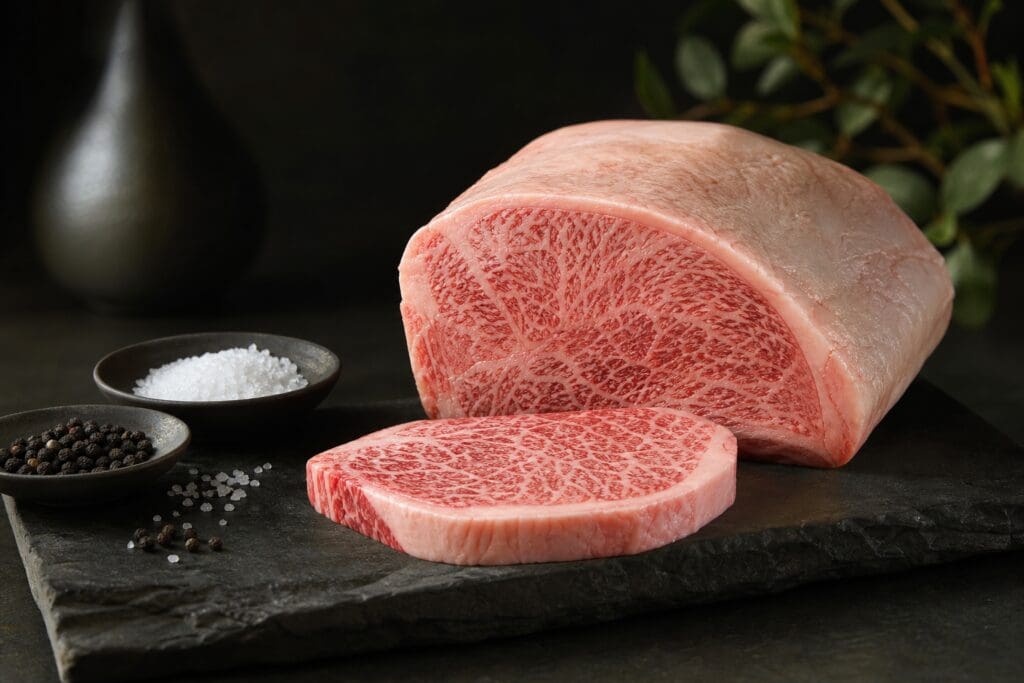
Marbling is the visual clue most people notice first. In Japanese wagyu, fine white lines of fat run through the red meat, sometimes so densely that the beef looks almost lace-like. This is not a decorative detail. It changes how the beef cooks, tastes and feels.
As the beef warms, the intramuscular fat softens and melts. This helps create the buttery mouthfeel associated with premium wagyu. It also carries flavour across the palate, giving each small bite a lingering savoury quality. Compared with leaner beef, Japanese wagyu can feel softer, juicier and more delicate.
Good marbling should feel harmonious rather than greasy. The best examples have a clean finish and a rounded flavour. This is why many chefs and home cooks serve Japanese wagyu in smaller portions than a typical steak. Its richness is part of the pleasure, but it is most enjoyable when treated as a concentrated ingredient.
Why wagyu fat feels different
Not all beef fat behaves in the same way. Wagyu fat is prized because it can feel softer and more melting than fat in many conventional beef cuts. This quality contributes to the sensation of tenderness, even when the meat is cooked briefly.
The flavour of the fat also matters. Rather than tasting heavy, well-prepared Japanese wagyu often has a gentle sweetness and deep umami. Umami is the savoury taste found in foods such as aged cheese, mushrooms, soy sauce and cured meats. In wagyu, it gives depth without needing strong sauces.
This is one reason simple cooking works so well. Salt, heat and careful timing are usually enough. Overpowering marinades can hide the natural flavour that makes the beef special.
Texture as much as taste
Japanese wagyu is often described in terms of flavour, but texture is equally important. The meat can feel almost tender from the first bite, with very little chew compared with many traditional steaks. This is partly due to marbling and partly due to muscle structure, feeding and handling.
The texture is not like ordinary rare beef, nor is it like slow-cooked meat. It has its own character: soft, juicy and smooth, but still clearly beef. That unusual combination is a major reason people remember their first taste of genuine Japanese wagyu.
Feeding, farming and patient production
Japanese wagyu production is associated with slow, careful raising. While exact methods vary by farm and region, the general approach focuses on calm handling, controlled feeding and patient growth. The goal is not simply to produce a large animal quickly, but to develop meat quality over time.
Feed programmes are carefully managed. Cattle may be given balanced rations designed to support growth and marbling. Farmers monitor condition closely and adjust care as needed. Myths about wagyu cattle being routinely massaged or fed beer are often exaggerated. The real story is less theatrical but more impressive: consistent husbandry, attention to animal welfare and a long-term focus on quality.
This patient production has an effect on price and availability. Japanese wagyu is labour-intensive, carefully regulated and produced in limited quantities compared with everyday beef. For consumers in the UK, imported Japanese wagyu is therefore usually bought as an occasional treat rather than a regular midweek steak.
Key factors that influence Japanese wagyu’s character include:
- Breed and bloodline, which affect marbling potential and texture.
- Feeding regime, which supports gradual development of intramuscular fat.
- Animal handling, which helps maintain steady growth and condition.
- Regional rules, which may define how named wagyu is produced.
- Grading standards, which measure visible quality before sale.
Grading and authenticity
One of the reasons Japanese wagyu inspires trust is its grading system. Beef is assessed for yield and quality, including marbling, colour, firmness, texture and fat quality. Many UK shoppers will recognise ratings such as A5, often presented as the highest grade commonly associated with Japanese wagyu.
The letter in a Japanese grade relates to yield, while the number relates to meat quality. A5 therefore indicates a high yield grade and top quality score. However, grade is not the only thing to consider. Some diners prefer a slightly less intensely marbled piece because it feels more balanced to them. The “best” wagyu depends on the occasion, cooking method and personal taste.
Authenticity is also important. “Wagyu” on a label outside Japan can mean different things. Some beef comes from full-blood wagyu cattle raised in other countries. Some comes from crossbred animals. These products can be excellent, but they are not the same as Japanese wagyu produced, graded and exported from Japan.
For UK consumers, clear labelling helps. Genuine Japanese wagyu should have traceability, country of origin information and grading details. Regional names should be used carefully, because famous designations have specific rules.
Regional character: why names matter
Japan’s wagyu regions are part of the fascination. Different areas have developed reputations based on cattle bloodlines, feeding approaches, climate and local standards. This means wagyu is not one single flavour profile. It is a category with regional expression.
Kobe beef is probably the best-known name internationally, but it is only one type of Japanese wagyu. It comes from Tajima cattle raised under strict conditions in Hyogo Prefecture. Other respected names, including Matsusaka and Omi, have their own histories and requirements. These names matter because they indicate more than marketing. They point to regulated traditions and particular production identities.
That said, a famous name is not always necessary for a memorable experience. High-quality Japanese wagyu from less familiar regions can still offer beautiful marbling, tenderness and flavour. For many consumers, the most important details are authenticity, grade, cut and suitable preparation.
How Japanese wagyu differs from ordinary steak
A conventional steak dinner often centres on a large portion, a strong sear and a hearty chew. Japanese wagyu asks for a different mindset. It is richer, softer and more intense, so smaller portions can feel satisfying. Instead of eating a thick slab, diners may enjoy thin slices, cubes or modest steaks cooked with precision.
The flavour is also different. Ordinary beef often gives a bold, meaty taste with a firmer texture. Japanese wagyu tends to be more layered: buttery, savoury, slightly sweet and lingering. It can feel almost delicate despite its richness.
This does not mean Japanese wagyu is automatically better for every meal. A lean sirloin, rib-eye or rump steak may suit a barbecue, sandwich or Sunday-style plate more naturally. Wagyu shines when its texture and marbling are the focus.
Cooking Japanese wagyu at home
Japanese wagyu is forgiving in one sense, because its marbling helps keep it juicy. Yet it is also easy to mishandle because the fat melts quickly and the flavour can be masked by heavy seasoning. The aim is to cook it simply and avoid treating it like an ordinary thick steak.
A hot pan, a little salt and brief cooking are often enough. Some cooks use no added oil, allowing the wagyu fat to render naturally. Resting can help, but long resting is not usually needed for small pieces. The meat is best eaten warm, when the fat is soft and aromatic.
Helpful home cooking principles include:
- Serve smaller portions, because the richness is satisfying and intense.
- Use simple seasoning, usually fine salt and perhaps a little pepper.
- Avoid heavy sauces, which can cover the natural umami and sweetness.
- Cook in batches, so thin slices sear rather than stew.
- Eat promptly, while the texture is at its most melting.
For doneness, many people prefer Japanese wagyu cooked rare to medium-rare, though thin slices may only need seconds on each side. The right approach depends on cut thickness and personal preference.
Serving and flavour pairings
Because Japanese wagyu is so rich, contrast is helpful. Clean, sharp or lightly bitter flavours can refresh the palate. Think steamed rice, pickled vegetables, simple greens, grated daikon, citrus, wasabi or a light soy-based dip. These additions should support the beef, not compete with it.
Wine and drink pairings are a matter of taste. Full-bodied reds can work, but very tannic wines may feel harsh against the soft fat. Some people prefer lighter reds, dry sparkling wines, sake or even green tea. The guiding idea is balance: choose something that cleanses rather than overwhelms.
Japanese wagyu also suits shared eating. Thin slices cooked at the table, small seared cubes or a few pieces served with rice can feel generous without needing a large quantity. This style reflects the beef’s concentration of flavour.
Why Japanese wagyu costs more
The price of Japanese wagyu can surprise shoppers, especially when compared with supermarket steak. Several factors explain the difference. The cattle are specialised, production is careful, grading is strict and exports involve traceability and logistics. Limited supply also affects cost.
The price should be understood in relation to portion size. Japanese wagyu is often enjoyed in smaller amounts, more like a luxury ingredient than a standard steak. A modest serving can deliver the flavour impact of a much larger piece of conventional beef.
Cost alone, however, does not guarantee enjoyment. Storage, cutting and cooking all matter. Even excellent wagyu can disappoint if overcooked, drowned in sauce or served in an oversized portion that becomes too rich.
Frequently Asked Questions
Is Japanese wagyu the same as Kobe beef?
No. Kobe beef is a specific type of Japanese wagyu from Hyogo Prefecture, produced under strict rules. Japanese wagyu is the wider category, and it includes many regions and styles beyond Kobe.
Why is Japanese wagyu so marbled?
Japanese wagyu cattle have genetics that support fine intramuscular fat development. Careful feeding, patient raising and regional production methods also encourage the even marbling that makes the beef so distinctive.
Is A5 always the best choice?
A5 is a top Japanese grade, but it may not suit every diner. Some people prefer slightly less marbling because it can feel lighter while still offering excellent tenderness and flavour.
How much Japanese wagyu should one person eat?
A smaller portion is usually enough because Japanese wagyu is very rich. Many people find a few carefully cooked slices more satisfying than a large conventional steak.
Can Japanese wagyu be cooked on a barbecue?
It can be cooked on a barbecue, but care is needed because the fat renders quickly and may flare. Gentle heat, close attention and smaller pieces are usually better than aggressive grilling.