What makes a traditional Neapolitan pizza different? At first glance, it may look simple: dough, tomato, mozzarella, basil and olive oil. Yet that simplicity is exactly where its character lives. A true Neapolitan pizza is shaped by strict technique, carefully chosen ingredients and a fast bake in intense heat. It is soft, fragrant, lightly charred and designed to be eaten soon after leaving the oven.
What makes a traditional Neapolitan pizza different from other pizzas?
Neapolitan pizza is not just “thin pizza”. It has its own identity, rooted in Naples and protected by tradition. Unlike many modern pizzas, it is not built to be heavily loaded, extra crisp or perfectly uniform. It is about balance: a tender base, a raised rim, bright tomato, creamy cheese and a gentle smoky note from the oven.
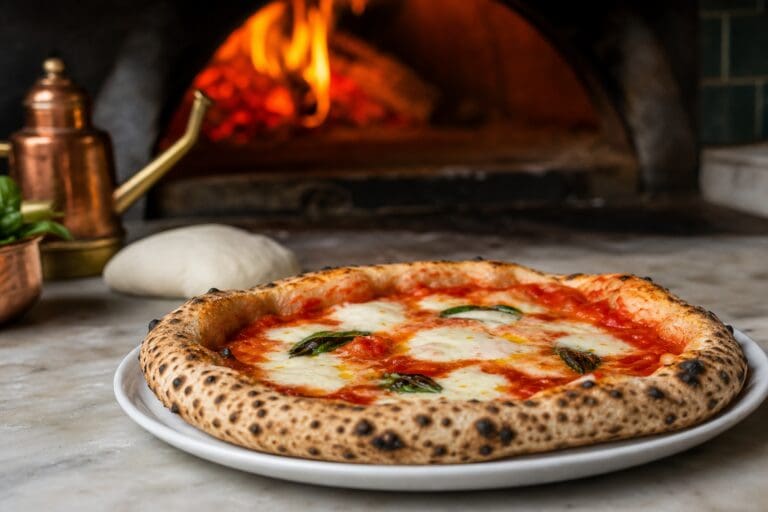
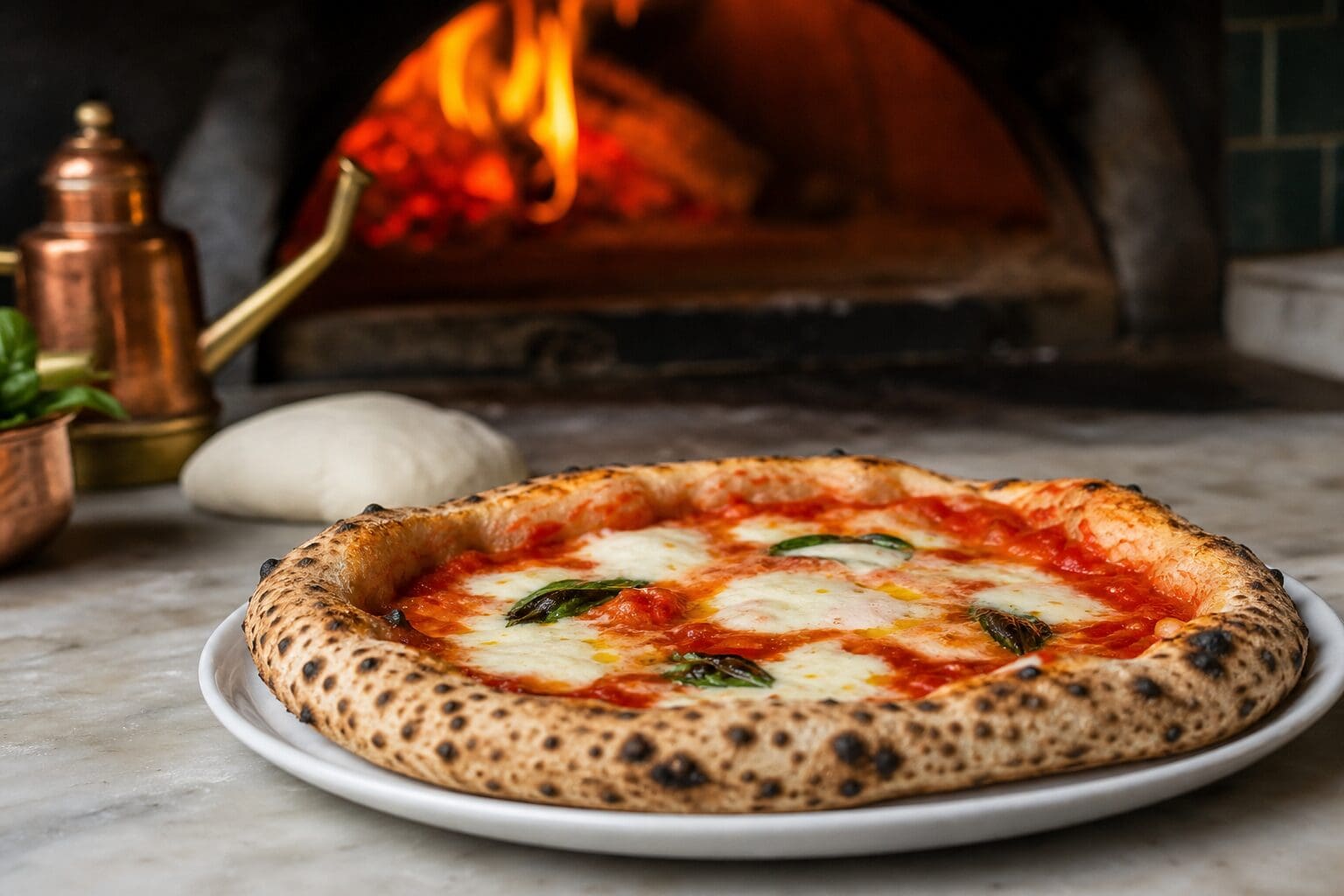
The crust is one of the clearest differences. A traditional Neapolitan pizza has a soft, elastic centre and a puffed edge known as the cornicione. The rim should be airy rather than dense, with small blisters and dark spots from the intense heat of the oven. These marks are not a flaw. They are part of the style.
The bake is also very short. Neapolitan pizza is cooked at a much higher temperature than most home ovens can reach, usually in a wood-fired oven. This gives the dough enough time to rise, blister and colour, without drying out the centre.
Toppings are used with restraint. The aim is not to cover every centimetre with ingredients, but to allow each part to stand out. Too much topping would weigh down the dough and prevent the classic texture.
The dough: simple ingredients, careful handling
Traditional Neapolitan pizza dough is made with only a few basic ingredients. The skill lies not in complexity, but in how the dough is mixed, rested, shaped and baked.
The core ingredients are:
- Wheat flour, usually finely milled and suitable for pizza dough
- Water, which hydrates the flour and helps create elasticity
- Salt, for flavour and dough strength
- Yeast, used in small amounts to ferment the dough slowly
There is no need for sugar, oil or milk in the classic dough. These ingredients appear in other pizza styles, but they are not part of the traditional Neapolitan approach.
Fermentation is essential. During resting, the dough develops flavour and becomes easier to stretch. A well-fermented dough should feel supple rather than tough. It should stretch by hand without needing a rolling pin.
Using a rolling pin is avoided because it presses out the air built up during fermentation. Instead, the dough is opened gently from the centre outwards, pushing air towards the rim. This is what helps create the raised, airy edge.
The texture of the base
A Neapolitan pizza base should be thin in the centre, but not brittle. It is often soft enough to fold slightly, especially when fresh from the oven. This can surprise people who expect all pizza to be crisp from edge to edge.
The centre may have a tender, almost silky quality where tomato, cheese and olive oil meet the dough. That softness is intentional. It should not be raw or wet, but it should feel different from a firm, cracker-like base.
The rim gives contrast. It should be inflated, light and chewy, with a pleasant flavour from fermentation and baking. A good cornicione is often one of the most enjoyable parts of the pizza.
Why the dough is not overloaded
Traditional Neapolitan dough is delicate. It is made to rise quickly in fierce heat, not to support a mountain of toppings. Heavy ingredients, thick sauces or too much cheese can make the base soggy and stop it cooking correctly.
This is why classic Neapolitan pizzas often look more minimal than takeaway or supermarket pizzas. The restraint is not a lack of generosity. It is part of the craft.
Ingredients that define the flavour
The flavour of Neapolitan pizza depends on quality ingredients used in the right amounts. Nothing should dominate completely. Tomato, cheese, basil, oil and dough should work together.
The two most famous traditional versions are Marinara and Margherita. Marinara is made with tomato, garlic, oregano and olive oil. Margherita is made with tomato, mozzarella, basil, olive oil and often a little grated hard cheese, depending on the interpretation.
Tomatoes are central. Neapolitan pizza often uses Italian tomatoes with a fresh, sweet and lightly acidic taste. The sauce is usually simple, not heavily cooked or packed with herbs. This keeps the flavour bright.
Mozzarella brings creaminess. Traditional choices include mozzarella made from cow’s milk or buffalo milk. It should melt into soft pools rather than form a thick, greasy blanket.
Basil is used for aroma as much as flavour. A few leaves are enough. Olive oil adds richness and helps tie the toppings together.
Common features of traditional toppings include:
- Light tomato sauce, spread thinly so the dough can bake properly
- Fresh mozzarella, used in moderate amounts rather than a thick layer
- Fresh basil, added for fragrance and colour
- Extra virgin olive oil, drizzled sparingly
- Simple seasoning, allowing the main ingredients to speak clearly
The result is not bland. It is clean, direct and satisfying.
The oven and the fast bake
A traditional Neapolitan pizza is usually baked in a very hot oven, often wood-fired. The heat is far higher than a standard domestic oven, which changes everything about the finished pizza.
The intense heat cooks the pizza rapidly. In that short time, the dough expands, the rim puffs, the surface blisters and the cheese melts. The base cooks through while staying soft and flexible.
Wood-fired ovens also create radiant heat from the dome and strong heat from the floor. This combination gives the pizza its distinctive character. The top and bottom cook together, which is difficult to recreate fully in a normal kitchen oven.
The leopard-like spots on the crust come from quick charring. They should taste lightly smoky and roasted, not burnt and bitter. A completely pale crust usually suggests the oven was not hot enough, while a dry, hard base may mean the pizza cooked too slowly.
Shape, size and presentation
Neapolitan pizza has a handmade look. It is usually round, but not perfectly mechanical. Slight irregularity is a sign that it has been stretched by hand.
The pizza is generally individual-sized rather than a large sharing slab. This helps it cook quickly and evenly. It also suits the style: Neapolitan pizza is at its best when eaten hot, soon after baking.
The rim should be clearly raised, while the centre remains thin. Toppings may settle into soft pools rather than sit in a tidy grid. This relaxed appearance is part of its charm.
In Naples, pizza is often eaten with a knife and fork, especially when the centre is very soft. Folding slices is also common. Either way, the experience is meant to be immediate and informal.
Neapolitan pizza compared with other popular styles
Understanding Neapolitan pizza is easier when compared with other pizzas found in the UK.
New York-style pizza is usually larger, wider and firmer, with slices made for folding. It often has a more even layer of cheese and a chewier, sturdier base.
Roman-style pizza can be thin and crisp, or sold in rectangular slices with a lighter, airy structure. It tends to have a different bake and texture from the soft Neapolitan centre.
Chicago deep-dish is almost the opposite of Neapolitan pizza. It is thick, rich and layered, with a high-sided crust and a much longer bake.
Many UK takeaway pizzas are designed for delivery, which means they often use a stronger base, more cheese and heavier toppings. Neapolitan pizza is less suited to long travel because its texture is best immediately after baking.
None of these styles is automatically better than another. They simply aim for different pleasures. Neapolitan pizza celebrates softness, speed, heat and balance.
Why simplicity matters so much
The simplicity of Neapolitan pizza can make it seem easy to copy, but it is unforgiving. With so few ingredients, every choice is noticeable. If the dough is under-fermented, the crust may taste flat. If the oven is not hot enough, the base may dry before the rim puffs. If the toppings are too heavy, the centre may collapse.
This is why traditional technique matters. A good Neapolitan pizza is not created by adding more. It is created by knowing when to stop.
The best examples taste lively and complete. The tomato should be bright, the cheese milky, the basil aromatic and the dough full of character. The crust should invite you to eat it, not leave it on the plate.
Frequently Asked Questions
Is Neapolitan pizza meant to be crispy?
Neapolitan pizza is not meant to be crispy throughout. The rim should be airy and lightly charred, while the centre is soft, tender and flexible.
Why does Neapolitan pizza have black spots on the crust?
The black spots come from baking quickly at very high heat. They should taste roasted and smoky, not harsh, burnt or unpleasantly bitter.
Is a Margherita the same as a Neapolitan pizza?
A Margherita can be a traditional Neapolitan pizza when made with the correct dough, method and ingredients. The name describes the topping, not the whole technique.
Can traditional Neapolitan pizza be made in a home oven?
A home oven can make a delicious pizza inspired by Neapolitan style, especially with a baking stone or steel. However, it is difficult to match the heat of a traditional pizza oven.
Why does Neapolitan pizza use fewer toppings?
Fewer toppings keep the dough light and allow it to cook quickly. They also preserve the balance between crust, tomato, cheese, basil and olive oil.
Final thoughts
So, what makes a traditional Neapolitan pizza different? It is the combination of soft fermented dough, restrained toppings, hand shaping and an extremely hot, rapid bake. It is not trying to be the crispiest, biggest or most heavily loaded pizza. Its beauty lies in balance.
A traditional Neapolitan pizza feels alive: blistered at the edge, soft in the centre, fragrant with basil and warm olive oil. It proves that a few ingredients, handled with care, can create a pizza with remarkable depth and character.