Why is saffron one of the world's most expensive spices? The short answer is that it takes a remarkable amount of careful human work to produce even a small quantity. Each thread comes from the delicate stigma of the saffron crocus flower, and every stage, from picking to drying, affects its colour, aroma and flavour. For UK shoppers, saffron can seem surprisingly costly compared with familiar spices such as turmeric, cinnamon or cumin. Yet once you understand how it is grown, harvested and graded, the price begins to make much more sense.
What saffron actually is
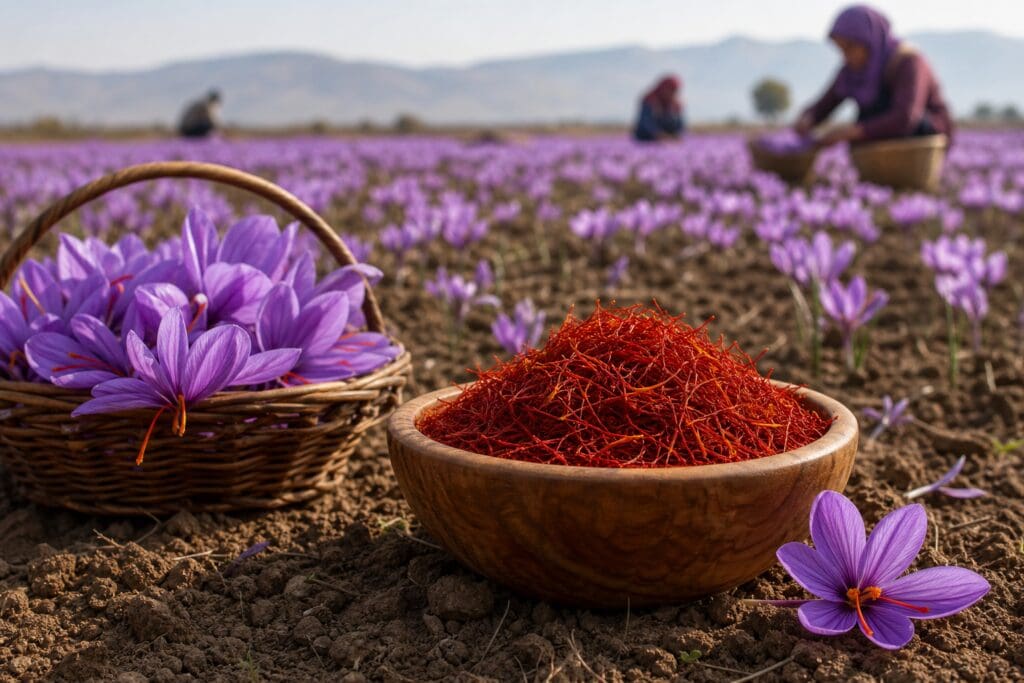
Saffron is not a seed, bark, root or dried leaf. It is made from the red stigmas of Crocus sativus, commonly called the saffron crocus. Each flower produces only a few fine threads, and those threads must be separated from the rest of the flower by hand.
The spice is prized for three main qualities: its deep golden colour, its complex aroma and its distinctive flavour. Good saffron can smell floral, honeyed, earthy and slightly hay-like. In food, it gives warmth and depth rather than heat. It is used in dishes such as risotto alla Milanese, paella, bouillabaisse, Persian rice, Indian sweets and many rice-based dishes across the Middle East and South Asia.
Unlike many spices, saffron is usually used in tiny amounts. A small pinch can colour and perfume a whole dish. This partly softens the cost for consumers, but it does not change the fact that producing the spice is slow, skilled and labour-intensive.
Why is saffron one of the world's most expensive spices? The main reasons
The price of saffron is not based on rarity alone. It reflects a chain of work where very little can be mechanised without damaging quality. From the field to the finished jar, saffron demands patience, precision and care.
Each flower gives only a tiny amount
The saffron crocus is beautiful, but it is not generous. Each bloom contains just a few usable red stigmas. These are the threads sold as saffron. The rest of the flower is not used as the spice.
This low yield is one of the biggest reasons behind the price. A field full of flowers may look abundant, yet the final dried saffron weighs very little. Fresh stigmas also lose moisture during drying, so the finished spice is much lighter than the freshly picked material.
In practical terms, growers need many flowers to make a modest amount of saffron. That simple botanical fact sets saffron apart from spices that come from larger plant parts, such as bark, pods or roots.
Harvesting must be done by hand
Saffron flowers are fragile. They bloom for a short period, and they are usually picked early in the day to protect the quality of the stigmas. The flowers cannot be roughly handled, because bruising and delay can reduce aroma and colour.
After picking, workers separate the red stigmas from each flower. This is detailed, repetitive work that relies on human eyes and fingers. The best saffron contains the vivid red part of the stigma, with little or no yellow style attached. Separating it cleanly takes skill.
This hand labour is expensive wherever saffron is grown. Even when labour costs vary between countries, the time required remains significant. Machines can help with some farming tasks, but they cannot easily replace the careful selection needed for high-quality saffron threads.
Drying is delicate and decisive
Once the stigmas are removed, they must be dried. Drying preserves the spice and concentrates its flavour, but it must be done with care. Too much heat can damage aroma; too little drying can affect storage and quality.
Different regions use different drying methods, including gentle heat or controlled air drying. The aim is to create threads that are dry, aromatic and intensely coloured, without being burnt or dull.
This stage matters because saffron’s quality is not only about how it looks. Its colour strength, aroma and flavour are all influenced by growing conditions, harvest timing and drying. A mistake at this point can reduce the value of the crop.
The role of place, climate and tradition
Saffron grows best in particular conditions. It needs well-drained soil, suitable seasonal changes and careful cultivation. It is associated with regions including Iran, Kashmir, Spain, Greece, Morocco, Afghanistan and parts of Italy. Each area has its own traditions and quality styles.
Climate affects the crop. Weather during planting, flowering and drying can influence the harvest. Too much rain at the wrong time, poor soil conditions or unsuitable temperatures may reduce yield or quality. Growers cannot simply expand production anywhere and expect the same result.
Tradition also plays a part. In long-established saffron-growing areas, knowledge is passed through families and communities. Farmers understand when to pick, how to handle flowers and how to dry the stigmas for the desired result. That experience adds value, especially when it produces consistently fragrant saffron.
For consumers, origin can affect both price and character. Spanish saffron, for example, is often linked with classic Mediterranean dishes. Iranian saffron is widely respected for its strong colour and aroma. Kashmiri saffron has a distinctive reputation and is often discussed as a premium product. These differences are part of saffron’s appeal, but they can also make pricing more complex.
Quality, grading and the problem of adulteration
Because saffron is expensive, it has long been vulnerable to adulteration. Lower-quality products may contain extra yellow style, broken plant material, dyed fibres or other substitutes. Ground saffron is especially difficult for ordinary shoppers to judge, because it is harder to see what is inside.
Whole saffron threads are usually easier to assess. Good threads tend to be deep red, dry but not dusty, and intensely aromatic. A small amount should release a golden colour when steeped in warm water, milk or stock. The colour should develop gradually rather than instantly bleeding out like artificial dye.
Quality can be influenced by:
- Thread content: Better saffron contains mostly red stigmas, with minimal yellow or pale parts.
- Aroma: Fresh, good-quality saffron smells strong, warm, floral and slightly earthy.
- Dryness: Threads should be dry enough to store well, but not so brittle that they have lost character.
- Packaging: Light, heat and air can weaken saffron, so protective packaging matters.
- Form: Whole threads are usually easier to inspect than powder.
Grading systems exist in the saffron trade, and laboratory testing can measure key compounds linked with colour, aroma and flavour. However, everyday shoppers usually rely on trusted retailers, clear labelling and visible quality. A very low price can be a warning sign, particularly if the saffron is sold without origin, grade or packaging information.
Why a little saffron goes a long way
Although saffron is expensive by weight, it is rarely used by the spoonful. Recipes often call for a pinch, a few threads or a small measured amount. This is because saffron is powerful and can become bitter or medicinal if overused.
To get the most from saffron, cooks often steep it before adding it to food. Warm water, milk, stock or wine helps draw out its colour and aroma. Crushing the threads lightly before soaking can also improve extraction. This means a small quantity can spread evenly through a dish.
Saffron works especially well in foods that give it space to shine. Rice, seafood, chicken, cream, almonds, citrus and gentle spices are common partners. It is less suited to dishes with very aggressive flavours that hide its delicate character.
From a consumer point of view, this changes how the cost feels. A small jar may seem expensive, but it can last through several dishes if stored properly and used carefully. The key is buying real saffron and treating it as a special ingredient rather than a bulk seasoning.
How to store saffron at home
Saffron’s flavour and aroma fade over time, especially when exposed to light, heat and air. Proper storage helps protect the money spent on it.
Keep saffron in an airtight container, away from direct sunlight and away from the cooker or other warm places. A cool, dry cupboard is usually suitable. If the saffron comes in a clear container, it is sensible to keep that container inside a box, tin or dark cupboard.
Avoid leaving the jar open while cooking, as steam can introduce moisture. Use clean, dry fingers or a dry spoon. Saffron does not need to be kept in the fridge for everyday home use, and refrigeration may introduce condensation if the container is opened frequently.
Over time, saffron may still lose intensity. Older threads may colour food but smell less lively. This is another reason to buy a sensible amount rather than a large packet that will sit unused for years.
What UK shoppers should know about price
In the UK, saffron is usually sold in very small packs. This can make the price per gram look high, but small pack sizes are practical because most households use it occasionally. Supermarkets, specialist food shops, delicatessens and online retailers may all stock it, with quality and price varying widely.
When comparing saffron, look beyond the headline price. Consider whether it is sold as whole threads, whether the origin is stated, how it is packaged and whether the threads appear deep red and clean. Extremely cheap saffron may not offer the same strength, meaning more is needed to achieve the desired result.
It is also worth remembering that saffron is not interchangeable with cheaper yellow spices. Turmeric can colour food, but it does not taste or smell like saffron. Safflower is sometimes called “false saffron” and can add colour, but it does not provide the same aroma or culinary effect.
Frequently Asked Questions
Is saffron more expensive than gold?
By weight, saffron is often compared with precious materials because it is so labour-intensive. However, prices vary by quality, origin, retailer and market conditions, so the comparison is not always straightforward.
Why does saffron come in such small packets?
Saffron is powerful, costly to produce and used in tiny quantities. Small packets help keep it affordable for home cooks and reduce the chance of waste.
Can I use turmeric instead of saffron?
Turmeric can give food a yellow colour, but it cannot replace saffron’s aroma or flavour. It is better viewed as a different spice with its own character.
How can I tell if saffron is real?
Real saffron threads are usually deep red, aromatic and slow to release colour in warm liquid. Be cautious with very cheap powders or products with unclear labelling.
Does expensive saffron always taste better?
Not always, because price can reflect packaging, origin, supply and retailer margins. Still, very high-quality saffron is usually more aromatic, cleaner and more effective in small amounts.