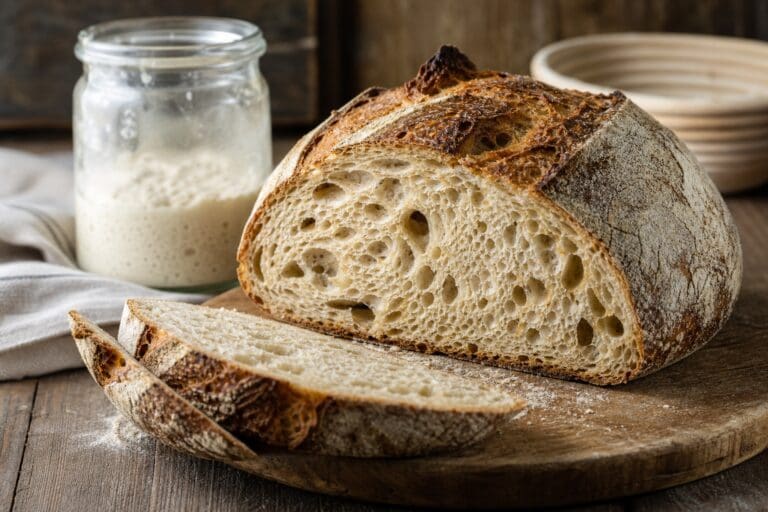
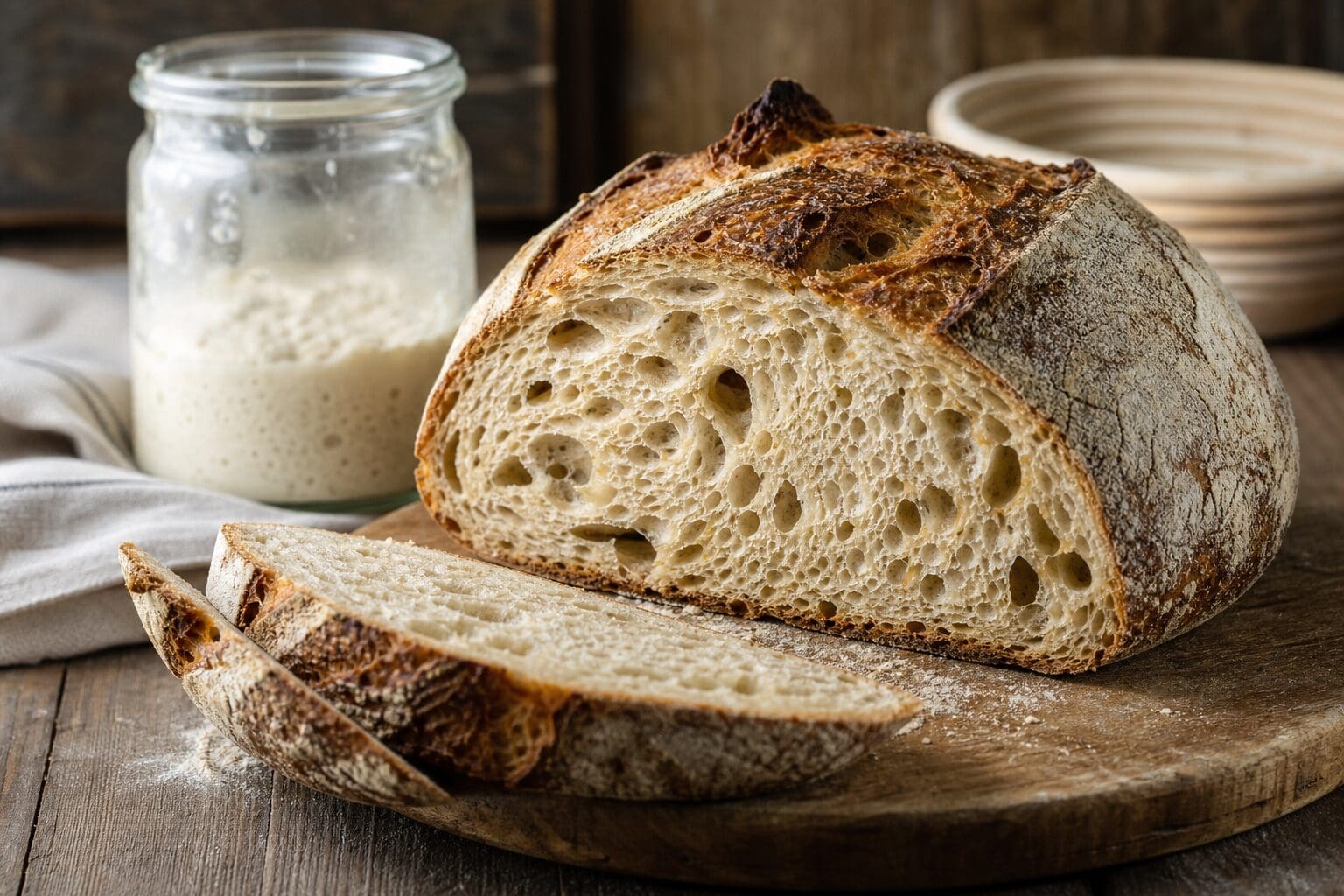
Why does sourdough bread develop a more complex flavour? The short answer is fermentation. Unlike many standard loaves made with commercial baker’s yeast alone, sourdough relies on a living culture of wild yeasts and lactic acid bacteria. As this culture ferments flour and water over time, it creates acids, alcohols, enzymes and aromatic compounds that shape the bread’s taste, smell and texture. The result is not simply “sour” bread, but a loaf with depth: tang, nuttiness, sweetness, earthiness and a lingering finish.
Why does sourdough bread develop a more complex flavour during fermentation?
Sourdough flavour begins with a starter, sometimes called a levain. This is a mixture of flour and water that has been allowed to ferment. Within it, naturally occurring wild yeasts and bacteria feed on the carbohydrates in flour. They do not all work in the same way, and that is part of the reason sourdough is so layered.
Commercial yeast is excellent at raising dough quickly and predictably. It produces carbon dioxide, which makes bread rise, and it contributes some flavour. Sourdough fermentation is slower and more diverse. The bacteria in the starter produce organic acids, especially lactic acid and acetic acid. These acids influence both flavour and structure.
Lactic acid tends to bring a mild, creamy tang. Acetic acid is sharper and more vinegar-like. A well-made sourdough balances these notes rather than letting one dominate. Alongside the acids, fermentation creates small amounts of alcohol and many aroma compounds. These can suggest fruit, toasted grain, dairy, malt or even gentle spice, depending on the flour, method and baking conditions.
Time is crucial. A dough that ferments slowly has more opportunity to develop flavour than a dough rushed from mixing to oven. This does not mean longer is always better; over-fermented dough can become slack, overly acidic or unpleasant. Good sourdough is about balance.
The role of wild yeasts and lactic acid bacteria
A sourdough starter is often described as “alive”, and that is a useful way to think about it. It contains a community of microorganisms. The exact mix varies from kitchen to kitchen and bakery to bakery, influenced by flour type, temperature, feeding routine and hydration.
Wild yeasts create lift and aroma
Wild yeasts help the dough rise by producing carbon dioxide. They are generally slower than commercial yeast, but they work well in the acidic environment created by the bacteria. Their slower activity gives the dough more time to change.
As yeasts ferment sugars, they also form flavour compounds. These may be subtle, but they add to the impression of complexity. A sourdough loaf can smell lightly fruity, malty or floral before it even reaches the oven. After baking, those aromas become richer because fermentation products interact with heat.
Lactic acid bacteria bring tang and depth
Lactic acid bacteria are central to sourdough’s character. They feed on sugars released from the flour and produce acids. These acids lower the pH of the dough, giving sourdough its familiar tang and helping shape the crumb.
Different conditions encourage different acid profiles. A warmer, wetter dough often tastes milder and more yoghurt-like. A cooler, firmer dough may produce a sharper flavour. This is one reason two loaves made from similar ingredients can taste noticeably different.
The bacteria also affect how the bread feels in the mouth. Acidity can make flavours seem brighter and more defined. It can highlight the natural sweetness of wheat and give the crust a pleasing contrast with the crumb.
Flour, grain and enzymes: flavour starts before baking
Fermentation matters, but flour is the foundation. White, wholemeal, rye, spelt and seeded blends all bring different flavour possibilities. The microorganisms in sourdough can only work with what the flour provides.
Wholegrain flours often create more robust flavours because they contain the bran and germ as well as the starchy endosperm. These parts of the grain contribute oils, minerals and aromatic compounds. Rye flour, for example, is often associated with earthy, slightly sweet notes and active fermentation. Spelt can bring a gentle nuttiness.
Enzymes in flour also play an important role. During fermentation, enzymes break starches into simpler sugars. These sugars feed the yeasts and bacteria, but they also contribute to browning in the oven. A well-fermented dough can develop a deeply coloured crust with flavours reminiscent of toast, caramel and roasted grain.
The choice of flour affects:
- Sweetness: Some flours release sugars more readily, giving a rounder taste.
- Earthiness: Wholemeal and rye flours can produce deeper, more savoury notes.
- Aroma: Fresh, good-quality flour often has a fuller grain scent.
- Crust colour: Available sugars encourage browning during baking.
- Fermentation speed: Rye and wholegrain flours can make starters and doughs more active.
This is why a plain white sourdough and a wholemeal rye sourdough may both be tangy, yet taste completely different. The fermentation is the process; the flour is the source material.
Time, temperature and hydration change the taste
Sourdough is sensitive to how it is handled. Small changes in temperature, water content and timing can shift the final flavour. Bakers use these variables to guide the loaf towards a mild, rounded profile or a more assertive tang.
A cooler fermentation, especially an overnight rest in the fridge, often encourages slower flavour development. This can produce a loaf with a more pronounced tang and a richer aroma. A warmer fermentation moves faster and may taste milder if the dough is baked before acidity builds strongly.
Hydration also matters. A wetter dough allows microorganisms and enzymes to move more freely. This can create an open crumb and a gentle acidity. A stiffer dough may ferment differently and can develop a firmer bite and sharper notes.
Salt should not be overlooked. It strengthens gluten, slows fermentation and improves flavour perception. Without enough salt, sourdough can taste flat or harsh, even if fermentation has gone well. With the right amount, the acidity, sweetness and grain character feel more balanced.
The crust: where fermentation meets heat
Much of sourdough’s flavour is concentrated in the crust. During baking, the surface of the dough reaches high temperatures. Sugars and proteins react, creating browning and a wide range of toasted flavours. This is often described as the Maillard reaction, a browning process that gives baked, roasted and grilled foods much of their appeal.
Because sourdough fermentation creates acids and releases sugars, the dough enters the oven with strong flavour potential. As the loaf bakes, the crust may develop notes of caramel, nuts, malt and toast. A bold bake can make these flavours more intense, while a paler bake may taste softer and less complex.
Steam at the start of baking helps the loaf expand and keeps the surface flexible. Later, as moisture leaves the crust, it becomes crisp and aromatic. The contrast between a tangy, chewy crumb and a dark, crackling crust is one of sourdough’s great pleasures.
Why sourdough does not always taste very sour
Despite the name, sourdough is not always sharply sour. Some loaves have only a gentle tang. Others are bold and acidic. The difference depends on the starter, flour, fermentation schedule and baking method.
A young levain used at its peak can make a lively but mild loaf. A more mature or longer-fermented dough can bring stronger acidity. Wholegrain flour can increase depth, while white flour may give a cleaner, lighter taste. Refrigeration can encourage a more noticeable tang, but results vary with the dough and starter.
Personal preference matters too. Some people love a pronounced sourness, especially with rye or strongly baked crusts. Others prefer a mellow sourdough that works well for sandwiches, toast or soup. Complexity is not the same as intensity. A mild sourdough can still have plenty of flavour if it is well fermented and properly baked.
Common flavour notes in sourdough bread
Sourdough tasting can be as simple or as detailed as the eater wants. Many consumers notice the tang first, but there is usually more happening. A good loaf may reveal different flavours as it cools, is sliced, toasted or paired with food.
Typical flavour notes include:
- Tangy: From lactic and acetic acids developed during fermentation.
- Nutty: Often linked to wholegrain flours, seeds or a darker crust.
- Malty: Created by grain sugars and browning during baking.
- Creamy: A softer acidity, often associated with lactic acid.
- Toasty: Strongest in the crust and more obvious after toasting.
- Earthy: Common in rye, wholemeal and heritage grain loaves.
- Lightly sweet: From natural grain sugars released before baking.
Toasting can make these flavours more obvious. Heat drives off moisture and adds extra browning, which is why sourdough toast can taste more aromatic than the same bread eaten plain.
Frequently Asked Questions
Is sourdough bread healthier because it has a stronger flavour?
A stronger flavour does not automatically mean a bread is healthier. Sourdough fermentation can affect texture, acidity and how some people experience digestion, but health depends on the whole loaf. Flour type, salt level, portion size and overall diet all matter. A wholegrain sourdough will differ nutritionally from a white sourdough.
Why does some sourdough taste too acidic?
Sourdough can taste too acidic if fermentation goes too far or the balance of acids is not right. Long fermentation, a very mature starter, cooler resting and certain flour choices can all increase sharpness. Over-acidity may also make the crumb feel gummy or weak. Skilled bakers adjust time, temperature and starter use to avoid harshness.
Does the age of a sourdough starter affect flavour?
The age of a starter can matter, but regular care is more important than age alone. A mature, well-fed starter may have a stable community of yeasts and bacteria, which can support consistent flavour. However, an old starter that is neglected can perform poorly. Feeding routine, flour choice and temperature strongly influence taste.
Why does sourdough crust taste richer than the middle?
The crust tastes richer because it is exposed to the strongest heat in the oven. Browning reactions create toasted, nutty and caramel-like flavours on the surface. The crumb stays softer and moister, so its flavour is usually more tangy, wheaty and gentle. Both parts work together to make sourdough satisfying.
Can supermarket sourdough have the same complex flavour as bakery sourdough?
Some supermarket sourdough can be enjoyable, but flavour depends on how it is made. A loaf given enough fermentation time and baked well can develop real depth. Products that rely mainly on added flavourings or very fast processes may taste less layered. Ingredient lists and texture can give useful clues, but tasting is the final test.
The simple reason sourdough tastes so layered
Sourdough develops a more complex flavour because it is shaped by a living fermentation and a careful bake. Wild yeasts provide lift and aroma. Lactic acid bacteria create tang, depth and balance. Flour brings grain character, enzymes release sugars, and oven heat turns the crust rich and savoury.
The best sourdough is not defined by sourness alone. It is the combination of acidity, sweetness, grain, aroma, crust and crumb that makes it memorable. That is why two loaves can share the same basic ingredients yet taste entirely different. Sourdough is simple in principle, but wonderfully complex in flavour.