From tapas to pintxos: what is the difference? It is a common question for anyone planning a Spanish meal, browsing a bar menu, or trying to understand why small plates can feel so different from one region to another. Both are delicious ways to eat in company, but they are not the same. Tapas are closely linked with Spain’s wider bar culture, while pintxos are especially associated with the Basque Country and nearby northern areas. The difference lies in tradition, serving style, ingredients, pricing and the way people enjoy them.
From tapas to pintxos: what is the difference in practice?
Tapas and pintxos are both small portions of food, often eaten with drinks. That shared idea can make them seem interchangeable. In practice, they belong to different food cultures.
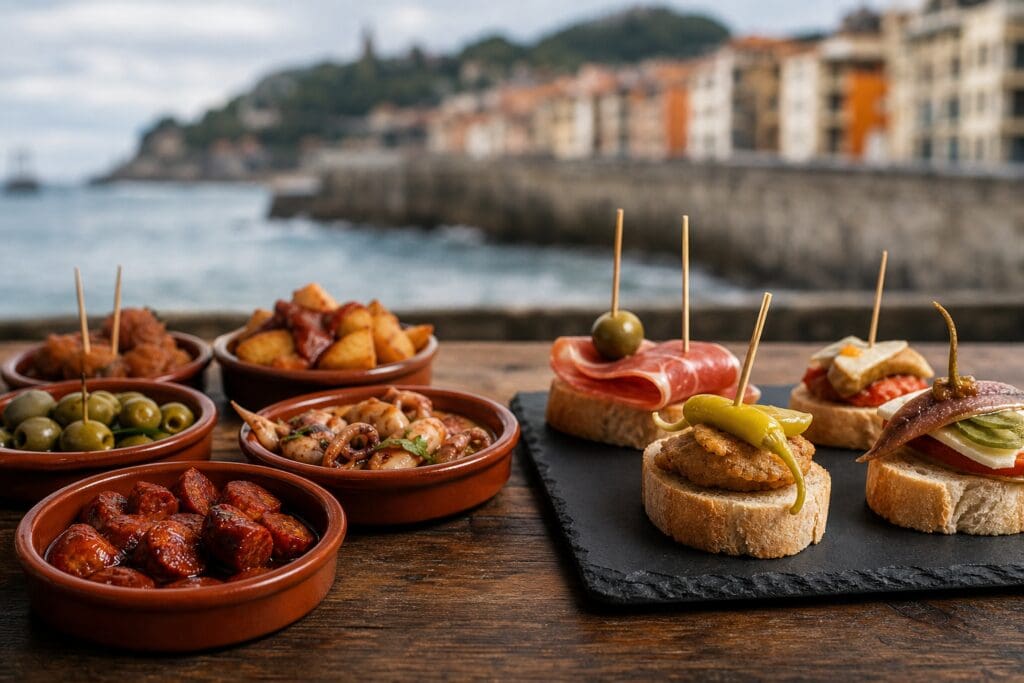
Tapas are found across Spain in many forms. They may be a small bowl of olives, a portion of tortilla, fried seafood, croquettes, cured ham, patatas bravas or a small serving of stew. Some are simple snacks; others are miniature versions of cooked dishes. Depending on the bar and region, tapas may be served free with a drink, ordered individually, or shared as several small plates.
Pintxos, pronounced roughly “peen-chos”, are strongly linked with the Basque Country, especially cities such as San Sebastián and Bilbao. The word comes from the idea of something being “spiked” or “pierced”. Traditionally, many pintxos are assembled on a slice of bread and held together with a cocktail stick, although modern versions may be more elaborate and not always on bread.
The clearest everyday distinction is this: tapas are small dishes or snacks, while pintxos are usually individual bite-sized creations, often displayed on the bar and designed to be eaten in one or two mouthfuls.
The origins of tapas and pintxos
Tapas have a long and much-debated history. One well-known explanation links the word “tapa” to a “cover”, as small pieces of bread or food were said to have been placed over glasses to protect drinks. Whether or not that story is the full truth, the name reflects the close relationship between tapas and drinking culture. Over time, tapas became an informal way to eat while moving between bars, socialising and sharing food.
Tapas vary greatly across Spain because they have absorbed local ingredients and habits. In Andalusia, fried fish and cold soups may appear. In central Spain, cured meats, omelettes and stews are common. Along the coast, seafood is often central. This variety is part of their appeal.
Pintxos developed in the Basque Country, where bar counters became showcases for carefully prepared small bites. The Basque approach often places emphasis on presentation, quality produce and bold flavour combinations. Classic pintxos can be simple, such as anchovy, olive and chilli pepper, or more refined, with seafood, mushrooms, slow-cooked meats or sauces layered onto bread.
While tapas culture is broad and flexible, pintxos culture is more closely tied to a particular regional identity.
How they are served and eaten
The way tapas and pintxos are served is one of the easiest ways to tell them apart.
Tapas are often ordered from a menu. They may arrive on small plates, in terracotta dishes, on boards, or in bowls. A group might order several tapas to share at the table, creating a relaxed meal made of different flavours. In some bars, a tapa may arrive automatically with a drink, although this is not universal across Spain.
Pintxos are often displayed along the bar, ready to be chosen. Diners may stand at the counter, point to what they want, or help themselves depending on local practice. Warm pintxos may be ordered separately from a board or menu. The atmosphere is usually lively and informal, with people moving from bar to bar rather than staying in one place for a full meal.
Common differences include:
- Size: tapas can range from a small nibble to a shareable dish, while pintxos are usually individual portions.
- Format: tapas may be plated dishes; pintxos are often built on bread or served as composed bites.
- Eating style: tapas are frequently shared; pintxos are commonly chosen one by one.
- Setting: tapas bars exist throughout Spain; pintxos are most closely linked to northern Spain, especially the Basque Country.
- Presentation: pintxos often have a more crafted, display-led appearance on the bar counter.
Both styles encourage variety. Rather than committing to one large dish, diners can taste several things in one outing.
Ingredients and typical examples
Tapas and pintxos use many similar Spanish ingredients, but they tend to arrange them differently. Tapas often focus on a dish or ingredient served in a small portion. Pintxos often focus on composition: a base, topping, garnish and sometimes a skewer to hold it together.
Classic tapas you may recognise
Tapas menus can be very broad, but some dishes are especially familiar in the UK. Patatas bravas are fried potatoes served with a spicy tomato-based sauce, sometimes with aioli. Tortilla española is a thick Spanish omelette made with potato and egg, usually served in wedges or cubes. Croquetas are crisp on the outside and creamy inside, often filled with ham, chicken, cod or mushrooms.
Other classic tapas include gambas al ajillo, prawns cooked with garlic and olive oil; albondigas, meatballs in sauce; and pimientos de Padrón, small green peppers fried and sprinkled with salt. Manchego cheese, jamón and olives are also common choices, especially as simple cold tapas.
Tapas can be rustic or refined. A neighbourhood bar may serve a comforting spoonful of stew, while a modern restaurant may offer polished small plates inspired by the tapas tradition.
Well-known pintxos and Basque favourites
Pintxos are often visually striking. A simple pintxo might be a slice of bread topped with anchovy, roasted pepper and olive. Another might combine cured ham with cheese, mushroom or a quail’s egg. Seafood is common, including prawns, crab, salt cod and anchovies.
One famous Basque pintxo is the “gilda”, usually made with anchovy, green olive and pickled chilli pepper on a skewer. It is salty, sharp and slightly spicy, showing how a tiny bite can carry a lot of flavour.
Warm pintxos may include grilled mushrooms, small portions of hake, pork cheek, cod omelette or other cooked items. In many Basque bars, the cold pintxos sit on the counter, while the hot ones are prepared to order. This gives diners a mix of immediate choice and freshly cooked food.
Price, portions and ordering customs
For UK diners, one of the most useful differences concerns ordering and paying. Tapas are usually ordered as dishes. If several people are eating together, the table may choose five or six plates and share them. The bill is then based on those dishes and drinks.
Pintxos are more often counted by item. In traditional settings, the sticks left on your plate may help staff calculate the bill, although payment systems vary. Some modern bars use tickets, ordering pads or staff service instead. It is best not to assume one method applies everywhere.
Portion expectations also differ. Three tapas dishes might make a light meal for two, depending on size. Several pintxos may be needed to feel satisfied, especially if each is only a bite or two. The pleasure of pintxos lies partly in movement: one or two in one bar, another few in the next, and so on.
Etiquette is relaxed, but a few habits are worth knowing:
- Do not pile your plate too high at a pintxos bar; take a small selection and order more later.
- Use the napkins, plates or sticks as provided, rather than reaching across the counter carelessly.
- Expect busy bars to be noisy, quick and social rather than formal.
- If unsure whether to serve yourself or ask, watch what local customers do or ask staff politely.
- In tapas settings, check portion sizes before ordering too much, as some “small plates” are quite generous.
Regional identity and atmosphere
Tapas and pintxos are not just foods; they shape the rhythm of an evening. Tapas culture often suits lingering. Friends may sit at a table, share several plates and talk over wine, beer or soft drinks. In some places, moving from bar to bar is also part of the experience, but the food may still arrive as shareable dishes.
Pintxos culture often feels more like a route than a single sitting. The Basque habit of going out for pintxos can involve standing at the bar, eating a bite, finishing a small drink and moving on. Each bar may be known for a particular speciality. The counter itself becomes part of the attraction, with rows of colourful bites arranged for browsing.
This does not mean one style is casual and the other sophisticated. Both can be simple, creative, traditional or modern. The difference is more about social pattern. Tapas invite sharing from plates; pintxos invite choosing individual bites from a display or menu.
Tapas and pintxos in the UK
In the UK, menus sometimes use “tapas” as a general word for small plates, even when the dishes are not strictly Spanish. This can blur the meaning. A restaurant may serve “tapas-style” portions of Mediterranean, British or global dishes. That approach can be enjoyable, but it is not the same as traditional tapas.
Pintxos are less common on UK menus, and when they appear they may be used to signal Basque inspiration, bite-sized bar food, or skewered snacks. A slice of bread with toppings is not automatically a pintxo unless it follows the spirit of the Basque format.
For clarity, think of tapas as a broad Spanish small-plate tradition and pintxos as a more specific northern Spanish bar tradition. If a UK restaurant uses the terms loosely, the menu description will usually tell you what to expect: shareable plates, bar snacks, skewers, bread-based bites, or tasting-style portions.
Frequently Asked Questions
Are tapas and pintxos the same thing?
No, although they are related. Tapas are small Spanish dishes or snacks, while pintxos are usually individual Basque-style bites, often served on bread or held with a stick.
Why are pintxos often served with a stick?
The stick traditionally holds the ingredients together and reflects the idea of food being pierced. In some bars, sticks may also help staff count how many items have been eaten.
Can tapas be a full meal?
Yes, tapas can easily become a full meal if several dishes are ordered and shared. Many people enjoy tapas because they offer variety without choosing one main course.
Are pintxos always cold?
No. Many pintxos are displayed cold on the bar, but warm pintxos are also common. Hot versions are often cooked or finished to order.
Which is better for sharing, tapas or pintxos?
Tapas are generally better suited to sharing because they are often served as small plates. Pintxos are usually individual bites, though a group can still choose and compare different ones.
The simple way to remember the difference
The easiest summary is that tapas are small dishes, while pintxos are small bites. Tapas belong to a wide Spanish tradition and can be served in countless regional styles. Pintxos are especially Basque, often displayed at the bar and built as individual mouthfuls.
Both traditions celebrate sociable eating. They favour variety, conversation and flavour over formality. Whether you are sharing patatas bravas or choosing a gilda from a crowded counter, the pleasure comes from tasting a little of many things and enjoying food as part of a lively social moment.