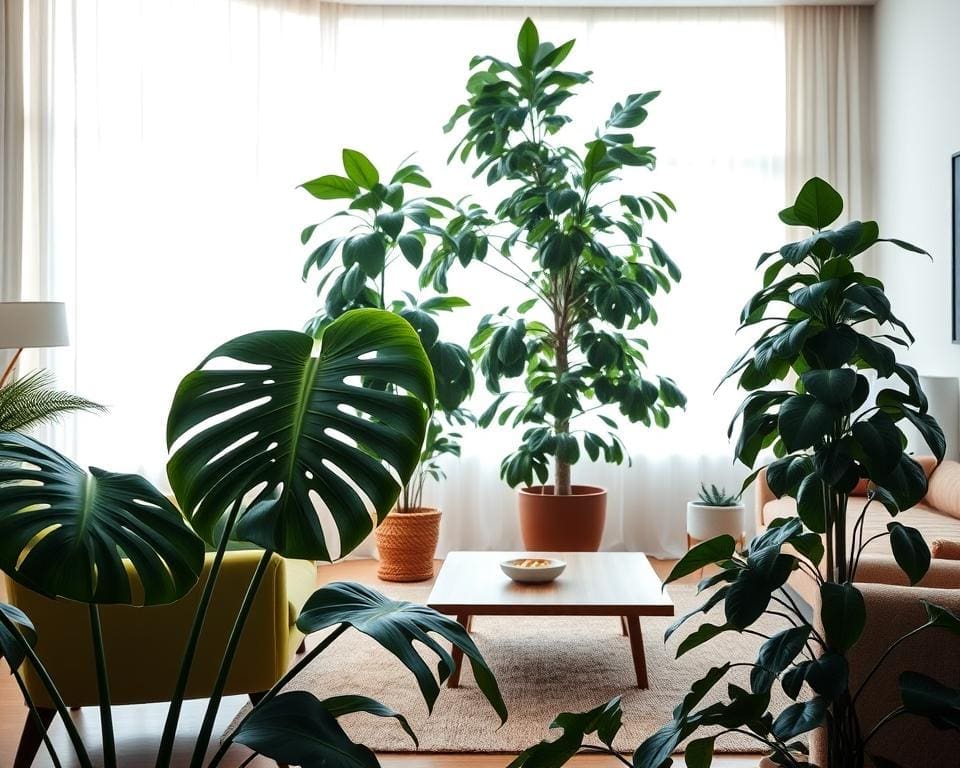
You can transform your living space using home decor plants monstera ficus as intentional design elements. Monstera deliciosa and Monstera adansonii bring bold, fenestrated leaves that work as striking focal points, while Ficus lyrata (fiddle‑leaf fig), Ficus elastica (rubber plant) and Ficus benjamina (weeping fig) add sculptural height and structure. These genera are popular because their large forms and glossy foliage create impact with relatively little fuss.
Retailers such as B&Q, Dobbies, Patch Plants and Crocus make it easy to source healthy specimens and inspiring pots. You’ll find options ranging from statement specimens to smaller varieties suited to shelves and bedside tables. Think about monstera home styling for a dramatic living‑room focus, and ficus indoor styling where you need vertical presence or an architectural corner plant.
This article guides you through choosing the right varieties, practical styling and placement, selecting plant pots, and basic care with troubleshooting. Expect clear advice on matching plants to Scandi, modern and boho interiors, and tips for houseplant decorating UK conditions like darker winters, north‑facing rooms and centrally heated flats.
Beyond looks, these plants improve air quality and boost wellbeing. Before you buy, consider light levels, seasonal change and ventilation; avoid siting plants directly above radiators or in draughty hallways. With the right choice and placement, monstera and ficus can lift both the style and comfort of your home.
Choosing the right varieties for your space
Before you buy, think about the room you want to fill and the light it receives. A single statement plant can anchor a living room. Multiple smaller pots create layered interest on shelves or in corners. Match the scale of your choice to ceiling height and available floor space for the best visual balance.
Understanding monstera and ficus species
Monstera options vary from the dramatic Monstera deliciosa, which gives large fenestrated leaves and works well as a focal point, to Monstera adansonii, a smaller, trailing climber ideal for shelves and hanging spots. Consider growth habit: climbers such as deliciosa can reach impressive indoor heights when given a moss pole, while adansonii stays compact and decorative.
Ficus choices include Ficus lyrata (fiddle-leaf fig) for upright, architectural impact, Ficus elastica (rubber plant) with glossy leaves and tolerance of lower light, and Ficus benjamina (weeping fig) which you can train as a small tree. Variegated forms such as Monstera deliciosa variegata or Ficus elastica ‘Tineke’ need brighter light and careful watering to stay healthy.
Assessing light, temperature and humidity needs
To judge room light, note window orientation. South-facing rooms get direct sun. East and west provide bright, indirect light. North-facing rooms or spaces with small windows are low light. Most Monstera and many ficus prefer bright, indirect light, though some ficus varieties cope with dimmer spots.
Keep indoor temperature steady between 16–24°C. Avoid radiators, open fires and cold draughts; sudden drops can trigger leaf drop in ficus. For humidity, aim for 40–60% or above. Use pebble trays, group plants together, mist regularly or run an inexpensive humidifier in dry winter months to support growth.
Deciding between statement specimens and multiple small plants
A single Monstera deliciosa or Ficus lyrata delivers instant drama and becomes a focal point. These specimens often need larger plant pots and occasional staking. They suit rooms with high ceilings or spacious living areas.
Multiple smaller plants—young rubber plants, adansonii, trailing pothos—build texture and make the space feel lush. They work well in flats and on shelves. Expect varied watering schedules and more pot rotation to keep growth even when you choose multiples.
Where to buy healthy plants in the UK
Buy from reputable garden centres and online specialists such as Dobbies, Hillier, Crocus, Patch Plants, The Sill UK, or trusted local nurseries. Check plants for firm stems, no black or mushy roots and minimal pests like red spider mite or mealybug. Look for fresh new growth and intact roots in potted stock.
Prefer potted plants for immediate indoor placement rather than bare-root. For variegated cultivars, confirm authenticity and that the plant has been acclimatised. You can find bargains at local plant swaps, Facebook Marketplace and Freecycle, but inspect carefully for pests and disease before bringing them home.
Home decor plants monstera ficus
Place your monstera where it gets bright, indirect light and room for those iconic leaves to unfurl. For effective monstera styling, give the plant space near a window, beside a sofa or at the end of a hallway to draw the eye. Use a moss pole or trellis for climbing varieties and rotate the pot regularly so growth stays balanced.
Choose a terracotta or glazed ceramic pot with a saucer or reservoir tray suited to UK interiors. Raised plant pots on a low stand or a simple wooden platform elevate presence without cluttering the room. Keep surrounding furniture minimal so the foliage becomes the focal point.
Ficus varieties such as fiddle-leaf figs and rubber plants bring height and architectural form to a room. Position them in corners, beside bookcases or behind seating to create a sculptural backdrop. For stable display, use heavy pots or weighted bases; stakes help young plants settle upright.
Train a ficus into a single-stem tree or a multi-stem bush by pruning to encourage branching and control proportions. Regular light pruning keeps the silhouette neat and helps the plant fit your interior scale while maintaining strong vertical lines for ficus decor.
Combine monstera and ficus with other houseplants to build depth and interest. Pair Monstera deliciosa with pothos, Calathea for patterned leaves, and snake plant for textural contrast. Group plants by light and watering needs so care is straightforward and your indoor plant combinations UK feel cohesive.
Arrange plants at staggered heights using plant stands and shelves to create layers. Keep pet safety in mind: many monstera and ficus species are toxic to cats and dogs, so place these specimens out of reach and consult the RSPCA or your vet about safer alternatives if needed.
Choose colour palettes that complement green foliage. Neutral Scandi tones—whites, greys and light woods—accentuate leaf colour. Deep jewel tones such as navy or emerald add drama. Warm terracotta and ochre bring boho warmth and a cosy feel.
Mix pot finishes to build texture: matte ceramic, woven baskets and rattan work well together when you keep a unifying hue or material. Contrast glossy ficus leaves with the matte surface of a Monstera for pleasing interplay. Size pots proportionally so the composition looks balanced and intentional.
Plant pots, placement and practical considerations
Choosing the right plant pots and where you put them makes a big difference for your home decor plants monstera ficus. Pots affect soil moisture, plant health and how well a room flows. Read on for simple, practical guidance on pot types, styling and keeping surfaces safe.
Choosing plant pots: materials, sizes and drainage
Terracotta is porous and helps soil dry between waterings. That suits plants that dislike constant wet feet.
Ceramic or glazed pots hold moisture and add colour or pattern to a scheme. Use a nursery pot inside glazed pots if they lack holes.
Plastic is lightweight and budget-friendly. Fibreglass and metal offer a modern look while staying easy to move. Woven baskets work as outer covers when paired with a plastic liner.
Drainage is essential. Always favour pots with drainage holes and saucers or self-watering inserts. For decorative pots without holes, keep an inner pot to avoid waterlogging and root rot.
When sizing, pick a pot just one size larger than the rootball for most houseplants. Large jumps in pot size can hold excess soil and retain moisture, increasing the risk of rot. Reserve bigger pots for slow-growing specimens.
Matching pot styles to interior themes
For Scandi interiors, stick to muted tones such as white or soft grey. Choose clean lines and natural wood plant stands with textured ceramics.
A modern look favours matte black, concrete-style pots and geometric metal stands. Minimal forms help keep focus on leaf shape and scale.
Boho styling suits woven rattan baskets, terracotta and colourful glazed ceramics. Layer pot groupings at varied heights to create a relaxed, collected feel.
Shops in the UK to browse include John Lewis, Habitat, Made.com and West Elm. Independent makers on Etsy or Not On The High Street are useful for one-off pieces and bespoke stands.
Placement tips for light optimisation and traffic flow
Place light-demanding specimens on south or east-facing windowsills, adjusting for reduced daylight in winter. Rotate plants seasonally to keep growth even.
Avoid blocking walkways. Use corners and window edges to make sure plant placement UK works with daily movement. Keep larger plants away from high-traffic routes.
Use shelves, plant stands and hanging planters to exploit vertical space. That keeps floors clear while allowing more plants in smaller rooms.
Protecting floors and surfaces from water and soil
Protect surfaces with saucers, plant trays or waterproof mats. For wooden floors, put felt pads under stands and use waterproof coasters beneath pots.
Wipe spills immediately and lift pots now and then to let the surface dry. Fit liners properly in baskets to prevent mould and staining.
If you rent, check your tenancy agreement before making permanent alterations. Document plant locations and any protective measures in case you need to show how you avoided damage.
Care routines and troubleshooting common issues
Keep a simple plant care routine to support home decor plants monstera ficus in UK homes. Check soil moisture weekly with the finger test to about 2–3 cm; water according to a watering schedule UK that reflects the season and indoor heating. Monstera prefers evenly moist but not waterlogged soil, while ficus likes to dry slightly between waterings. Reduce frequency in winter and note each watering in a small journal so you can spot patterns.
Maintain plant pots and feeding habits: dust leaves monthly, rotate plants every few weeks, prune dead or damaged foliage as required, and repot young, fast-growing specimens every 12–24 months or when roots are pot-bound. Use a free-draining potting mix amended with perlite for aeration. Feed with a diluted balanced fertiliser every 4–6 weeks during spring and summer, and consider misting, grouping plants, or using a humidifier in centrally heated flats to raise humidity.
When troubleshooting houseplants, start with simple checks. Yellowing leaves often mean overwatering or poor drainage — inspect roots for rot and adjust watering. Leaf drop on ficus is commonly stress-related from moving, draughts or sudden light changes; acclimatise new plants slowly. Brown tips or crispy edges usually point to low humidity or salt build-up; flush the soil occasionally and use rainwater or distilled water if needed.
Pests and poor growth need prompt action: isolate affected plants and treat spider mites, mealybugs, scale or aphids with insecticidal soap or horticultural oil, and wipe leaves regularly to prevent infestations. If stems grow leggy or growth slows, increase light or prune to encourage bushiness. For further local guidance, consult resources such as the Royal Horticultural Society and community groups like UK Houseplants while keeping notes on your plant care routine and watering schedule UK for steady progress.