This short guide helps you choose a leather belt that balances style, fit and longevity across everyday wear and special occasions in the United Kingdom. Whether you search for the perfect leather belt to pair with an office suit or a belt for wardrobe rotation at weekends, you will find clear advice to simplify purchases online and in-store.
You will learn the main factors to weigh when deciding how to choose leather belt: belt type (dress versus casual), leather quality from full-grain to bonded, buckle style, width and colour, fit and ongoing maintenance. These elements interact — a narrow dress belt works best with polished buckles, while casual belts take wider straps and matte hardware.
This UK belt guide speaks to both men and women and covers workwear, smart-casual evenings in London and Manchester, wedding attire, and country walks in waxed trousers. Expect practical takeaways you can use straight away: how to measure belt size accurately, how to match a men’s leather belt or women’s leather belt to shoes, how to care for leather in damp UK climates, and when to repair or replace a trusted strap.
Recommendations draw on leather trade standards, cordwainers’ advice and care guidance from British specialists and retailers such as John Lewis, Marks & Spencer, Barker and Loake. You will find tips for every budget — from investment pieces by British shoemakers to reliable high-street options — so you can select the right belt for wardrobe needs with confidence.
Understanding styles and types of leather belt
Choosing the right belt starts with recognising the main types of leather belt and how each one shapes your look. A well-chosen strap lifts an outfit, while the wrong choice can undermine it. Read on to learn how material, buckle styles and finishing details affect wear and longevity.
Classic dress belts versus casual belts
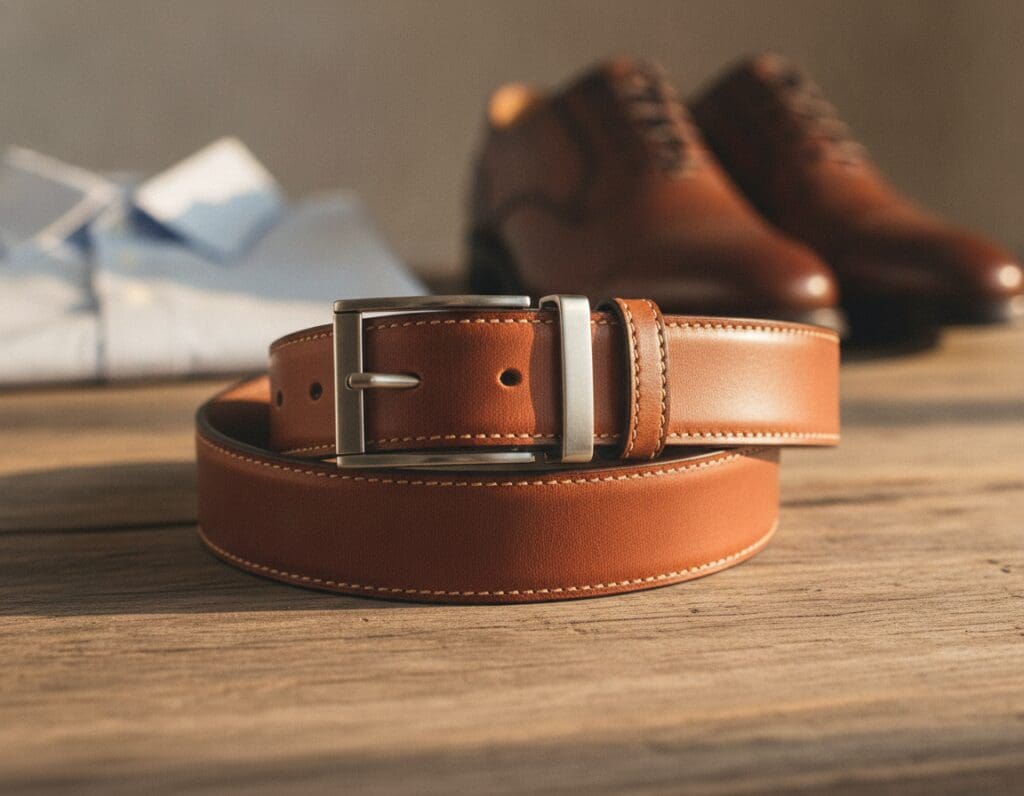
When you weigh dress belt vs casual belt, think purpose first. Dress belts sit narrow and neat at roughly 2.5–3 cm. They favour smooth full-grain or top-grain leathers, minimal stitching and a slim polished buckle for suits or formal occasions.
Casual belts are wider and more varied in texture. You will see visible stitching, distressed finishes and buckles such as D-rings or plate styles. Brands like Church’s, Barker and Loake supply refined dress belts. Barbour and Timberland offer rugged casual options for jeans or country wear.
Full-grain, top-grain and bonded leather explained
A full-grain leather belt is the top choice for durability and patina. It keeps the hide’s natural grain and improves with age when cared for properly.
Top-grain leather is sanded and refinished to remove flaws. It looks more uniform and sits between full-grain and bonded in price and longevity. Bonded leather uses scraps bonded with polymers. It is cheaper and suits short-term or fashion-led purchases but will not last like higher-grade leathers.
For everyday wear invest in full-grain or quality top-grain. When labels say “genuine leather” check for more detail. Look for transparent sourcing and clear terms on the tag.
Buckle styles and finishes that complement different outfits
Understanding buckle styles helps you match belts to occasions. Single-prong buckles work across most wardrobes. Double-prong and plate buckles sit better on work or heavy-duty belts. Ratchet systems give micro-adjustments without holes.
Choose finishes to echo your metal accessories. Polished chrome and black nickel pair well with formalwear. Antique brass and matte finishes suit relaxed or country pieces. Ensure buckle size matches the belt width and your frame for balanced proportion.
Width, colour and edge finishing: what suits your wardrobe
Follow a simple belt width guide: 2.5–3 cm for suits, 3–3.5 cm for smart-casual outfits, 3.5–4.5+ cm for jeans. Match width to the trouser loops and the event you will attend.
For belt colour match, keep black and dark brown as staples in a UK wardrobe. Add tan, cognac or oxblood for variety. Navy and grey work for contemporary looks. Aim to own at least a slim black dress belt and a versatile brown or tan strap.
Edge finishing signals quality. Burnished or painted edges look refined. Raw edges give a rugged feel. Matching edge colour to the strap and subtle tone-on-tone stitching are hallmarks of smarter belts. Contrast stitching suits casual belts and adds personality.
How to measure, fit and maintain your belt
Getting the right belt starts with accurate measuring and sensible care. Below you will find clear, practical steps to measure belt size, follow a simple belt fit guide, protect leather in British weather and decide when to seek belt repair or belt replacement.
Measure a pair of trousers that fit well from the hole you use to the buckle point. That length often equals the buckle-to-middle-hole measurement listed by makers. If your trousers are 34 inches, many brands advise a 36-inch belt; check brand sizing charts when you buy.
Alternatively, measure around the waist where the belt will sit. Use the waist for tailored trousers and the hips for low-rise jeans. Standard belts usually have five holes spaced about 1 inch apart to allow adjustment. If your size fluctuates, consider a ratchet belt for micro-adjustment.
When buying from UK retailers such as John Lewis or Marks & Spencer, try the belt with the trousers you wear most. Review return policies before ordering online to make exchanges straightforward.
How a properly fitted belt should sit with trousers and jeans
The belt should sit at the waistband and hold trousers without pulling or gaping. When fastened, the buckle tongue should rest at the middle hole for best balance and comfort.
Let the tail pass through the first belt loop and lie flat. Aim for about 6–8 cm of tail beyond the buckle for a neat look. Jeans usually need wider belts and a longer tail. Tailored trousers fare better with slimmer belts that keep your silhouette crisp.
Choose a belt that is firm but allows you to breathe and sit comfortably. Avoid belts that force you to loosen trousers or create pressure points when you move.
Care and maintenance to prolong leather life in UK climates
Keep leather dry from prolonged rain and humidity common in the UK. If your belt gets wet, let it dry naturally away from radiators and direct heat. Do not tumble dry.
Wipe dirt away with a soft, dry cloth. Use a mild leather cleaner or saddle soap for deeper cleaning, testing on an inconspicuous area first. Condition leather roughly every three to six months with quality products such as Saphir Renovateur or British-made balms to prevent drying and cracking.
Store belts flat or hang them on a rack to avoid kinks. Use breathable covers or cotton bags rather than plastic to reduce mould risk in damp homes. If mould appears, clean with a diluted alcohol solution and recondition the leather afterwards.
For scuffs, apply matching polish or dye sparingly. For larger colour loss, consider professional re-colouring from a leather restorer rather than aggressive DIY fixes.
When to repair, recondition or replace your belt
Repair is sensible when hardware fails, rivets loosen or a hole stretches beyond adjustment. Cobblers can replace buckles and mend stitching at modest cost.
Recondition dry, stiff or lightly cracked leather with thorough cleaning and conditioning. Re-colouring can mask significant wear and extend life.
Replace the belt if you see split leather, delamination in bonded straps or severe thinning that compromises strength. Consider belt replacement when the style no longer suits your wardrobe or when restoration costs approach the price of a new belt.
Use reputable local cobblers or specialists listed by the British Leather Federation for valuable items. Professional restoration can be cost-effective compared with early replacement.
Choosing the right leather belt for occasions and outfits
When selecting a belt for occasions, think about harmony first. For suits and formal wear choose a slim formal belt in full‑grain or top‑grain leather in black or dark brown with a low‑profile polished buckle. If you need a belt for a black‑tie evening, keep contrast and stitching to a minimum so the belt disappears into the outfit rather than competes with it.
For weddings and ceremonial events match your wedding belt to shoe leather and metalwork on accessories. Antique brass or brass finishes pair well with tweed and brogues at country weddings, while patent finishes suit highly formal shoes. For the workplace, keep two core work belts: a black polished dress belt for traditional suits and a dark brown for navy or brown suits; smart‑casual offices can take pebbled or suede options at 3–3.5 cm width for a neat leather belt outfit pairing.
Casual and weekend wear calls for wider, textured or distressed full‑grain belts, woven styles or suede for jeans and chinos. Tan and cognac are versatile with denim and lighter chinos, and larger, matte buckles feel appropriate. For outdoor or country use choose waxed leather and rugged stitching with antique hardware to suit garments such as Barbour jackets and wellington boots, and favour treated leathers for damp UK conditions.
Build a capsule belt collection around two essential pieces — one black and one brown — then add a casual belt and a seasonal or statement option. Invest more in belts you will wear daily from respected British shoemakers or specialist leather ateliers, and keep a small care kit: soft cloth, neutral cleaner and conditioner. When shopping, try the belt with the trousers you intend to wear, check return policies for online purchases and inspect stitching, edge finishing and buckle attachment for lasting quality.