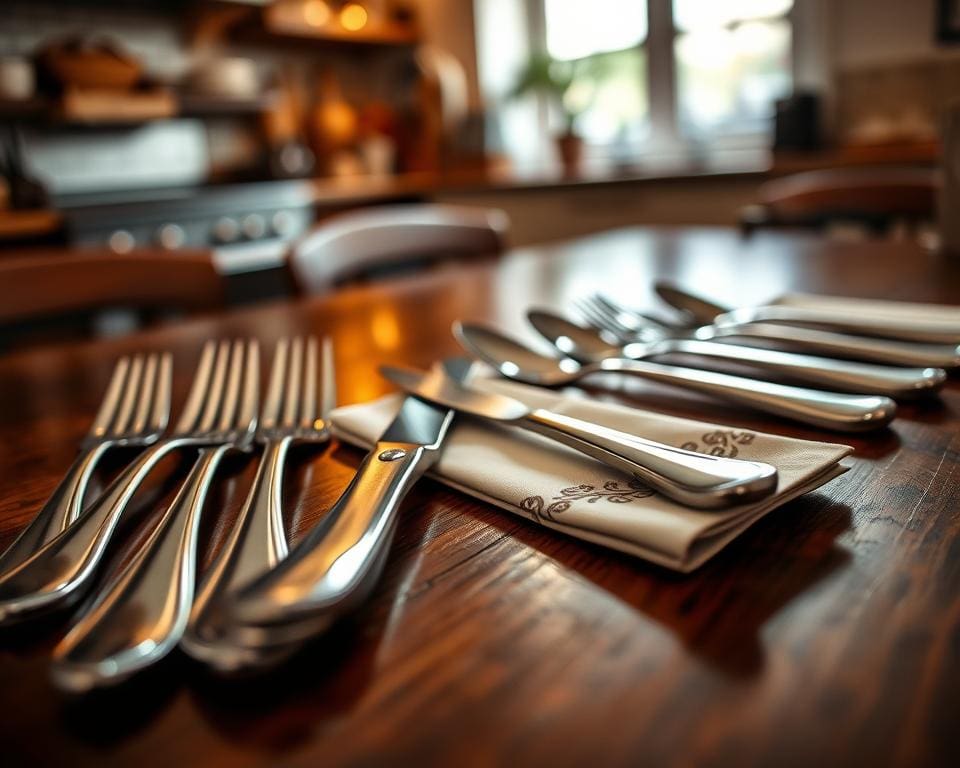
Choosing cutlery can feel overwhelming, but it need not be. This cutlery guide explains what “quality” means so you can buy with confidence for daily use, special occasions and gifts. You will learn practical cutlery buying tips that focus on materials, finishes, design and ergonomics.
Quality cutlery balances durability and appearance. Stainless steel cutlery and silver cutlery each have strengths: stainless resists corrosion and suits everyday life, while silver offers heritage and reparability. The following sections expand on how to read stainless steel grades, spot hallmarking and assess weight and balance.
You will also find advice on long-term value, including initial cost versus lifespan, re-silvering options for silver plate, and recycling of stainless steel. Use the checklists ahead to compare mass-market sets with premium or bespoke options and identify the best cutlery for your home in the United Kingdom.
Understanding materials and finishes for long-lasting cutlery
Choosing cutlery starts with knowing what it is made from and how the surface is finished. Your choice affects durability, care and the way pieces age. Read on to compare common metals and the most popular cutlery finishes so you can pick items that suit everyday use or special occasions.
Stainless steel grades and what they mean for durability
Stainless steel grades determine corrosion resistance, shine and strength. 18/10 cutlery contains 18% chromium and 10% nickel. It resists rust well, keeps a bright lustre and features in sets from Robert Welch and John Lewis & Partners. 18/8 cutlery has slightly less nickel yet remains a solid choice for many households.
Lower-cost options use 13/0 steel, sometimes called 430, which is magnetic and cheaper. It suits casual use but can stain and lacks the long-term resistance of higher grades. Some makers use 316 or specialist alloys for knives where edge retention and saltwater resistance matter.
Silver plate, sterling silver and alternatives: pros and cons
Sterling silver cutlery is stamped 925 and offers prestige plus the ability to be passed down through generations. It develops a patina and needs polishing to remove tarnish. UK hallmarking from London or Sheffield gives you authenticity and peace of mind.
Silver-plated cutlery provides the look of silver at a lower price. A thin silver layer covers a base metal and can wear through on high-contact areas over time. Electroplated nickel silver (EPNS) gives a similar finish but requires gentle care to avoid abrasion.
Stainless alternatives avoid tarnish and reduce upkeep. Titanium and wood-handled pieces with stainless inserts are niche options for specific uses or aesthetics.
Matte, polished and brushed finishes: appearance and maintenance
Polished cutlery offers a mirror shine and a classic look. It shows fingerprints and scratches more readily, so it needs more frequent cleaning to maintain that gleam.
Brushed cutlery, or satin finish, hides marks and suits busy kitchens. It lends a modern, practical feel and performs well for daily family use.
Matte cutlery gives a subdued, contemporary appearance. Its texture can make stain removal trickier but it resists obvious scratches.
Practical tips
- For everyday family service, choose 18/10 stainless with a brushed finish for durability and low maintenance.
- If you want heirloom pieces, consider sterling silver cutlery, check hallmarking and plan for periodic polishing.
- Avoid harsh abrasives on silver-plated cutlery to prolong the finish, and always check manufacturer guidance for dishwasher safety.
How to assess design, balance and ergonomics
Good cutlery design makes meals easier and more enjoyable. Pay attention to how a piece feels in your hand, where its weight sits and how the handle shape supports your grip. Small differences in cutlery ergonomics change comfort on long meals and reduce wrist strain.
Handle shape and weight: choosing what feels comfortable
Try several patterns before you buy. The ideal cutlery weight places the centre of gravity near your fingers so pieces feel like an extension of your hand. Too much weight in the handle feels clumsy; too much at the head makes items tip forward.
Handle profiles include rounded, tapered, flat and hollow-handled. Solid, heavier handles often feel substantial and durable. Hollow or slim handles are lighter and may suit formal settings or smaller hands.
Match handle length and bulk to who will use the set. Families often prefer fuller, longer handles. Think about materials such as wood or composite, which change grip and thermal comfort and need different care.
Blade and tine design: performance for different foods
Blade shape and finish affect cutting. Modern table knives are usually non-serrated stainless steel. Sharper or finer-edge blades, often from higher-carbon steel, deliver better knife performance for meat and firm vegetables.
For steaks and dense cuts consider dedicated serrated or steak knives. They keep performance at the table without frequent re-sharpening.
Fork tine design matters for food types. Three-tine forks work well for fish; four-tine forks suit general use. Tine thickness and spacing determine how easily you pick up soft or firm foods.
Spoon bowls vary by depth and curve. Shallow bowls suit desserts; deep bowls fit soups and serving tasks. Keep separate pieces for specific uses when precision matters.
Matching style to your tableware and occasion
Choose patterns that harmonise with your plates and setting. Traditional, polished patterns pair well with fine china at formal dinners. Brushed or matte finishes go with modern stoneware and casual meals.
Consider matching cutlery and tableware in metal tone and form. Polished silver complements chargers and serving pieces. Mixing metals, such as brass accents with brushed steel, works if you plan it deliberately.
If you entertain often and vary styles, pick a neutral, well-balanced pattern such as a simple 18/10 satin finish. Versatile balanced cutlery keeps your table coherent and adapts to many occasions.
Where to buy quality cutlery and what to look for
When you decide to buy cutlery UK, start by checking established makers and retailers. Brands such as Robert Welch, Arthur Price and John Lewis & Partners have clear product specs and aftercare. Look for explicit markings like 18/10 stainless steel or EPNS rather than vague labels that tell you little about longevity.
Hallmarking matters if you are considering precious metal pieces. In the UK sterling silver must carry a silver hallmark from an Assay Office in London, Birmingham, Sheffield or Edinburgh. Ask to see hallmarks on new or antique items to confirm purity, maker and date.
Reputable brands and hallmarking in the UK
Compare cutlery brands on how openly they publish materials, manufacturing location and care notes. International names such as Villeroy & Boch, Christofle and Georg Jensen often provide clear provenance and support. If you are assessing vintage or second-hand silver, inspect for a proper silver hallmark and any wear that might need re-plating.
Retailers, independent makers and custom options
Try department stores and specialist kitchen shops like Fortnum & Mason and Lakeland to test weight and balance in person. Independent silversmiths and bespoke cutlery workshops offer tailored options for handle shape, engraving and feel. If you prefer to research local makers, read this guide to how local brands build trust before you commit: local brand transparency.
Online marketplaces and manufacturer sites provide wide ranges and reviews, but confirm seller authenticity before buying plated or sterling pieces. For bespoke cutlery expect longer lead times and higher prices, with the upside of custom weight and finish.
Warranty, care instructions and return policies
Check cutlery warranty details before purchase. Reputable manufacturers include a cutlery warranty that covers manufacturing defects and sets out exclusions like misuse or dishwasher damage. Read exclusions so you know what is and is not covered.
Care instructions should be explicit. Good product pages tell you whether items are dishwasher-safe and which detergents to avoid. Silver and plated sets need polishing guidance to keep them in top condition.
Confirm cutlery returns terms for online orders. Look for clear timeframes on returns and rules for personalised items. If possible, test a few pieces in-store to reduce the need for returns and ensure the ergonomics suit your use.
Care, maintenance and long-term value of cutlery
To preserve the longevity of cutlery, rinse or wash items promptly after use to remove acidic residues. For plated and sterling silver, hand-wash with a mild detergent and a soft cloth; this is central to good silver care. Many high-quality 18/10 stainless pieces are labelled as dishwasher-safe cutlery, but always follow the manufacturer guidance to avoid pitting or finish damage.
Dry immediately to prevent water spots and corrosion, and store pieces in cutlery trays or tarnish-resistant cloths. Avoid prolonged contact between different metals, which can cause galvanic corrosion. When you use a dishwasher, select gentle detergents, lower temperatures and separate items to reduce scratching; remove and dry items quickly for best results.
Polish sterling on a regular schedule with a reputable product such as Hagerty or Goddard’s and a soft lint-free cloth. Minor discolouration on stainless steel can often be treated with a bicarbonate paste or specialised stainless cleaner; never use steel wool. For worn silver plate, professional re-silvering is available, though re-silvering can be costly — weigh repair costs against replacement.
Good-quality stainless sets can last decades, so factor lifespan into value assessments. Keep receipts, hallmarks and service records for hallmark-verified or designer pieces to protect provenance and potential heirloom value. To maintain cutlery economically and sustainably, choose durable materials, repair when practical and recycle stainless steel at end of life to reduce waste.