London has many signature tastes, from pie and mash to afternoon tea, yet few drinks feel as closely tied to the city’s character as the gin and tonic. The story behind London's famous gin and tonic culture is not just about a refreshing highball. It is a tale of medicine, trade, taxation, naval influence, clever distilling, changing fashions and the capital’s enduring love of sociable drinking. Today, a well-made G&T can be crisp, aromatic, floral, spicy or boldly savoury, but its roots are far older and more complex than its simple recipe suggests.
The story behind London's famous gin and tonic culture
Gin’s London story begins before tonic joined the glass. In the seventeenth century, English drinkers developed a taste for juniper-flavoured spirits, influenced by Dutch genever. William of Orange’s arrival on the English throne in 1689 helped strengthen cultural and commercial links with the Low Countries, and grain spirits became increasingly common.
By the early eighteenth century, gin was cheap, strong and widely available across London. This period is often remembered as the “Gin Craze”, when unregulated spirits caused serious social harm, especially among the urban poor. Prints such as William Hogarth’s Gin Lane captured the moral panic around excessive drinking, while Parliament introduced a series of Gin Acts to control production and sale.
Over time, better regulation helped reshape gin’s reputation. Distillers improved quality, and styles developed. Old Tom gin, a lightly sweetened style, became popular in the eighteenth and nineteenth centuries. Later, London Dry gin emerged as a cleaner, drier expression, made without added sweetening after distillation. Despite its name, London Dry does not have to be made in London, but the style reflects the city’s long association with precise, botanical-led gin making.
How tonic water entered the glass
Tonic water began with quinine, a bitter compound derived from the bark of the cinchona tree. Quinine was used to treat malaria, and British colonial history played a major role in bringing it into everyday drinking culture. In tropical regions where malaria was a threat, quinine was taken as a preventative medicine, though its bitterness made it difficult to enjoy.
Sugar, citrus and water helped soften the taste. Gin, already familiar to British drinkers, made the mixture more palatable. This practical blend gradually became a drink in its own right, especially among British communities in India and other parts of the empire. The modern gin and tonic carries this complicated heritage: refreshing and elegant in the glass, but connected to imperial networks, medicine and global trade.
Carbonated water also changed the experience. Johann Jacob Schweppe developed a commercial method for producing fizzy mineral water in the late eighteenth century, and his business became strongly associated with London. By the nineteenth century, commercial tonic waters made it easier to mix the drink consistently.
The importance of bitterness
A good gin and tonic works because it balances bitterness, sweetness, aroma and fizz. Quinine gives tonic its dry, bitter edge, while sugar rounds it out. Gin brings juniper, citrus peel, roots, seeds, herbs and spices. Ice controls dilution and temperature. A garnish can lift one botanical note without overwhelming the glass.
This balance explains why the drink has lasted. It is easy to make, yet surprisingly sensitive to proportion and quality. Too much tonic can flatten the gin. Too little can make the drink harsh. A warm glass or tired mixer quickly dulls the sparkle.
Why London embraced the serve
London has always been a city of taverns, clubs, hotels, theatres and railway bars. The gin and tonic fitted that social world neatly. It could be served quickly, looked smart, and suited both casual and formal settings. Unlike heavier mixed drinks, it felt clean and brisk.
The drink also benefited from the city’s trading links. Citrus, spices, sugar and imported botanicals all passed through London’s docks and warehouses. Distillers could draw on a wide range of ingredients, helping gin become a canvas for global flavours, filtered through a distinctly London style.
From gin palaces to modern cocktail bars
During the nineteenth century, London’s gin palaces transformed how spirits were sold. These bright, ornate venues used polished wood, mirrors and gas lighting to attract customers. They were more glamorous than many older drinking houses, and they helped make gin feel less hidden and more theatrical.
By the twentieth century, gin held a firm place in British drinking habits. The martini, the gimlet and the gin and tonic all kept it visible, though vodka later took some of the spotlight. In the late twentieth century, gin was sometimes seen as traditional rather than exciting. That changed dramatically with the modern craft gin revival.
Small distilleries, new licensing opportunities and adventurous consumers brought gin back into focus. London became both a historical centre and a creative stage. Classic juniper-forward gins sat beside expressions using cucumber, rose, tea, sea herbs, pepper, rhubarb, lavender and countless citrus variations. Bars responded with larger gin lists, better ice and premium tonic choices.
What makes a London gin and tonic distinctive today
A London G&T is not one fixed recipe. It is more a set of habits: respect for juniper, attention to temperature, a good mixer, thoughtful garnish and an understanding that simple drinks reveal every flaw.
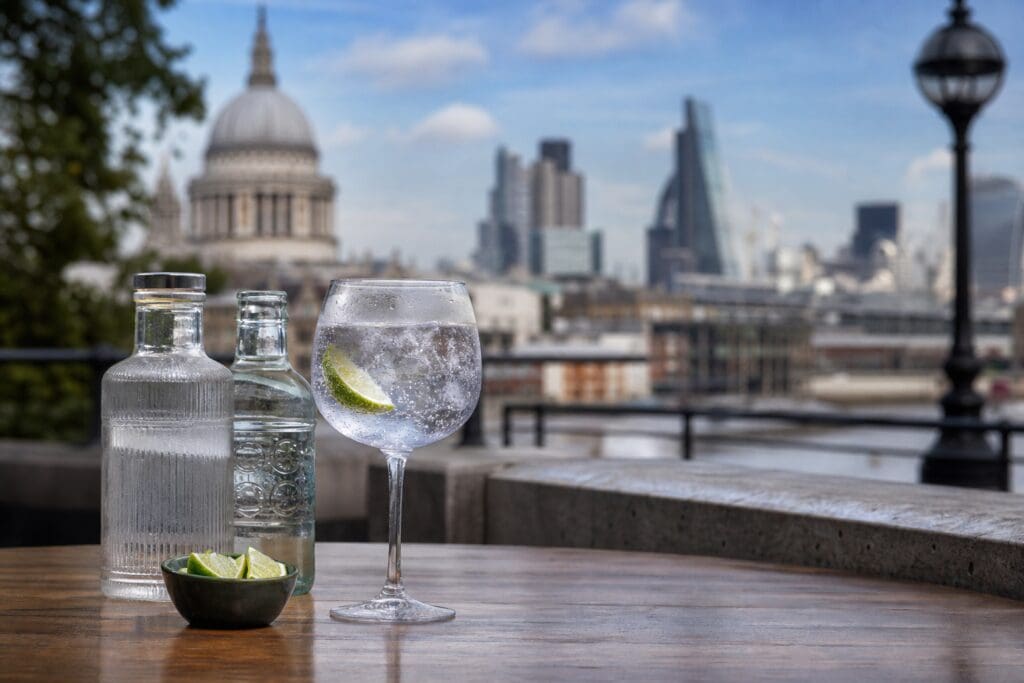
Many London bartenders favour clean, cold serves that allow the gin’s structure to show. Some use a tall highball glass; others prefer a balloon glass to hold plenty of ice and release aroma. Neither is automatically better. The best choice depends on the gin, the tonic and the setting.
Useful details often include:
- Plenty of solid ice: Large cubes chill the drink properly and melt more slowly than small, wet ice.
- Fresh garnish with purpose: Lemon, lime, grapefruit, rosemary, cucumber or peppercorns should match the gin’s botanicals.
- Measured proportions: A common approach is one part gin to two or three parts tonic, adjusted for strength and taste.
- Fresh tonic water: Lively carbonation is essential, so flat tonic should never be used.
- A clean glass: Strong dishwasher smells or warm glassware can spoil delicate aromas.
London drinkers are also more aware of tonic choice than they once were. Some tonics are dry and bitter; others are sweeter, citrus-led or floral. A bold navy strength gin may need a different mixer from a delicate gin with soft herbal notes.
The cultural pull of the G&T in the capital
Part of the gin and tonic’s charm is its flexibility. It can open an evening, accompany a summer lunch, fit into a hotel bar ritual or appear at a relaxed gathering at home. It feels familiar without being dull.
In London, the drink also carries a sense of place. Historic distilling areas, old pubs, modern rooftop bars and neighbourhood restaurants all interpret it differently. The same basic drink can feel classic in St James’s, playful in Soho, refined in Mayfair or creative in East London.
There is also a democratic quality to the G&T. It does not require rare equipment or elaborate technique. Consumers can understand it, compare it and adapt it. At the same time, professionals can refine it through glassware, dilution, garnish oils, carbonation and botanical pairing.
The craft revival and changing tastes
The twenty-first century gin revival has made consumers more curious. People now ask about base spirit, distillation method, local botanicals and the difference between London Dry, distilled gin and flavoured gin. This curiosity has changed the way menus are written and how drinks are served.
Flavoured and pink gins have attracted new drinkers, though traditionalists often prefer a clear, juniper-led style. Low and no alcohol options have also become more common, reflecting broader changes in British drinking habits. These alternatives often borrow the ritual of the G&T: ice, tonic, garnish, sparkle and a grown-up bitter finish.
Sustainability has entered the conversation too. Bars may think about wasted garnish, local sourcing, refill systems and lighter packaging. The drink remains simple, but the culture around it keeps evolving.
How to understand the drink without overcomplicating it
The best way to appreciate a gin and tonic is to notice its moving parts. Juniper should usually be present, even when other botanicals shine. Tonic should refresh rather than smother. Garnish should guide the nose, not turn the glass into a fruit bowl.
A classic London-style serve might use a dry gin, cold tonic, a twist or wedge of citrus and enough ice to keep everything bright. A modern serve might pair a herbaceous gin with rosemary, a citrus gin with grapefruit peel, or a spicy gin with orange and clove. The principle is always balance.
That is why the drink has survived shifts in fashion. It can be plain or polished, nostalgic or modern. It belongs to history, but it still feels alive.
Frequently Asked Questions
Why is gin so strongly associated with London?
Gin is strongly associated with London because the city was central to its production, sale and regulation. From the Gin Craze to later high-quality distilling, London shaped gin’s reputation and helped define styles such as London Dry.
Did the gin and tonic originate in London?
The gin and tonic did not simply originate in London. Its development involved quinine, colonial medicine, British drinking habits and commercial mixers. London’s distillers and drinking culture later helped make it iconic.
What is London Dry gin?
London Dry gin is a regulated style made by redistilling spirit with natural botanicals, with juniper as the leading flavour. It must not be sweetened after distillation beyond very limited allowances.
What garnish is best for a gin and tonic?
There is no single best garnish for every gin and tonic. Lemon, lime, grapefruit, cucumber, herbs or spices can all work when they complement the gin’s botanicals and the tonic’s flavour.
Why does tonic water taste bitter?
Tonic water tastes bitter because it contains quinine, historically used in medicine against malaria. Modern tonic uses safe, regulated amounts, balanced with sweetness, citrus notes and carbonation for a refreshing finish.