Designing a family-friendly home means creating a space that balances safety, durability, flexibility, comfort, and style. In a modern U.S. household this approach reduces daily friction, tames clutter, and supports toddlers, teens, and multigenerational living.
The core principles of family-friendly home design start with safety-first planning and kid-safe interior design. Choose durable, low-VOC finishes and non-toxic materials to cut maintenance and protect health. Plan flexible layouts that evolve with life stages and add integrated storage to simplify routines.
Think about everyday pain points: noisy open plans, cluttered mornings, and shifting play and study zones. Practical family home ideas—like sightlines for supervision, anchored furniture, and easy-clean surfaces—solve those problems while keeping a warm, stylish look.
This guide is for young families, parents of toddlers and school-age kids, caregivers, and homeowners in the United States who are renovating or building. With small, incremental changes you can achieve a joyful, functional home without a full overhaul.
Read on for actionable tips: childproofing strategies from the Consumer Product Safety Commission, low-VOC paint advice from the EPA, safe-sleep and anchoring guidance from the American Academy of Pediatrics, and product suggestions from Sherwin-Williams, Kohler, IKEA, and Wayfair to support any family-friendly renovation.
How can you design a family-friendly home?
Designing a home for family life blends safety, style, and flexibility. Start with a clear plan that places supervision, durable finishes non-toxic materials, and practical storage at the center of every decision.
Prioritizing safety without sacrificing style
Begin with childproofing essentials that work with your décor. Replace outlet covers with tamper-resistant receptacles as recommended by the CPSC. Use magnetic cabinet locks or keyed latches where needed, and choose Safety 1st or KidCo products for proven reliability.
Anchor dressers, bookshelves, and TVs to studs using anti-tip kits. The American Academy of Pediatrics highlights anchoring to prevent tipping injuries. Add soft silicone corner guards to counters and coffee tables that match your color palette.
For stairs and balconies, select hardware-mounted gates with self-closing mechanisms. Install vertical balusters or clear plexiglass screening on balconies and add 3M Anti-Slip Tape or textured stair treads for safer footing.
Flexible layouts that grow with your family
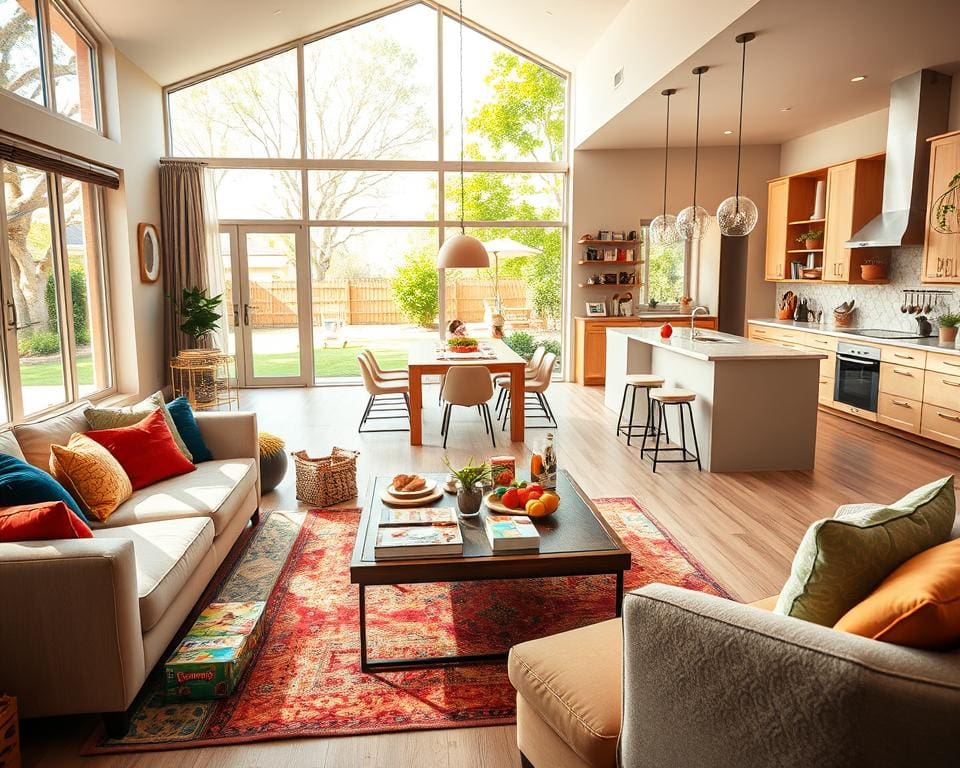
Open-plan family zones support supervision and togetherness. Arrange sofas, rugs, and lighting to define activity areas without blocking sightlines between kitchen and living spaces.
Design convertible spaces that adapt over time. A playroom can shift into a study using modular shelving. Guest rooms can hide a compact crib or a Murphy bed. Lofted desks and foldaway furniture stretch square footage as needs change.
Control noise by placing TV and play areas away from bedrooms. Use acoustic panels, heavy curtains, and door seals to reduce sound transmission for better rest and focus.
Storage strategies to reduce clutter and simplify routines
Make mudroom storage ideas central to entry design. Install cubbies with labeled baskets, a bench with hidden storage, and child-height hooks for coats and backpacks. Choose durable flooring at thresholds to trap dirt and moisture.
Use open cubbies and bins like IKEA Trofast to promote independent tidy-up. Add picture labels for pre-readers and rotate toys seasonally to reduce overwhelm. Store overflow in attic shelving, under-bed bins, or vacuum-seal bags.
Create a family command center near the entry for schedules, permission slips, and charging stations. A corkboard or magnetic panel keeps routines visible and helps mornings move smoothly.
Design elements that boost comfort and functionality for families
Designing a family home means blending durability with warmth. Choose materials that stand up to daily life while keeping rooms inviting. Use stain-resistant fabrics on sofas and dining chairs to protect against spills. Pair those textiles with easy-care flooring such as LVP or engineered hardwood for resilient surfaces that clean up quickly.
Choosing family-friendly materials and furnishings
Select performance fabrics like Crypton or Sunbrella indoor options for high-traffic seating. Buy washable slipcovers from Pottery Barn or West Elm to simplify laundering after messy moments. Invest in a solid-wood dining table and a durable sofa with modular sections to reconfigure seating as needs change.
For flooring, prefer easy-care flooring that works with area rugs made from washable polypropylene or wool blends. Place ottomans with soft edges and rounded coffee tables to enhance rounded furniture safety while keeping a modern look.
Lighting, acoustics, and climate control for well-being
Adopt a layered lighting family home approach: ambient recessed lights, task lamps for desks, and dimmable accent fixtures to set mood and function. Choose smart systems like Philips Hue or Lutron Caseta for programmable scenes that guide homework, dinner, and bedtime.
Use acoustic solutions to tame noise. Add bookcases as sound diffusers, hang heavy drapery, and install wall panels from reputable makers such as Auralex to reduce echo between play and lounge zones. Pair these moves with efficient HVAC controls like Nest or Ecobee and zoned thermostats to maintain comfort across bedrooms and common areas.
Creating activity zones for varied ages
Design distinct areas for play, study, and rest. A dedicated homework area with a child-height desk, adjustable chair, and labeled bins keeps supplies organized and supports learning. Consider IKEA’s Micke desk or built-in nooks that sit near natural light.
For active play, provide easy-to-clean floors and soft mats such as Skip Hop or foam tiles. Install secure transitions to porches and screened doors for safe access outdoors. Create quiet corners with window seats or built-in benches and soft lighting to encourage reading and downtime.
Plan age-proofing so zones evolve. Swap toy bins for school-supply organizers, add task lighting and ergonomic seating for teens, and repurpose playrooms into study lounges or guest spaces as children grow. For more layout ideas and practical strategies, explore this guide from Evovivo: family-friendly living space tips.
Practical tips and lifestyle-focused upgrades for everyday family life
Start with family-friendly kitchen upgrades that make daily life smoother. Choose quartz counters from Cambria or Caesarstone and porcelain or glass backsplashes for quick wipedowns. Add integrated cutting-board storage and an induction cooktop for safer, faster cooking. Pick a quiet Bosch dishwasher and refrigerators with family-friendly drawers; front-control, child-lock washers and dryers round out a practical laundry zone.
Bring smart home for families into your routines to cut decision fatigue. Use Philips Hue and Ecobee scenes or Apple HomeKit and IFTTT to automate lighting and thermostat setpoints. Install SimpliSafe, Ring, or Nest cameras and smart locks for secure monitoring, and add router-level parental controls like Circle with Disney. A mesh Wi‑Fi system such as Eero or Google Nest Wifi with cellular backup keeps remote work and online schooling reliable.
Transform outdoor space with backyard safety kids in mind and a low-maintenance garden that invites play. Opt for poured rubber, engineered wood mulch, or kid-safe artificial turf and plan drainage to limit upkeep. Secure fencing, shaded areas with pergolas or shade sails, and durable seating from Trex or West Elm Outdoor create a versatile yard. Use weatherproof storage boxes and wall-mounted racks to speed cleanup and protect gear.
Adopt low-effort routines and family automation tips to keep your home functioning. Maintain simple weekly checklists: wipe high-touch surfaces, rotate toys, inspect safety gates and detectors. Start with small, high-impact fixes—outlet covers, rug runners, toy storage—before larger remodels. Involve children in tidy-up tasks and choose durable, washable fabrics and rounded-edge furniture so rooms support meals, homework, and play while reflecting your family values. Learn more ideas for child-friendly living.