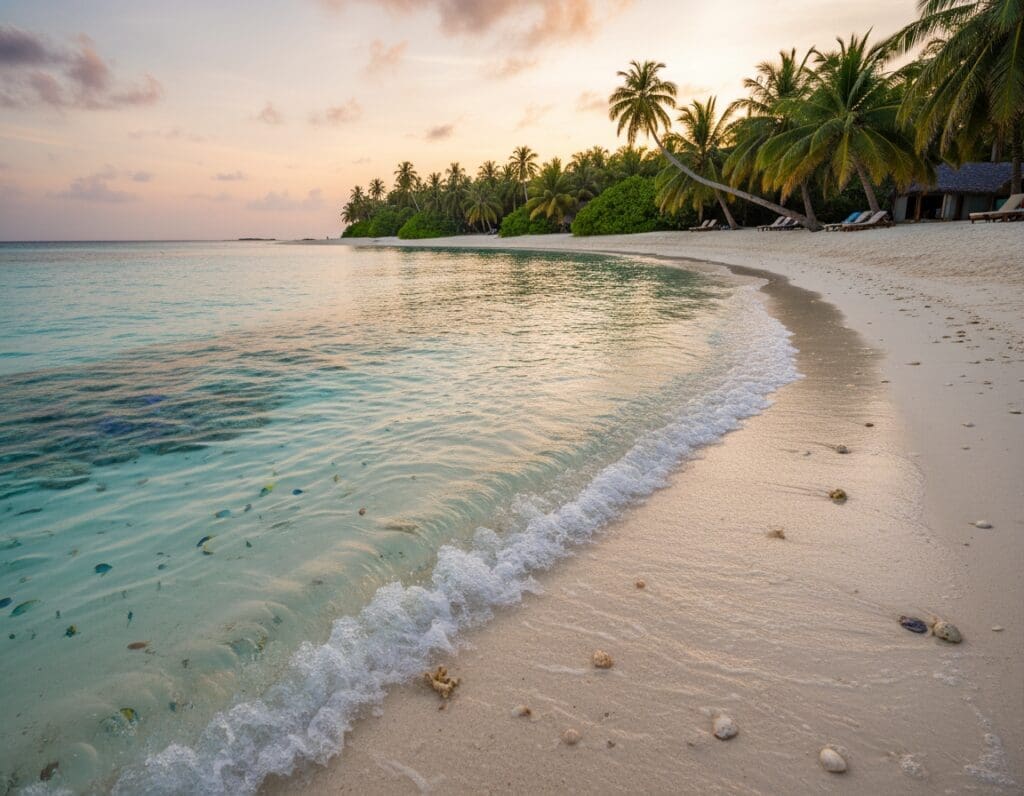
The Maldives is an Indian Ocean archipelago of 26 atolls and more than 1,000 coral islands. This unique coral-atoll formation creates the powder-white sand and calm, glassy lagoons that define the tropical Maldives beaches you see in travel magazines.
You can expect fine coral sand that stays cool underfoot and water so clear visibility often reaches 20–30 metres. Gentle shelving lagoons make swimming effortless, while regular sightings of manta rays, reef sharks and green and hawksbill turtles add a wild, vibrant edge to the Maldivian shorelines.
Beaches range from deserted sandbanks to curated resort shores. Many of the best beaches in the Maldives sit on private resort islands such as Soneva Fushi or Gili Lankanfushi, while excellent public beaches are found on inhabited local islands reachable by ferry or speedboat.
Climate affects conditions: the northeast and southwest monsoons change sea state and wind direction, so timing your visit will influence snorkelling and water-sport options. Use this Maldives beach guide to match beaches to your priorities—solitude, family facilities, snorkelling or active watersports—and check local access rules and marine‑protected zones before you travel.
Maldives beaches: top picks for pristine sand and turquoise waters
Choose your beach by the experience you want. The Maldives offers a mix of popular shorelines and quieter stretches that feel almost private. This guide groups the best Maldives beaches by what makes them special, so you can match sand, sea and services to your holiday plans.
Hidden gems and lesser-known island beaches
For more solitude, consider islands that receive fewer visitors. Maafushi has quieter corners outside peak times, while Thulusdhoo blends surf culture with calm bays. Rasdhoo Atoll islands and remote atolls such as Gaafu Alifu and Faafu reward visitors with long stretches of sand and near-empty horizons.
Southern atolls like Addu Atoll and parts of Gaafu Alifu are distant from Malé and often offer more solitary beaches. Visiting these secluded Maldives islands gives you space to relax, better chances of wildlife sightings and cleaner views for photography. Bear in mind that some inhabited islands have designated tourist zones and local dress rules on certain beach areas. Check rules before you go.
Beaches famous for crystal-clear snorkelling
If underwater life is your priority, head to Baa Atoll for reef diversity and Hanifaru Bay’s manta sightings. North Ari Atoll remains a reliable choice for house-reef snorkelling close to many resorts, while Lhaviyani Atoll is prized for channels and coral gardens.
Plan around seasons: the dry season, roughly November–April, usually brings the best visibility and calmer seas. The wet season, May–October, can produce plankton blooms that draw larger visitors such as manta rays. Check recent reports from your resort or a local dive centre for current sighting updates and the best access points to house reefs. Pay attention to tides and currents; guides time shore snorkel trips to match optimum conditions.
How to choose a beach based on accommodation style
Decide what matters most: privacy, service or culture. Private resort beaches deliver polished sands, attentive beach service and unrestricted bikini-wear areas. These private resort beaches often include sun-loungers, beach butlers, watersports centres and direct house-reef access via jetties or steps.
Local island beaches suit budget travellers seeking authentic encounters. Expect fewer amenities, community-run cafés and guesthouses close by. Dress codes and designated tourist beaches may apply on inhabited islands, so respect local customs when visiting local island beaches.
Use these criteria when choosing a base: pick a luxury resort island for privacy and service, an inhabited island for culture and savings, or atolls like Baa, North Ari and Lhaviyani for the best snorkelling beaches Maldives can offer.
Activities and experiences on Maldives beaches
The Maldives offers a rich mix of shore-based fun and ocean adventures to suit every kind of visitor. Plan your days by group type and interests to get the most from Maldives beach activities. Short bookings work for casual outings, while special occasions need advance reservations.
Water sports and marine adventures
You can choose gentle options or adrenaline-packed trips when you think about snorkelling Maldives and Maldives water sports. Guided snorkel trips to house reefs are common at resorts and often include night snorkelling for reef life that only appears after dark.
Scuba diving is available at world-renowned sites such as Manta Point in Baa Atoll and Maaya Thila in North Ari Atoll. Dive centres affiliated with PADI or SSI run guided drift dives in channels for more experienced divers. Read recent reviews and confirm operator safety standards before you book.
Boat excursions range from short speedboat rides to dhoni day trips and luxury yacht charters. Typical choices include sandbank picnics, dolphin-watching at sunset and island hopping. Day trips often last a half or full day; multi-day liveaboards suit dedicated divers and offer deep access to remote sites.
Non-motorised options include kayaking and stand-up paddleboarding in calm lagoons. Windy atolls such as Thulusdhoo host kiteboarding and windsurfing schools for learners and intermediates. Always use reef-safe sunscreen, avoid touching coral and follow guide instructions for safe wildlife encounters.
Romantic and wellness experiences
Many resorts tailor Maldives romantic experiences for proposals, honeymoons and anniversaries. Private beach dinners on a secluded stretch of sand are a popular choice. You can book island-picnic sandbank trips or sunset cruises designed for two.
Beachfront spa pavilions offer couples’ massages and sunrise yoga sessions. Resorts often add floral arrangements, photographers and private butler service to create a personalised package. Book these services early in peak season and ask about any government or resort fees that may apply.
Family-friendly beach activities
Families will find safe swimming zones in many shallow lagoons around family beaches Maldives. International resort brands frequently run kids’ clubs and lifeguard-supervised beach areas to give parents peace of mind.
Educational eco-tours and responsible wildlife viewings are great for children. Look for turtle- and reef-conservation programmes, guided nature walks and junior marine-biologist sessions. Reef-cleaning activities help children learn to protect the environment.
Practical planning tips include checking inter-island transfer times, packing reef shoes and child-sized snorkel gear, and confirming medical facilities or on-call doctors at your chosen resort or island.
Practical planning tips for visiting Maldives beaches
When you plan your trip, start with a clear Maldives season guide. Peak season runs roughly November to April and brings dry weather, calm seas and the best visibility for snorkelling and diving. Expect higher prices and fuller resorts then. The off-season, from May to October, often gives lower rates and fewer crowds but can include heavy rain and rougher seas. It may also bring unique wildlife sightings, such as increased plankton that attract manta rays in some atolls.
Book early for busy periods: aim to reserve 3–6 months ahead of Christmas, New Year and UK school holidays. Check refund and change policies because weather can be unpredictable. For transfers from Velana International Airport, compare Maldives transfers options: direct speedboats for nearby atolls, domestic flights plus speedboat for regional islands, or seaplanes for mid-to-far atolls. Remember seaplanes fly only in daylight, can be costly and have luggage limits; domestic flights also set luggage allowances and may require extra boat legs.
Monsoon patterns matter for beach conditions. The northeast (Iruvai) monsoon typically brings calmer seas to some atolls, while the southwest (Hulhangu) monsoon can increase surf and currents on western shores. These shifts affect shore access and water clarity. Monitor local weather, ask your resort or guesthouse about the best time of day for swimming and boat transfers, and build buffer time into your itinerary for travel delays or overnight stays in Malé when needed.
Travel responsibly by following responsible tourism Maldives guidelines. Use reef-safe sunscreen, avoid collecting coral or shells, and respect marine-protection zones. Support local communities by booking community-run excursions, buying Maldivian handicrafts and trying local cafés. Choose operators with credible sustainability credentials and ask about reef-restoration or beach-clean activities you can join. Check that wildlife encounters follow ethical practices—no baiting, chasing or close harassment of manta rays and turtles.