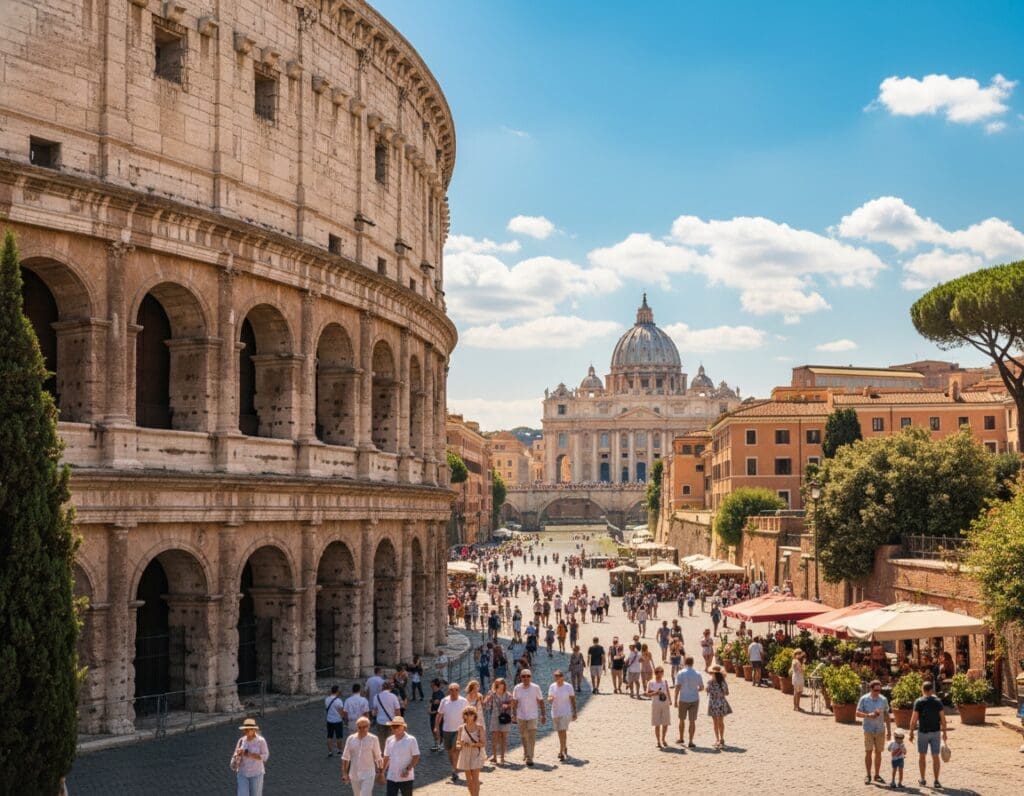
Rome rewards a short break like few cities can. This Rome travel guide is written to help you choose the best places in Rome for a 48–96 hour trip, so you can see major Rome attractions and still savour food and neighbourhood life.
For a typical Rome city trip from the UK, you’ll find direct flights from London and Manchester and easy regional connections. Aim for two to four days, based in one central spot such as Centro Storico or near Roma Termini. That keeps travel time low and gives you more hours to explore.
Book high-demand sites in advance; the Colosseum and the Vatican Museums often sell out. Plan walking routes between attractions, wear comfortable shoes for cobbles and short hills, and expect to use the metro, buses, trams or taxis for longer hauls. Contactless payments are widely accepted across Rome.
Peak season runs in spring and early autumn when the weather is pleasant and crowds are highest. If you prefer quieter streets, consider November to February, bearing in mind Christmas and New Year remain busy. As a British traveller, check passport validity and visa guidance before you travel, and bring a Type C/L adaptor for chargers. Tipping is modest — service is often included, but small gestures are appreciated.
This guide draws on official sources such as Parco archeologico del Colosseo and Musei Vaticani, Italy’s tourism information, National Rail advice for transfers, and recent traveller reports to keep details on opening times and booking practices up to date.
Essential historic attractions for your Rome city trip
Start your exploration with a clear plan so you get the most from Rome’s ancient sites. Book Colosseum tickets in advance and consider a skip-the-line Colosseum option to save time. Combination passes often cover a Roman Forum visit and Palatine Hill Rome, making it easier to move between sites.
Colosseum and Roman Forum: experiencing ancient Rome
At the Flavian Amphitheatre you can stand where gladiators once fought and admire the imposing outer façade. Allow two to three hours to explore the arena level and the surrounding monuments. Guided tours and audio guides bring the history to life and explain the Arch of Constantine and the arena’s structure.
Next door, a Roman Forum visit reveals temples, the Curia and the House of the Vestal Virgins. Wear comfortable shoes for uneven ground and bring water from public fountains. For special access, book arena-floor or underground experiences well ahead, as these sell out fast.
Pantheon: architectural wonder and visiting tips
The Pantheon Rome stands remarkably intact, famed for its Pantheon dome and central oculus that lights the Rotunda Rome. Visit early morning or late evening to avoid crowds and to enjoy softer light on the coffered ceiling. Check Pantheon opening hours before you go; entry is often free but guided visits or museum areas may carry a small charge.
Inside, note Raphael’s tomb and Baroque additions that layer the site’s long history. Respect the building as an active church by dressing modestly and keeping noise low during services. Photographs are generally allowed outside of formal worship moments.
Palatine Hill: panoramic views and archaeological insights
Palatine Hill Rome offers sweeping ancient Rome viewpoints across the Forum and Circus Maximus. The Palatine archaeological site reveals imperial homes such as the House of Augustus and the House of Livia.
Use the quieter terraces for photographs and quiet reflection. Paths can be steep and uneven, so plan for slopes and check which zones are open during archaeological work. Most combination tickets include Palatine access, so coordinate entry times with your Colosseum and Forum visits.
Vatican City: St Peter’s Basilica and the Vatican Museums
Vatican Museums tickets should be booked well in advance to avoid lengthy queues. Your visit will likely include the Sistine Chapel and its Michelangelo ceiling, plus the Raphael Rooms and Gallery of Maps. Consider Vatican guided tours for deeper art-historical insight.
St Peter’s Basilica visit is free, though security checks can produce long lines. Climb the dome for panoramic views if you can manage the steps. Follow the dress code and use official services for accessibility information if needed.
places to visit Rome: neighbourhoods, piazzas and cultural hotspots
Rome rewards wandering. Your days should include a mix of lively squares, hidden lanes and neighbourhood cafés to feel the city’s rhythm. Start with a map, leave time for aimless walks and plan meals around markets and landmarks for an authentic experience.
Trastevere charms with narrow lanes and a bohemian mood. You will love the Trastevere cobbled streets that wind past ivy-clad façades and cosy squares. Wander Via della Lungaretta and pause at Piazza Santa Maria in Trastevere to see the 12th-century mosaics. Use this quarter as your base for an authentic stay, with easy access to the Orto Botanico and riverside views from the Victor Emmanuel II Bridge.
Dining in Trastevere is memorable. Book ahead for the best restaurants Trastevere, where traditional Roman trattorie serve cacio e pepe and wood-fired pizza. Nights come alive with Trastevere nightlife centred on small bars and wine spots; expect crowded streets and a lively atmosphere after sunset.
Centro Storico is compact and walkable. You can move between the Pantheon area and Piazza Navona in minutes, soaking up Baroque art and bustling lanes. Early morning visits show the squares at their calmest, letting you admire Piazza Navona attractions like the Fountain of the Four Rivers without the crowds.
Shop the lanes for unique finds. Rome boutique shopping thrives around Campo Marzio and the narrow alleys near the Pantheon area, where independent leather workshops and artisan jewellers display handmade pieces. Stop at a local coffee bar and try classic Roman dishes at family-run restaurants to feel the neighbourhood pulse.
Monti sits east of the Colosseum with a lively, creative spirit. The Monti neighbourhood hosts vintage stores, independent boutiques and easygoing wine bars. Stroll Via dei Serpenti and Via del Boschetto to browse artisan shops Rome that offer jewellery, ceramics and bespoke clothing.
Monti cafés provide rest between sights. You will find relaxed places for an aperitivo or late breakfast, perfect after museum visits. The area’s weekend markets and pop-ups add a local buzz while staying within walking distance of the Forum and Colosseum.
Campo de’ Fiori pulses with market life each morning. The Campo de’ Fiori market is the place to buy seasonal fruit, olive oil and cured meats. Mornings bring the best atmosphere, with stalls brimming with produce and bakeries offering picnic supplies for a riverside lunch.
Decide where to eat Campo de’ Fiori by your mood. Choose casual trattorie for hearty Roman fare, seafood spots nearby for fresher plates, or terraces for people-watching as the square shifts into evening mode. Carry small change and a reusable bag when shopping at Rome food markets to make your visit smooth.
Practical planning and local experiences to enhance your trip
Plan your days to balance sights and local experiences Rome offers. For a 2-day Rome itinerary, spend morning hours at the Colosseum and Roman Forum, take a leisurely lunch near the Pantheon, then explore Centro Storico in the afternoon. For a 3–4 day Rome itinerary, add a Vatican morning visit with pre-booked tickets, dedicate an afternoon to Trastevere and another to Monti or Villa Borghese. These sample plans help you see highlights while leaving room for the passeggiata and unexpected discoveries.
Know the basics of public transport Rome before you arrive. Use Metro Lines A and B for fast links, and buses or trams to reach neighbourhoods off the underground map. Buy a single BIT ticket for occasional trips, a day pass if you plan heavy use, or consider the Roma Pass for combined transport and museum savings. Taxis and ride‑hailing are best for late‑night journeys or when you have heavy luggage.
Budget realistically: expect mid‑range meals from €15–€30, museum entries from €8–€25, and taxi starting fares around €4–€6. Cards are widely accepted, but keep small change for markets and cafès; use ATMs that display major bank logos to avoid extra fees. For UK travellers, notify your bank about travel to limit foreign transaction surprises and carry a card with no overseas fees if possible.
Stay safe and healthy by watching for pickpockets in crowded areas, keeping valuables secure, and following local health guidance. Dial 112 for emergencies and register any needed assistance with the British Embassy if required. To deepen your trip, book guided food tours, pasta‑making classes, or a Vespa tour; visit lesser‑known sites like the Baths of Caracalla, the Protestant Cemetery, or Villa Borghese for quieter moments. Pack light layers for summer, a waterproof coat for winter, and comfortable shoes to cope with cobbles. Finally, reserve Vatican Museums and Colosseum tours well in advance, plan airport transfers (Leonardo Express from Fiumicino, shuttle options from Ciampino), and allow extra time for luggage and security when leaving for your flight home.