
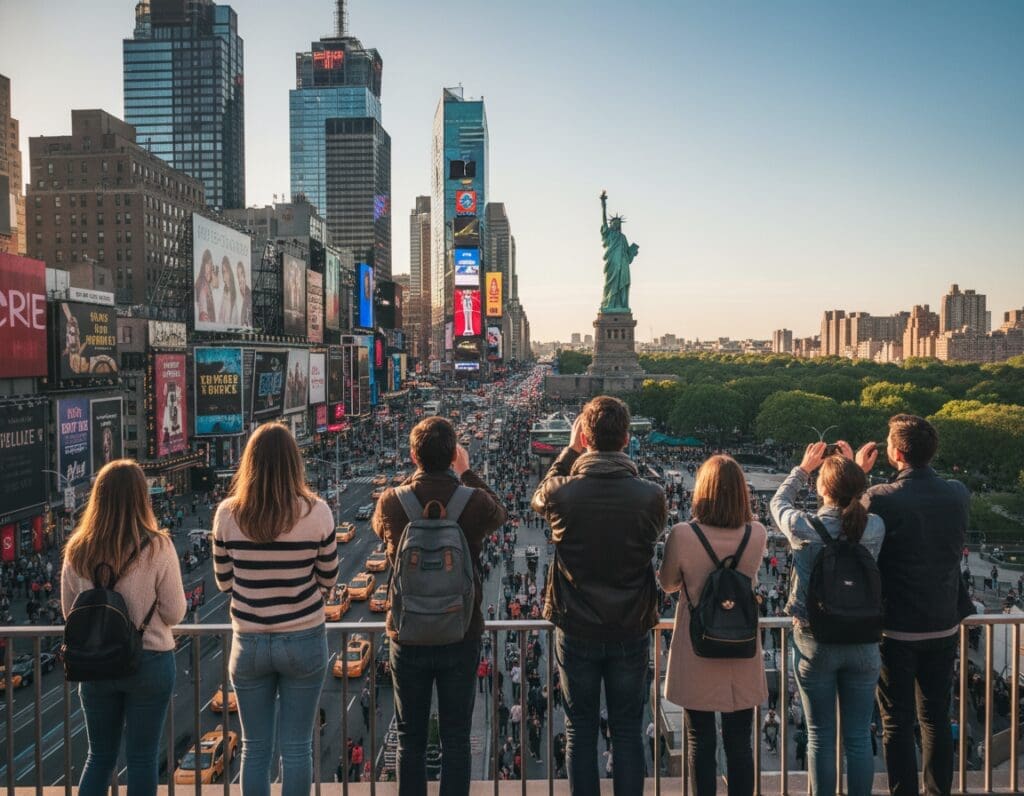
New York City offers an extraordinary mix of world-famous landmarks, diverse neighbourhoods, cultural institutions, green spaces and lesser-known experiences. This New York travel guide sets the scene for what to expect and helps you plan the best way to visit New York from the United Kingdom.
You’ll find the top attractions New York has to offer, from iconic sights in Manhattan to vibrant boroughs like Brooklyn and Queens. The aim is to give you an actionable overview of things to do in New York, tailored for travellers with limited time.
For quick logistics: the city comprises five boroughs — Manhattan, Brooklyn, Queens, the Bronx and Staten Island. Primary arrival points are John F. Kennedy International Airport (JFK), LaGuardia (LGA) and Newark Liberty (EWR). The currency is the United States dollar (USD) and the electrical supply is 120V/60Hz with plug types A and B. Summers (June–August) are hot and humid, winters (December–February) can be cold with snow, while spring and autumn are often the most pleasant for sightseeing.
If you have 3–4 days, prioritise Manhattan highlights and one Brooklyn neighbourhood. A week allows time for several museums, borough exploration and some off-the-beaten-path experiences. Build flexible days to allow for queues and travel between sites.
Ticketing options range from single-site tickets to combined attraction passes such as CityPASS, New York Pass and Explorer Pass, plus attraction-specific timed-entry reservations. Pre-book popular items, especially Broadway shows and observation decks, to avoid sold-out slots.
Public transport is efficient: the MTA subway and bus network covers most of the city, with taxis and ride-hailing services like Uber and Lyft available. Commuter rails such as the Long Island Rail Road and Metro-North serve outer boroughs. Use OMNY or a MetroCard for multiple journeys to save time and hassle.
Stay alert to basic safety and etiquette: keep valuables secure, be mindful of pickpockets in crowded areas, and follow rules in parks and museums. Tipping is customary — around 15–20% in restaurants, $1–2 per bag for porters and $2–5 for taxi drivers, depending on the fare.
In the sections that follow you will explore iconic landmarks, vibrant neighbourhoods, hidden gems and practical planning tips to help you make the most of your trip. This introduction should help you decide which New York attractions to prioritise and how to structure your time once you arrive.
New York attractions: iconic landmarks and must-see sights
New York brims with landmarks that define the city skyline and its history. You can plan each day around a few key sights to make the most of a short stay. The following entries explain logistics, visitor tips and the best times to arrive so you avoid long queues and enjoy fuller experiences.
Start early when you can. Mornings are quieter at many attractions and give you space to savour the views and exhibits. Booking timed-entry tickets is wise for popular sites and helps you fit more into your itinerary.
Statue of Liberty and Ellis Island
The Statue of Liberty National Monument symbolises freedom and is a landmark from 1886. Ferries depart from Battery Park in Manhattan and from Liberty State Park in New Jersey. You should check whether your choice includes ferry-only access or permits pedestal or crown access.
Crown tickets are limited and require advance booking. Security screening mirrors airport procedures, so bring photo ID if you plan to enter restricted areas. Allow half a day for a combined itinerary, or a full day if you plan to explore every exhibit.
The Ellis Island immigration museum houses passenger arrival records, oral histories and displays about migration. The National Park Service runs the grounds while the Ellis Island immigration museum preserves personal archives that bring migration stories to life.
Times Square and Broadway
Times Square is the neon heart of Manhattan. It is famed for massive billboards, flagship stores and a constant stream of pedestrians. Nearby attractions include Rockefeller Centre and Bryant Park. If you want discounted same-day theatre tickets, check the TKTS booth for offers.
The Broadway ecosystem centres on musical theatre and plays in the Theatre District. Hit productions such as Hamilton, The Lion King and Wicked often sell out, so book ahead when possible. If you prefer lower prices and fresh work, off-Broadway shows can offer innovative theatre and smaller venues.
Visit Times Square in the evening for the full spectacle. Be aware of aggressive costumed characters who may expect tips. If your schedule is flexible, use TKTS for cheaper Broadway shows at short notice.
Empire State Building and Top observation decks
Observation decks each offer distinct vantage points. The Empire State Building observation deck gives a classic Art Deco skyline view from midtown. Top of the Rock at Rockefeller Centre provides 360-degree panoramas and a clear sightline to Central Park and the Empire State Building. One World Observatory crowns One World Trade Center with sweeping views over Lower Manhattan and New York Harbour.
Ticket options range from general admission to express passes and timed-entry sessions for sunrise or sunset. Visiting early in the morning or late at night reduces queue time. Typical visits last between one and two hours depending on queues and whether you use audio tours.
Each site has elevator access and facilities for visitors with mobility needs. Timed tickets help you plan transfers between sites and make the most of limited time in the city.
Neighborhoods and cultural districts to explore
New York’s neighbourhoods each have a distinct mood. You can spend a morning in leafy open spaces, an afternoon browsing galleries and boutiques, and an evening enjoying live music or a church service. Plan your time so you savour one area without rushing to the next.
Central Park and surrounding museums
Central Park is an 843-acre oasis with Bethesda Terrace and Fountain, The Mall and Literary Walk, Bow Bridge, Belvedere Castle, Sheep Meadow and the Jacqueline Kennedy Onassis Reservoir. You can hire a bike, row a boat at the Loeb Boathouse or join a guided walking tour to learn hidden stories of the park.
Along Museum Mile you will find landmark institutions. The Metropolitan Museum of Art offers encyclopaedic collections from ancient times to modern painting. The Solomon R. Guggenheim Museum showcases modern art within Frank Lloyd Wright’s spiralling rotunda. On the Upper West Side, the American Museum of Natural History features dinosaur skeletons, the Rose Centre for Earth and Space and immersive dioramas.
Allow at least half a day for the Met and a separate visit for the American Museum of Natural History. Check for free or pay-what-you-wish options and timed-entry tickets to avoid queues.
Greenwich Village and SoHo
Greenwich Village has a bohemian heart. Tree-lined streets lead to jazz clubs, off-Broadway theatres and intimate cafés. Walk through Washington Square Park, pop into bakeries and enjoy small music venues that keep a strong local scene.
SoHo draws shoppers with cast-iron architecture and cobblestone streets. You will find high-end boutiques, independent galleries and street art as you wander Broadway and Prince Street. Book walking tours that cover LGBTQ+ history in the Village and contemporary murals in SoHo.
For dining and nightlife, options range from casual pizza parlours and delis to Michelin-starred restaurants. Make reservations for popular spots to avoid disappointment. The combination of Greenwich Village food and nightlife with SoHo shopping makes for a full, varied day.
Harlem and cultural heritage sites
Harlem played a central role in the Harlem Renaissance and remains a vibrant centre for African American culture, music and cuisine. Historic brownstones line streets that lead to theatres, churches and galleries.
Key visits include the Apollo Theater, famous for launching many performers, and Sylvia’s, known for classic soul food. Join Harlem gospel tours or attend a Sunday service to hear powerful choirs and community singing. The Studio Museum in Harlem focuses on contemporary work by Black artists and offers exhibitions and talks.
When attending religious services, behave respectfully and check times for community-led institutions. Harlem is easy to reach by subway, with multiple lines serving the area, making it simple to include on your itinerary.
Hidden gems and off-the-beaten-path experiences
New York hides a host of secret New York spots that reward curious visitors. These quieter corners offer fresh perspectives on the city beyond the usual tourist route. You can craft a day that blends green spaces, waterside views and tasty bites without fighting crowds.
High Line and Chelsea Market
The High Line walkway sits atop a former freight rail line on Manhattan’s West Side. Stroll among planted gardens and public art while you look out over the Hudson River and the Meatpacking District. Start early to enjoy the route in peace and spot seating areas for a breather.
Chelsea Market sits in a converted Nabisco factory and makes a perfect follow-up to the walk. The indoor arcade serves Chelsea Market food from artisanal vendors, seafood counters and bakeries. Time your visit so you can sample oysters, tacos or a fresh pastry for lunch.
Pair a High Line walk with a detour to the Whitney Museum of American Art or the Meatpacking nightlife for a full neighbourhood experience.
Roosevelt Island and tramway views
Take the Roosevelt Island tram for sweeping panoramas of the East River, Midtown and the United Nations. The Roosevelt Island tram accepts the same fare as the subway, so the ride is an easy addition to your route.
On the island, visit Franklin D. Roosevelt Four Freedoms Park and wander quiet riverside paths at Lighthouse Park. These spots make superb settings for skyline photography and a calm pause from Manhattan’s bustle.
Consider riding the tram one way and returning by subway or ferry. Dining options are limited on the island, so bring water or snacks for comfort.
Local markets and seasonal festivals
Local markets NYC are a wonderful way to taste regional produce and shop for handmade souvenirs. Union Square Greenmarket offers fresh fruit and veg from nearby farms. Smorgasburg in Brooklyn draws crowds with global street food, while the Brooklyn Flea specialises in vintage finds and crafts.
Plan your visit around seasonal festivals New York hosts throughout the year. You might catch the Macy’s Thanksgiving Day Parade, the US Open in Queens, or Governors Ball in June. Free events such as Shakespeare in the Park and SummerStage add cultural variety to summer nights.
Check event calendars before you travel and book tickets for major festivals early. Expect larger crowds on peak dates and prepare accordingly to make the most of these lively, local experiences.
Practical tips for planning your visit
Plan your trip for late spring (May–June) or early autumn (September–October) for mild weather and fewer crowds. Summer brings higher hotel rates and busy streets, while winters can be snowy and cold but offer festive decorations and ice rinks. Choosing the best time to visit New York helps you balance weather, costs and sightseeing comfort.
Budget for accommodation, meals, attraction tickets and transport. Rates vary by neighbourhood, so consider staying in outer Manhattan or parts of Brooklyn for better value. Book well in advance for peak periods and use official sites or authorised resellers when booking Broadway tickets and major attractions to avoid scams.
Use the MTA subway and buses to move quickly around the city; OMNY MetroCard contactless payments work on most services, although some travellers still prefer a MetroCard for multiple trips. Walking is often fastest in dense areas and Citi Bike is handy for short hops. For airports, use the AirTrain and subway from JFK, NJ Transit or Amtrak from Newark, shuttles, or the flat‑fare taxis to Manhattan.
Sort payment practicalities before you travel: credit cards are widely accepted but carry some cash for small purchases and tipping. Check international card fees with your bank and inform them of travel dates. Buy travel insurance that covers medical costs and emergency evacuation, and know where urgent care clinics and pharmacies are located. Finally, carry a valid passport, check ESTA or visa needs when visiting New York from UK, pack layered clothing, comfortable shoes and a universal adapter, and leave time in your schedule for queues and rest so you can enjoy both iconic sights and local neighbourhoods.