
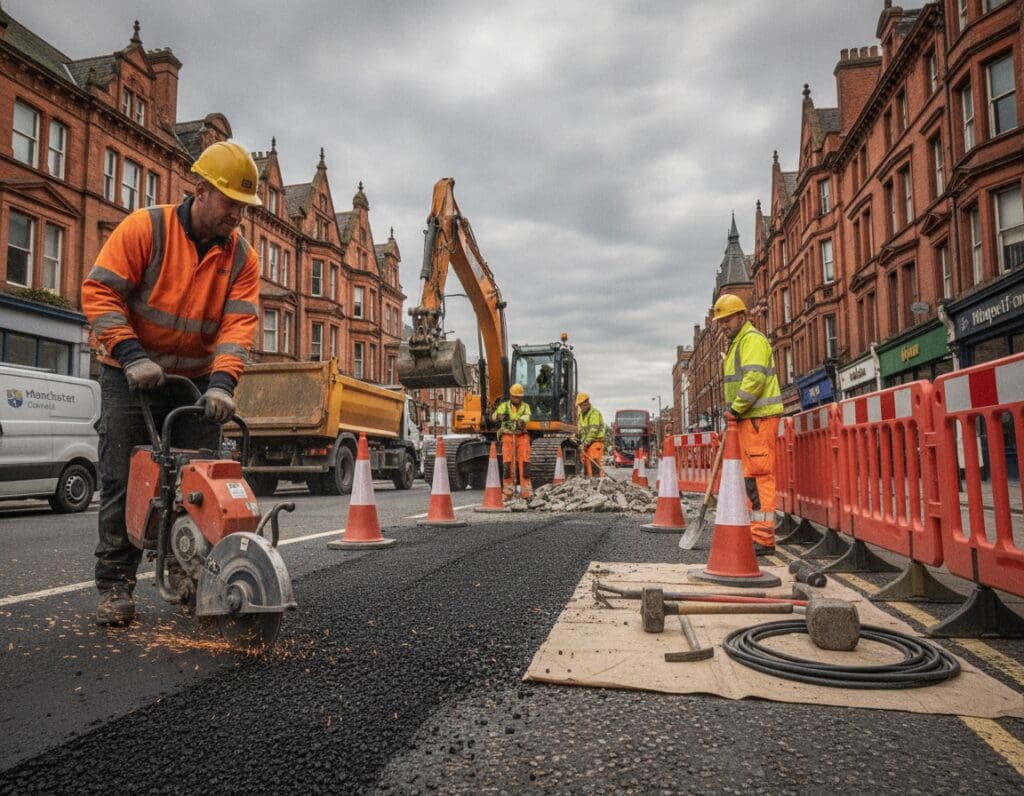
This short introduction explains how street maintenance teams work to keep Manchester’s roads safe, accessible and reliable for you throughout the year. It covers the scope of Manchester road maintenance, from seasonal planning and routine inspections to emergency repairs, resurfacing, drainage and gully cleaning, vegetation clearance and traffic management during works.
Key organisations coordinate delivery and funding. The Greater Manchester Combined Authority (GMCA), Manchester City Council, Trafford Council and the nine other local authorities set strategy alongside National Highways where appropriate. Private contractors such as Amey, Balfour Beatty and Ringway often carry out highway upkeep under local authority frameworks.
Your main benefits are reduced disruption, lower accident risk from potholes and standing water, smoother journeys for drivers and cyclists, safer pavements for pedestrians, and clearer information about closures and repairs. This article also explains how councils prioritise limited budgets, using local authority funds, Department for Transport grants and capital programmes to target safety-critical works and planned resurfacing.
Street maintenance follows recognised asset management approaches, including whole-life highway asset management and the Well-managed Highway Infrastructure guidance from the UK Roads Liaison Group. Local highway maintenance plans set inspection frequencies and intervention levels to protect road safety Manchester and achieve value for money.
The rest of the article is structured to help you understand practical action and planning. Section 2 looks at seasonal planning and preventative work, Section 3 describes day-to-day operations and rapid response, Section 4 covers collaboration and public communication, and Section 5 gives key takeaways and ways you can report problems and stay informed about year-round maintenance.
Seasonal planning and preventative work to keep roads reliable
Keeping Manchester moving requires year-round planning you can rely on. Seasonal road maintenance teams map priority routes, stock up on materials and schedule inspections so your journeys stay safe. Planned interventions cut long-term repair bills and limit disruption to public transport and emergency access.
Winter preparedness: gritting, snow clearance and priority routes
Before cold weather arrives, authorities confirm primary routes such as major junctions, bus corridors and hospital access roads for winter gritting Manchester. Crews test gritters, check salt stockpiles and programme GPS-enabled vehicles for accurate route coverage.
You will see treatments triggered by MET Office forecasts and road temperature sensors. Emergency cold snaps bring extended shifts and extra crews to keep key routes open for you. Urban snow clearance focuses on city centre streets, transport hubs and access for emergency services.
Teams coordinate with Transport for Greater Manchester to prioritise services. They grit first to prevent ice, then carry out ploughing and focused clearance on high-priority streets. Pedestrian snow clearance squads target main walking routes and cycleways.
Spring inspections: pothole repair and drainage clearing
When temperatures rise, teams inspect roads to identify winter damage like potholes and cracked surfacing. Quick cold-lay pothole repair keeps you safe during busy months. Planned hot-lay resurfacing or surface dressing follows for durable results.
Drainage clearing is a spring priority. Gullies, culverts and surface water channels are cleaned of salt, silt and debris left by winter. These works lower flood risk and help your journeys remain reliable.
Summer resurfacing: reducing noise and improving ride quality
Summer offers the warm, dry conditions needed for effective road resurfacing. Crews use hot-mix asphalt, micro-asphalt and surface dressing to improve ride quality and extend pavement life. Low-noise surfacing materials help cut traffic sound in built-up areas.
Work is scheduled to reduce disruption. You may notice overnight shifts, temporary lane closures and clear traffic management aimed at keeping traffic moving while repairs take place.
Autumn leaf and debris management to prevent flooding
Leaves and debris can block drains and raise flood risk during autumn storms. Councils run leaf clearance timetables, gully emptying programmes and vacuum sweeping to keep channels clear. Coordination with parks and highways tree teams helps manage heavy leaf fall.
Targeted debris clearance around culverts and drainage structures supports wider flood prevention. These measures protect road users and reduce the likelihood of emergency closures.
street maintenance: day-to-day operations and rapid response
You rely on a steady programme of routine road inspections to spot wear before it becomes a danger. Safety inspections on busy A-roads and motorways may happen daily or weekly. Quiet residential streets are checked monthly or quarterly. Inspectors look for potholes, surface defects, kerb damage, footway faults, blocked drains, broken signs and damaged street furniture.
Condition surveys combine visual checks with machine-based data. Laser profilometers, high-resolution cameras and mobile tablet apps collect consistent measurements. That information feeds Pavement Management Systems so officers can rank works by remaining life and risk.
Routine inspections and condition monitoring
You will see teams using tablets to record defects and upload them to GIS maps. Road condition monitoring uses sensor data and survey vehicles to show where action is needed most. This lets you and the team target repairs, reduce repeat visits and plan maintenance scheduling with clear priorities.
Emergency repairs and incident response teams
When a defect poses an immediate danger, incident response crews mobilise at short notice. They set up temporary safety measures such as barriers, signs and cold-lay patching. Crews work with Greater Manchester Police, fire services and utility companies when incidents involve utilities or risks to life.
Typical emergency techniques include cold-lay patching, rapid-setting materials for urgent reinstatement, temporary steel plates over excavations and portable pumps during floods. Traffic management and worker protection are top priorities while a permanent follow-up repair is scheduled.
Use of technology for scheduling and asset management
Highway asset management systems hold records for pavements, signs, gullies and lighting. They track condition, maintenance history and remaining life. Work scheduling software then optimises crew allocation and cuts travel time between jobs.
Integration with online reporting platforms means you can log a fault and follow progress. Automated messaging and social channels keep you informed about timings and closures.
Performance is measured with KPIs such as response times to dangerous defects, the share of road length meeting condition standards and customer satisfaction scores. Data from inspections and emergency road repairs feed continuous improvement of budgets and maintenance scheduling.
Collaborative strategies and public communication for smoother travel
Keeping Manchester moving relies on strong highway collaboration and clear roadworks communication between councils, operators and contractors. You benefit when ten local authorities, the Greater Manchester Combined Authority and Transport for Greater Manchester plan together. Joint corridor renewals for road, drainage and tram tracks cut repeat street openings and reduce the number of times you face diversions.
Councils align maintenance with bus and tram timetables, cycling schemes and major events through formal transport partnerships. That helps to coordinate timings so resurfacing does not clash with football matches or tram upgrades. Framework contracts with firms such as Amey, Balfour Beatty and Ringway give consistent standards and let councils pool buying power for better value.
Contract management sets performance targets, incentives and penalties to keep projects on time. You get fewer repeat disruptions and clearer diversion plans when contractors meet those targets.
Traffic management and minimising disruption during works
Planned measures reduce impact on your journey. Night‑time and off‑peak working, phased closures and contraflow arrangements keep traffic moving where possible. Temporary traffic lights and clear signage guide drivers, cyclists and pedestrians through changed layouts.
Traffic modelling and liaison with bus operators shape diversion routes and keep emergency access. Reinstatement notice boards and local media explain how long works will last and what to expect.
How you can report problems and stay informed about closures
You can report issues using council online forms, highways hotlines and mobile apps that let you upload photos and location data. If you report a pothole, precise location and images speed inspection and repair. When you need to report a pothole Manchester, use the council portal or app to add the evidence that helps prioritise the repair.
Councils and partners publish planned works and live updates via council pages, One Network portals, social media and local news. Some offer email alerts and subscription services for road closure updates so you get advance notice of diversions. Roadworks.org and national traffic services also show live schemes to help you plan trips.
Before major schemes, councils consult residents, businesses and transport operators to agree timing and access. Open briefings and clear budgets build trust and make mitigation measures easier to accept, reducing complaints and improving outcomes for your journeys.
Conclusion
This street maintenance summary underlines how seasonal planning, routine inspections and rapid-response teams work together to keep Manchester moving. Winter gritting and snow clearance, spring pothole repairs, summer resurfacing and autumn leaf management all form a cycle of preventative care. Those routines, combined with data-led asset management and modern scheduling, reduce unexpected failures and improve ride quality.
You can play a part in Manchester road upkeep by reporting defects promptly through your local council highways page and following diversion signs during works. Allow extra time when maintenance is planned and avoid parking over gulleys in heavy rain. These small actions support preventative measures and help crews respond faster to hazards.
The highway maintenance takeaway is simple: better coordination across Greater Manchester, environmentally sensitive materials like recycled asphalt, and clearer communications deliver safer walking and cycling routes, lower flood risk and fewer sudden closures. For more information, check your council highways updates, Transport for Greater Manchester notices and guidance from the UK Roads Liaison Group to stay informed and engaged with ongoing improvements.