
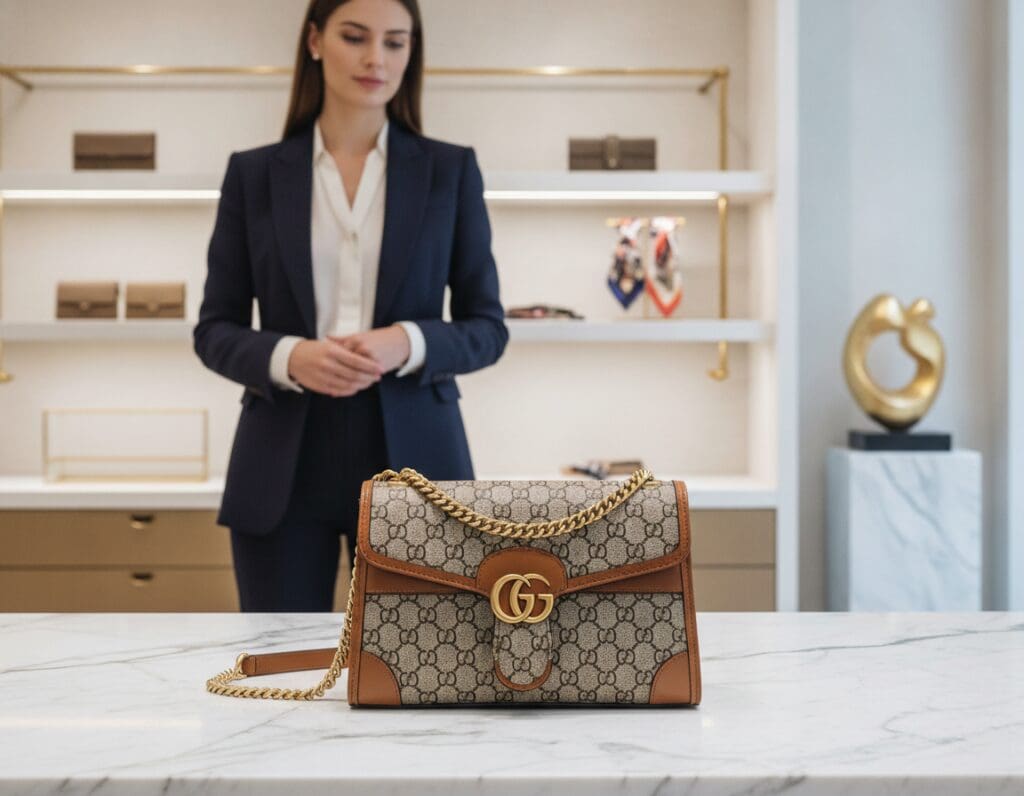
When you consider buying a Gucci handbag, you are really weighing style, history and potential financial return. This introduction explains why a Gucci handbag is often called a timeless investment and what you should expect from the rest of the article.
For readers in the United Kingdom, Gucci is a familiar presence. You can find Gucci boutiques in London and authorised stockists across the UK, and British buyers must factor in VAT and duty when assessing total cost. That context matters when you compare local prices to global resale markets and evaluate Gucci bag value over time.
By “timeless fashion investment” we mean an item that keeps its aesthetic appeal, works well in daily use and can hold—or sometimes grow—its monetary worth. This combines emotional wear value with measurable financial value, and it is not the same as a short‑term fashion purchase.
This article will examine three core pillars that support the case for a Gucci bag as a luxury handbag investment: heritage and craftsmanship, style and resale performance, and preservation through careful buying and care. You will read evidence from Gucci’s documented history, resale platforms such as The RealReal and Vestiaire Collective, and guidance from leather care specialists and Gucci care instructions.
Finally, you will get practical takeaways: what to look for when buying (authenticity and condition), how to assess Gucci bag value and investment potential, and simple care steps to protect appearance and resale price. These actionable points will help you decide whether a Gucci handbag fits your style and financial goals.
Heritage and craftsmanship behind luxury handbags
You will find that Gucci history reads like a handbook of leatherwork and refined style. Founded by Guccio Gucci in Florence in 1921, the house began as a maker of artisanal luggage and equestrian accessories. Early motifs such as the bamboo handle and horsebit hardware set a visual language that endures in contemporary collections.
You should note key moments that shape collectability. The GG monogram became a signature mark, the horsebit emerged in the 1950s and the bamboo handle arrived in 1947. The Jackie bag first appeared in 1961 and has been reissued with care. More recent successes include the Dionysus and Marmont lines, which sit alongside archival references to attract collectors.
Creative directors have steered Gucci design evolution in visible ways. Tom Ford added a bold, modern edge in the 1990s and early 2000s. Alessandro Michele revived vintage textures and maximalist details after 2015, prompting renewed demand for reissues and historic silhouettes.
Traditional techniques and modern production standards
You will notice the role of hand skills in every stage of production. Trained leather artisans in Italy practise hand‑stitching, skiving and edge finishing. Hardware is set by specialists to ensure long service life. These practices underpin Gucci craftsmanship and the sense of luxury handbag heritage.
Gucci pairs craft with modern checks on quality and traceability. In‑house and partner workshops follow production standards, while the group publishes sustainability reporting and traceability efforts to meet ethical expectations. Gucci Boutiques and authorised repair centres provide maintenance that extends a bag’s usable life and supports resale value.
Materials that contribute to longevity and value
You should expect premium materials in a genuine piece. Core leathers include calfskin and lambskin, while GG Supreme canvas offers a coated microfiber that resists wear. Limited editions may use exotic skins subject to regulation and CITES controls. Metal fittings commonly use brass with gold or silver finishes to resist tarnish.
Understanding material properties explains why bags age well. Full‑grain leather develops a patina and withstands daily use. Coated canvas resists moisture and abrasion. Quality linings and robust hardware slow degradation and help maintain form.
Gucci has moved to source certified hides and reduce environmental impact. Provenance and ethical sourcing matter more to buyers, so these practices bolster confidence in a piece’s long‑term desirability. Durable assembly and high-quality handbag materials lower the rate of wear, making a bag more likely to remain attractive and functional for years to come.
Gucci handbag: style, resale value and investment appeal
Your choice of a Gucci piece blends style with clear resale potential. Iconic Gucci bags such as the Jackie, Horsebit 1955, Dionysus, GG Marmont and Soho Disco have stayed desirable because they mix heritage cues with fresh updates. This mix helps explain the Gucci investment appeal you see on secondary markets.
Recognisable hardware and versatile silhouettes keep demand steady. Reissues and thoughtful redesigns by Alessandro Michele have amplified interest in archival details. Celebrity sightings and social media exposure lift visibility for certain styles, which feeds stronger prices in the resale market.
Iconic silhouettes and their enduring popularity
The Jackie’s classic flap and the Horsebit 1955’s equestrian motif are instantly identifiable. The Dionysus and GG Marmont offer contemporary lines that pair well with many wardrobes. Reissues of these models, plus limited runs in new materials, spur renewed interest and sustained demand.
How brand desirability supports resale prices
High demand and restricted availability for specific models create resilience in resale values. Platforms like The RealReal, Vestiaire Collective and Fashionphile regularly show that select Gucci pieces hold value or sometimes appreciate. Verified authenticity, original packaging and receipts boost buyer confidence and can lift prices on designer resale UK sites.
Factors that affect the investment potential of a handbag
- Condition: well cared for bags command higher sums; visible wear lowers value.
- Rarity and edition: limited editions and discontinued colours often fetch premiums.
- Model popularity: evergreen silhouettes outperform trend-led pieces over time.
- Colour and material: classic neutrals and signature canvas resell more predictably; exotic skins carry legal and upkeep issues.
- Market timing and macro factors: exchange rates, VAT changes and economic shifts affect returns for buyers in the UK.
- Documentation: receipts, dust bags and repair records increase resale appeal.
Treat a Gucci purchase first as a wearable asset rather than a guaranteed financial instrument. While some pieces may rise in value, handbag investment factors vary by model, condition and market. Your best strategy is to buy what you love and maintain it well to preserve both style and potential resale value.
How to buy, care for and protect your luxury purchase
When you decide to buy Gucci handbag, start at authorised Gucci boutiques or approved UK retailers to guarantee authenticity and full warranty cover. If you opt for pre‑owned, use reputable resale platforms such as Vestiaire Collective or The RealReal, or established specialist dealers, and request provenance documentation plus clear photos of serial numbers and hardware to authenticate Gucci bag details before payment.
Inspect key markers closely: a heat‑stamped serial code inside the bag, precisely finished stitching and edges, correct logo typography, and solid hardware with proper engraving. Factor in total cost of ownership — include VAT, possible import charges if buying from abroad, insurance and likely repair costs — so the true value is clear when you compare offers.
For handbag maintenance UK routines matter. Avoid overfilling, rotate use between bags to reduce wear, and store each piece in its dust bag away from direct sunlight and damp. Use a soft cloth for metal hardware and specialist leather cleaners for the correct leather type; never reach for household detergents that can strip finishes. These Gucci care tips will help preserve appearance and resale value.
Keep original packaging, dust bags, authenticity cards and receipts; they materially improve buyer confidence when you sell. Insure valuable pieces under home contents or specialist handbag policies, keep high‑resolution photos and repair records, and use Gucci authorised repair services or trusted leather restorers for major work. To protect designer handbag value, present it cleanly with accurate condition notes and choose the resale channel that suits rarity and price.