
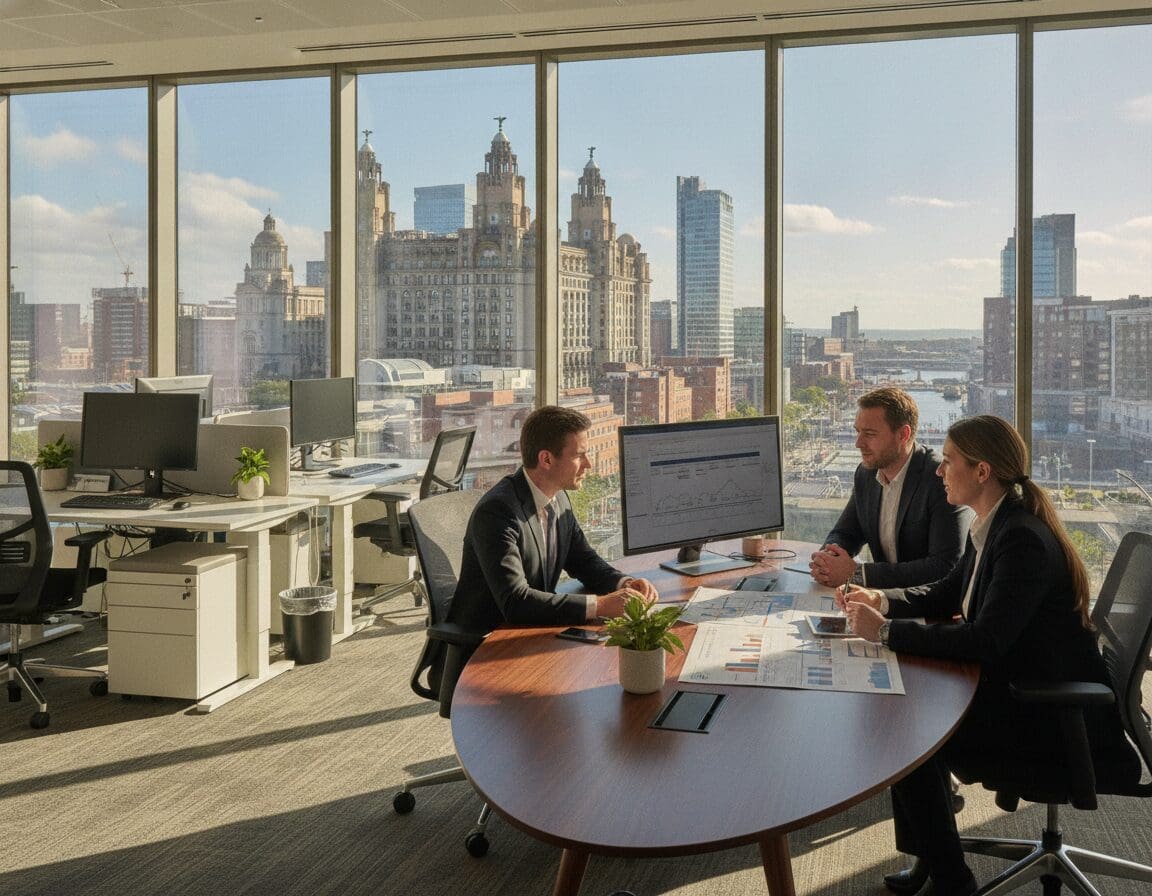
This short guide helps you choose and understand facility management in Liverpool for your office. You will get practical advice on what services matter, the regulatory context, and how to pick a provider that supports productivity and resilience.
Strong facility management reduces downtime, improves indoor environment quality and lowers energy bills. For your business, good Liverpool office facilities mean healthier staff, longer-lasting assets and tighter cost control. Typical outcomes include fewer reactive repairs, better compliance with health and safety rules and measurable savings on operational spend.
Liverpool’s commercial landscape spans the Waterfront, Liverpool ONE, city-centre knowledge-economy offices and suburban business parks. Both national suppliers and regional FM firms offer commercial facility services Liverpool clients can use. You’ll see a growing preference for integrated packages over single-service contracts, so consider bundled options when planning workplace management Liverpool.
This article is aimed at facilities managers, office managers, property owners, landlords and procurement professionals in the UK who need localised office FM Liverpool insight. Its objective is to help you identify essential services, evaluate suppliers against local regulatory and environmental drivers, and make cost-effective choices that align with sustainability and business continuity.
Understanding facility management in Liverpool
Facility management keeps your office running smoothly. It covers everyday tasks, planned work and strategic planning so your workspace stays safe and efficient. When you assess potential providers, check the office facilities scope they offer and how well their FM services Liverpool align with your needs.
What facility management covers for offices
Your core FM functions should include cleaning and janitorial services, planned and reactive maintenance for building fabric, HVAC, plumbing and electrical systems, plus security and access control. Waste management and grounds maintenance matter for sites with outdoor areas. Catering or pantry services may be part of the package if you need them.
Strategic activities go beyond day-to-day upkeep. Expect lifecycle asset management, space planning and workplace optimisation, supplier and contract management, budget forecasting and utility procurement. These tasks shape long-term costs and efficiency.
Value-added options can make a real difference. Concierge and reception, meeting-room management, pest control, specialist deep cleans and workplace wellbeing initiatives such as air quality monitoring or ergonomic reviews add measurable benefits.
Local considerations for Liverpool workplaces
Liverpool’s temperate maritime climate raises humidity and salt-laden air concerns for waterfront buildings. Older Victorian or post-industrial conversions may carry heritage constraints that need conservation-sensitive maintenance. Local knowledge helps you protect building fabric.
Transport hubs like Liverpool Lime Street, Moorfields and James Street influence footfall and security planning. Historic streets and restricted loading zones affect delivery schedules and large-scale maintenance access. You should factor these into service planning.
The local labour market and supplier base in Liverpool offer a mix of skilled trades and regional FM firms. Choosing a local provider often yields faster response times and practical knowledge of local regulations FM and logistics. Different business types, from creative agencies to call centres, require tailored cleaning regimes and space-management strategies.
How regulatory and safety standards affect services
Your FM partner must support compliance with core legal duties. Health and Safety at Work etc. Act 1974 and the Management of Health and Safety at Work Regulations require risk assessments, method statements and competent staff so you meet health and safety compliance Liverpool.
Fire safety obligations under the Regulatory Reform (Fire Safety) Order 2005 mean alarm and emergency lighting maintenance, routine checks and clear evacuation procedures. These tasks are commonly included in FM contracts to ensure ongoing compliance.
Water hygiene, legionella control and asbestos management are critical for older sites. Providers should follow HSE guidance L8 for temperature monitoring and record-keeping and maintain asbestos registers and management plans where needed.
Data protection and secure handling of documents affect day-to-day FM operations. If you manage personal or commercial data, insist on processes that meet GDPR and sector-specific standards for secure disposal and access control so your premises remain safe and compliant.
Key services to look for in office facility management
When you manage an office in Liverpool, a clear list of services helps you choose a supplier that meets daily needs and long-term goals. This section outlines the core offerings you should expect from a modern facilities partner.
Cleaning and janitorial services tailored to your office
Your cleaning plan should match occupancy and brand standards. Look for providers who offer daily office cleaning, washroom services, deep cleans, window cleaning and specialist care for carpets, hard floors and IT suites.
Choose teams that can scale frequency for busy reception areas or ramp up sanitisation in healthcare-adjacent spaces. Ask for KPIs such as cleanliness scores and inspection schedules, plus evidence of COSHH-compliant products and training like SafeContractor or CHAS.
Ongoing touchpoint cleaning and access to antimicrobial products remain important. Ensure the supplier has outbreak protocols and can adapt to changing public-health guidance.
Maintenance and reactive repairs
Planned preventative maintenance keeps HVAC, lifts, electrical systems and the building fabric running reliably. A robust PPM programme extends asset life and reduces emergency costs.
Reactive maintenance should be fast and local. Confirm call-out procedures, defined response times and escalation routes with engineers based in Liverpool for rapid mobilisation.
Ensure access to certified trades such as Gas Safe registered engineers, RIA-approved lift technicians and competent refrigeration and electrical specialists. Digital asset logs and a CMMS help with warranty tracking and replacement planning.
Security, access control and surveillance
Physical security services include reception staff, patrols and keyholding. Only accept SIA-licensed contractors for manned guarding roles.
Electronic systems must integrate with your operations. Expect card or fob access, turnstiles, intercoms and visitor management that tie into your building management systems.
CCTV needs to follow ICO guidance on signage, retention and secure storage. Confirm incident-response procedures and local liaison arrangements, including contact points for Merseyside Police and emergency services.
Energy management and sustainability initiatives
Energy monitoring and procurement advice help you cut costs. Providers should offer sub-metering, bill validation and strategies to spot waste.
Look for efficiency measures such as LED retrofits, HVAC optimisation and smart controls for heating and lighting. Assess feasibility of solar PV, heat pumps or green tariffs aligned with local net-zero targets.
Waste audits, segregation plans and partnerships with licensed carriers improve diversion from landfill. Your supplier should support carbon footprint measurement and ESG reporting, with routes to BREEAM, ISO 14001 or ESOS where relevant.
Choosing the right provider for your office needs
Selecting the right partner for your office requires a clear process. Start with a short list of suppliers and focus on evidence of past performance, service clarity and technological capability. Keep your priorities practical so you can compare like for like when you assess proposals.
Evaluating experience and local reputation
Ask for case studies that match your office size and sector. A firm with a Liverpool-based team will respond faster and understand local planning and supply chains. Check accreditations such as ISO 9001 and ISO 45001 and seek references from credible organisations in the city.
Service-level agreements and performance metrics
Make sure FM SLAs Liverpool spell out measurable KPIs. Look for clear response times, uptime targets and cleanliness standards, plus defined penalties and incentives. Agree reporting frequency and an escalation path with named contacts for governance.
Technology, reporting and communication tools
Choose suppliers that offer CMMS, mobile apps and customer portals for real-time job tracking. Confirm their FM technology reporting includes trend analysis and secure, GDPR-compliant data handling. Prefer a provider offering a single point of contact and 24/7 helpdesk options.
Cost structures and value-for-money considerations
Compare pricing models and understand what is included in the headline figure. Look beyond FM costs Liverpool to lifecycle savings, reduced risk and productivity benefits. Use a standardised tender or RFP to run a fair supplier evaluation and negotiate exit and handover terms.
Conclusion
Facility management in Liverpool is central to how your office performs day to day. Effective services cover cleaning, maintenance, security and energy efficiency, while also accounting for local building types, the city’s maritime climate and applicable health and safety regulations. A clear office facilities conclusion recognises that these elements combine to protect staff wellbeing, reduce operating costs and support business continuity.
To move forward, carry out an internal FM audit to identify gaps and prepare an RFP that reflects Liverpool-specific requirements. When you choose FM Liverpool suppliers, shortlist firms with a demonstrable local presence, relevant accreditations and a track record of delivering to commercial clients. Prioritise suppliers that commit to measurable SLAs and offer integrated reporting and communication tools.
Use a concise decision checklist as you procure: local presence, proven experience, clear SLAs, robust reporting technology, accredited staff and transparent pricing. This FM provider summary Liverpool approach helps you compare bids objectively and focus on value rather than lowest cost. Also consider future trends such as hybrid working, sustainability targets and digitalisation of FM services; select a partner who can adapt as your needs change.
Finally, request references and arrange site assessments to confirm capability and fit. Apply the guidance here to shortlist credible local and national suppliers so you can choose FM Liverpool support that delivers compliance, efficiency and occupant satisfaction for your offices.