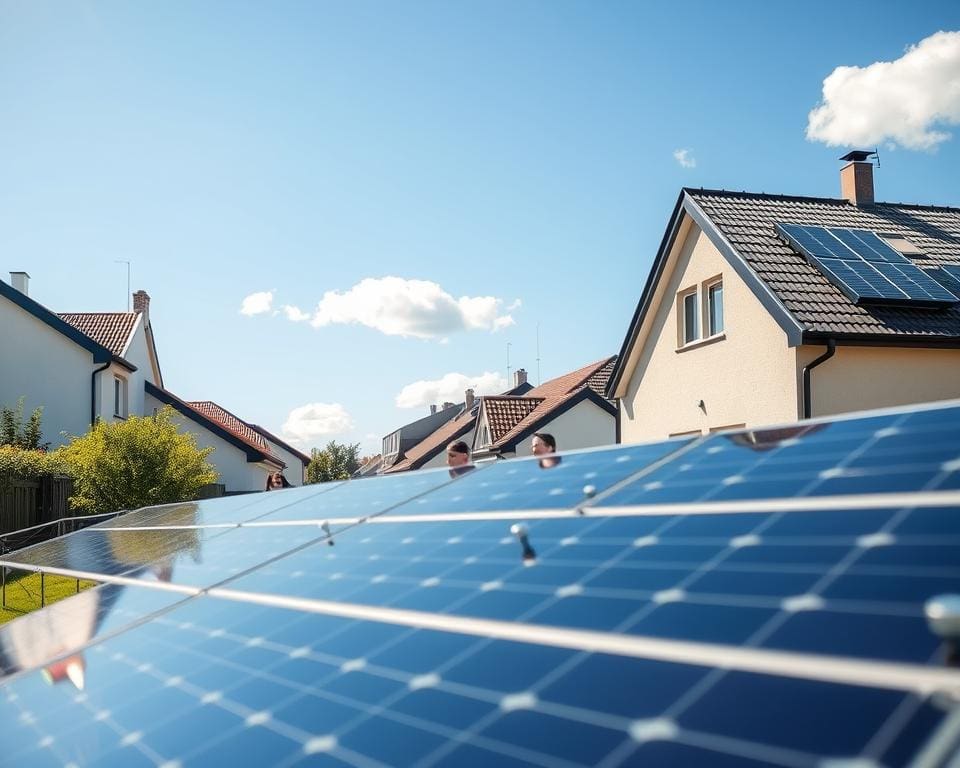
Installing domestic solar panels brings clear, practical advantages for homeowners across the United Kingdom. Solar photovoltaic (PV) systems convert sunlight into electricity on your roof, cutting reliance on grid power and lowering your energy bills. You can also benefit from export payments when surplus generation is sent back to the network, turning sunlight into a modest income stream.
The benefits of solar panels extend beyond finances. A home solar installation often boosts property appeal and value, reduces household carbon emissions, and pairs effectively with battery storage to improve resilience during outages. Modern panels typically carry warranties of around 25 years, while inverters commonly have ten-year guarantees, offering long-term, low-maintenance performance.
Solar energy UK performs well even in cloudy conditions, and many UK roofs—south-, east- or west-facing at about 15–40°—are suitable for panels. Do note planning rules for conservation areas and listed buildings may affect where you can install panels.
In the sections that follow, you will learn how solar panels generate electricity on your roof, what typical savings to expect, the financial incentives and financing options available in the UK, plus the environmental and lifestyle benefits and practical steps to take before installation.
Why choose solar panels for your home energy
Choosing solar for your home brings practical advantages you can see on your bills and in your daily life. Household solar generation reduces reliance on the grid, cuts your energy costs and helps you lock in cleaner power for years to come.
Understanding how solar panels work gives you confidence when comparing quotes. Solar PV UK systems use silicon cells to make direct current (DC) from sunlight. An inverter from brands like SMA, Fronius or SolarEdge converts DC to alternating current (AC) so you can run appliances and charge batteries.
Installation matters for performance. Panels are fixed to roof rafters with rails or installed on ballasted frames for flat roofs. Typical UK systems range from 2 kW to 6 kW depending on roof size and household demand. Orientation, tilt and shading from trees or chimneys change output, yet panels still generate on cloudy days.
Look at typical outputs to gauge savings. A 4 kW array can deliver about 3,400–3,900 kWh a year across much of England and Wales. Northern Scotland yields less, while shaded sites drop further. You can increase solar energy savings by matching daytime use to production or by adding battery storage.
Seasonal change affects generation. Production peaks in spring and summer and falls in autumn and winter. Using stored energy or shifting appliance use to daytime improves winter performance and boosts overall solar energy savings.
The landscape for payments has changed since the feed-in tariff closed in 2019. Existing FiT contracts remain in place for older systems. New small-scale generators now rely on the Smart Export Guarantee as an export tariff option, though rates vary and often stay modest.
Because export payments tend to be low, many homeowners focus on maximising self-use, adopting battery storage or exploring feed-in tariff alternatives that improve returns. Metering is key; export can be measured with a dedicated export meter or estimated by deemed export in some setups, while smart meters help ensure accurate SEG payments.
Financial advantages of installing a solar panel system
Installing solar PV cuts the amount you buy from the grid. Every kWh you generate and use on-site lowers your electricity bill. With typical UK patterns, self-consumption ranges from about 20–50% without a battery and can rise to 60–80% with storage or smart load-shifting.
Your solar payback period depends on system cost, how much you use, and future energy prices. Many well-sited UK systems pay back in 8–15 years. Systems often last 25 years or more, so you should expect net gains after payback.
Reduction in your electricity bills and payback period
Think of solar as an on-site generator that replaces purchased electricity. If grid tariffs rise, your solar payback period shortens because each kWh you avoid buying is worth more. Simple energy efficiency steps, such as LED lighting and better insulation, increase the share of generated power you use and boost solar panel savings.
When you add a battery, you store midday generation for evening use. That raises self-consumption and reduces reliance on peak-rate imports. Check quotes from MCS-accredited installers to compare likely returns and typical lifetime costs.
Impact on property value and buyer appeal
Homes with owned PV often attract more interest from buyers. Estate agents report that clear documentation, valid warranties and MCS certification strengthen buyer confidence. A well-maintained system that is owned outright can add perceived value during viewings.
Make sure conveyancing paperwork lists any leases or service contracts. Buyers favour transparent records of inverter condition and guarantees. The effect on home value solar panels deliver varies by region and market conditions, but the presence of PV tends to reduce objections about running costs.
Available grants, incentives and financing options in the UK
National grant schemes change over time and some local councils offer targeted support. The Energy Company Obligation (ECO) focuses on efficiency upgrades and may link to retrofit programmes. Look into local schemes for possible assistance.
There are several solar financing routes: cash purchase, green personal loans, hire purchase and energy-as-a-service arrangements where a provider installs and maintains the system. Choose an option that suits your cash flow and risk appetite.
The Smart Export Guarantee pays for exported electricity from participating suppliers. To qualify for export payments and for legacy scheme recognition, use an MCS-accredited installer. While the Renewable Heat Incentive applies to heat systems, combined local grants may help if you plan a broader retrofit.
Environmental and lifestyle benefits of solar panels
Switching to rooftop solar delivers clear gains for your home and the wider environment. You lower household emissions by displacing grid electricity, contributing to carbon footprint reduction while supporting national decarbonisation goals. Modern panels from manufacturers such as REC, Q CELLS and Longi offer strong warranties and improving lifecycle performance, helping you make a durable, sustainable choice.
Reducing your carbon footprint and supporting sustainability
When your panels generate power, they replace fossil-fuel-derived electricity and cut CO2 output. A typical 4 kW system can offset around one to two tonnes of carbon each year, depending on location and generation. Recycling schemes and manufacturer take-back programmes help reduce embodied-energy impacts at end of life.
Energy independence and resilience during power outages
On-site generation increases energy independence and reduces exposure to volatile retail prices. Pairing PV with storage improves self-sufficiency and lets you use more of what you generate. Standard grid-tied systems cannot power your house during an outage, but systems with appropriately configured inverters and solar battery storage can provide backup for essential circuits.
How solar panels complement other green technologies
Combining PV with heat pumps and solar adds further savings and emission cuts. An air-source or ground-source heat pump powered by your own electricity reduces reliance on gas boilers. Smart controls and timers shift loads like washing machines and EV charging to peak solar hours, improving efficiency and cost savings.
You can explore practical setups and small off-grid solutions through a concise guide to powering devices in remote garden areas as you plan battery sizing and hybrid inverters: how to power devices in a remote part of the.
- Battery options such as Tesla Powerwall and LG Energy Solution boost self-consumption and provide backup.
- Smart energy management tools help align heat pump cycles with sunny periods for best results.
- Careful sizing of storage matches critical loads like refrigeration and lighting during outages.
Practical considerations before installing solar panels
Start with a thorough site assessment to confirm roof suitability solar panels. Arrange a professional survey from MCS accredited installers to check orientation, tilt, shading and structural integrity. South-facing roofs give the best yields, but east or west aspects can still perform well. If your roof needs re-tiling within a few years, schedule that work first to avoid panel removal later.
Choose installers with MCS accreditation and membership of trade bodies such as Solar Energy UK or the Renewable Energy Consumer Code for added consumer protection. Request multiple quotes and a clear solar installation checklist that shows expected annual generation, component brands, warranties and inverter replacement plans. Look for reputable manufacturers that provide UK support and long performance warranties.
Check planning rules early to understand any need for solar planning permission. Most domestic systems are permitted development, but listed buildings, conservation areas and some flat roofs may need consent. Notify your distribution network operator and supplier where required, and ensure correct metering so you remain eligible for export arrangements if applicable.
Factor in costs, maintenance and lifespan when you plan. Provide transparent estimates for installation, inverter replacement, optional battery costs and basic solar maintenance UK tasks such as occasional cleaning and periodic checks. Aim to improve energy efficiency first and allow wiring or space for future battery or EV charging to future-proof your system and maximise long-term value.