Your entryway is the first impression visitors get of your home, so aim for a balance of warmth and function. Environmental psychology shows surroundings shape mood and behaviour, and a thoughtful front hall styling can set a positive tone the moment someone steps inside. Simple entryway ideas—like a clear circulation path and a focal mirror—help create immediate warmth and make your house feel lived in.
Practical needs sit alongside style. Durable flooring, organised storage for shoes and coats, and reliable lighting are the backbone of any hallway makeover. Consider hardwearing materials such as porcelain tiles, laminate or luxury vinyl for rainy days, and add a washable rug to bring softness without fuss. For storage, benches with built-in compartments, wall hooks and compact cabinets keep clutter at bay.
In the UK you often face narrow Victorian and terraced hallways and changeable weather, so design choices should reflect that reality. Wet-weather storage, easy-to-clean surfaces and conservation area rules that affect exterior alterations are all worth checking before you begin. For inspiration and products, look at John Lewis & Partners for mirrors and lighting, IKEA and Argos for affordable storage, Habitat and Made.com for curated furniture, and Homebase or Wickes for flooring and DIY supplies.
Throughout this short guide you will find practical sections on style and storage, layered lighting and ambience, layout and flow for small spaces, and finishing touches to personalise the space. Think about your household size, pets, guest frequency and whether your entry is merely a corridor or a multipurpose landing. Also consider sustainability: choose low-VOC paints, responsibly sourced timber and recycled or long-lasting materials to reduce waste and extend the life of your hallway makeover.
For a detailed walkthrough of functional layouts and stylish solutions, see this practical reference on crafting an effective entryway: entryway design guide.
Entryway ideas for style and functionality
Decide on an entryway style that flows from the rest of your home and suits everyday use. You might favour modern minimalist lines, Scandi softness with light timber and muted tones, classic Georgian symmetry, rustic cottage warmth or industrial accents with dark metal and exposed textures. Choose one statement piece—a narrow console table, a hall runner or a large mirror—to anchor the space and keep scale suited to small UK hallways.
Defining your look
Create a simple moodboard using images from Pinterest, Instagram interiors and magazines such as Grand Designs or Ideal Home. Collect colour schemes, material swatches and examples of entrance furniture so you can test combinations before committing. Use vertical artwork or slim shelving to draw the eye up and give the impression of height in narrow corridors.
Practical storage solutions
Choose hallway storage ideas that keep clutter hidden while staying stylish. Built-in cupboards work well in larger homes. For smaller spaces, try slim shoe cabinets, wall-mounted shelves, peg rails and bench seating with concealed compartments. Add baskets in washable fabrics for gloves and scarves, umbrella stands and a dedicated hook for dog leads.
- Use vertical storage and over-door racks to free floor space.
- Magnetic strips for keys and shelves above radiator covers add handy spots for essentials.
- Select modular pieces from IKEA or freestanding benches from Dunelm for budget-friendly options.
Balancing aesthetics with durability
Plan around durable hallway materials that stand up to daily wear without sacrificing style. Porcelain or stone-effect tiles resist moisture, while engineered oak or high-quality laminate gives warmth with longevity. Pick washable paints such as Dulux Easycare and scuff-resistant finishes for entrance furniture to reduce visible wear.
Protect high-traffic areas with runners and mats that trap dirt and moisture. Choose machine-washable rugs where possible and removable cushion covers for benches to keep cleaning simple. Allocate more budget to flooring and lighting, invest moderately in fitted storage from brands such as Hammonds or B&Q, and refresh the look with accessories.
For tips on making narrow hallways feel wider, consult practical layout advice here: maximize natural light and mirrors. These strategies work alongside mudroom alternatives and smart entrance furniture to create a welcoming, efficient arrival space.
Lighting and ambiance to make guests feel welcome
Good lighting sets the mood before a guest has even taken off their coat. Your entryway lighting should combine function with atmosphere so you create a calm, inviting first impression. A welcoming scheme uses warmth, layers and a few well-placed focal points to lift hallway ambience without glare.
Layered lighting strategies
Think in three layers: ambient for general illumination, task for actions such as finding keys, and accent to highlight features. Layered lighting gives balance and removes harsh shadows that make small spaces feel cramped.
- Ambient: choose ceiling-mounted pendants or flush fittings from Tom Dixon for style, LED recessed downlights for low ceilings, or semi-flush fixtures in period homes. Aim for 150–300 lux for a welcoming entryway.
- Task: install wall-mounted sconces by a mirror for quick appearance checks, add under-shelf LED strips in storage, and fit motion-sensor lights near doors for hands-free convenience.
- Controls: use dimmable fittings and smart bulbs from Philips Hue or LIFX to tune colour temperature and brightness for different times of day.
Choose warm-white bulbs in the 2700–3000K range to create a soft tone. Select energy-efficient LEDs and use timers or motion sensors to cut running costs while maintaining a warm welcome.
Accent lighting and focal points
Accent lights draw the eye to art, a plant or a statement mirror. Small directional spotlights, picture lights or low-voltage uplights work well to create depth and highlight texture.
Mirrors amplify daylight and artificial light, making tight spaces feel larger. Pick a mirror or mirrored furniture that reflects light without overwhelming the layout.
- Use picture lights or mini-spotlights to create a visual destination on arrival.
- Position accent lights to avoid glare and to gently lift hallway ambience after dusk.
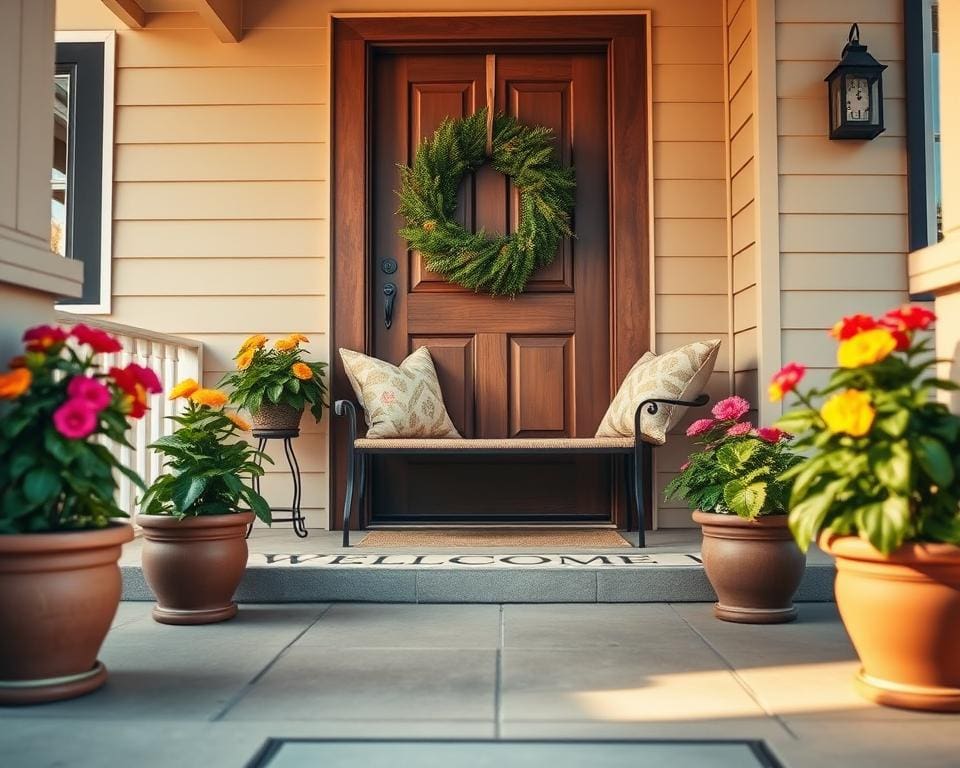
- For outdoor safety, choose porch fittings with dusk-to-dawn sensors and weatherproof ratings to illuminate steps and thresholds.
Pair your scheme with smart home controls to set scenes for arriving home, evening or entertaining. Thoughtful use of accent lights and layered lighting turns a simple corridor into a warm, practical entrance that feels personal and safe.
Practical layout and flow for a welcoming entrance
Good entryway layout makes day-to-day life easier and sets the tone as you walk in. Keep sightlines clear and plan furniture to one side so your hallway flow feels natural. Small adjustments often have the biggest impact on how welcoming the space feels.
Maximising small or narrow entryways
For tight British hallways, choose slimline furniture and wall-mounted solutions to save floor space. Use mirrored surfaces and a consistent colour palette to lift the area and avoid visual clutter.
Consider folding or drop-leaf seats and recessed niches for storage. Shallow cabinets no deeper than 20–25cm work well in very narrow spaces. Vertical stripes or an elongated runner can make the corridor appear longer.
Practical UK examples include concealed storage under stairs, ventilated shoe cupboards from John Lewis, and slim coat rails that tuck behind doors. Aim for at least 75–90cm of clear walkway where possible to maintain comfortable circulation.
Creating a clear circulation path
An unobstructed circulation path prevents bottlenecks and improves daily movement through your home. Place storage and seating to the side of the main route and keep the immediate landing free of loose items.
Design functional zones: a drop zone for keys and post near the door, seating for shoe changes, and coat storage slightly beyond the doorway to avoid crowding. Low thresholds and non-slip mats support accessibility for all ages.
For families with pets or young children, fit lower hooks for leads and coats, choose stain-resistant materials, and use easy-clean boot trays to keep the route tidy and safe.
Seasonal considerations for UK climates
Adapt your entryway across the year with generous waterproof mats and umbrella stands for autumn and winter. Rotate storage for summer footwear and lightweight coats when warmer months arrive.
Manage moisture with ventilated shoe storage, dehumidifying sachets, and natural-fibre mats that dry quickly. Protect floors with durable runners and wipe-clean surfaces to handle grit and salt in winter.
Keep a small cleaning kit near the door — a brush, wipes and a shoehorn — for quick upkeep after wet or muddy days common in the UK. These simple measures maintain comfort and extend the life of your entryway finishes.
Decor and finishing touches that personalise your entry
Finishing touches are what turn a practical corridor into a welcoming, personalised entrance. Choose hallway accessories that echo the style you set earlier and avoid overcrowding; a few well-chosen items will have more impact than a cluttered display. Think of entryway decor as the final layer that ties together lighting, storage and flow.
Wall art and mirrors add personality and help with light and proportion. Select artwork sized to the wall, or group smaller prints into a cohesive gallery; sourcing prints or photography from UK galleries and local makers gives a distinct regional flavour. For mirrors, gilt-framed pieces suit traditional homes while frameless round mirrors complement contemporary schemes, both helping to reflect daylight and enlarge the space.
Textiles and soft furnishings bring warmth and practicality. Choose durable hall runners and rugs with anti-slip backing from reputable suppliers such as John Lewis & Partners or The Rug Seller; machine-washable or easy-clean options are practical for UK households. Add cushions or seat pads in weather‑resistant fabrics on benches, and swap wool for winter and linen for summer to refresh the look with seasonal changes.
Greenery and tactile materials soften a hallway and add texture. Use low‑maintenance plants like Sansevieria, pothos or ZZ plant where light is limited, or opt for wall-mounted planters and small succulents in narrow passages. Woven baskets, wooden trays and stoneware dishes work well as places for keys and odds and ends, while curated hooks, a stylish key bowl and a decorative umbrella stand keep essentials organised.
Keep safety and longevity in mind when styling. Anchor heavy mirrors and tall furniture to the wall, choose non‑slip pads for rugs and ensure decorations do not obstruct sightlines or movement. Adopt a simple maintenance routine: tidy daily, rotate accessories seasonally and check storage and finishes annually to prolong the life of your scheme.
Start small: a new light, a mirror or a storage bench can immediately lift your hallway. These approachable entrance styling ideas and hallway finishing touches let you build a personalised entrance over time while keeping the space useful and welcoming.