You cannot increase the floor area without building work, but you can make a small living room feel bigger. The right furniture, clear walkways and careful use of light can change how the space looks and works.
Start with pieces that suit the room’s scale. Pale colours, reflective surfaces, layered lighting and well-planned storage can create a brighter, calmer setting. These spacious living room ideas help you gain visual space without giving up comfort or personality.
Good small lounge ideas should also reduce clutter. Keep sightlines open and move furniture away from main routes where possible. A tidy room often feels larger because your eye can travel across it with fewer interruptions.
Every compact living room design needs to reflect the property itself. Consider the room’s shape, window position, door swing, radiators and original features before choosing furniture. For more guidance, explore this practical guide to decorating a small apartment.
These living room design tips focus on better circulation and everyday use, not just appearance. With a few thoughtful changes, your lounge can feel more open, welcoming and easy to live in.
Small living room layout ideas for a more open feel
A thoughtful small living room layout can make the space feel calm and easy to use. Start by considering the room’s shape, natural light and main entrance. The right furniture for a small lounge should leave clear routes between the door, seating and windows.
Choose furniture that fits the room’s scale
Measure the room before you buy anything. Record the width of doorways, hallways and staircases, as well as the room itself. Each item must fit through the property before it reaches its intended place.
Oversized sofas, deep armchairs and wide coffee tables can restrict movement. They can make the usable floor area appear smaller. Choose appropriately scaled furniture that supports comfort without filling every wall.
Compact sofas with slim arms and moderate depth suit many rooms. A raised design with visible legs reveals more flooring and creates a lighter look. You could choose a two-seater sofa, a loveseat, compact modular seating or one sofa with a lightweight armchair.
Good small-space furniture can serve more than one purpose. An ottoman with concealed storage can act as a footrest and seat. Nesting tables give you extra surface space when needed. A compact sofa bed can support occasional guests without taking over the room.
Prioritise comfort and proportion over the smallest possible size. Furniture that is too small can look disconnected and may not support everyday use. A balanced choice will give your small lounge arrangement a more settled appearance.
Arrange seating to improve movement and flow
Living room furniture placement should support simple movement. Leave enough space for people to pass safely between the main entrance, sofa and other rooms. This clear route will improve room flow and make living room circulation feel natural.
Place the largest item first, often the sofa. Position chairs to face it without blocking a doorway or window. In narrow living room ideas, placing seating along the longest wall can preserve a wider central path.
A small coffee table with a slim frame, rounded corners or a glass top can reduce visual weight. Keep a safe gap around it for walking and sitting. Do not push every piece against a wall, since some breathing room can make the room feel less congested.
For an open-plan living room layout, use the sofa to define the sitting area. A compact console or rug can mark the boundary without closing off the space. In a small sitting room arrangement, keep the centre as open as possible.
Use visual tricks to make the ceiling feel higher
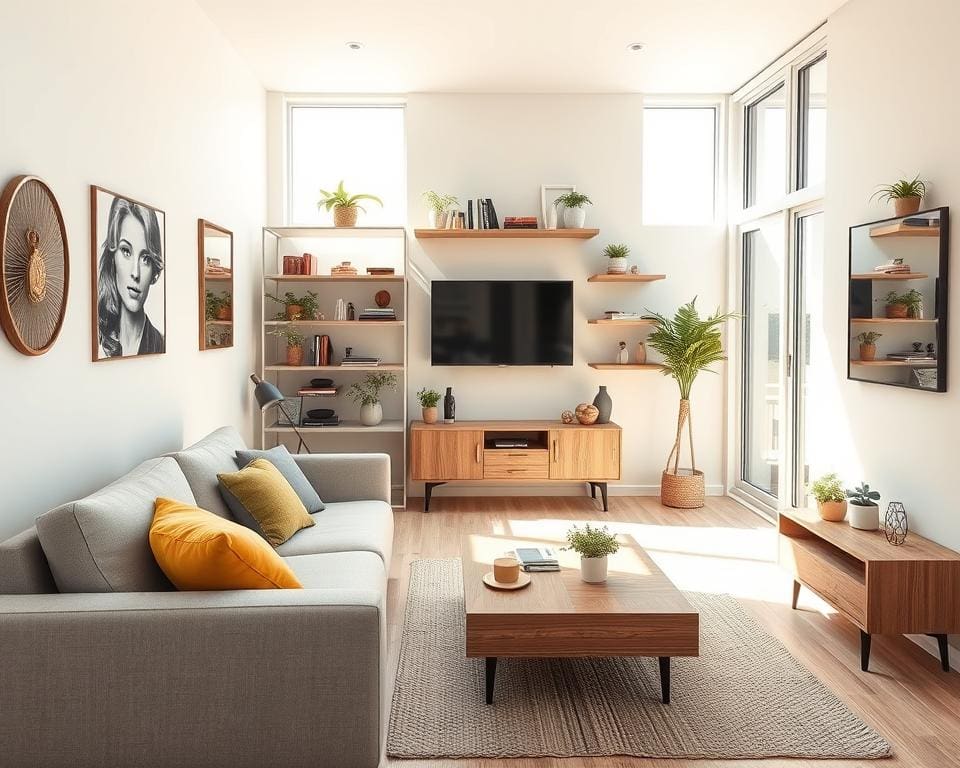
Use vertical living room design to draw the eye upwards. Tall bookcases, narrow shelves and high-mounted artwork can add height without using much floor space. These living room wall ideas give the eye a clear upward path.
Hang curtains close to the ceiling and let them fall to the floor. Choose slim lamps and tall plants where space allows. These small room decorating tricks can make a low ceiling look higher.
Keep the lower part of the room simple and uncluttered. Exposed legs, open shelving and a pale rug can help make a small room look bigger. A clear floor line will support both the room’s proportions and its daily use.
Light colours, natural light and reflective surfaces
Using light colours for a small living room can make the space feel brighter, calmer and more open. Warm white, soft grey, pale beige and muted sage reflect available light without making the room feel cold.
White is not your only choice. A softly tinted shade can add depth and prevent a stark look, especially in a north-facing room with cool daylight. Explore these ways to brighten a dark lounge before choosing your paint.
Keep walls, woodwork and large furnishings within a similar colour range. This creates a smooth visual flow and reduces sharp breaks across the room. Pale living room colour schemes can include one gentle accent wall for depth, provided the shade stays restrained.
Paint can look different as daylight changes. Bulb colour and room direction affect each tone. Test sample patches in the morning, afternoon and evening before you commit.
Clean windows help you make the most of daylight. Keep tall furniture away from the glass and avoid heavy curtains. Blinds, shutters and lightweight curtains provide privacy while letting you draw fabric beyond the window recess when you need more light.
Mirrors in small rooms can reflect daylight and nearby views, which may make the room seem deeper. Place one opposite or beside a window, but check what it reflects. A cluttered view will not create the same sense of calm.
Choose reflective surfaces with care. A glass coffee table, glazed ceramics, polished metal or a satin paint finish can bounce light around the room. Balance these details with woven fabrics, wood and matte finishes to avoid glare.
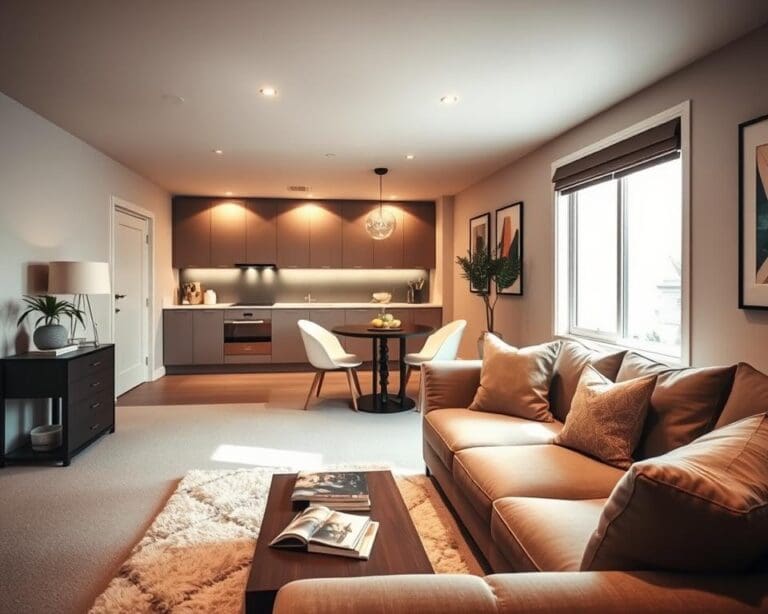
Layered lighting keeps dark corners from returning after sunset. Combine ceiling lights with wall lights, floor lamps and table lamps. Place fittings at different heights, using warm bulbs that improve visibility while keeping the room inviting.
Pale upholstery and flooring can support the scheme. If your household needs harder-wearing materials, choose washable covers, durable fabrics and mid-tone accents. These choices help hide everyday marks without making the room feel heavy.
Smart storage and practical furniture for a spacious living room
Good small living room storage reduces visible clutter and protects clear floor space. Give books, cables, games, paperwork, remote controls and toys a defined home. Closed cupboards create useful hidden storage, while baskets, boxes and labelled containers keep smaller items together. Keep open shelves for books and a few well-chosen ornaments to maintain a calm, decluttered living room.
Choose multifunctional furniture that works harder without crowding the room. An ottoman, storage bench, footstool, coffee table with drawers or media unit with cupboards can add capacity. Select a media unit that suits the wall and television, as deep furniture can reduce circulation. Wall-mounted options reveal more floor beneath and can make cleaning easier.
Use tall shelving, narrow bookcases and wall-mounted cupboards to make the most of vertical space. Secure every shelf correctly for the wall structure and intended load. Built-in storage ideas can also use alcoves, chimney-breast recesses and awkward corners. For more practical storage ideas for a small lounge, consider under-bed boxes, stackable containers and adjustable shelving.
Folding chairs, nesting tables and compact side tables can move aside when guests arrive. Edit possessions often, and do not let surfaces become permanent drop zones. Keep shelves stable, avoid overloading them, and do not block radiators or ventilation points. Check that doors and drawers open without narrowing the main walkway. With the right balance of proportion, movement, light and organisation, your room can feel spacious while remaining comfortable and personal.