Choosing the best flooring for a busy family home means looking beyond appearance. Your floors must cope with daily foot traffic, spilled drinks, muddy shoes, toys and pet claws. They should also stay comfortable, attractive and easy to clean.
There is no single type of family home flooring that suits every room. You need to match each material to the way you use the space, the moisture it faces and the care you are willing to provide. Entrance halls, kitchens and utility rooms often need extra protection from wet British weather.
Good durable household flooring balances strength with comfort. Consider water and stain resistance, noise, appearance, cleaning, installation and whole-life cost. These points are especially important when choosing flooring for children and pets.
This guide compares luxury vinyl, laminate, engineered wood, carpet, porcelain and ceramic tiles. It also covers practical flooring ideas UK households can use when planning maintenance, room changes and future costs.
For further guidance, explore these flooring options for busy households. Before buying, check the manufacturer’s instructions, wear rating and warranty. You should also confirm suitability for underfloor heating and review any claims about moisture resistance.
Choosing family home flooring for everyday family life
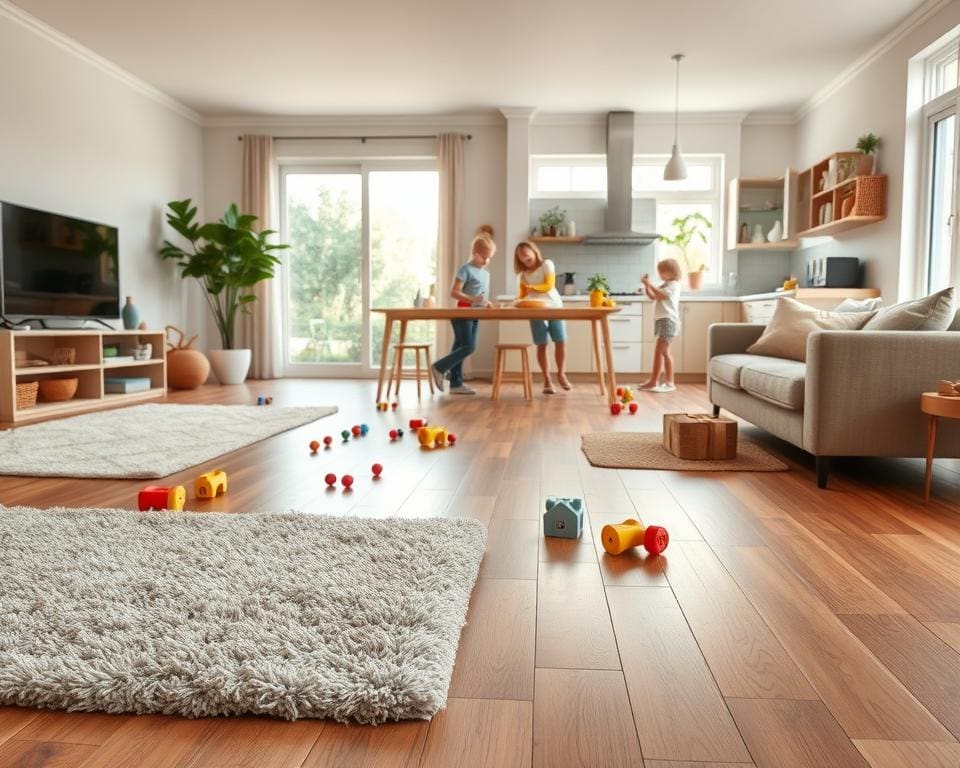
The right floor must cope with real family life, from muddy shoes to dropped toys. Good practical family flooring should withstand repeated use, stay simple to clean and allow minor repairs. Hallways, kitchens, dining areas and open-plan rooms need more resilience than a guest bedroom.
Start with how each room is used. This approach helps you choose flooring for busy households without losing sight of comfort or appearance. These family kitchen flooring ideas can help you plan surfaces around entrances, sinks and dining zones.
What makes flooring practical for a busy household?
Foot traffic, moving furniture, dropped objects, food spills and muddy shoes can mark a floor quickly. Pet claws create further wear, especially in routes between the garden, kitchen and sitting room. Look for hard-wearing flooring in these areas, with a finish suited to regular sweeping and mopping.
A smooth, well-sealed surface is usually an easy-care flooring choice. It gives dirt fewer places to settle and makes spills easier to remove. Deep texture can hide light marks, yet it may hold grit and need more detailed cleaning.
LVT, porcelain tile and quality laminate can provide reliable high-traffic flooring for busy zones. Some laminate products offer strong scratch resistance at a lower price. Porcelain is very hard-wearing and easy to clean, while Karndean is a widely used UK brand with installer warranties.
Good installation matters as much as the material. An uneven subfloor, poor adhesive or missing expansion gap can affect the floor’s strength and lifespan. Flush thresholds reduce trip risks between rooms and create a cleaner line through an open-plan home.
How to balance durability, comfort and style
Your floor should feel pleasant underfoot as well as withstand daily use. LVT and water-resistant engineered wood can offer durable and comfortable flooring for kitchens, hallways and dining areas. Engineered wood brings a natural look, while solid timber provides warm flooring that needs regular oiling.
Consider flooring comfort underfoot when planning bedrooms, play areas and living rooms. A suitable underlay can soften harder surfaces and reduce the sound of footsteps. Carpet can make a room feel quieter, though spills and pet hair may need more attention.
Colour and grain can support your family interior design without making the floor look too busy. Mid-tone wood effects can disguise small marks. Matt finishes often create stylish family flooring with a softer, more relaxed appearance than a highly polished surface.
Use samples at different times of day before choosing. This simple step helps you compare light levels, furniture colours and flooring design ideas in your own rooms.
Key flooring features for children and pets
For a child-friendly flooring choice, select a surface that is easy to wipe and comfortable for crawling or play. Flooring for toddlers should have a stable finish, secure edges and no raised thresholds that could catch small feet.
A pet-friendly flooring surface needs to handle claws, moisture and frequent cleaning. Flooring for dogs should have a strong seal and enough texture to support paws. A scratch-resistant flooring finish can help preserve the surface where pets turn, play and wait by doors.
Choose non-slip family flooring near sinks, entrances, bathrooms and utility rooms. Textured porcelain and durable vinyl can provide grip without becoming difficult to sweep. Test the finish with wet footwear, since excessive texture may trap dirt.
Place a sturdy doormat at each entrance and consider a shoe-free routine. Washable runners can protect key paths from grit and moisture. These small measures help everyday flooring stay cleaner and reduce wear across the home.
Compare the best durable flooring options for every room
Choosing between the durable flooring options UK households use means matching the surface to each room. Your best flooring for every room may combine water resistance in the kitchen, grip in the hallway, warmth in bedrooms and comfort in living areas. This family flooring comparison covers the main flooring types for homes, with performance shaped by the product, installation and daily care.
Before you choose, check the wear layer, finish, backing, construction and water-resistance rating. A level subfloor, sound moisture barrier and suitable underlay or adhesive matter just as much. Follow fitting guidance on acclimatisation and expansion gaps, or use a qualified installer for a more reliable finish.
Luxury vinyl flooring for kitchens and hallways
Luxury vinyl flooring offers a practical mix of comfort, style and resilience. LVT flooring can copy timber, slate or stone, which makes luxury vinyl tile UK designs easy to match with modern interiors. Its softer feel is pleasant underfoot, while a strong wear layer helps resist marks from shoes, toys and pets.
For many homes, LVT provides waterproof kitchen flooring when the chosen product has a suitable water-resistance rating and the joints are fitted correctly. It suits hallway flooring, kitchens, conservatories and rental properties. Easy-clean vinyl flooring needs regular sweeping and a damp microfibre mop, with no harsh products that may dull the surface.
Click-fit LVT can be quicker to install than glued options, though both need a smooth, dry base. Uneven boards or poorly prepared screed may cause movement and hollow spots. Read the manufacturer’s guidance before using LVT over underfloor heating.
Laminate flooring for affordable family-friendly style
Laminate flooring is a popular form of affordable family flooring. Its printed surface creates convincing wood-effect flooring, with many colours and plank sizes to suit period and contemporary homes. A dense core and quality locking system give it stability in busy rooms.
For laminate for hallways, choose scratch-resistant laminate with a strong wear rating and sealed edges. Easy-care laminate is simple to sweep and wipe, yet standing water can damage some products. It may suit lounges, dining rooms and play areas where spills are cleaned quickly.
Laminate feels firmer and less warm than vinyl or carpet. Underlay can improve sound control and comfort, though it must match the product and subfloor. Leave the correct expansion gaps around walls, door frames and fixed units. Acclimatisation may be required before fitting.
Engineered wood flooring for warmth and longevity
Engineered wood flooring brings the character of natural timber flooring with a layered structure. Its cross-grain core handles changes in UK humidity better than many solid boards. This makes it a strong choice for family-friendly wood flooring in lounges, dining spaces and open-plan areas.
Wood flooring for living rooms feels warm and inviting, with finishes ranging from matt lacquer to oil, smoked and whitewashed effects. Engineered oak flooring is widely chosen for its grain and strength. A thicker real-wood wear layer gives more scope for careful refinishing, supporting the use of durable wooden flooring over many years.
Keep wood away from prolonged moisture and wipe spills without delay. Solid timber can be sanded and refreshed, though it is more sensitive to humidity. Engineered boards often suit underfloor heating better, but you should confirm the temperature limit and fitting method before installation.
Flooring can change how bright or spacious a room feels. Pale boards reflect more light, while a satin finish can make everyday wear less visible. Explore how flooring upgrades affect interior style before choosing a colour or plank layout.
Carpet for comfortable bedrooms and living areas
Family carpet adds warmth, softness and sound absorption where comfort matters most. It works well as bedroom flooring and creates soft flooring for living rooms. A dense pile can feel plush, while a shorter, tightly woven pile may cope better with busy routes.
For a durable carpet for children, look for a hard-wearing fibre, secure backing and a practical colour. A pet-friendly carpet should resist pulled loops and hold its shape under repeated use. Stain-resistant carpet treatments can help with food and drink spills, but fast cleaning still protects the pile.
Carpet is not suited to rooms with frequent splashes or tracked-in mud. Vacuuming, prompt spot cleaning and professional care at suitable intervals help preserve its appearance. Quality underlay improves comfort, insulation and wear, provided the base is level and dry.
Porcelain and ceramic tiles for hard-wearing spaces
Porcelain floor tiles and ceramic floor tiles offer firm, durable tiled flooring for kitchens, entrances and bathrooms. Porcelain has low porosity, so it handles moisture and heavy traffic well when the correct product is selected. Large formats can create a calm, spacious look and mimic natural stone with less upkeep.
Kitchen floor tiles are easy to wipe and can work with underfloor heating. Bathroom flooring needs slip performance, suitable grout and properly sealed joints. Low-maintenance tile flooring is practical for muddy paws and frequent cleaning, though natural stone such as slate, limestone and travertine needs periodic sealing.
Tiles feel hard and cool without heating, so they may be less comfortable for play areas or long periods of standing. They can crack if fitted over movement, moisture or an uneven base. A prepared subfloor, correct adhesive and professional installation reduce the risk of loose tiles, hollow areas and failed grout.
Which flooring is easiest to clean and maintain?
For a busy home, easy-to-clean family flooring should deal with dust, spills and daily traffic without demanding complex care. Every surface needs regular sweeping or vacuuming, prompt spill removal and occasional deeper cleaning. A clear flooring cleaning guide helps you protect the finish and keep your routine simple.
Stain-resistant flooring for spills and muddy footprints
Stain-resistant flooring gives you more time to deal with juice, food and muddy footprints. It is useful as flooring for muddy shoes in hallways and as easy-clean flooring for children in playrooms. Pet stain-resistant flooring can limit marking, yet you should still remove accidents quickly.
Stain resistance helps prevent marks from setting into the surface. It does not make a floor spill-proof family flooring in every situation. Sealed vinyl, porcelain tile and some laminate products resist stains well, while carpet fibres and unfinished wood need faster attention.
Use entrance mats to catch grit and moisture. Remove outdoor footwear where practical. Fit felt pads beneath furniture, and lift items when moving them rather than dragging them. These simple steps support flooring maintenance and reduce scratches, dents and ground-in dirt.
Water-resistant flooring for kitchens, bathrooms and utility rooms
Water-resistant flooring can cope with small splashes when joints and edges are protected. Waterproof flooring UK products, such as fully waterproof LVT, offer stronger protection against standing water. Water resistance and waterproofing are not interchangeable terms, so check the product specification before buying.
Waterproof kitchen flooring suits busy cooking areas because it can handle regular spills and frequent wiping. Porcelain and sealed ceramic tiles provide practical bathroom floor options, with dense surfaces that do not absorb much water. Vinyl and porcelain are useful choices for utility room flooring, where damp coats and leaking appliances may create extra moisture.
Moisture-resistant flooring still needs sensible care. Wipe spills quickly, keep water away from exposed edges and use well-fitted transitions between rooms. Poor installation, gaps and an unsuitable subfloor can allow moisture to collect beneath the surface.
Cleaning and maintenance requirements by flooring type
Your flooring care guide should name the correct cleaner and method for the material. Avoid excessive water, steam cleaners and harsh detergents. These can damage sensitive finishes or affect a manufacturer’s warranty. A pH-neutral product, such as Bona for suitable wood floors, is often safer than a strong household cleaner.
- Luxury vinyl: Sweep or vacuum grit, mop with a lightly damp pad and follow the instructions for how to clean LVT. Thicker wear layers can improve resistance to everyday scuffs.
- Laminate: Use a dry or well-wrung mop and remove spills at once. Laminate floor maintenance is easier when water does not reach open joints.
- Wood: Vacuum with a soft brush and use approved products for wood floor care. Keep indoor humidity near 35% to 55% to reduce movement and warping.
- Carpet: Vacuum high-traffic areas often and blot spills rather than rubbing them. Carpet maintenance may include professional cleaning when fibres hold deep dirt.
- Tile: Sweep grit, mop with a suitable cleaner and pay attention to grout lines. Tile cleaning is simpler when grout is sealed and stains are treated early.
Fewer joints, sealed surfaces and accurate transitions leave fewer places for dirt to settle. For a wider comparison of durability, review this durable flooring guide before choosing a surface for each room.
How to choose flooring that suits your budget and lifestyle
A useful flooring budget guide should cover more than the product price. Allow for underlay, adhesive, trims, thresholds, subfloor preparation, delivery, fitting, and removal and disposal of the old floor. Comparing flooring costs UK retailers quote can help you avoid surprises and set a realistic total.
Think about value over time, not only the lowest price. A cheaper floor may need early replacement or regular specialist care. A stronger option could become a long-lasting flooring investment if it lasts for many years and allows simple repairs. Prioritise performance in busy areas, such as luxury vinyl or tile in an entrance and kitchen, engineered wood in a reception room, and carpet in bedrooms.
Your routine also matters when choosing the best flooring for your lifestyle. Families with young children may prefer spill-resistant surfaces that clean quickly. Pet owners may need scratch resistance, odour control, and practical colours. If noise is a concern, carpet or quality underlay can make rooms feel calmer and more comfortable.
Test samples beside your furniture, lighting, skirting boards, and existing décor. Check the texture, joint appearance, cleaning instructions, and fitting requirements before ordering. Confirm guarantees, domestic or commercial suitability, water-resistance terms, and any approved underlay rules. Look for clear information on sourcing, durability, repair, and disposal. The right affordable family home flooring offers the best balance of durability, comfort, maintenance, and style for each room, while keeping flooring installation costs within reach.