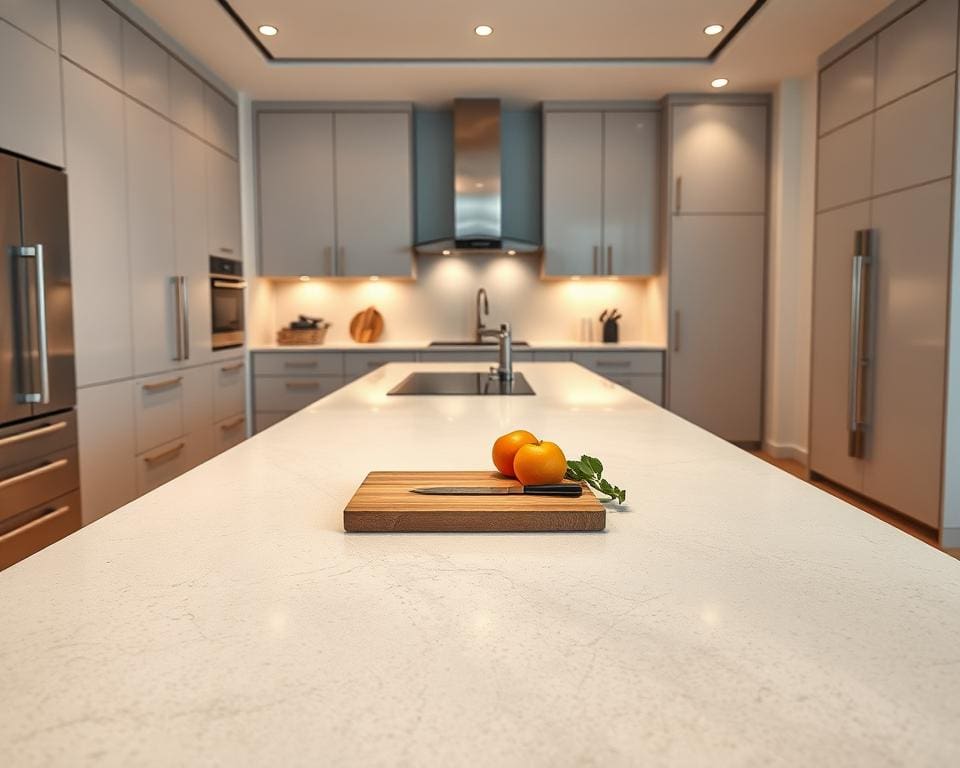
Your kitchen worktop must handle daily preparation, spills and heat. It is also a major visual feature, especially in an open-plan home. The best kitchen worktop should suit the way you cook, your budget and the look you want to create.
There is no single choice for every household. Quartz offers a durable, low-maintenance finish, while granite brings natural pattern and strong heat resistance. Laminate is affordable and flexible, solid wood adds warmth, and porcelain suits a clean, contemporary scheme.
Corian and other solid-surface materials can create smooth, seamless designs. They may also work well with integrated sinks and curved details. For more guidance on durable kitchen surfaces, it helps to compare each material’s strengths before you decide.
This guide compares kitchen worktop materials by scratch, stain, heat and moisture resistance. It also considers cleaning, appearance, edge profiles, lifespan, repairability, installation and long-term value. These points matter in busy UK kitchens with breakfast bars, undermounted sinks, boiling-water taps and integrated appliances.
Performance can vary with thickness, finish, brand, fabrication and installation quality. Your final choice should be checked with a specialist supplier, particularly for complex cut-outs, joins or large sections. These practical details can shape your worktop ideas UK and help you choose a modern kitchen worktop with confidence.
How to choose the best kitchen worktop for your home
Choosing a kitchen worktop starts with your daily routine. Think about how often you cook, how much cleaning your kitchen needs and whether the surface will face spills, sharp knives and hot pans. A busy family kitchen may need a hard-wearing finish, while a lightly used room gives you more freedom to focus on appearance and natural materials.
Consider durability, maintenance and everyday use
Kitchen worktop durability depends on the material, its finish and how you use it. Quartz, granite, porcelain and solid-surface worktops are often chosen for robust performance. Laminate and solid wood can look excellent, yet they need more care around heat, water and sharp objects.
- Scratches can affect any surface, so use a chopping board rather than cutting directly on the worktop.
- Pale or porous materials may show stains and may need careful cleaning or periodic sealing.
- Hot pans and baking trays can mark some finishes. Use trivets unless the manufacturer confirms heat resistance.
- Seal areas around sinks, taps and draining grooves to reduce the risk of water ingress, especially with timber-based worktops.
- Use a soft cloth and mild detergent for regular cleaning. Abrasive cleaners, scouring pads and unsuitable chemicals may dull the surface.
Easy-clean worktops suit homes where food preparation takes place every day. Your kitchen worktop maintenance routine should still follow the supplier’s care guide, since finishes and sealants vary between products. The manufacturer’s specification should take priority over general advice.
Compare worktop costs, installation and long-term value
The worktop installation cost involves more than the price per square metre. Ask whether the quotation includes templating, delivery, fabrication, polishing, sink and hob cut-outs, drainer grooves, upstands, splashbacks, joins, edge profiles and fitting.
Quartz, granite and porcelain are heavy materials. They may need specialist handling and professional installation. Staircases, narrow doorways, difficult access and the layout of your kitchen can affect the fitting time and total price.
Look beyond the initial purchase price when comparing options. Consider the expected lifespan, resealing, refinishing, repairs and the difficulty of replacing a damaged section. A cheaper surface may cost more over time if it needs frequent repairs or loses its appearance quickly.
Request a detailed quote that lists each service and finish. This makes it easier to compare like for like, particularly when one supplier includes sink cut-outs or edge details within the main price.
Match your worktop to your kitchen style and colour scheme
Assess samples in the room where the worktop will be fitted. Daylight, warm bulbs and showroom lighting can change how a surface looks. Larger samples give you a clearer view of movement in stone, texture in laminate and the grain in timber.
Place samples beside your cabinet doors, flooring, splashbacks, handles and appliances. A worktop colour scheme should link these elements without making every finish identical. Light surfaces can make a compact kitchen feel brighter and more spacious, yet they may show marks more readily.
Dark worktops can add contrast to pale cupboards. They may make fingerprints, dust, crumbs and limescale easier to see. Concrete, marble and stone-effect finishes suit modern kitchen design ideas without the cost or care needs of natural stone.
Timber introduces warmth to painted, neutral or handleless kitchens. It can soften strong modern lines and create a more welcoming feel. Gloss, matt, honed, textured and polished finishes reflect light in different ways, changing the character of the room.
Check the impact of thickness and edge detailing before ordering. A slim profile supports a minimalist look, while a thicker edge feels more substantial. Waterfall ends, peninsulas and islands can need extra fabrication, precise joins and careful material selection.
Popular modern kitchen worktop materials compared
Your worktop affects the look, feel and daily use of your kitchen. Each material offers a different balance of strength, care, cost and style. Compare the main options before choosing a surface that suits your space.
Quartz worktops for a durable, low-maintenance finish
Quartz is an engineered material made from natural quartz particles, resins and pigments. This process creates a wide choice of colours, patterns and stone-effect finishes. You can choose a surface that looks like marble, concrete or natural stone with a more consistent design.
Quartz kitchen worktops are popular because they resist everyday scratches, stains and moisture. They need less routine care than many porous stones and do not usually require regular sealing. Care advice can vary by manufacturer, so follow the supplied guidance.
Wipe spills promptly, especially coloured drinks, oils and acidic liquids. Quartz is not completely heat-proof. Hot pans can cause thermal damage or marks, so use trivets and heat protection near hobs and ovens.
Long runs and islands may need visible joins. Professional templating and fabrication help create accurate cut-outs and neat seams. Quartz suits you if you want a refined finish with simple cleaning and reliable everyday performance.
Granite worktops for natural luxury and heat resistance
Granite is a natural stone with unique grains, tones and mineral markings. No two slabs look exactly alike, which gives your kitchen a distinctive finish. Granite worktops are strong and offer good resistance to heat, making them useful around hobs and busy preparation areas.
Granite can be porous, so sealing is often needed to help prevent stains. You should still clean spills quickly and use chopping boards to protect the surface. Its weight and precise fitting requirements mean professional installation is usually the safest option.
Laminate worktops for affordable style and versatility
Laminate worktops combine a decorative layer with a durable core. They are available in many colours, wood effects and stone designs. This variety makes it easier to match cabinets, flooring and splashbacks without a large material cost.
Laminate is simple to clean and suits many modern kitchen layouts. It can be more vulnerable to deep scratches, swelling and heat damage than stone. Keep water away from exposed edges and use a heat mat beneath hot cookware.
Solid wood worktops for warmth and traditional character
Solid wood kitchen worktops bring natural colour and texture to a modern room. Oak, walnut and beech can create a warm contrast against painted or handleless cabinets. Small marks may add character over time, though the surface needs regular oiling.
Wood can react to moisture and changes in temperature. Dry spills quickly and avoid leaving wet items beside sinks. Light sanding can refresh minor marks, which makes timber a repairable choice when cared for properly.
Porcelain and ceramic worktops for a contemporary look
Porcelain worktops are made from refined materials fired at high temperatures. They offer a sleek appearance with slim profiles, strong colour choices and convincing marble or stone effects. Many are resistant to stains, heat and ultraviolet light.
Ceramic worktops provide a similar contemporary style and are easy to wipe clean. Their edges can be more vulnerable to impact, especially during fitting. Accurate measurements and skilled installation help protect cut-outs, corners and joins.
Corian and other solid-surface worktops for seamless designs
Corian worktops are made from a non-porous solid-surface material. They can be shaped into flowing designs with integrated sinks and curved edges. Colour can run through the material, which allows some marks to be sanded away by a trained professional.
Other solid-surface worktops offer smooth finishes with discreet joins. They suit minimalist kitchens where clean lines matter. These surfaces can scratch or mark when exposed to strong heat, so use chopping boards, trivets and suitable cleaning products.
Which worktop material is right for your modern kitchen?
The best worktop for a modern kitchen depends on how you use the room. Quartz, including Silestone and Caesarstone, suits busy homes that need a polished, consistent finish and a low-maintenance kitchen worktop. It is non-porous and resists stains. Granite offers natural patterning, strong heat resistance and long-term durability. Laminate is a practical choice when price, colour range and simple installation matter most.
Solid wood, such as oiled oak or walnut, adds warmth and traditional character. It needs sealing, prompt care after acidic spills and heat mats for hot pans. Porcelain and ceramic provide a contemporary, low-porosity surface with strong heat and stain resistance, but specialist fitting is important. Corian and similar solid-surface materials are ideal for seamless joins, integrated sinks, curves and bespoke details. You can find more modern kitchen design ideas before choosing a finish.
Use this kitchen worktop comparison alongside your daily habits. Consider how often you cook, whether children use the space and how much care you are willing to provide. Durable worktop materials should also suit your layout. Square edges look crisp, while waterfall ends add impact to an island. A 20–40mm thickness can change the worktop’s visual weight, and timber joints may need careful planning. FSC-certified timber, recycled composites and reclaimed shelving can support a more sustainable renovation.
As part of your kitchen renovation advice, request a written quote from a certified fabricator or trusted local stone yard. Check separate costs for material, templating, fabrication, delivery, fitting, cut-outs, drainer grooves, upstands, splashbacks, sealing and waste removal. Read the manufacturer’s guidance on heat, cleaning products, warranties and sink or hob compatibility. View physical samples, or a full slab where possible, as colour, pattern scale, sheen and edge details can change. The best choice balances your cabinetry and colour scheme with the care, installation method, durability and long-term value that fit your home.