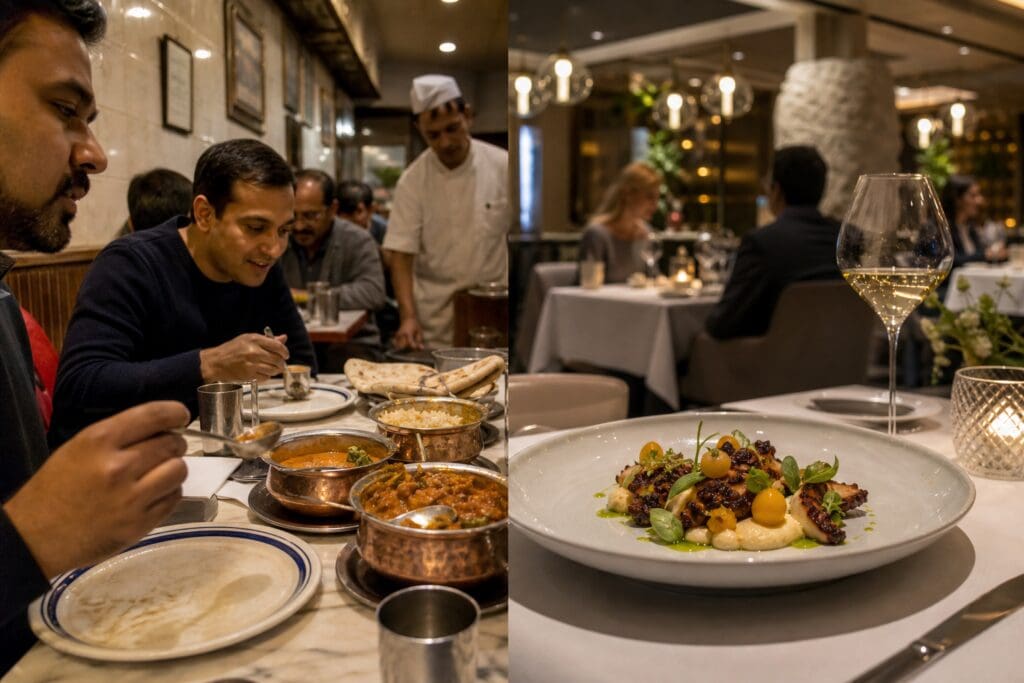
London’s appetite for Indian food is deep, lively and constantly changing. From curry houses to fine dining: London's Indian food scene tells a story of migration, comfort, creativity and pride. It stretches from late-night plates of biryani and butter chicken to tasting menus shaped by regional recipes, seasonal British produce and modern technique. For many Londoners, Indian food is not an occasional treat. It is part of the city’s everyday rhythm.
From curry houses to fine dining: London's Indian food scene today
Indian food in London is not one single cuisine. It is a wide and varied collection of regional traditions, family recipes, restaurant styles and personal memories. A dish described simply as “curry” may carry influences from Punjab, Gujarat, Bengal, Kerala, Goa, Hyderabad or Tamil Nadu. It may also reflect the long history of Indian food adapted for British tastes.
The classic British curry house still has an important place in the capital. These restaurants made dishes such as chicken tikka masala, lamb rogan josh, saag paneer and pilau rice familiar to generations of diners. Many are warm, reliable and good value, with menus that feel comforting before they are even opened.
Alongside them, London has developed a confident modern Indian dining scene. Some restaurants focus on one region. Others use Indian techniques with British ingredients. There are elegant dining rooms, busy canteen-style spaces, street-food-inspired kitchens and chef-led restaurants where spice is used with precision rather than force.
This range is what makes the city so interesting. Indian food in London can mean a quick dosa, a family thali, a seafood curry, a smoky kebab, a railway-style mutton dish or a refined tasting menu. The best experiences respect flavour first.
The curry house legacy
The curry house is central to London’s food identity. It helped introduce millions of people to Indian and South Asian flavours, even when menus were shaped as much by British expectations as by regional authenticity. These restaurants became social places: after-work meeting spots, family favourites and late-night refuges.
Brick Lane remains strongly associated with curry houses, although London’s Indian food map is now much wider. Southall, Wembley, Tooting, East Ham, Hounslow, Ealing and Harrow all have strong South Asian food cultures, reflecting the communities that live, shop and eat there.
The enduring appeal of the curry house lies in generosity. Portions are often plentiful, flavours are bold, and the food is designed to be shared. A table might be crowded with poppadoms, chutneys, naan, rice, dal, meat curries and vegetable sides. The pleasure comes from mixing, scooping and passing dishes around.
Familiar dishes that still matter
Some dishes have become fixtures because they offer comfort and clarity. A good tandoori chicken should bring char, smoke and gentle heat. A well-made dal should be slow, soft and deeply savoury. A korma may be mild, but it should not be bland; it needs sweetness, richness and balance.
These dishes are sometimes dismissed as old-fashioned, but that view is too simple. A classic menu can still show skill. The difference is in the details: fresh spices, properly cooked onions, careful seasoning and breads served hot from the tandoor.
Why nostalgia is part of the flavour
For many diners, curry houses are tied to memory. First meals out with friends, birthdays, student dinners and post-pub suppers all play a part. Food does not need to be fashionable to be meaningful.
London’s curry houses also reveal how cuisines change when they settle in new places. Menus became hybrids, shaped by migration, local ingredients and customer demand. That does not make them less interesting. It makes them part of Britain’s culinary history.
Regional Indian cooking across the capital
One of the most exciting changes in London is the growing visibility of regional Indian food. Diners are now more likely to recognise that India’s food traditions differ hugely from state to state, city to city and home to home.
South Indian restaurants have made dosas, idlis, vadas, sambar and coconut chutneys familiar far beyond specialist communities. Gujarati food brings vegetarian cooking full of sweetness, spice, texture and balance. Punjabi cooking is loved for tandoori meats, rich dals and hearty breads. Bengali food often celebrates fish, mustard and subtle spice. Keralan cooking may bring curry leaves, coconut, seafood and black pepper to the table.
This regional focus helps move the conversation beyond “hot” or “mild”. It encourages diners to notice sourness, smokiness, bitterness, fragrance and texture. Indian food is not only about chilli heat. It is about layering.
Useful signs of a regionally focused Indian restaurant include:
- A menu that names specific places, communities or cooking styles rather than using only broad labels.
- Breads, rice dishes or snacks that match the region, such as appam, paratha, poori or dosa.
- Spice combinations that vary across dishes, instead of one base sauce appearing throughout the menu.
- Vegetarian dishes treated as central, not as afterthoughts.
- Staff who can explain dishes clearly without making the food feel intimidating.
Street food, cafés and casual dining
London’s Indian food scene has also been shaped by a more casual way of eating. Indian-inspired cafés and street-food kitchens have made snacks and small plates more visible. Chaat, kathi rolls, pav bhaji, vada pav, kebabs and fried snacks now sit comfortably beside the older curry house staples.
This kind of food is lively and social. Chaat, for example, depends on contrast: crisp, soft, hot, cool, sweet, sour and spicy all at once. It is food that wakes up the palate. A good plate feels playful but carefully built.
Casual Indian dining has also helped introduce dishes that are less formal than restaurant curries. It reflects how people often eat in Indian cities: in cafés, markets, railway stations, sweet shops and roadside stalls. London versions may be polished, but the spirit is relaxed.
For consumers, this means more choice at different prices and times of day. Indian food no longer has to mean a large evening meal. It can be breakfast, lunch, a snack, a shared table of small plates or a simple cup of masala chai with something savoury on the side.
Fine dining and modern Indian cooking
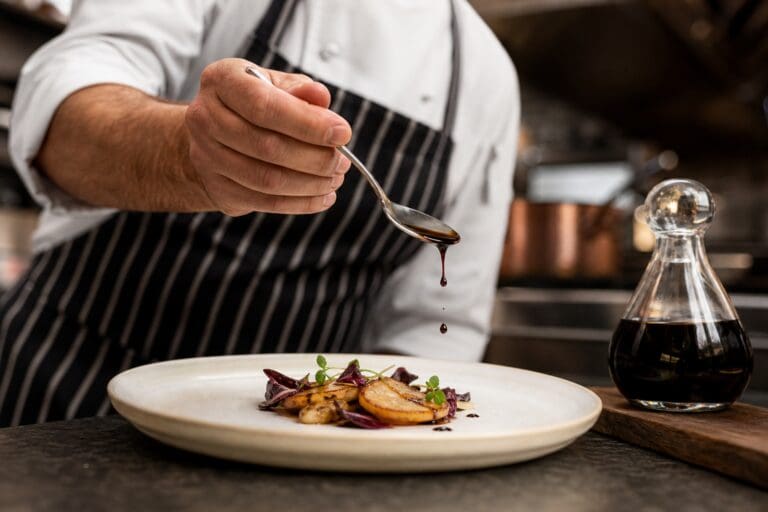
At the other end of the spectrum, London has become a leading city for high-end Indian restaurants. Fine dining has allowed chefs to present Indian flavours with careful plating, tasting menus and polished service. This has changed how some diners think about the cuisine.
Modern Indian restaurants often combine memory with technique. A chef may take a familiar street snack and rebuild it as an elegant starter. A regional curry might be served with a precisely cooked piece of fish or lamb. Pickles, chutneys and spice blends may appear as accents rather than large side dishes.
This style is not about making Indian food “better” by making it more expensive. At its best, it highlights complexity that was already there. It can show how refined a dal can be, how delicate a seafood curry can taste, or how much depth a carefully handled spice mix can bring.
The role of British produce
Many modern Indian kitchens in London use British seasonal ingredients while keeping Indian techniques at the centre. This can work beautifully. British lamb, root vegetables, game, fish, shellfish and greens can all sit well with Indian spices when handled with care.
The result is not always strictly traditional, but it can still feel honest. London itself is a mixed city, so its food often carries more than one influence. The key question is whether the dish tastes balanced and thoughtful, rather than whether it fits a rigid label.
Fine dining without losing warmth
Indian hospitality is often generous, and the best fine dining restaurants do not lose that sense of welcome. Service may be more formal, but the food should still feel alive. Spice should have movement. Sauces should have depth. Breads should arrive with purpose, not as decoration.
A polished dining room can sometimes make food feel distant. Strong Indian fine dining avoids this by keeping flavour bold and emotional. It respects the guest without softening the cuisine into something cautious.
How London diners are changing
London diners have become more curious. Many now understand that “Indian food” covers a huge range of dishes, religions, languages, climates and histories. They may still love a tikka masala, but they are also open to fermented batters, mustard fish, tamarind rice, black pepper curries and sweets flavoured with cardamom or saffron.
Social media has played a part, but so have communities, travel and better food writing. Diners are increasingly interested in stories behind dishes. They want to know why a bread is cooked a certain way, why a curry uses coconut, or why a snack combines yoghurt with chutney and sev.
At the same time, value remains important. A brilliant meal does not need white tablecloths. Some of the most memorable Indian food in London is served in modest rooms where the focus is entirely on cooking. The city’s strength is that both ends of the market can thrive.
What makes a memorable Indian meal in London?
A memorable Indian meal is rarely about heat alone. It is about balance, freshness and rhythm. The best meals have contrast: crisp snacks before soft curries, bright chutneys against rich sauces, cooling yoghurt beside chilli, and warm breads to bring everything together.
Spicing should feel layered. Cumin, coriander, turmeric, mustard seeds, fenugreek, cloves, cardamom, cinnamon, curry leaves and black pepper each behave differently. Skilled cooks know when to toast, grind, temper or simmer them. That knowledge shapes the final dish.
Texture matters too. A thali, for instance, works because it offers variety in a contained form. Rice, bread, dal, vegetables, pickles, yoghurt and sweets all have roles. Nothing is random.
London’s Indian food scene is strongest when it allows this complexity to show. Whether in a curry house, a sweet shop, a neighbourhood café or a fine dining restaurant, the pleasure comes from food that feels specific rather than generic.
Frequently Asked Questions
What makes London’s Indian food scene so varied?
London’s Indian food scene is shaped by migration, regional cooking, British tastes and changing dining habits across generations.
Are curry houses still important in London?
Yes, curry houses remain important because they offer comfort, familiarity and a strong link to British dining history.
Is Indian fine dining very different from traditional Indian food?
Indian fine dining often uses modern presentation, but its best dishes still depend on traditional flavours and techniques.
Which London areas are known for Indian food?
Areas such as Southall, Wembley, Tooting, East Ham and Brick Lane are strongly associated with Indian and South Asian food.
Is Indian food in London usually very spicy?
Not always. Indian cooking uses many spices, but dishes can be mild, aromatic, tangy, smoky or richly savoury.
A city still hungry for Indian flavour
From curry houses to fine dining, London’s Indian food scene continues to grow without losing its roots. Its strength lies in variety: old favourites, regional specialities, casual snacks and refined modern cooking all share space in the same city.
For consumers, that variety is a gift. Indian food in London can be comforting, surprising, elegant, affordable, nostalgic or adventurous. Sometimes it is all of those things in one meal. The capital’s relationship with Indian cooking is not fixed in the past. It is alive, generous and still unfolding.