The French 75: a sparkling cocktail with a long history, is one of those drinks that feels instantly celebratory. It brings together the sharp lift of lemon, the gentle sweetness of sugar, the character of gin or Cognac, and the bright fizz of Champagne. Elegant but lively, it sits comfortably between a classic sour and a glass of sparkling wine.
The French 75: a sparkling cocktail with a long history in one glass
The French 75 is closely linked with the cocktail culture of the early twentieth century. Its name refers to the French 75mm field gun, a piece of artillery used during the First World War. The comparison was meant to suggest that the drink had a surprising kick, despite its polished appearance.
Like many classic cocktails, its exact origin is not perfectly tidy. Drinks with similar names and related ingredients appeared in the early 1900s, and recipes changed as they travelled between bars, books and countries. The version recognised today became more familiar through cocktail books of the late 1920s and early 1930s, including the influential hotel bar culture of London and Paris.
What has endured is not just the name, but the balance. A French 75 is brisk, aromatic and sparkling. It has enough citrus to refresh, enough sweetness to soften the edges, and enough wine to make it feel like an occasion.
What goes into a French 75?
A modern French 75 usually contains four main ingredients: gin, lemon juice, sugar syrup and Champagne. Some versions use Cognac instead of gin, and both styles have historic roots. The result depends on the base spirit, the quality of the citrus, and the dryness of the sparkling wine.
A classic structure is simple:
- Gin or Cognac for strength, aroma and depth.
- Fresh lemon juice for brightness and acidity.
- Sugar syrup to balance the citrus.
- Champagne or dry sparkling wine for fizz and elegance.
- A lemon twist for fragrance and a neat finish.
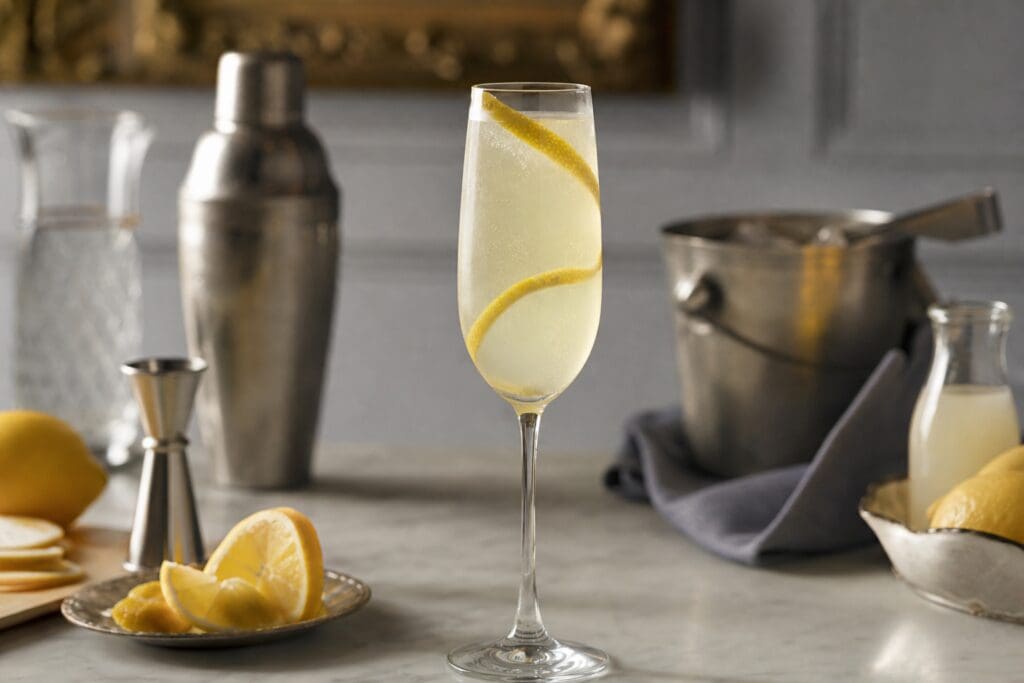
The drink is often served in a Champagne flute, coupe or small wine glass. Each gives a slightly different experience. A flute keeps the bubbles lively for longer, while a coupe feels vintage and open, allowing more aroma to rise from the glass.
Gin or Cognac?
Gin is the most common choice in many modern recipes. It brings botanicals, dryness and a clean structure that works well with lemon. London Dry gin is a strong fit because its juniper-led flavour does not disappear under the Champagne.
Cognac gives a warmer, rounder drink. It can bring notes of dried fruit, oak and spice, making the cocktail feel richer and more autumnal. This style can be especially appealing to people who enjoy Sidecars, brandy sours or Champagne cocktails with deeper flavour.
Neither version is wrong. The gin French 75 feels crisp and bright. The Cognac version feels softer and more luxurious. The best choice depends on the mood, the food and personal taste.
Champagne and sparkling wine
Champagne is traditional, but it is not the only possible sparkling wine. The key is dryness. A sweet sparkling wine can make the drink feel heavy, especially because sugar syrup is already part of the recipe.
Brut Champagne works beautifully because it offers acidity, fine bubbles and a savoury edge. A dry English sparkling wine can also suit the cocktail well, particularly in the UK, where high-quality traditional-method sparkling wines are widely appreciated. Cava can work too, provided it is dry and fresh.
Prosecco is softer and fruitier, so it creates a gentler version. It may be enjoyable, but it will not have quite the same crisp structure as Champagne or a very dry traditional-method sparkling wine.
How to make a French 75 at home
A French 75 looks refined, but it is not difficult to make. The most important detail is balance. Fresh lemon juice makes a clear difference, and the sparkling wine should be well chilled.
A reliable home recipe is:
- 40ml gin or Cognac
- 20ml fresh lemon juice
- 15ml sugar syrup
- 60–90ml chilled Champagne or dry sparkling wine
- Lemon twist, to garnish
Shake the gin or Cognac, lemon juice and sugar syrup with ice. Strain into a chilled flute, coupe or small wine glass. Top gently with sparkling wine, then garnish with a lemon twist.
Sugar syrup is usually made with equal parts sugar and water, stirred until dissolved. It blends more smoothly than granulated sugar and helps the drink keep its clean texture.
The final amount of sparkling wine can be adjusted. Less wine creates a stronger, sharper cocktail. More wine makes the drink longer, lighter and more suitable for slow sipping.
Getting the balance right
The French 75 is all about contrast. It should be tart but not sour, lively but not harsh, and sparkling without tasting thin. If it tastes too sharp, a little more syrup can help. If it tastes too sweet, a touch more lemon or a drier sparkling wine may correct it.
The size of the lemon matters too. Fresh lemons vary in acidity, so exact measurements do not always produce identical results. Bartenders often taste and adjust, and the same approach works at home.
Ice is another quiet detail. Shaking the first ingredients chills and dilutes them slightly, which helps the cocktail settle before the sparkling wine is added. Without enough chill, the drink can taste rough or lose its freshness quickly.
Glassware should be clean and preferably chilled. Warm glasses make bubbles fade more quickly, while chilled glass keeps the drink sharper and more elegant.
Why the French 75 still feels modern
Some old cocktails feel firmly tied to a specific period. The French 75 has managed to stay current because it suits how many people like to drink now: lighter, brighter and less sugary than many mixed drinks.
It is also flexible without losing its identity. It can feel formal at a wedding reception, relaxed at a weekend lunch, or glamorous at a New Year’s gathering. It is strong enough to be a proper cocktail, yet sparkling enough to feel fresh and social.
For UK drinkers, it also fits naturally alongside familiar occasions where sparkling wine already appears. The French 75 adds just enough theatre to a glass of fizz without turning it into something complicated.
Its appearance helps, too. Pale gold, gently bubbling and finished with a strip of lemon peel, it looks graceful rather than showy. That visual simplicity is part of its lasting charm.
Food pairings and serving ideas
Because the French 75 is citrus-led and sparkling, it works well with salty, crisp and lightly rich foods. The acidity cuts through fat, while the bubbles refresh the palate.
Good pairings include:
- Smoked salmon blinis with crème fraîche and dill.
- Oysters, prawns or crab served simply with lemon.
- Goat’s cheese tartlets or cheese straws.
- Roast chicken canapés with herbs and light seasoning.
- Salted crisps, almonds or olives for an easy aperitif spread.
It is usually best before a meal rather than after one. The lemon and fizz wake up the appetite, making the drink a natural aperitif. With dessert, however, it can taste too dry unless the pudding is very light and citrus based.
The cocktail is also useful when guests have different tastes. People who enjoy gin, Champagne, sours or spritz-style drinks often find something to like in it.
Common mistakes to avoid
A French 75 has only a few ingredients, so small mistakes are noticeable. The most common issue is using bottled lemon juice. It can taste flat or overly sharp, while fresh lemon brings brightness and aroma.
Another mistake is using sparkling wine that is too sweet. This can make the drink lose its clean finish. A brut style is usually safer.
Overfilling the glass can also weaken the balance. Too much sparkling wine turns the cocktail into flavoured fizz; too little can make it overly strong. The best version lands somewhere between the two.
Finally, avoid shaking the sparkling wine. It should be added after shaking, then poured gently. This keeps the bubbles lively and prevents a messy overflow.
Frequently Asked Questions
Is the French 75 a strong cocktail?
Yes, it can be stronger than it looks because it contains both spirit and sparkling wine. However, the lemon, sugar and bubbles make it taste light and refreshing, so it is best enjoyed slowly.
Should a French 75 be made with gin or Cognac?
Both are accepted versions, and each gives the drink a different personality. Gin makes it crisp and botanical, while Cognac creates a warmer, rounder and richer cocktail.
Can I use Prosecco instead of Champagne?
You can use Prosecco, but the result will be softer and fruitier. For a drier, more classic profile, Champagne, English sparkling wine or Cava is usually closer.
What glass should a French 75 be served in?
A flute keeps the bubbles lively, while a coupe gives a more vintage feel. A small wine glass also works, especially when serving a slightly longer version.
Why is it called a French 75?
The name refers to the French 75mm field gun from the First World War. It suggested that the cocktail had surprising power beneath its elegant, sparkling appearance.