
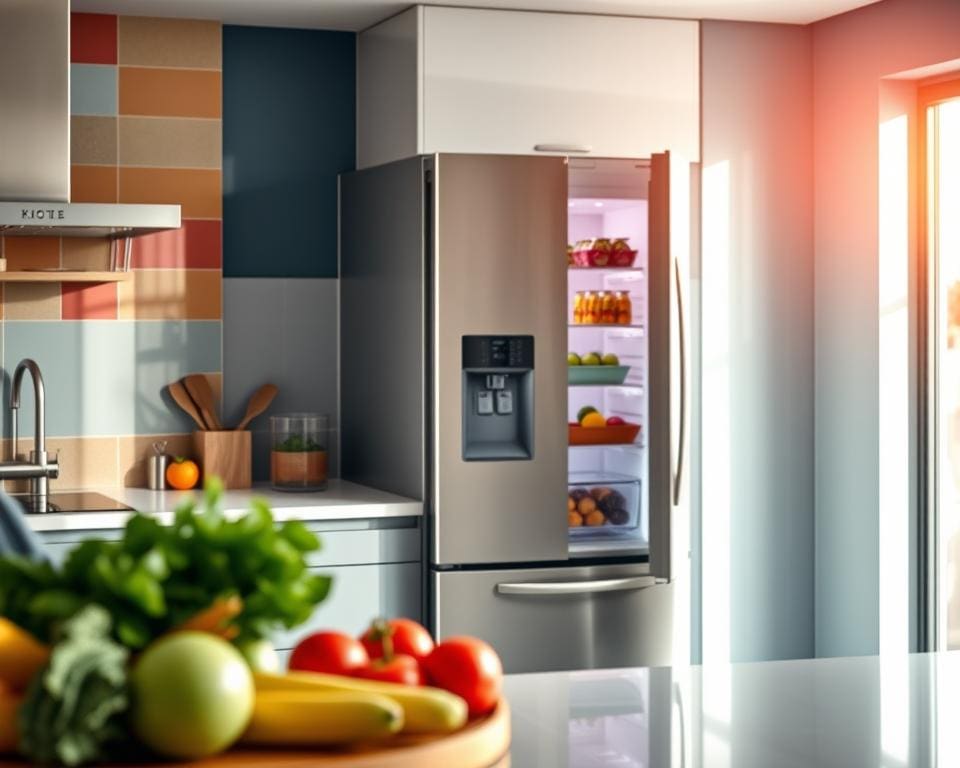
Choosing a refrigerator is about more than looks. You need to balance space, energy use, features and budget to buy a fridge that serves your household for years.
This refrigerator guide UK will help you start the process. You will learn how to measure your kitchen, estimate the capacity you need and compare common styles such as top-freezer, bottom-freezer, side-by-side and French door models.
Practical considerations include energy labels and running costs, plus warranty and reliability information from manufacturers like Bosch, Samsung, LG and Whirlpool. The right choice reduces bills and keeps food fresher.
As you read on, you will find a simple litres‑per‑person rule, a checklist for door clearance and delivery, and questions to ask before you buy. By the end you should feel confident choosing a refrigerator that fits your home and habits.
Assess your kitchen space and refrigerator size requirements
Before you buy, take time to map the exact space where the fridge will sit. Measure height, width and depth in millimetres and note any overhangs or cupboards above the alcove. Manufacturers list fridge dimensions and you should allow 25–50 mm at the sides and top for ventilation and space at the back for plumbing on models with water dispensers.
Next, measure door openings and routes into the kitchen. Measure the door swing and any adjacent cupboards to be sure the fridge door can open fully. For narrow hallways or flats, check stairwell and lift clearances against the appliance packaging. Retailers such as Currys and John Lewis can confirm delivery limits and whether they remove your old appliance for an extra fee.
Measure available space and door swing
Use a tape to measure from floor to underside of any overhang and record the depth including skirting boards. When you measure fridge space, remember to include handle depth if you are comparing Samsung or LG freestanding models, which often list depth including handles.
Allow for door clearance so hinges and full opening are not obstructed by cabinets or walls. If you are fitting an integrated fridge like a Bosch or Siemens model, check the precise cut‑out dimensions in the installation guide and whether a plinth kit or special hinges are required.
Determine optimal capacity for your household
Work out fridge capacity per person to match your shopping habits. A simple rule of thumb is 50–70 litres per adult and 30–50 litres per child. Singles or couples often manage with 150–250 litres.
Think about cooking style and bulk buying. If you buy in bulk or cook from scratch, choose a larger unit. Typical ranges run from compact 50–150 litres to standard 200–350 litres and family models that can reach 300–600+ litres. Don’t forget freezer needs; a separate chest or upright freezer can supplement family storage.
Consider built-in, integrated and freestanding options
Decide whether you want a built-in fridge for a seamless look or a freestanding refrigerator for flexibility. A built-in fridge or integrated fridge sits within cabinetry and gives a polished finish but often costs more and needs exact venting. Brands such as Neff and Bosch are known for integrated models that require precise cut‑outs.
Freestanding refrigerators from Hotpoint, Beko and Indesit are easier to replace and usually cheaper up front. Undercounter and counter‑depth options work well in small kitchens or as secondary units in islands and utility rooms. Whichever route you choose, follow the maker’s ventilation guidance and check delivery and installation requirements before you buy.
Energy efficiency, running costs and environmental impact
When choosing an energy efficient refrigerator you should read the energy label fridge closely. The UK and EU labels show kWh per year alongside the letter rating, so focus on the annual energy consumption figure rather than the letter alone. Two models with the same rating can still differ in kWh/year and in real-world running costs.
To estimate fridge running cost multiply the fridge’s kWh/year by your electricity price in pence per kWh. Use your current domestic tariff and account for how often you open the door and the ambient kitchen temperature. Frost-free models save effort but can draw more power than manual-defrost units when running continuously.
Compressor and insulation technology make a big difference. Inverter compressors in Samsung, LG and Bosch models vary speed to match demand and cut part-load consumption. Good insulation and correct refrigerant charge keep annual energy consumption lower over the appliance’s lifetime.
Pay attention to refrigerant environmental impact when comparing models. Many modern fridges use R600a (isobutane), which has a far lower global warming potential than older HFCs. Check manufacturer specs from brands such as Liebherr and Beko to confirm the refrigerant and safe handling guidance.
Longevity and serviceability affect overall footprint. A durable model from Bosch, Miele, Samsung or LG that can be repaired and supplied with spare parts may be greener than a cheaper unit that you replace within a few years. Retailers and manufacturers often offer take-back or recycling schemes, in line with WEEE rules.
Simple user habits cut costs and emissions. Keep the fridge at about 3–5°C and the freezer at −18°C. Allow hot food to cool before storing, avoid overloading shelves, and check door seals regularly. Clean accessible condenser coils and defrost manually if the model requires it.
You can compare estimated running costs and incentives before you buy. Look at EnergyGuide or manufacturer estimates, multiply by local tariffs and consider available rebates or financing. For practical guidance on appliance savings and incentives, see this advice on energy-efficient appliances here.
Professional installation and correct sizing help you realise the expected savings. A well-installed unit with the right refrigerant charge and airflow will match the rated annual energy consumption more closely, lowering the lifetime fridge running cost and reducing your household carbon footprint.
Compare refrigerator styles and configurations
Choosing the right fridge styles means balancing space, budget and daily habits. Start by thinking about how you use your kitchen and which layout will make food access easiest for you.
Top-freezer, bottom-freezer, side-by-side and French door choices
A top freezer fridge is often the most affordable option. Brands such as Hotpoint and Beko offer reliable, energy-conscious models that suit tight budgets. You will save money up front, though reaching fridge items may be less convenient if you use the fresh-food compartment most.
Bottom-freezer designs place fresh food at eye level, which helps if you open the fridge frequently. Whirlpool and Bosch supply many of these models. Keep in mind the freezer drawers can be shallower, which may limit storage for bulky frozen goods.
For narrow kitchens, a side-by-side fridge keeps doors compact and can include water and ice dispensers. Samsung and LG make feature-rich side-by-side models. Expect narrower shelf widths, which can make storing large trays harder.
A French door fridge offers wide shelves and flexible organisation, making it popular with families. Samsung, LG and Fisher & Paykel build notable French door fridge models. These units tend to cost more and need more clearance for full-width doors.
Specialised refrigerators: compact, under-counter and wine fridges
A compact fridge is handy for student rooms, offices and small flats. Capacities often range from 50 to 150 litres. Watch energy ratings, since small units can be less efficient per litre than larger fridges.
Under-counter models slot neatly beneath worktops and work well as a second fridge in a utility room or island. UK brands such as Caple and CDA produce sizes that fit standard kitchen runs.
A wine fridge preserves bottles by controlling temperature zones, humidity and light. Look for units from Liebherr, Vinoteca or Haier if you need vibration control and UV protection to keep vintages stable.
Interior layout, shelving and adjustable storage features
Shelving materials affect cleaning and load capacity. Tempered glass shelves are easy to wipe and hold heavy items. Wire shelves are lighter but less helpful for small containers.
Adjustable shelves and door bins make daily use far simpler. Seek units with height-adjustable options, split shelves and sliding racks for bottles. Removable bins add flexibility when you need to store tall items.
Crisper drawers with humidity control extend the life of fruit and veg. Some models from Liebherr and Bosch feature multi-zone drawers that switch between fridge and freezer temperatures.
Special compartments such as deli or zero-degree drawers suit fresh meat and fish. Quick-cool or rapid-freeze settings help preserve texture and nutrients. LED lighting improves visibility while reducing energy use compared with older bulbs.
Key features, performance and warranty considerations
When you compare fridge features, start with measurable performance: check the fridge noise level in decibels, cooling recovery times and whether the model has multi‑airflow. Brands such as Samsung, LG and Bosch often list dB ratings and fast‑freeze or fast‑cool functions. If you live in an open‑plan home, a quiet appliance under about 40 dB will make a noticeable difference.
Decide between a frost free fridge and a manual‑defrost unit by weighing convenience against running costs. Modern inverter compressor designs deliver steadier temperatures and lower energy use; an inverter compressor from LG or Samsung can cut noise and reduce temperature swings. Also look for must‑have items: solid door seals, adjustable shelving and a clear fridge warranty that spells out parts and labour.
Smart fridge options add remote monitoring, temperature alerts and diagnostics, but they can raise the purchase price and need ongoing software support. Consider useful extras like ice‑and‑water dispensers, antibacterial linings and eco modes only if they match your routine. For service and repair, prefer manufacturers with strong UK networks such as Bosch, Miele or Hotpoint so spare parts and engineers are accessible.
Before you buy, use a final checklist: confirm internal dimensions and shelving flexibility, verify the energy label and kWh/year, note compressor warranty length and exclusions, and ask about delivery, plumbing for water models and old‑appliance removal. For a wider guide to kitchen appliance choices and installation readiness see this resource on choosing appliances at how to choose the right kitchen.