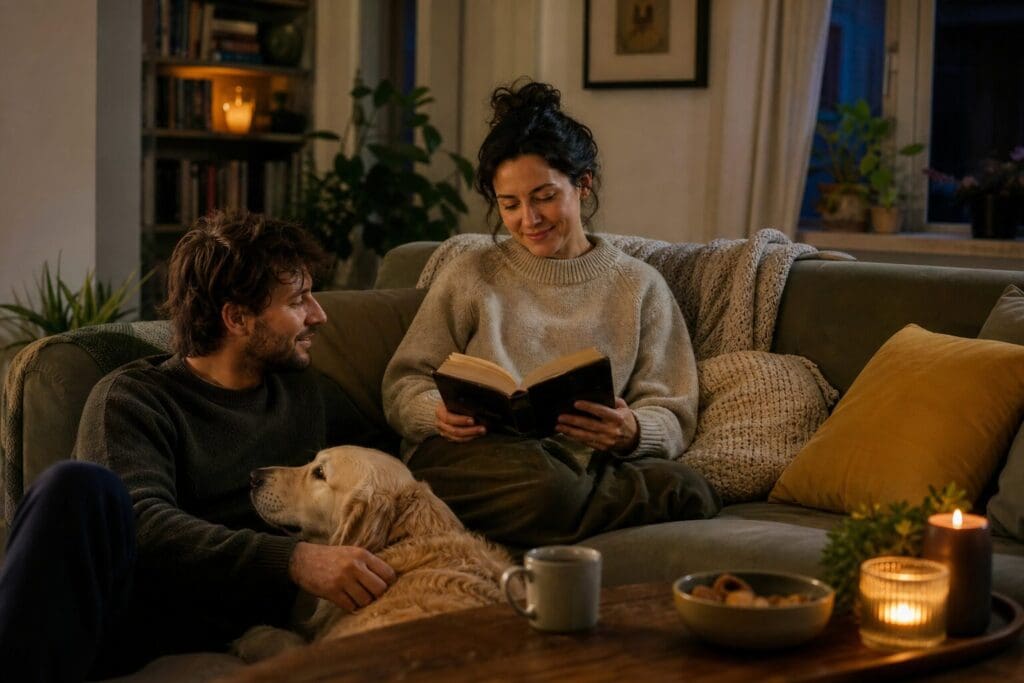
A quiet night without notifications, streaming menus or social feeds can feel surprisingly luxurious. How to plan the perfect screen-free evening at home is not about banning fun; it is about making space for rest, conversation and simple pleasures. With a little preparation, your home can feel like a cosy retreat rather than another place to scroll. The secret is to decide what you want from the evening before habit takes over.
Why a screen-free evening works at home
Most evenings drift towards screens because they are easy. One episode becomes three; a quick message becomes half an hour. Planning a screen-free evening gives the night a gentle shape. It helps separate work from home life, reduces background noise and gives everyone permission to slow down. You do not need a special occasion. A Tuesday with soup, candles and a pack of cards can be as memorable as a booked night out.
The aim is to replace passive scrolling with something more satisfying. That might be laughter over a board game, a proper catch-up at the table, or an early night with a good book. Keep the plan realistic, and it will feel inviting rather than strict.
How to plan the perfect screen-free evening at home
Start by choosing a clear beginning and end. Put phones away after dinner, or decide that screens pause from 7 pm until bedtime. A defined window feels easier than an open-ended rule. If other people are involved, agree the plan earlier in the day so nobody feels ambushed when the television stays off. Keep essential calls possible, especially if you are caring for someone or waiting for important news.
Next, remove the friction. Charge devices in another room, switch on do-not-disturb, and place books, games or craft materials where they are easy to reach. Prepare snacks before you begin, because searching the kitchen with a phone in your pocket can undo the mood. A good screen-free evening feels smooth, not worthy. It should be less about resisting temptation and more about enjoying what is already in front of you.
Set the scene before you switch off
Atmosphere matters because screens often provide colour, sound and movement. Replace that stimulation with comfort. Lower harsh overhead lights, choose a playlist before the screen-free period begins, or use the radio if music streaming would pull you back online. Tidy only the surfaces you will actually use: the table, the sofa, or a clear patch of floor for a game. This is not a deep-cleaning project.
Small sensory details make the evening feel intentional:
- Soft lighting, such as lamps, fairy lights or unscented candles in safe places.
- A simple drink station with tea, cordial, sparkling water or hot chocolate.
- Something tactile, like playing cards, a jigsaw, knitting, sketchbooks or a paperback.
If you have children at home, make the change visible. A basket labelled “phones and tablets” can turn the switch-off into a shared ritual. For adults, putting devices out of sight works just as well. The point is to reduce little decisions, because every glance at a lock screen invites another.
Choose activities that suit your mood
The best activity depends on the energy in the room. After a long day, a complicated project may feel like homework. Pick one main idea and one backup, then let the evening breathe. You are planning a mood, not a military timetable.
Consider these reliable options:
- For calm: reading side by side, doing a jigsaw, listening to an album, or writing in a notebook.
- For connection: cooking together, playing a card game, sharing old photographs, or asking each other thoughtful questions.
- For creativity: baking, sketching, mending clothes, arranging flowers, or making a scrapbook page.
- For movement: stretching, dancing in the kitchen, indoor bowling with soft balls, or a gentle garden stroll.
For solo evenings, choose something that feels nourishing rather than productive. You might read three chapters, sort a small photo box, or enjoy a bath without balancing a phone on the side. A screen-free night alone can feel spacious when it has warmth and a little structure.
Make food part of the pleasure
Food gives the evening rhythm. It does not need to be fancy; in fact, simple is usually better. Think jacket potatoes with toppings, homemade pizza, a tray of roasted vegetables, soup with crusty bread, or a picnic-style supper on the living-room floor. Choose dishes that can be prepared mostly before the switch-off starts, so the night does not become a series of kitchen tasks.
A shared pudding can become the centrepiece: crumble, fruit with cream, warm brownies, or a bowl of popcorn passed around during a story. If you drink alcohol, keep it moderate and optional. The purpose is comfort and presence, not excess. A pot of tea can feel just as special when it is poured slowly and shared without distraction.
Keep the evening flexible
A plan should support the night, not control it. If a board game becomes too competitive, swap to music. If everyone is tired, shorten the evening and go to bed. If conversation opens up, leave the cards untouched. The sign of success is not completing every activity; it is noticing that the room feels calmer and more human.
For mixed households, agree one compromise. A teenager might join for dinner and a game, then read privately. A partner who loves television might prefer one screen-free hour rather than a whole night. Consistency grows from positive experiences, not pressure. When the evening feels good, repeating it becomes much easier.
Frequently Asked Questions
What counts as a screen-free evening?
A screen-free evening usually means no phones, tablets, computers, games consoles or television during the chosen time.
Can I still use music during the evening?
Yes, if it supports the mood and does not lead to browsing, scrolling or checking messages.
How do I involve reluctant family members?
Keep the first evening short, offer enjoyable choices, and avoid making it feel like punishment.
What should I do with my phone?
Place it in another room, on silent, while keeping emergency contact arrangements sensible and accessible.
Is a screen-free evening good for children?
It can encourage play, conversation and calmer routines, especially when adults join in positively.