Vintage shopping is often praised as a clever way to spend less, but that is only a small part of its appeal. Why vintage shopping is about more than saving money becomes clear when you look at what older clothes, furniture and homeware can offer: character, quality, sustainability and a stronger sense of personal style. For many UK shoppers, vintage is not just a budget choice. It is a way to buy with more thought.
The real value of vintage finds
A vintage item has usually lived a life before it reaches a rail, shelf or market stall. That history gives it a different feeling from something bought new and mass-produced. A wool coat may have the weight and finish of an era when tailoring was common. A ceramic vase may show a glaze or shape that is hard to find on the high street today.
Value is not always about the lowest price. It can also mean usefulness, durability and pleasure over time. A well-made leather bag that can be repaired, polished and worn for years may be more satisfying than a cheaper new one that quickly loses its shape. Vintage shopping encourages shoppers to think beyond the first purchase and consider how an item will fit into daily life.
There is also emotional value. Finding something unexpected can feel rewarding because it has not been chosen for everyone at once. It feels more personal.
Why vintage shopping is about more than saving money for style
The primary keyword is not just a search phrase; it reflects a real shift in how people think about wardrobes and homes. Why vintage shopping is about more than saving money is especially clear in personal style, where older pieces can help people move away from trends that change every season.
Vintage shopping supports a slower, more individual approach. Instead of buying an outfit because it is currently everywhere, shoppers can choose colours, cuts and fabrics that genuinely suit them. A 1970s blouse, a 1990s denim jacket or a mid-century side table can add interest without making a room or wardrobe look like a copy of a catalogue.
Clothes with character
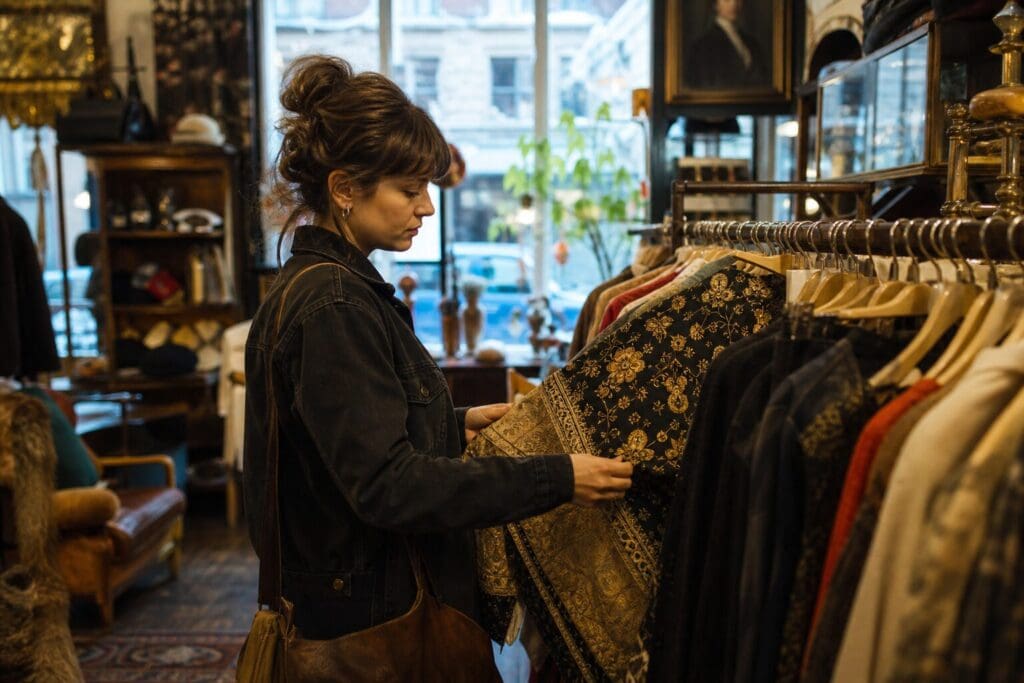
Vintage clothing often stands out because of the details. Buttons, collars, linings, embroidery and fabric textures can feel distinctive. Even simple pieces may have a cut that is less common today, such as a higher waist, a fuller skirt or a boxier jacket.
This does not mean dressing head to toe in one decade. Many people mix one vintage piece with modern basics. A vintage blazer with plain jeans, or an older silk scarf with a simple coat, can add personality without looking like fancy dress.
Homes that feel collected
The same idea applies to interiors. Vintage homeware can soften a room and make it feel layered. A new sofa can sit happily beside an old wooden coffee table. Modern shelves can hold second-hand books, studio pottery or framed prints found over time.
A home filled only with new items can sometimes feel too polished. Vintage pieces bring texture, patina and small imperfections. These details often make a space feel warmer and more lived-in.
Sustainability without perfection
Vintage shopping is often linked with more sustainable consumption. Buying something that already exists can reduce demand for newly produced goods, and it can help keep usable items in circulation for longer. That matters in fashion and interiors, where trends can encourage frequent replacement.
It is important, however, to avoid treating vintage as a perfect solution. Transport, cleaning, alterations and packaging can still have an impact. Not every second-hand item is automatically a wise purchase. A thoughtful approach matters more than simply buying anything labelled vintage.
Useful questions include:
- Will this item be worn or used often, rather than stored away?
- Is it in a condition that suits its purpose, or can it be repaired?
- Does it work with things already owned, reducing the need for extra purchases?
- Is the material practical for everyday care?
- Is the price fair for the quality, condition and usefulness?
This kind of thinking helps vintage shopping stay meaningful. It becomes less about impulse and more about choosing well.
Quality, craft and materials
One reason people enjoy vintage is the chance to find materials and construction that can be harder to access affordably when buying new. Natural fibres, solid wood, metal fittings and proper linings are often attractive because they feel substantial.
Of course, age alone does not guarantee quality. Some older items were cheaply made, just as some new items are beautifully made. The advantage of vintage shopping is that time has already tested the piece. If a coat, chair or table has survived decades and still works well, that can say something about its construction.
Learning to spot quality is part of the enjoyment. Seams, zips, hems, hinges, drawers and fabric weight all tell a story. Over time, shoppers become more confident in recognising pieces that are worth caring for.
The pleasure of the search
Vintage shopping is not as predictable as buying new. That unpredictability can be frustrating if someone needs a specific item quickly, but it is also part of the charm. There is pleasure in browsing without knowing exactly what will appear.
This slower rhythm can change the relationship people have with shopping. Rather than scrolling through endless similar products, vintage shoppers often pause, compare and inspect. They may leave empty-handed, which is not a failure. It can simply mean nothing was right that day.
The search also encourages patience. Waiting for the right dining chairs or the right winter coat can make the eventual find feel more satisfying. It turns shopping from a quick transaction into a process of discovery.
Frequently Asked Questions
Is vintage shopping always cheaper than buying new?
Not always. Some vintage items cost more because of rarity, condition, designer labels or high-quality materials. The benefit is often long-term value rather than the lowest possible price.
What is the difference between vintage and second-hand?
Second-hand simply means previously owned, while vintage usually refers to older items with a recognisable style, period or design value. The terms can overlap in everyday use.
How can I tell if a vintage item is good quality?
Check the fabric, stitching, fastenings, lining and overall condition. For furniture, look at joints, weight, stability and materials. Good quality usually feels sturdy and considered.
Is vintage shopping suitable for everyday wardrobes?
Yes, vintage can work very well for daily dressing when mixed with modern basics. Practical pieces such as coats, knitwear, shirts and bags are often easy to wear.
Does buying vintage help reduce waste?
Buying vintage can help keep usable items in circulation for longer, which may reduce waste. Its impact depends on buying thoughtfully and choosing pieces that will be used.